
August 14, 2026
Global energy markets are experiencing a fundamental transformation that extends far beyond typical supply-demand dynamics. The current environment reflects deep structural vulnerabilities in the international petroleum distribution system, with price volatility reaching levels that challenge traditional economic models. These conditions emerge from a convergence of geopolitical tensions, infrastructure constraints, and evolving risk assessment frameworks that collectively reshape how markets price energy security.
The Iran conflict impact on oil prices has created unprecedented market conditions, with Brent crude trading near $110 per barrel as of March 28, 2026. This represents a dramatic escalation from pre-conflict baseline levels, with crisis-high peaks touching $119.50 during March 2026. These price levels approach the nominal historical peak of $147.50 per barrel established in July 2008, though current conditions reflect distinctly different underlying market mechanics. Furthermore, the oil price rally analysis reveals complex interactions between conflict dynamics and broader market forces.
Market participants increasingly recognise that current volatility stems from supply-side infrastructure disruption rather than demand-driven pressures. This distinction proves critical for understanding both the immediate price response and longer-term market adjustment mechanisms. Unlike previous energy crises driven primarily by consumption patterns or production capacity constraints, the current situation centres on transportation chokepoints and their cascading effects throughout global energy networks.
The complexity of modern energy markets means that price discovery mechanisms now incorporate sophisticated risk premiums that account for supply chain resilience, alternative routing capacity, and geopolitical scenario modelling. These factors create pricing environments where traditional elasticity relationships between supply, demand, and price may not function according to historical patterns.
What Makes the Strait of Hormuz So Critical to Global Energy?
The World's Most Strategic Waterway
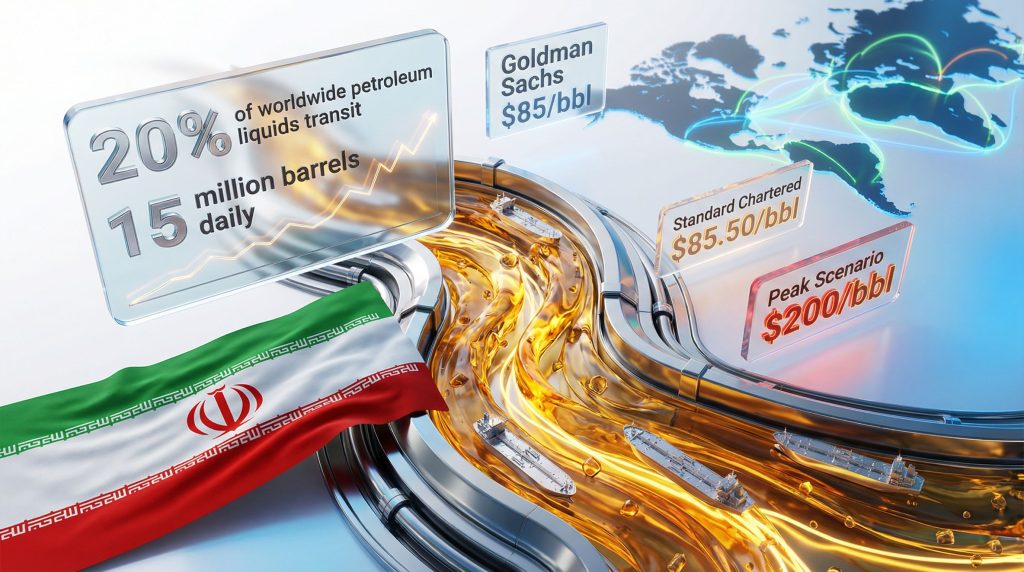
The strategic importance of maritime chokepoints in global energy distribution cannot be overstated, with the Strait of Hormuz representing the single most critical passage for international petroleum transport. This narrow waterway facilitates the transit of approximately 20% of worldwide petroleum liquids on a daily basis, handling roughly 15 million barrels of crude oil and 5 million barrels of refined products each day.
The physical geography of the Strait creates unique vulnerability for global energy markets. Separating Oman and Iran with a minimum width of approximately 21 nautical miles, the actual shipping lanes through which tanker traffic operates are considerably narrower. This geographic constraint means that no viable alternative routing exists for the massive daily volumes that typically transit this waterway without substantial delays and cost premiums.
Current disruption status has resulted in near-complete closure of the Strait by Tehran, creating an immediate bottleneck that prevents normal export volumes from reaching global markets. This closure affects not only crude oil flows but also disrupts refined product distribution and liquefied natural gas exports from the region.
The technical challenges associated with rerouting energy flows around this disruption prove substantial. Alternative pipeline routes lack the capacity to handle diverted volumes, while longer maritime routes through the Cape of Good Hope add significant transit time and shipping costs. These constraints fundamentally alter the cost structure of global energy distribution.
Economic Multiplier Effects
The closure of this critical waterway creates a cascade of economic impacts that extend far beyond immediate supply shortfalls. Direct supply disruption of up to 20 million barrels daily exceeds global spare production capacity, which currently stands at an estimated 3-4 million barrels per day across major producing nations. The oil price trade war impact demonstrates how such disruptions amplify existing trade tensions.
Secondary effects manifest through regional refining capacity pressures across Gulf Cooperation Council states. These facilities face dual challenges: inability to export their refined products while simultaneously struggling to import feedstock crude from regional sources. This creates bottlenecks throughout the refined products supply chain, affecting everything from gasoline to petrochemical feedstocks.
Tertiary impacts extend to liquefied natural gas markets, where supply interruptions from Middle Eastern facilities create shortages in global gas markets. This interconnection means that crude oil supply disruptions rapidly translate into broader energy commodity stress.
The demand destruction mechanism required to balance markets under extended closure conditions would necessitate historically unprecedented consumption reductions. Analysis suggests that sustained Strait closure would require prices to rise sufficiently to destroy significant amounts of global oil demand through industrial curtailment, transportation reduction, and economic slowdown effects.
When big ASX news breaks, our subscribers know first
How Are Investment Banks Modelling Oil Price Scenarios?
Consensus Forecast Analysis for 2026-2027
Financial institutions are deploying sophisticated scenario modelling to assess potential price trajectories under varying conflict duration assumptions. Macquarie Group has outlined two primary scenarios with distinct probability weightings and associated price targets.
Their analysis assigns a 40% probability to extended conflict extending through the second quarter of 2026, with continued Strait closure potentially driving oil prices to $200 per barrel. This scenario assumes sustained infrastructure disruption requiring historically significant demand destruction to achieve market balance. However, experts warn about potential oil price crash insights if geopolitical tensions ease rapidly.
Conversely, they assign a 60% probability to conflict resolution by the end of March 2026, which would facilitate more moderate pricing impacts and gradual market normalisation. This optimistic pathway depends critically on limited infrastructure damage and rapid restoration of transit capacity through the Strait.
| Scenario | Probability | Timeline | Peak Price Target |
|---|---|---|---|
| Extended Conflict | 40% | Through Q2 2026 | $200/bbl |
| Rapid Resolution | 60% | End March 2026 | Moderate Impact |
The analytical framework underlying these projections identifies two critical determining factors: the timing of Strait reopening and the extent of physical infrastructure damage in conflict zones. These variables directly influence both short-term price spikes and longer-term commodity market adjustment mechanisms.
Extreme Scenario Modelling
The $200 per barrel scenario represents pricing levels substantially exceeding historical precedents in real terms. Achievement of such elevated prices would require sustained Strait closure through June 2026, coupled with severe demand destruction mechanisms to balance global energy markets.
This extreme pricing environment would necessitate:
- Industrial curtailment in energy-intensive manufacturing sectors
- Transportation demand reduction through economic slowdown effects
- Alternative energy acceleration as cost competitiveness shifts dramatically
- Policy interventions including potential fuel rationing or consumption restrictions
Historical context provides perspective on these projections. The 1979 Iran Revolution drove prices to $125 per barrel in inflation-adjusted terms, while the 2008 financial crisis created a nominal peak of $147.50 per barrel. Current scenario modelling suggests potential for real price levels exceeding these historical benchmarks under extended disruption conditions. Moreover, the tariffs economic implications could further complicate recovery scenarios.
Market participants recognise that such extreme pricing would fundamentally alter global energy consumption patterns, potentially accelerating structural shifts toward alternative energy sources and energy efficiency measures that might permanently reduce petroleum demand.
What Economic Indicators Signal Market Stress?
Inflation Transmission Mechanisms
Energy price increases transmit through economic systems via multiple channels that compound initial cost pressures. The mechanism begins with direct energy costs affecting consumers through gasoline, heating oil, and electricity pricing, then expands through transportation and industrial input cost increases. According to recent analysis, the Iran conflict is driving up costs across multiple sectors simultaneously.
Current Brent pricing near $110 per barrel represents a significant premium over pre-conflict levels, though exact baseline comparisons require verification of early 2026 pricing data. The crisis-high of $119.50 per barrel demonstrates the market's sensitivity to supply disruption scenarios.
Transportation cost escalation occurs as higher fuel expenses increase shipping costs for goods globally. This effect proves particularly pronounced for:
- Long-distance freight transport dependent on diesel fuel
- International shipping facing extended routing requirements
- Aviation industry operations with limited fuel hedging protection
- Local delivery services with immediate fuel cost pass-through
Industrial input cost pressures affect energy-intensive manufacturing sectors including chemicals, metals, and petrochemicals. These industries face immediate margin compression that may require production adjustments or consumer price increases to maintain profitability.
Consumer spending patterns shift as higher energy costs reduce discretionary purchasing power. This reduction in disposable income creates secondary demand effects throughout the broader economy, potentially triggering recessionary conditions if energy price increases persist.
Regional Price Disparities
Geographic variations in energy pricing reflect local supply chain vulnerabilities and policy frameworks. California gasoline markets demonstrate particular sensitivity to crude oil price increases due to state-specific fuel formulations, limited import capacity, and higher state excise tax rates.
Australia faces unique vulnerability as an import-dependent nation for approximately 90% of crude oil consumption. Limited domestic refining capacity and distance-dependent supply chains create exposure to Middle Eastern supply disruptions that manifests through localised price spikes and potential supply shortages.
European markets experience heightened energy security concerns due to diversified supply dependencies and strategic reserve policies. Industrial planning adjustments reflect growing awareness of supply chain vulnerabilities, with energy-intensive sectors reassessing operational cost structures. Furthermore, European energy markets face particular challenges due to their existing energy infrastructure constraints.
Regional policy responses vary significantly, with some jurisdictions implementing fuel subsidies or price controls while others allow market mechanisms to function without intervention. These differences create additional complexity for multinational corporations managing global operations under volatile energy cost conditions.
How Do Historical Crises Compare to Current Conditions?
Comparative Supply Shock Analysis
Historical energy crises provide valuable context for understanding current market dynamics, though structural differences in global energy consumption patterns suggest potentially different outcomes. The 1979 Iran Revolution created sustained disruption lasting approximately 18 months, with recovery timelines extending three years beyond initial peak pricing.
| Crisis Period | Peak Price (Inflation-Adjusted) | Duration | Recovery Timeline |
|---|---|---|---|
| 1979 Iran Revolution | $125/bbl | 18 months | 3 years |
| 1990 Gulf War | $95/bbl | 6 months | 12 months |
| 2003 Iraq Invasion | $78/bbl | 3 months | 8 months |
| 2026 Current Crisis | $119/bbl | Ongoing | Unknown |
The 1990 Gulf War demonstrated faster market adjustment mechanisms, with peak pricing lasting approximately six months and recovery achieved within twelve months. This shorter timeline reflected more limited infrastructure damage and rapid diplomatic resolution.
Current conditions differ from historical precedents in several critical aspects. Modern energy markets demonstrate lower intensity energy consumption per unit of economic output compared to 1970s-era patterns. This structural change potentially limits extreme price responses despite supply disruptions.
Additionally, strategic petroleum reserve systems now provide greater buffering capacity against short-term supply interruptions. However, the current scale of potential disruption through Strait of Hormuz closure exceeds the capacity of strategic reserves to provide medium-term market stability.
Structural Market Differences
Contemporary energy markets feature more sophisticated financial instruments for price risk management, including futures markets, options contracts, and commodity swaps. These mechanisms provide market participants with hedging tools unavailable during earlier crisis periods.
Alternative energy infrastructure has developed significantly since previous major oil shocks, potentially providing some demand substitution capability under extreme pricing scenarios. However, the scale and speed of potential substitution remain limited for transportation fuels and industrial applications requiring liquid hydrocarbons.
Global strategic reserve coordination has improved through International Energy Agency mechanisms, though the effectiveness of coordinated releases under current disruption scales remains untested. Previous reserve releases have addressed short-term disruptions rather than sustained infrastructure closure scenarios.
What Risk Factors Could Extend Market Volatility?
Infrastructure Vulnerability Assessment
Critical energy infrastructure faces multiple vulnerability vectors that could extend market disruption beyond initial conflict resolution. Regional refinery capacity operates under direct threat conditions, with processing facilities representing high-value targets that require extended reconstruction timelines if damaged.
Storage system vulnerabilities extend beyond immediate production and transportation constraints. Strategic petroleum reserves face deployment decisions that balance short-term market stability against longer-term security requirements. Reserve release strategies must consider both volume and timing to maximise market impact while preserving emergency capacity. The OPEC production boost initiatives become crucial under these circumstances.
Alternative routing capacity limitations become apparent under current disruption conditions. Pipeline systems lack sufficient capacity to handle diverted volumes from maritime transport, while longer shipping routes through alternative waterways add substantial time and cost burdens to energy distribution networks.
The interconnected nature of regional energy infrastructure means that damage assessment and repair timelines prove critical for market stabilisation. Complex refineries and export terminals require specialised equipment and expertise that may face supply constraints under wartime conditions.
Political Timeline Uncertainties
Diplomatic developments continue to influence market expectations, with recent timeline extensions providing temporary market stabilisation. President Trump's decision to extend attack deadlines by 10 days, pushing potential escalation to April 6, 2026, created short-term breathing room while maintaining underlying tension.
The gesture of allowing 10 oil tankers transit through the Strait represents limited goodwill measures that provide minimal actual supply relief but signal potential for broader diplomatic resolution. These symbolic actions influence market sentiment while having negligible impact on fundamental supply-demand balances.
Political calendar considerations in major consuming nations affect policy response timelines and strategic reserve deployment decisions. Electoral cycles and legislative schedules influence the timing and scale of government interventions in energy markets.
International alliance coordination requires careful balancing of national interests with collective security concerns. Energy-sharing agreements and coordinated reserve releases depend on political consensus that may prove challenging to maintain under extended crisis conditions.
How Should Investors Position for Energy Market Volatility?
Portfolio Hedging Strategies
Investment positioning under current market conditions requires sophisticated risk management approaches that account for multiple scenario outcomes. Direct energy sector exposure through equity allocation offers potential upside participation but carries significant downside risk if conflict resolution occurs rapidly.
Commodity futures positioning provides more direct exposure to energy price movements while offering greater liquidity for tactical adjustments. However, futures markets incorporate current volatility expectations that may limit profit potential under scenario outcomes already reflected in forward curves.
Currency hedging considerations become critical as energy-exporting nation currencies typically strengthen during commodity price increases. Portfolio exposure to currencies from major oil producers can provide natural hedging against energy cost inflation in import-dependent economies.
Options strategies offer asymmetric risk-reward profiles that may prove attractive under high uncertainty conditions. Purchasing call options on energy commodities or energy sector equities provides upside participation while limiting downside exposure to premium costs.
Sector Rotation Implications
Transportation sector performance typically exhibits inverse correlation with energy price increases, as airlines and shipping companies face immediate margin compression from fuel cost escalation. These sectors require careful analysis of hedging positions and pass-through pricing capabilities.
Manufacturing industries demonstrate varying sensitivity to energy cost increases based on their energy intensity and pricing power with customers. Chemical and metals producers face particular pressure, while technology and service sectors show greater resilience to energy price volatility.
Alternative energy sectors may benefit from sustained high fossil fuel pricing through improved cost competitiveness. However, these benefits depend on the duration of elevated pricing and the ability of alternative energy sources to scale production capacity rapidly.
Financial sector exposure varies based on regional energy dependencies and loan portfolio composition. Banks with significant exposure to energy sector lending face credit risk considerations, while those in energy-importing regions may benefit from central bank policy responses.
The next major ASX story will hit our subscribers first
What Long-Term Structural Changes Could Emerge?
Supply Chain Diversification
Geographic rebalancing of energy supply relationships may accelerate under current crisis conditions. Import-dependent nations are reassessing supplier concentration risks and exploring alternative sourcing arrangements that reduce exposure to single chokepoint vulnerabilities.
Strategic reserve expansion initiatives are likely to receive enhanced policy support as nations recognise the limitations of existing stockpile capacity under sustained disruption scenarios. These expansions require significant capital investment and long-term storage infrastructure development.
Technology acceleration in energy efficiency measures may receive increased investment as organisations seek to reduce exposure to volatile energy costs. Industrial processes, transportation systems, and building efficiency improvements become more economically attractive under sustained high energy pricing.
Regional energy independence initiatives may gain political support as the strategic vulnerabilities of globalised energy systems become apparent. These initiatives encompass both alternative energy development and domestic production capacity expansion.
Geopolitical Realignment
Alliance structures may strengthen around energy cooperation agreements that provide mutual security benefits. Bilateral and multilateral arrangements for energy sharing during crisis periods require advance planning and infrastructure coordination.
Trade route development beyond traditional maritime passages may receive enhanced investment attention. Pipeline projects, rail connections, and alternative shipping routes that bypass critical chokepoints become strategically important infrastructure investments.
Regulatory evolution in international energy security frameworks may accelerate as current crisis conditions expose gaps in existing coordination mechanisms. Enhanced information sharing, coordinated reserve policies, and emergency response protocols require international consensus building.
The balance between energy security and economic efficiency may shift toward greater emphasis on supply chain resilience, even at higher cost. This transition affects investment priorities, infrastructure development, and international trade relationships.
How Might Resolution Scenarios Unfold?
Optimistic Pathway Analysis
Rapid conflict resolution by month-end could facilitate swift price normalisation toward the $70-80 per barrel range, assuming infrastructure damage remains limited and diplomatic frameworks establish sustainable peace agreements. This pathway depends critically on minimal physical damage to regional energy infrastructure and rapid restoration of normal transit operations.
Market psychology under optimistic resolution scenarios typically creates rapid price corrections as risk premiums dissipate quickly. However, some structural premium may persist as market participants reassess the probability of future disruptions and adjust long-term risk models accordingly.
Infrastructure assessment and repair timelines prove critical for determining actual supply restoration speeds. Even under optimistic diplomatic scenarios, technical evaluation of facility damage and operational readiness may require weeks or months for full capacity restoration.
Inventory rebuilding dynamics affect the trajectory of price normalisation as both commercial and strategic stockpiles require replenishment. This rebuilding demand may sustain pricing above long-term equilibrium levels during the initial recovery period.
Extended Conflict Scenario
Prolonged instability extending through mid-2026 could sustain triple-digit oil pricing and potentially approach the $200 per barrel threshold identified in extreme scenario modelling. This outcome requires sustained Strait closure and limited alternative supply development to replace disrupted volumes.
Demand destruction mechanisms under extended high pricing would likely trigger global economic slowdown effects. Energy-intensive industries would face production curtailment, transportation demand would decline, and consumer spending would shift toward essential goods and services.
Policy interventions become more likely under extended crisis scenarios, including coordinated strategic reserve releases, fuel efficiency mandates, and potential rationing systems in severely affected regions. These measures aim to moderate price impacts while preserving economic stability.
Structural energy transition acceleration may occur as sustained high fossil fuel pricing improves the economic competitiveness of alternative energy sources. This transition could create permanent demand reduction for petroleum products even after supply disruptions resolve.
What Should Market Participants Monitor?
Key Leading Indicators
Diplomatic communications regarding timeline extensions and negotiation progress provide the most immediate signals for potential conflict resolution. April 6, 2026 represents the current deadline for potential escalation, with market attention focused on any further extensions or breakthrough developments.
Infrastructure damage assessments from conflict zones require careful monitoring as they determine both immediate supply restoration capacity and longer-term reconstruction requirements. Satellite imagery, industry reports, and official damage surveys provide critical input for supply forecasting models.
Global strategic reserve deployment levels indicate government assessment of crisis severity and duration expectations. Coordinated releases signal official concern about market stability, while reserve accumulation suggests preparation for extended disruption.
Alternative supply capacity utilisation from non-Middle Eastern sources provides insight into the global petroleum system's ability to compensate for disrupted volumes. Production increases from North America, Africa, and South America help determine the sustainability of current supply-demand balances.
Risk Management Priorities
Organisations must balance energy cost hedging strategies against operational flexibility requirements under rapidly changing market conditions. Fixed-price contracts provide cost certainty but may limit ability to benefit from potential price declines under rapid conflict resolution.
Supply chain diversification initiatives require acceleration under current uncertainty, though alternative arrangements often involve higher costs or longer lead times. Balancing security and efficiency considerations proves critical for maintaining competitive positioning.
Financial risk management extends beyond direct energy costs to encompass currency exposure, interest rate sensitivity, and credit risk considerations. Iran conflict impact on oil prices affects multiple financial variables that require coordinated hedging strategies.
Scenario planning capabilities become essential for navigating potential rapid changes in market conditions. Organisations need robust frameworks for adjusting operations, investment plans, and strategic positioning based on evolving geopolitical and energy market developments.
Investment Disclaimer: The analysis presented reflects current market conditions and scenario modelling as of March 2026. Energy commodity markets remain highly volatile and subject to rapid changes based on geopolitical developments, infrastructure status, and policy decisions. Investors should conduct independent research and consider professional advice before making investment decisions related to energy markets or related sectors. Past performance does not guarantee future results, and commodity investments carry substantial risk of loss.
Are You Ready to Navigate Australia's Energy Sector Opportunities?
Energy market volatility creates significant opportunities across Australia's resource landscape, particularly as global supply disruptions highlight the value of domestic energy assets. Discovery Alert's proprietary Discovery IQ model instantly identifies significant ASX mineral discoveries across energy commodities including uranium, coal, and oil & gas ventures, providing subscribers with actionable insights during periods of heightened market uncertainty. Begin your 14-day free trial today to position yourself ahead of rapid market developments and capitalise on Australia's energy transition opportunities.