
August 14, 2026
The Economic Transmission Channels of Iran Conflict on India's Financial Architecture
Global energy markets operate through intricate interdependencies that extend far beyond immediate supply-demand dynamics, creating cascading effects across economies thousands of kilometers from conflict zones. The contemporary Iranian situation demonstrates how geopolitical tensions in one region can fundamentally restructure economic conditions across entire continents, with India serving as a particularly illustrative case study of such transmission mechanisms.
The impact of Iran conflict on India economy manifests through multiple sophisticated channels that connect regional instability to domestic economic indicators, revealing the complex nature of modern economic integration. Understanding these pathways requires examination of both immediate market responses and deeper structural vulnerabilities that emerge during periods of extended geopolitical stress.
When big ASX news breaks, our subscribers know first
What Economic Channels Connect Iran Conflict to Indian Markets?
Energy Import Dependencies and Chokepoint Vulnerabilities
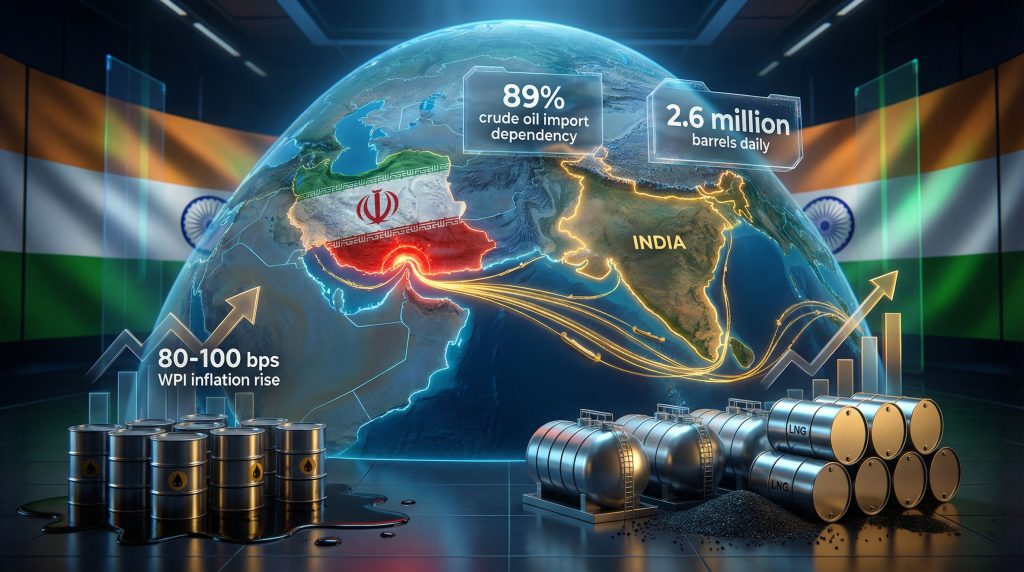
India's energy security architecture reveals profound exposure to Middle Eastern supply chain disruptions, with 89% crude oil import dependency creating systematic vulnerability to regional conflicts. The Strait of Hormuz functions as a critical transit route for approximately 2.6 million barrels daily of Indian crude oil imports, alongside substantial LNG and LPG shipments that support domestic industrial operations.
The 2025 energy import statistics demonstrate the magnitude of this exposure, with India importing $70 billion worth of crude oil and petroleum products from West Asia, supplemented by $9.2 billion in LNG imports representing 68.4% of total LNG requirements. This concentration creates immediate transmission pathways for regional disruptions to affect domestic energy availability and pricing structures.
Key Vulnerability Metrics:
- 89% of crude oil requirements imported
- $70 billion annual West Asia energy imports
- 68.4% of LNG supplies from regional sources
- 2.6 million barrels daily transit dependency
Strategic petroleum reserve utilisation becomes critical during crisis periods, though current reserve capacity provides limited buffer against sustained supply disruptions. The operational reality demonstrates that shipping route alternatives require significantly higher costs and extended delivery timelines, creating immediate economic pressure regardless of physical availability from alternative sources.
Currency Market Transmission Mechanisms
The rupee's movement to an all-time low of 92.33 per US dollar on March 9, 2026, illustrates immediate currency market sensitivity to energy price shocks and regional instability. This depreciation reflects foreign portfolio investment flight-to-safety dynamics triggered by concerns over India's external account vulnerability during periods of elevated energy costs.
Trade deficit expansion occurs mechanically through higher energy import costs, while foreign exchange reserve adequacy faces stress from both increased import bills and potential capital outflow pressures. The simultaneous occurrence of currency weakness and energy price increases creates compounding effects on import-dependent sectors throughout the economy.
Currency Impact Indicators:
- Rupee depreciation to 92.33 per dollar (all-time low)
- 3% decline in Sensex and Nifty indices
- 11-month low for major equity indices
- Foreign portfolio investment withdrawal pressures
The transmission mechanism operates through multiple channels simultaneously: increased dollar demand for energy imports, reduced investor confidence in emerging market currencies during global uncertainty, and structural concerns about India's ability to maintain current account balance stability under sustained higher energy costs.
How Do Oil Price Shocks Cascade Through India's Economy?
Inflation Transmission Pathways
Oil price movements create systematic inflation pressures through both direct energy cost increases and secondary effects across manufacturing and service sectors. Brent crude's surge over 25% to $117 per barrel on March 9, 2026, representing a 50% cumulative increase since conflict began, demonstrates the velocity of price transmission during geopolitical crises.
ICRA analysis provides quantitative frameworks for understanding inflation transmission timelines and magnitudes across different price shock scenarios. Furthermore, recent oil price rally analysis indicates that market dynamics are increasingly influenced by complex geopolitical factors.
Table: Crude Oil Price Impact on Indian Inflation Metrics
| Price Increase | WPI Inflation Rise | CPI Inflation Rise | Timeline |
|---|---|---|---|
| 10% | 80-100 bps | 40-60 bps | 3-6 months |
| 25% | 200-250 bps | 100-150 bps | 6-12 months |
| 50% | 400-500 bps | 200-300 bps | 12-18 months |
The transmission process depends critically on government policy decisions regarding retail selling price adjustments for petrol, diesel, and LPG. Administrative price controls create divergence between wholesale price index impacts, which reflect immediate input cost changes, and consumer price index effects, which depend on policy-mediated retail price adjustments.
ICRA's baseline forecasts for FY27 assume 2.7% WPI inflation and 4.0% CPI inflation prior to conflict escalation, with both metrics now subject to significant upside revisions depending on conflict duration and oil price sustainability above historical averages.
Sectoral Cost Structure Vulnerabilities
Manufacturing sectors with high petroleum derivative content face immediate input cost pressures that compound over time through supply chain integration. Bank of Baroda analysis indicates that permanent 10% fuel price increases generate approximately 1-1.5% WPI inflation including secondary effects, given fuel products' 10% weight in the index.
Secondary Inflation Pathways:
- Petroleum derivatives in plastic packaging and manufacturing
- Transportation cost increases across all sectors
- Power generation expenses for gas-fired facilities
- Agricultural input costs through fertiliser price transmission
The cascading effects operate through interconnected industrial processes where energy serves both as direct input and indirect cost component through logistics, heating, and chemical processing requirements. Industries utilising crude oil, gas, naphtha, or bitumen as primary inputs face immediate margin compression or forced price increases to maintain operational viability.
Which Industries Face Maximum Economic Disruption?
Energy-Intensive Manufacturing Sectors
Fertiliser manufacturing demonstrates critical vulnerability through dependence on Gulf LNG supplies for ammonia production, with approximately one-third of globally traded urea passing through the Strait of Hormuz. This concentration creates immediate risk for agricultural input availability and pricing, particularly given India's substantial fertiliser subsidy commitments.
Industry executives confirm that Strait of Hormuz closure restrictions create direct fertiliser price pressures through constrained nitrogenous fertiliser shipment delivery. The mechanical relationship between Gulf natural gas availability and domestic fertiliser production capacity means supply disruptions translate directly into increased government subsidy burdens or farmer input cost increases.
Manufacturing Sector Vulnerabilities:
- One-third of global urea trade through Hormuz
- Critical Gulf LNG dependency for ammonia production
- Direct government subsidy exposure
- Limited alternative supplier arrangements
Petrochemical industries face dual exposure through both feedstock cost increases and energy cost escalation for processing operations. Steel and aluminium sectors experience similar pressures, with aluminium prices reaching $3,544 per metric tonne on March 9 (highest since March 2022) before moderating to approximately $3,394, demonstrating immediate commodity market sensitivity to supply route disruptions.
Consumer Goods and Services Impact Assessment
The restaurant and quick-service sectors provide immediate examples of operational constraint responses to energy supply uncertainty. The National Restaurant Association of India's guidance to 500,000 members requesting consideration of shorter operating hours and reduced deep-frying operations demonstrates direct business model adaptations to LPG availability concerns.
FMCG companies face dual pressures from Iran conflict: rising petroleum-based packaging costs and potential shrinkflation strategies. Quick-service restaurants may reduce operating hours due to LPG supply constraints, while pharmaceutical prices could surge 30% from API supply disruptions.
Bangalore Hotels Association reports of abrupt commercial LPG supply cessation and potential hotel closures illustrate the immediate operational impacts on service sector businesses. JM Financial analysis indicates that major quick-service chains including McDonald's, Domino's Pizza, and KFC face multiplicative risks from rising input costs, reduced customer traffic, and forced menu modifications.
Service Sector Disruption Indicators:
- 500,000 restaurant association members affected
- Operational hour reduction recommendations
- Menu modification requirements
- Potential hotel closure threats in major cities
Export-Dependent Industries Under Stress
Basmati rice exports demonstrate immediate trade flow disruption with approximately 200,000 tonnes stranded in transit and equal amounts held at Indian ports due to shipping route complications. The $747 million West Asia rice export market and $51 million tea export market face immediate logistical constraints and elevated freight costs.
The diamond cutting and polishing industry, with 28% of cut and polished diamond exports directed to West Asia, experiences 2-3 day shipment delays from flight cancellations, though ICRA analysis indicates no immediate order cancellations or deferrals as of reporting periods.
Export Impact Metrics:
- 200,000 tonnes basmati rice stranded in transit
- 200,000 tonnes additional rice held at Indian ports
- $747 million West Asia rice export market affected
- 28% of diamond exports to West Asian markets
Textile industry freight cost escalation affects competitiveness in price-sensitive international markets, while pharmaceutical exports face potential disruption through API supply chain constraints and elevated shipping costs.
What Are the Macroeconomic Stability Implications?
Current Account Balance Deterioration Scenarios
The mechanical expansion of import bills under different oil price trajectories creates systematic pressure on India's external account balance. With analyst forecasts suggesting crude prices could range $100-150 per barrel if Hormuz shipping faces significant disruption, the current account deficit faces substantial widening pressure.
Export competitiveness erosion occurs simultaneously through domestic cost inflation affecting manufacturing sectors and elevated logistics costs for trade-dependent industries. The combination creates adverse current account dynamics that compound currency pressure and foreign exchange reserve utilisation. Additionally, US oil production decline has created additional supply uncertainties that amplify these pressures.
Current Account Stress Factors:
- Import bill expansion under higher energy costs
- Export competitiveness reduction through cost inflation
- Logistics cost increases affecting trade margins
- Potential remittance flow disruption from Gulf employment
Remittance flows from Gulf employment face potential disruption if regional economic conditions deteriorate, removing a traditional current account balance support mechanism during periods of elevated energy import costs.
Fiscal Policy Response Mechanisms
Government subsidy burden expansion represents immediate fiscal pressure under sustained higher energy costs. LPG subsidies, fertiliser support mechanisms, and potential fuel price stabilisation measures may strain fiscal consolidation targets by 0.5-1.0% of GDP depending on policy responses and oil price sustainability.
Government subsidy burden could expand significantly if crude prices sustain above $100/barrel. LPG subsidies, fertiliser support, and potential fuel price stabilisation measures may strain fiscal consolidation targets by 0.5-1.0% of GDP.
The government's March 10 notification prioritising domestic natural gas allocation to LPG manufacturing units demonstrates immediate policy adaptation to supply constraints. Additionally, Essential Commodities Act invocation provides administrative tools for production, supply, and distribution control during crisis periods.
Fiscal Response Measures:
- Domestic gas allocation priority revisions
- Essential Commodities Act implementation
- Subsidy mechanism adjustments
- Administrative price control utilisation
Monetary Policy Dilemma Framework
The Reserve Bank of India faces complex trade-offs between inflation targeting mandates and growth support requirements during supply-side inflation episodes. Traditional monetary policy transmission becomes less effective when inflation originates from external supply shocks rather than domestic demand pressures.
Interest rate policy decisions must balance inflation control objectives against potential economic growth impacts from monetary tightening during periods when businesses already face elevated input costs. Exchange rate intervention capacity requires careful calibration to preserve foreign exchange reserves while managing currency volatility.
How Do Financial Markets Price Iran Conflict Risks?
Equity Market Sector Rotation Patterns
Financial markets demonstrate immediate sector-specific repricing based on conflict exposure and benefit patterns. Energy upstream stocks typically outperform during oil price increases, while sectors with high energy cost sensitivity experience margin compression expectations and valuation pressure.
The 3% decline in Sensex and Nifty indices on March 9, reaching 11-month lows, reflects broad market concern about economic impacts rather than sector-specific effects. Banking sector vulnerability emerges through potential credit cost increases if energy-dependent borrowers face financial stress.
Market Performance Indicators:
- 3% major index decline on March 9
- 11-month low levels reached
- Broad-based selling across sectors
- Energy sector relative outperformance
Infrastructure and aviation sectors face particular margin compression risks through elevated fuel costs, while defence sector positioning may benefit from increased geopolitical risk premiums and potential government spending increases. Furthermore, broader tariffs and market impact create additional complexity for investors navigating multiple risk factors.
Bond Market Risk Premium Adjustments
Government securities markets experience yield curve adjustments reflecting both inflation expectations and fiscal burden concerns from increased subsidy requirements. Corporate bond spreads widen particularly for energy-intensive industries facing immediate input cost pressures.
Foreign investor positioning changes create additional volatility in bond markets as international capital assesses India's external stability during periods of elevated energy import costs. Credit rating implications emerge for corporations with significant energy cost exposure and limited pricing power transmission capabilities.
The next major ASX story will hit our subscribers first
What Regional Economic Integration Risks Emerge?
South Asian Trade Network Disruptions
Chabahar Port development timeline faces potential delays as regional stability concerns affect infrastructure investment confidence and operational planning. Central Asia connectivity projects encounter increased uncertainty regarding Iranian transit route viability for regional trade integration.
Regional energy cooperation frameworks require reassessment as traditional Gulf supply arrangements face disruption risks. Alternative transit route development priorities shift toward non-Iranian pathways, potentially increasing regional integration costs and complexity.
Regional Integration Challenges:
- Chabahar Port development uncertainties
- Central Asia connectivity project risks
- Transit route diversification requirements
- Energy cooperation framework modifications
Middle East Economic Partnership Vulnerabilities
The $4.5 billion electronics export relationship with UAE faces potential stress testing as regional trade flows encounter elevated logistics costs and operational uncertainties. Saudi Arabia energy cooperation continuity requires evaluation under different conflict duration scenarios. Moreover, new Saudi exploration licenses may affect the regional energy landscape and bilateral cooperation frameworks.
Qatar LNG supply agreement renegotiation pressures emerge as demonstrated by Petronet LNG delivery suspensions from March 4, 2026, due to vessel movement restrictions. The $2.31 billion Iran bilateral trade relationship faces immediate sustainability questions under current conflict conditions.
Partnership Assessment Metrics:
- $4.5 billion UAE electronics export exposure
- Qatar LNG supply agreement pressures
- $2.31 billion Iran trade relationship
- Saudi energy cooperation evaluation requirements
Which Economic Policy Tools Can Mitigate Impact?
Strategic Petroleum Reserve Optimisation
Current reserve capacity utilisation strategies provide limited buffer against sustained supply disruptions, requiring optimisation of import timing and supplier diversification programmes. Emergency release coordination mechanisms need preparation for extended conflict scenarios.
Import timing arbitrage opportunities may emerge through forward contracting during temporary price moderation periods, though this requires careful balance against storage capacity constraints and financial risk management considerations.
Reserve Management Strategies:
- Current capacity utilisation optimisation
- Import timing arbitrage assessment
- Supplier diversification acceleration
- Emergency release coordination preparation
Industrial Policy Adaptation Strategies
Manufacturing competitiveness support measures become critical for sectors facing elevated input costs without corresponding pricing power increases. Supply chain resilience investment incentives may accelerate adoption of alternative sourcing arrangements and operational efficiency improvements.
Energy allocation priority revisions, as demonstrated in the March 10 domestic natural gas notification, provide immediate policy tools for critical sector support during supply constraint periods. Consequently, the role of OPEC production impact becomes increasingly relevant for policy planning and strategic response coordination.
What Long-Term Structural Changes May Result?
Energy Security Architecture Redesign
Renewable energy transition acceleration assumes greater strategic importance as external energy dependency creates systematic economic vulnerability during geopolitical instability. Nuclear power capacity expansion timelines may receive renewed policy attention as domestic energy security priorities increase.
Coal utilisation strategy modifications balance environmental objectives against energy security requirements, while energy efficiency mandate strengthening provides demand-side response capabilities for external supply shocks.
Energy Architecture Modifications:
- Renewable energy transition acceleration
- Nuclear capacity expansion evaluation
- Coal strategy environmental balance
- Efficiency mandate strengthening
Trade Relationship Diversification Requirements
Alternative supplier market analysis reveals cost premiums associated with geographic diversification, requiring systematic evaluation of security-cost trade-offs across different commodity categories.
Table: Alternative Supplier Market Analysis
| Commodity | Current Gulf Share | Alternative Sources | Cost Premium |
|---|---|---|---|
| Crude Oil | 45% | Americas, Africa | 5-15% |
| LNG | 68% | Australia, Russia | 10-25% |
| Fertilisers | 35% | China, Eastern Europe | 8-20% |
The cost premium analysis demonstrates that energy security improvements require acceptance of higher import costs or domestic production capacity development across multiple commodity categories.
How Should Businesses and Investors Respond?
Corporate Risk Management Framework
Energy cost hedging strategy optimisation becomes critical for businesses with significant petroleum input exposure, requiring careful evaluation of hedging instruments and counterparty risks during volatile periods. Supply chain geographic diversification planning needs acceleration despite associated cost increases.
Working capital management during volatility requires increased focus on inventory optimisation and payment term negotiations as input cost fluctuations create cash flow uncertainties. Pricing power assessment across sectors helps identify businesses capable of cost pass-through versus those facing margin compression.
Risk Management Priorities:
- Energy cost hedging optimisation
- Supply chain diversification acceleration
- Working capital volatility management
- Pricing power capability assessment
Investment Portfolio Positioning Guidelines
Defensive sector allocation strategies favour businesses with pricing power and limited energy exposure, while avoiding sectors dependent on discretionary consumer spending that may contract under inflation pressure. Currency hedging considerations become more important for businesses with foreign currency revenue exposure.
Commodity exposure management techniques require evaluation for both direct commodity investments and indirect exposure through equity positions in commodity-dependent businesses. Geopolitical risk premium incorporation methods need systematic application across asset allocation decisions.
Navigating Economic Uncertainty Through Strategic Adaptation
Short-Term Adaptation Priorities
Immediate cost management and operational efficiency improvements provide defensive positioning against input cost increases, while supply chain flexibility enhancement reduces vulnerability to specific geographic disruptions. Financial risk mitigation strategies focus on cash flow protection and capital preservation during volatile periods.
Government policy response monitoring becomes critical as administrative measures evolve to address supply constraints and price pressures. Business adaptation requires continuous assessment of regulatory changes and subsidy mechanism modifications.
Long-Term Resilience Building
Structural dependency reduction initiatives require systematic evaluation of domestic production capabilities and alternative sourcing arrangements across critical input categories. Alternative market development investments help reduce concentration risks in existing trade relationships.
Technology adoption for efficiency gains provides competitive advantages during periods of elevated input costs, while regional cooperation framework strengthening offers diversified partnership opportunities for trade and investment flows. Recent analysis from India Briefing provides detailed insights into the economic transmission mechanisms affecting India's trade relationships.
The impact of Iran conflict on India economy demonstrates the complex interconnections between regional geopolitical stability and domestic economic performance. Understanding these transmission mechanisms enables more effective preparation for similar future scenarios through strategic diversification and operational adaptation measures. Furthermore, comprehensive economic analysis by regulatory officials emphasises the importance of maintaining policy flexibility during uncertain geopolitical periods.
Disclaimer: This analysis contains forward-looking statements and projections based on current information and assumptions. Actual economic impacts may vary significantly based on conflict duration, policy responses, and global market conditions. Readers should conduct independent analysis before making investment or business decisions.
Ready to Navigate Volatile Global Markets?
Discovery Alert's proprietary Discovery IQ model delivers real-time alerts on significant ASX mineral discoveries, helping investors identify actionable opportunities that emerge during periods of economic uncertainty and market volatility. Visit Discovery Alert's discoveries page to see how major mineral discoveries have historically provided substantial returns during challenging market conditions, then begin your 14-day free trial to position yourself ahead of market movements.