July 27, 2026
When Chokepoints Become Weapons: The Iran Conflict and the Fracturing of Global Energy Supply Chains
Every few decades, global energy markets confront a scenario that stress-tests the assumptions underpinning the entire system. The vulnerability is rarely theoretical. It exists in the architecture itself: a significant share of the world's crude oil and liquefied natural gas funnels through a single 33-kilometre passage between the Persian Gulf and the Gulf of Oman. For decades, the Strait of Hormuz functioned as the world's most consequential maritime corridor precisely because no realistic alternative could absorb its throughput. The Iran conflict and Strait of Hormuz shipping disruptions unfolding throughout 2026 have transformed that latent vulnerability into an active crisis, with consequences radiating across every major oil-importing economy on the planet.
When big ASX news breaks, our subscribers know first
The Geographic Reality That Energy Markets Cannot Escape
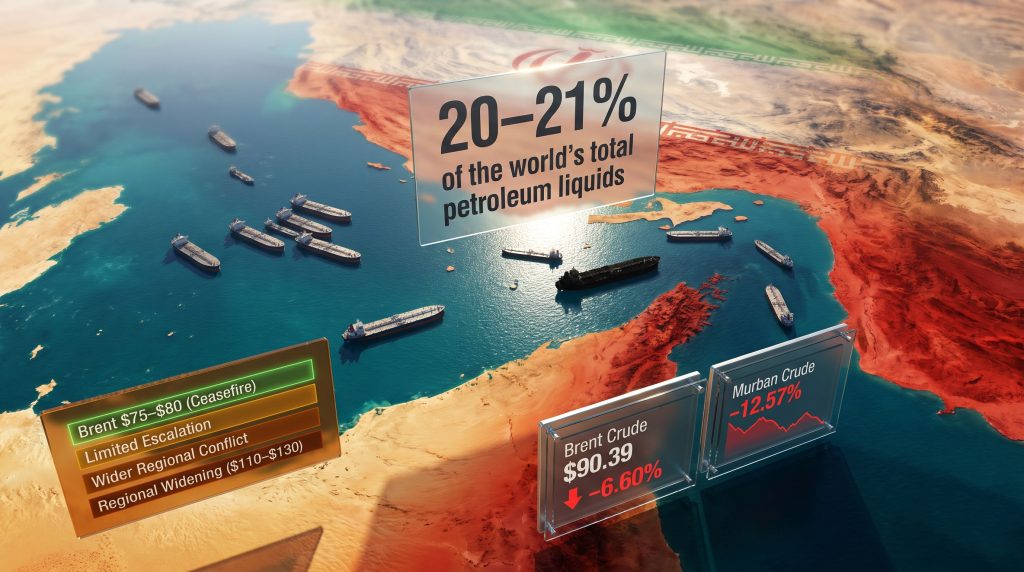
Understanding the scale of the current disruption requires clarity about what the strait actually carries. Under normal conditions, approximately 20 to 21% of the world's total petroleum liquids transit this narrow passage daily, alongside a substantial portion of global LNG exports originating primarily from Qatar. Saudi Arabia, Iraq, Kuwait, the UAE, and Iran all depend on this corridor as their primary maritime export route.
The UAE's Habshan-Fujairah pipeline represents the only meaningful bypass infrastructure, with a capacity of roughly 1.5 million barrels per day. Against a normal transit volume of 17 to 20 million barrels per day, this pipeline provides marginal relief at best. The structural gap between bypass capacity and normal throughput is not a recent oversight; it reflects decades of prioritised development of export capacity through the strait itself rather than around it.
Why This Crisis Differs from Prior Hormuz Tensions
The Strait of Hormuz has featured in geopolitical risk calculations since at least the early 1980s. Tension spikes in 2011–2012 and again in 2019 produced significant oil price volatility, but neither episode resulted in sustained physical disruption to commercial shipping. The critical distinction is that during those periods, Iran threatened interdiction without executing it at scale. For a broader view of how crude oil trade geopolitics shape these dynamics, the underlying structural pressures have been building for some time.
The 2026 crisis crossed a structural threshold. Iranian forces have moved from rhetorical posturing to active vessel interdiction operations, with Iranian authorities stopping six ships attempting to transit in a single 24-hour window as of July 26, 2026. That operational shift fundamentally altered the risk calculus for commercial shipping operators, insurers, and the refiners that depend on Gulf crude deliveries. When maritime insurers withdraw coverage or impose war-risk premiums that render voyages commercially unviable, the practical effect on global supply is functionally indistinguishable from a physical blockade, regardless of whether the waterway is technically open. The UNCTAD analysis of Strait of Hormuz disruptions provides further context on the broader trade and development implications of such scenarios.
Five Months of Escalation: How the Crisis Compounded
The current disruption traces its origins to a coordinated military campaign against Iranian targets that commenced approximately five months before late July 2026. The conflict escalated through nearly two consecutive weeks of uninterrupted bombardments prior to July 24, 2026, before a tactical pause was introduced. Iran's response evolved from targeted strikes against U.S. regional allies toward a broader maritime interdiction strategy in the Persian Gulf.
Tehran simultaneously opened diplomatic channels with Oman, which shares the southern coastline of the strait's narrowest passage, to establish frameworks governing shipping access. A proposed mechanism involving service fees on transiting vessels has emerged from these Iran-Oman discussions, a development that Washington has formally opposed. Oman's geographic position has elevated it to the role of potential neutral intermediary in any negotiated shipping arrangement.
The Weapons Stockpile Factor: A Structural Constraint on Escalation
A dimension of the conflict that has received less analytical attention than it warrants is the reported depletion of U.S. interceptor missile stockpiles. Multiple U.S. media organisations, including The New York Times, reported that weapons inventories have been drawn down through a combination of Ukraine conflict supply commitments, sustained Houthi engagement operations, and prior Iran campaign activity. U.S. officials publicly acknowledged that stockpile conditions contributed to the decision to pause military operations, introducing what amounts to a structural ceiling on near-term U.S. escalation capacity.
This constraint is significant for energy market scenario planning. A conflict in which one side faces ammunition constraints introduces asymmetric incentive structures: the party with depleted stockpiles has stronger near-term incentives to seek negotiated outcomes, while the adversary's calculus shifts accordingly.
The Houthi Dimension: A Second Front That Compounds the Crisis
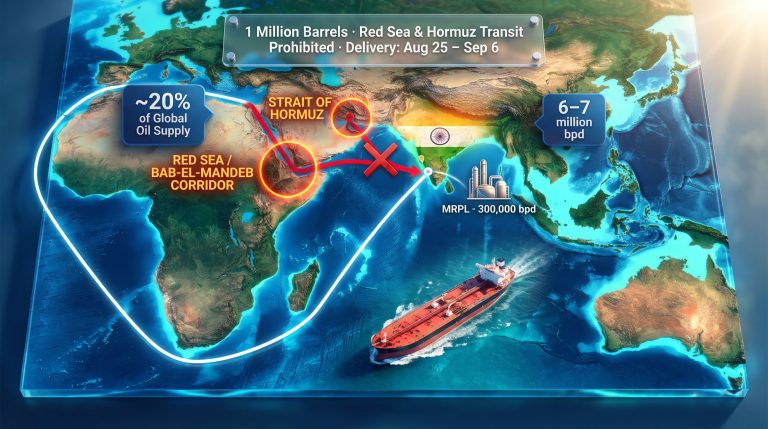
The Iran conflict and Strait of Hormuz shipping disruptions cannot be analysed in isolation from simultaneous Houthi operations across the Red Sea and Bab el-Mandeb corridor. The two disruption zones together constitute what Standard Chartered analysts have characterised as a dual-chokepoint scenario requiring oil markets to price in simultaneous supply risks from two separate maritime passages. Furthermore, understanding the full scope of these oil market disruption impacts requires examining both corridors together.
Saudi Red Sea crude exports have declined by 41% from their March 2026 peak, with tanker operators rerouting cargo through the Suez Canal or disabling AIS tracking systems to transit the Bab el-Mandeb undetected. A Houthi threat to impose a full Red Sea blockade triggered a nearly 4% single-session oil price spike on the threat alone, before the attack pause partially reversed those gains.
The Houthi dimension introduces a non-state escalation vector that neither Washington nor Tehran can fully manage. Iran's stated posture of retaliating proportionally to U.S. actions creates a mechanistic escalation dynamic, but proxy actors operating with significant operational autonomy can inject unpredictable variables into any de-escalation framework.
The Price Impact in Numbers
The market response to the attack pause illustrated the degree to which geopolitical risk premiums have become the dominant pricing variable in global crude markets, overriding traditional supply-demand fundamentals:
| Benchmark | Price Movement | Level |
|---|---|---|
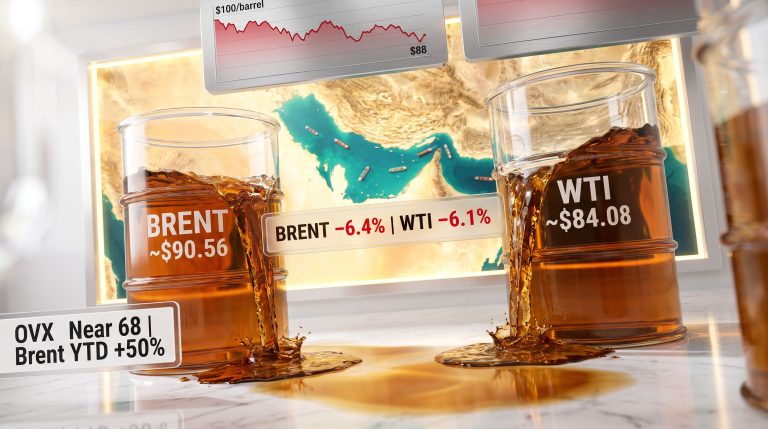
| WTI Crude | -6.05% on ceasefire signals | ~$83.91/bbl |
| Brent Crude | -6.60% on ceasefire signals | ~$90.39/bbl |
| Murban Crude | -12.57% single-session | ~$84.85/bbl |
| European Natural Gas | -8.00% on same day | Significant intraday decline |
| Oil (peak disruption) | Broke above $100/bbl | During most acute supply phase |
The extraordinary 12.57% single-session decline in Murban Crude, the Abu Dhabi benchmark, reflects just how aggressively Gulf-specific risk premiums had been embedded during peak disruption. Murban's elevated war-risk discount compared to WTI and Brent demonstrates that markets were pricing geographic supply source risk, not just aggregate supply tightness. Monitoring WTI and Brent futures remains essential for tracking how these premiums evolve in real time.
Brent moving more than $10 in either direction within days reflects geopolitical risk premiums operating as the primary pricing mechanism, temporarily disconnected from underlying inventory levels or OPEC production data.
LNG: The Underappreciated Crisis Within the Crisis
Media coverage of the Hormuz disruption has focused predominantly on crude oil, but the strait's role as the primary export route for Qatari LNG makes the disruption equally severe for global gas markets. Qatar is one of the world's largest LNG producers, and sustained interference with Hormuz transit has forced LNG importers across Asia and Europe to scramble for alternative supply at elevated spot prices. The broader LNG supply implications for global energy security are considerable and far-reaching.
Japan's power prices surged to a 3.5-year high directly attributable to LNG supply tightening caused by Hormuz disruption, as Japanese utilities depend on Gulf LNG for a substantial portion of their power generation fuel. European gas storage levels are tracking at their weakest position in 15 years heading into the winter season, with the Equinor CEO publicly warning that Europe may miss its winter storage targets. The Hormuz disruption has compounded an already fragile European supply picture.
LNG importers have simultaneously sought to renegotiate contract terms with Qatari and UAE suppliers, reflecting the degree to which sustained disruption is restructuring commercial relationships that were previously considered stable.
The next major ASX story will hit our subscribers first
Which Economies Carry the Greatest Exposure
| Country | Hormuz Dependency | Primary Risk | Current Response |
|---|---|---|---|
| Japan | Very High | ~90% of crude imports transit Hormuz | Alternative LNG sourcing; power prices at 3.5-year high |
| South Korea | Very High | Majority of crude and LNG via Gulf | Strategic reserve drawdowns; spot LNG procurement |
| India | High | Major Gulf crude importer | Angola/Venezuela crude sourcing; elevated refining margins |
| China | High | Large Gulf crude volumes | Accelerating Russian crude procurement; strategic stockpiling |
| Pakistan | Very High | Limited alternative supply infrastructure | Seeking non-Gulf alternatives; domestic fuel price crisis |
| Europe | Medium-High | Qatar LNG exposure | Weakest gas storage in 15 years; spot market pressure |
India has moved with notable urgency, redirecting procurement toward Angolan and Venezuelan crude as Middle Eastern supply lines tighten. Indian refiners are simultaneously capitalising on elevated margins, with fuel exports projected to surge as global supply constraints persist. China has pursued a dual-track strategy, accelerating Russian crude purchases through existing pipeline infrastructure while Chinese-flagged tankers continue pushing through Bab el-Mandeb despite Houthi operational threats.
Pakistan faces the most acute structural challenge, with limited alternative supply infrastructure and a domestic fuel price crisis generating political pressure severe enough to prompt nationwide transport strike threats.
How the Shipping Industry Is Adapting
Commercial shipping operators have deployed several adaptation mechanisms in response to the Iran conflict and Strait of Hormuz shipping disruptions, each carrying its own cost and risk profile:
- Cape of Good Hope rerouting: Vessels diverting around Africa add 10 to 14 days to voyage times, significantly increasing fuel costs and tying up tanker capacity that would otherwise be available for additional voyages.
- AIS transponder deactivation: Tankers operating without active tracking signals to reduce targeting risk complicate cargo monitoring, insurance underwriting, and port arrival scheduling.
- Anchorage waiting strategies: Some operators are holding vessels in Gulf anchorages rather than attempting transit, creating downstream supply delays for Asian refinery chains.
- War risk insurance surcharges: Underwriters have imposed substantial premiums on Persian Gulf and Red Sea routes, with some voyages becoming effectively uninsurable at commercially viable rates.
The aggregate effect of these adaptations is a sharp increase in the effective cost of moving Gulf crude to Asian refiners, a cost that transmits directly into refined product pricing at retail level. Australian gasoline prices reaching their highest level since March illustrates how Hormuz disruption propagates through to consumer fuel markets in economies that import refined products rather than crude oil directly. Reviewing current crude oil prices helps contextualise just how significantly these logistics costs are reshaping the broader pricing environment.
Corporate Winners and Losers in a Supply-Shock Environment
Not all participants in global energy markets suffer from supply disruptions. TotalEnergies reported a 68% surge in profit during the period of elevated oil prices, demonstrating how upstream producers with diversified portfolios benefit from supply-shock pricing dynamics. Equinor's profit surged 93% during the same period as oil and gas price spikes generated significant windfall earnings.
ADNOC has issued multiple crude tenders, including its seventh since June 2026, signalling continued export ambition despite elevated Hormuz and Red Sea risks. U.S. refinery utilisation reached 96.2%, approaching maximum operational capacity, as domestic and export fuel demand surged in response to global supply tightening.
The divergence between upstream producers capturing windfall revenues and downstream consumers absorbing higher costs represents a structural feature of supply-shock economics, not an anomaly.
Three Scenarios for the Next 90 Days
A U.S.-Israeli leadership meeting scheduled for July 28, 2026, introduced a time-bound dimension to the tactical pause. The pathway forward from that meeting shapes three plausible scenarios with materially different energy market implications:
Scenario 1: Negotiated De-escalation
A diplomatic framework emerges from back-channel talks, producing a partial ceasefire and gradual shipping resumption. Brent crude retreats toward the $75 to $85 range as risk premiums unwind, though structural insurance and routing costs persist. Probability: Low to Medium.
Scenario 2: Frozen Conflict with Controlled Disruption
The most probable near-term outcome. A prolonged tactical pause in which Iran maintains partial strait access control and Houthi operations continue at reduced intensity. Oil prices stabilise in an elevated range. The shipping industry adapts to a constrained Hormuz access environment as the new operating baseline. Probability: Medium.
Scenario 3: Renewed Regional Escalation
U.S. strikes resume at higher intensity, or Iran activates broader proxy networks. Additional state actors are drawn into the conflict, producing supply disruption exceeding current market pricing. Analysts have modelled Brent scenarios ranging from $110 to $130+ per barrel under prolonged full closure, depending on strategic reserve release speed, rerouting capacity, and demand destruction effects. Probability: Low to Medium.
According to Al Jazeera's reporting on post-conflict shipping recovery, the global shipping industry is already looking ahead to what a return to status quo might realistically require, though structural uncertainties remain considerable.
Disclaimer: Scenario probability assessments and price projections represent analytical frameworks based on available information as of late July 2026. Actual outcomes will depend on diplomatic, military, and political developments that are inherently uncertain. This article does not constitute financial or investment advice.
The Long-Term Architecture Problem
Beyond the immediate crisis, the 2026 disruption has forced a structural reckoning with the concentration of global export infrastructure through a single chokepoint. Despite decades of awareness, no scalable alternative routing infrastructure has been constructed to meaningfully reduce Hormuz dependency for the Gulf's major producers.
Nations most exposed to Hormuz disruption are now reassessing long-term LNG and crude contract structures, with geographic diversification of supply sources emerging as a core procurement principle. The crisis has simultaneously demonstrated the limits of financial hedging as a risk management tool when physical supply disruption is severe enough to overwhelm paper market mechanisms.
The longer-term implication is an accelerated strategic conversation about pipeline diversification, strategic reserve expansion, and LNG supply source diversification that will shape energy infrastructure investment decisions across Asia and Europe for years beyond the immediate conflict timeline.
For ongoing coverage of the Iran conflict, Strait of Hormuz shipping developments, and their implications for global crude and gas markets, OilPrice.com provides real-time reporting and analysis.
Want to Stay Ahead of the Next Major Resource Discovery Triggered by Global Supply Shocks?
When geopolitical crises reshape commodity markets at this speed, identifying emerging ASX mineral opportunities before the broader market requires real-time intelligence — Discovery Alert's proprietary Discovery IQ model scans daily ASX announcements instantly, translating complex discovery data into actionable insights for traders and investors alike. Explore historic examples of what major mineral discoveries can return and begin your 14-day free trial today to secure a market-leading edge.