June 27, 2026
The Geography of Leverage: How a 33-Kilometre Passage Became the World's Most Dangerous Chokepoint
There is a category of geographic features that no amount of diplomatic ingenuity, military technology, or market innovation has ever been able to fully neutralise. Strategic maritime chokepoints belong to this category. Throughout history, whoever commands a narrow passage connecting major trading regions commands something far more valuable than territory: they command dependency. Iran control of shipping in the Strait of Hormuz is the most consequential example of this principle in the modern energy era, and the events unfolding through 2026 have tested that principle to its absolute limit.
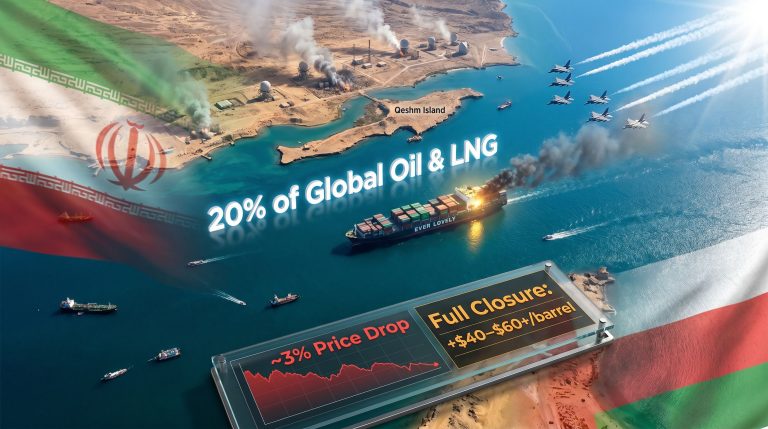
Under normal operating conditions, approximately 20 to 21 percent of global oil consumption moves through this passage daily. That translates to roughly 100 tanker transits every 24 hours through a corridor measuring just 33 kilometres at its narrowest navigable point. No pipeline network, no alternative sea route, and no combination of strategic petroleum reserves has ever been designed to absorb the full impact of a sustained Hormuz closure. The strait is not merely important. It is structurally irreplaceable at scale.
When big ASX news breaks, our subscribers know first
What Happened on February 28, 2026 and Why the Numbers Tell the Real Story
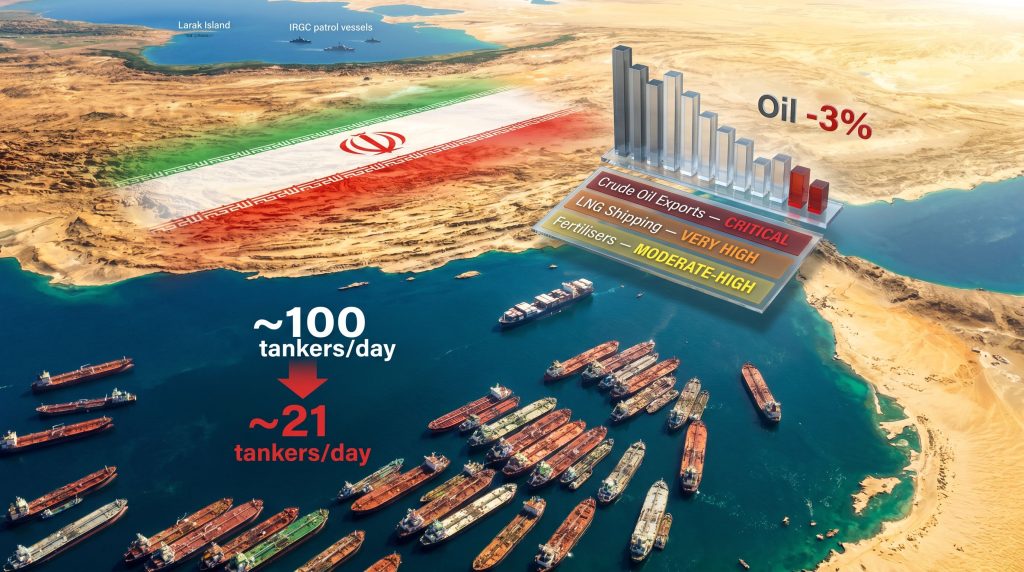
Following US-Israeli strikes on Iran on February 28, 2026, the Strait of Hormuz underwent a traffic collapse that energy analysts had theorised for decades but never witnessed in real time. Daily tanker transits dropped from approximately 100 vessels to just 21, representing a reduction of nearly 80 percent in throughput. Simultaneously, roughly 400 vessels became stranded in the Gulf of Oman as the transit regime broke down and insurance frameworks struggled to adapt.
The commodity exposure was not limited to crude oil. The disruption trapped:
- Liquefied natural gas cargoes critical to European and Asian import markets
- Petrochemical shipments feeding downstream manufacturing supply chains
- Fertiliser exports with direct consequences for agricultural input costs across South Asia, East Africa, and Southeast Asia
- Refined fuel products destined for economies with minimal domestic refining capacity
Saudi Aramco's Ras Tanura terminal, recognised as the world's largest crude oil export facility, halted loadings entirely. The shutdown lasted approximately four months before partial resumption of crude loadings was reported on June 27, 2026. The restart was a meaningful data point, but it did not resolve the structural question at the centre of the crisis: who actually governs transit through the Strait of Hormuz, and on what legal basis? Understanding the crude oil geopolitical dynamics at play here is essential context for any serious analysis of this disruption.
Iran's Claimed Authority vs. International Maritime Law: A Fundamental Conflict
The Iran control of shipping in the Strait of Hormuz debate is not simply a geopolitical dispute. It is a collision between two incompatible governance frameworks, one rooted in physical enforcement capacity and the other in the architecture of international maritime law.
| Dimension | Iran's Position | International Legal Position |
|---|---|---|
| Legal Basis | Coastal state sovereignty; bilateral deal terms | UNCLOS guarantees transit passage rights |
| UNCLOS Ratification | Iran has not ratified UNCLOS | US, UAE, and Gulf states invoke UNCLOS norms |
| Toll Collection | Asserts right to charge vessel transit fees | Universally rejected by maritime law consensus |
| Physical Control | IRGC enforces permission-based access | US Navy and Gulf allies reject Iran's regulatory claims |
| Transit Authority | Persian Gulf Strait Authority established | Not recognised under international law |
The Transit Passage Doctrine Explained
The United Nations Convention on the Law of the Sea, known as UNCLOS, establishes a legal category called transit passage that applies specifically to international straits connecting two areas of high seas or exclusive economic zones. Under UNCLOS Article 38, this right is non-suspendable, meaning coastal states cannot legally halt, restrict, condition, or charge for transit through such corridors.
The distinction between transit passage and innocent passage is critical and often misunderstood. According to Chatham House analysis on strait shipping and law, the legal nuances here carry enormous practical consequences for global commerce:
- Innocent passage applies in territorial waters and can be suspended by coastal states under defined conditions
- Transit passage applies in international straits and cannot be suspended under any circumstances
- The Strait of Hormuz qualifies as an international strait under UNCLOS criteria, connecting the Persian Gulf to the Gulf of Oman and onward to international waters
Iran has not ratified UNCLOS. Tehran instead relies on bilateral and regional frameworks, asserting that its status as a coastal state grants it special governance rights over the passage. This argument is rejected by the United States, the United Arab Emirates, and every Gulf Cooperation Council member state. Maritime law scholars broadly regard Iran's toll regime as having no basis in prevailing international law, regardless of UNCLOS ratification status, since transit passage norms are widely considered to reflect customary international law binding on all states.
Key distinction: Iran holds zero recognised legal authority over international shipping in the Strait of Hormuz under prevailing maritime law, yet exercises de facto physical control through military enforcement, threat projection, and a bureaucratic permission system. These two realities are in direct and unresolved conflict.
The Persian Gulf Strait Authority: Bureaucracy as Coercion
Iran established the Persian Gulf Strait Authority as an administrative mechanism to process vessel transit requests. In practice, the authority requires ship operators to obtain IRGC Navy approval before entering the strait. The conditions attached to this approval process are not technical or safety-related. Iran has articulated four structural conditions for normalised strait passage:
- Financial compensation for war damages attributed to US and Israeli strikes
- Full withdrawal of US military forces from the Gulf region
- International recognition of Iran's nuclear enrichment rights
- Removal of economic sanctions
None of these conditions can be resolved through a shipping company's compliance department. They are foreign policy demands dressed in bureaucratic language, and their effect is to make authorised passage structurally inaccessible for the vast majority of commercial operators.
How the IRGC Enforces Control Without a Legal Mandate
The Islamic Revolutionary Guard Corps Navy did not need international legal recognition to establish physical dominance over the strait. Its enforcement architecture rests on geographic advantage and asymmetric threat projection rather than legal authority.
Iran's strategic position is reinforced by control over seven island positions within and adjacent to the strait, providing overlapping coverage for missile systems, drone surveillance, and naval interdiction operations. This physical dominance allows the IRGC to credibly threaten any vessel attempting unauthorised transit, regardless of the flag state or the legal merit of Iran's claims. The geopolitical mining landscape offers further parallels for how physical geographic control continues to trump legal frameworks across strategic resource corridors.
The dual-corridor system that has emerged illustrates how this control operates in practice:
- Northern corridor: Runs near Larak Island under direct IRGC coordination, requiring operators to engage military channels
- Southern corridor: Follows a path aligned with Omani diplomatic arrangements, requiring government-to-government coordination rather than direct IRGC approval
The practical distinction between these routes is not primarily safety. It is political. The northern route legitimises IRGC authority. The southern route routes responsibility through Oman's diplomatic standing. Neither route offers full commercial protection.
The Insurance Mechanism: More Effective Than a Physical Blockade
One of the least widely understood aspects of Iran's control strategy is that it does not require Iran to physically stop every vessel. It requires only that the marine insurance market concludes that transit carries unacceptable risk.
War risk insurance premiums function as a de facto gatekeeping mechanism. When underwriters void or refuse to issue policies for vessels transiting a specific corridor, commercial operators cannot move cargo regardless of their willingness to transit physically. This makes the insurance market, rather than the IRGC Navy alone, the primary instrument through which Iran's effective closure is maintained.
The June 26, 2026 incident involving the Singapore-flagged Ever Lovely, operated by Taiwan's Evergreen Marine, demonstrated this dynamic in stark terms. The vessel was struck by an unknown projectile near Oman while following a route recommended by the UK Maritime Trade Operations (UKMTO). No personnel were injured and the ship resumed its journey, but the signal to the insurance market was unambiguous: even routes designated as relatively safe by international naval advisory bodies carry active kinetic risk. Two US officials confirmed to Reuters that Iran had fired on the vessel, though Iran did not acknowledge responsibility.
The GCC-US Joint Statement: Formal Legal Rejection of Iran's Claims
US Secretary of State Marco Rubio's Gulf tour in June 2026 produced a formal joint declaration with the Gulf Cooperation Council that explicitly rejected Iran's governance framing. The statement called for free, unconditional, and unrestricted navigation through the strait, with no tolls and no acceptance of Iran's claimed coastal state authority over transit decisions.
Rubio made clear that any Iranian threat to shipping would constitute a direct problem for US-Iran relations, and the joint statement extended the normalisation demands beyond maritime governance to include Iran's ballistic missile programme, drone arsenal, and financial support for regional proxy forces.
Iran's foreign ministry responded by characterising the US military presence in the Gulf as the primary source of regional instability, and reiterated that the strait should be governed jointly by Iran and Oman under the terms of the interim deal. Iran's Deputy Foreign Minister Kazem Gharibabadi stated publicly that safe passage through the strait cannot be guaranteed under arrangements that do not account for Iran's role as a coastal state.
Ali Akbar Velayati, a senior adviser to Iran's Supreme Leader, directed a pointed warning toward Gulf Arab states, stating that the strategic survival of Persian Gulf Arab nations depends on Iran's continued tolerance of their position, framing decades of Iranian strait management as a form of patronage rather than shared international access.
Oil Market Consequences: Price Dynamics in a Disrupted Corridor
The oil price volatility stemming from the Hormuz disruption has been complex and at times counterintuitive. Oil prices fell by more than 3 percent in a single trading session on June 27, 2026, despite the ongoing reduction in tanker traffic. The paradox reflects two competing forces:
- Demand destruction fears: prolonged supply disruption depresses economic activity, reducing forward oil demand expectations
- Deal optimism: signals of a preliminary Iran-US agreement triggered speculative positioning around traffic normalisation
The partial resumption of fertiliser shipments through the strait provided a stabilising signal for food commodity markets, which had been tracking the disruption with concern given the strait's role in moving agricultural inputs to import-dependent regions across Asia and Africa.
Sectoral Exposure by Industry
| Sector | Exposure Level | Key Risk |
|---|---|---|
| Crude Oil Exports | Critical | Volume collapse; rerouting impossible at scale |
| LNG Shipping | Very High | Qatar's export dependency on Hormuz transit |
| Petrochemicals | High | Gulf production locked behind the chokepoint |
| Fertilisers | Moderate-High | Partial recovery underway but structurally fragile |
| Food Commodities | Moderate | Indirect exposure via fertiliser and fuel cost inflation |
| Global Shipping Insurance | Systemic | War risk premium escalation affects all maritime routes |
Furthermore, the LNG supply outlook for the remainder of 2026 remains particularly sensitive to any further deterioration in strait access, given Qatar's structural dependency on Hormuz transit for its export volumes.
The next major ASX story will hit our subscribers first
Three Scenarios for Hormuz Governance Over the Next 12 to 24 Months
The trajectory of the strait's governance dispute points toward three distinct scenarios, each carrying substantially different implications for global energy markets and regional stability.
Scenario 1: Negotiated Normalisation
Full diplomatic resolution leading Iran to withdraw its toll and permission requirements. This outcome requires simultaneous resolution of nuclear, sanctions, and military withdrawal demands, making it the least probable near-term scenario. If achieved, tanker traffic could recover toward 100 vessels per day and oil prices would stabilise accordingly.
Scenario 2: Managed Ambiguity (Most Probable Near-Term)
Partial traffic restoration under informal arrangements, with IRGC enforcement continuing on a selective basis. The dual-corridor system becomes an informal standard. Insurance premiums remain elevated above pre-disruption levels. Traffic recovers to perhaps 40 to 60 percent of pre-disruption volumes, but the structural risk premium embedded in energy prices persists indefinitely.
Scenario 3: Renewed Escalation
Breakdown of the interim deal triggered by Iranian nuclear acceleration, a significant shipping incident, or domestic political realignment. US military operations resume. Near-total strait closure drives an oil price spike with potential recessionary consequences for import-dependent economies across Asia and Europe. The market volatility reset dynamics observed in early 2025 offer a useful reference point for how rapidly financial markets could reprice risk under this scenario.
The Rerouting Question: Why Alternatives Cannot Fill the Gap
A question that surfaces repeatedly in discussions of Hormuz vulnerability is whether commercial shipping can simply route around the problem. The honest answer is that rerouting is economically viable only for a narrow subset of cargo types.
The Cape of Good Hope alternative adds approximately 10 to 14 days of transit time and significantly increases fuel consumption per voyage. For time-sensitive liquid cargo, perishable goods, and just-in-time industrial supply chains, this timeline addition is operationally disqualifying. Overland pipeline alternatives exist for some Gulf producers, but their combined capacity represents only a fraction of the volume that moves daily through the strait under normal conditions.
No combination of alternative routes can absorb the loss of a fully functioning Hormuz corridor. This is the geographic reality that gives Iran its leverage, and it is a leverage that no interim diplomatic arrangement has yet structurally diminished. As The Conversation's analysis of the strait's importance makes clear, the chokepoint's structural irreplaceability has been understood by researchers and policymakers for decades, yet no credible alternative infrastructure has ever been built to absorb its loss.
Frequently Asked Questions: Iran's Control of Shipping in the Strait of Hormuz
Does Iran Have the Legal Right to Control Shipping in the Strait of Hormuz?
No. Under the transit passage doctrine applicable to international straits, Iran has no recognised legal authority to impose tolls, require permissions, or restrict commercial navigation. Its coastal state claims are rejected by the United States, the UAE, and the GCC.
How Is Iran Enforcing Control Without Legal Authority?
Through the IRGC Navy's physical presence across strategically positioned islands within and adjacent to the strait, combined with missile and drone threat projection and a bureaucratic permission system that makes unauthorised transit prohibitively risky from an insurance standpoint.
What Is the Persian Gulf Strait Authority?
An Iranian government body established to process vessel transit requests and require IRGC Navy approval before ships enter the strait. It is not recognised under international law.
How Much Oil Transits the Strait of Hormuz Under Normal Conditions?
Approximately 20 to 21 percent of global oil consumption daily, representing roughly 100 tanker movements per day. Since the February 28, 2026 disruption, Iran control of shipping in the Strait of Hormuz has reduced this to approximately 21 tankers per day.
What Would a Full Closure Mean for Energy Markets?
Removal of approximately one-fifth of global oil supply from accessible markets with no viable large-scale alternative route, driving severe price spikes, inflation acceleration, and potential recession across import-dependent economies.
Readers seeking additional context on international maritime law and energy chokepoint geopolitics may find value in publicly available analyses from the International Energy Agency, the International Maritime Organization, and academic resources on UNCLOS transit passage doctrine. Scenario projections contained in this article represent analytical frameworks, not financial or investment advice. Energy market conditions and geopolitical situations referenced reflect information available as of late June 2026 and are subject to rapid change.
Want to Track the Investment Ripple Effects of Global Energy Disruptions Like Hormuz?
Discovery Alert's proprietary Discovery IQ model monitors ASX mineral announcements in real time, instantly identifying actionable opportunities in commodities directly affected by geopolitical supply shocks — from oil and LNG to fertilisers and petrochemicals. Explore how historic mineral discoveries have generated substantial market returns and begin your 14-day free trial to position yourself ahead of the next major market-moving event.