June 27, 2026
The Strait of Hormuz: Why One Narrow Passage Controls Global Energy Fate
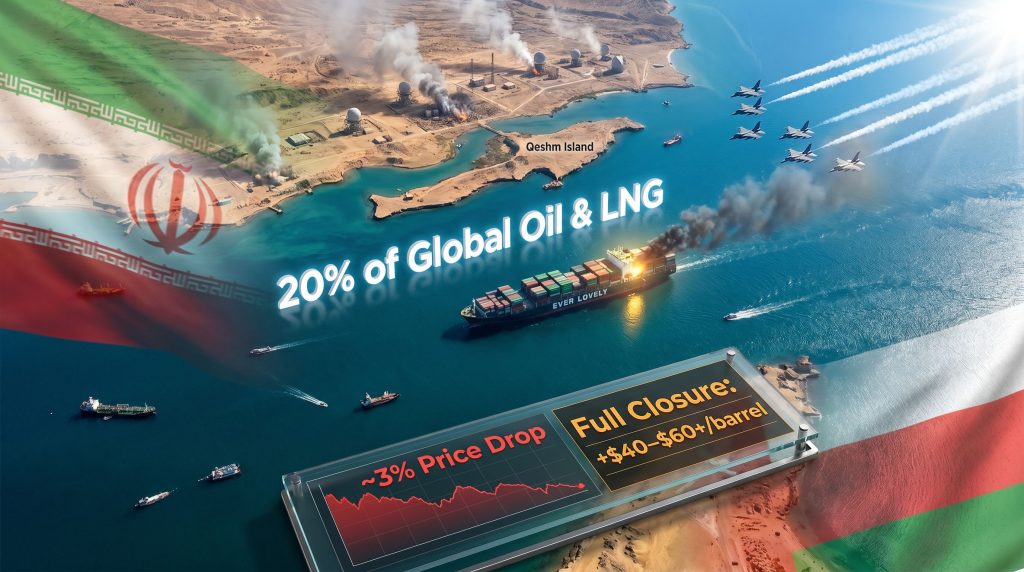
Few geographic features on Earth carry the concentrated economic weight of the Strait of Hormuz. At its narrowest navigable point, this sliver of water stretching roughly 33 kilometres between Iran's southern coastline and the Omani peninsula funnels approximately one-fifth of all global oil and liquefied natural gas supplies to markets across Asia, Europe, and beyond. No single pipeline system, no alternative maritime route, and no combination of land-based infrastructure currently exists at the scale required to replace it. That foundational reality is what makes every episode of tension in this waterway a potential systemic shock to the global economy, and why the latest escalation involving US strikes on Iran after a Strait of Hormuz cargo ship attack has reverberated through energy markets, diplomatic circles, and naval commands simultaneously.
When big ASX news breaks, our subscribers know first
A Cargo Ship, A Drone, and A Fractured Ceasefire
The sequence of events that triggered the latest military exchange began with a targeted strike on the Ever Lovely, a Singapore-flagged container vessel operating approximately 7.5 nautical miles southeast of the Omani port of Dahit. Iranian drone forces struck the vessel's starboard side, damaging the bridge structure. No personnel were killed, but the diplomatic consequences were immediate and severe.
| Impact Category | Detail |
|---|---|
| Vessel Targeted | Ever Lovely (Singapore-flagged container ship) |
| Strike Location | ~7.5 nautical miles SE of Dahit, Oman |
| Damage Sustained | Starboard side and bridge structure |
| Casualties | None reported |
| IMO Response | Suspended seafarer evacuation operations in the Persian Gulf |
| US Characterisation | Described as a ceasefire violation by President Trump |
The attack carried particular weight because it occurred fewer than 10 days after the signing of a June 17 interim ceasefire agreement between Washington and Tehran. That 14-point memorandum of understanding had required Iran to guarantee unimpeded commercial passage through the strait for 60 days, with no tolls or transit fees imposed on shipping. The ink had barely dried before the IRGC launched the strike that shattered the fragile diplomatic calm.
What makes the Ever Lovely incident especially revealing is the target selection itself. Container ships are not military assets. Striking one in a heavily monitored maritime corridor sends a deliberate political message, not a tactical one. Furthermore, the attack was structured to test the boundaries of the ceasefire framework and assert Iran's physical presence in the waterway regardless of what any written agreement specified.
How the US Military Responded: Calibrated Force, Not Full Escalation
US Central Command (CENTCOM) launched retaliatory strikes on Friday, deploying six military aircraft against four distinct target categories inside Iran. The strikes were surgical in their selection:
- Missile storage facilities positioned along Iran's coastline
- Drone depot infrastructure used to stage and launch unmanned aerial vehicles
- Coastal radar installations that provide Iran with surveillance capability over maritime traffic
- Infrastructure on Qeshm Island, a strategically positioned landmass sitting inside the strait itself, hosting IRGC naval and missile assets
Iranian state media subsequently confirmed that a projectile struck an area near a pier in Sirik, a coastal city on the shores of the Strait of Hormuz. You can watch an overview of the US strikes and Iran's response for a closer look at how events unfolded.
Was This Escalation or Containment?
The logic embedded in this target selection is worth examining closely. By destroying radar sites rather than warships, and drone depots rather than oil terminals, Washington communicated a specific message: the intent is to degrade the operational capability used in the cargo ship attack, not to initiate a broader war. Radar site destruction is particularly significant from an asymmetric warfare perspective.
Iran's ability to monitor and intercept commercial shipping depends heavily on its coastal surveillance network. Degrading that network impairs future targeting capability without crossing the escalatory threshold of striking naval vessels or population infrastructure. The selection of Qeshm Island as a target adds further strategic depth, as Qeshm sits inside the strait itself and serves as a forward operating base for IRGC naval units.
Iran's Sovereignty Claim and the Legal Fault Line
Central to understanding this crisis is a fundamental dispute over international maritime law. Iran's position rests on its status as a coastal state, which it argues entitles it to regulate and monetise traffic through the strait. Iranian Deputy Foreign Minister Kazem Gharibabadi stated publicly that safe passage through Hormuz could not be guaranteed under arrangements that failed to recognise Iran's coastal state role, framing the country's demands in legal rather than purely political terms.
This claim collides directly with established international law on three fronts:
- UN Convention on the Law of the Sea (UNCLOS) establishes the doctrine of transit passage through international straits, which grants all vessels the right of continuous and expeditious transit regardless of the political preferences of coastal states
- The joint statement issued by US Secretary of State Marco Rubio and the Gulf Cooperation Council explicitly called for free, unconditional, and unrestricted navigation without tolls or unilateral control assertions
- The June 17 memorandum of understanding itself contained provisions specifically prohibiting toll imposition for the 60-day interim period
Iran's foreign ministry went further, asserting that the strait should be governed jointly by Iran and Oman alone, effectively seeking to exclude the broader international community from any oversight role in the world's most consequential energy corridor.
How Does This Compare to Previous Iranian Pressure Tactics?
This legal positioning is not new. Iran has periodically invoked coastal state rights during periods of heightened tension, however the current iteration is more operationally assertive than previous ones. Iranian state television reported that three foreign tankers attempting what the broadcaster described as unauthorised passage were turned back by IRGC forces following a warning, though independent confirmation of this account was not immediately available.
Bloomberg News also reported that Oman had communicated to allied nations that vessels transiting Hormuz might need to pay fees, though this was not officially confirmed by Muscat at the time. These geopolitical trade tensions are reshaping how major powers approach maritime governance across critical global corridors.
Why Oil Prices Fell Despite Military Strikes
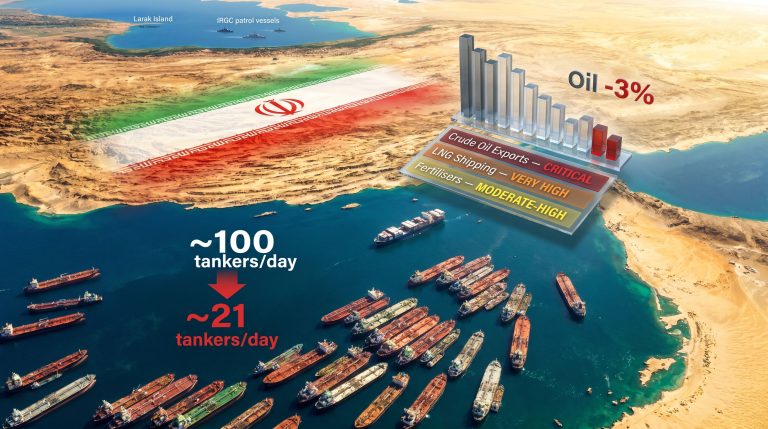
In a market response that surprised many observers, crude oil prices dropped approximately 3% on the day of the US strikes, placing prices on track for steep weekly losses despite active military exchanges between two major regional powers. Understanding this counterintuitive outcome requires disaggregating the competing forces at work. Crude oil price trends in 2025 have already been volatile, and this latest episode adds another layer of uncertainty for market participants to navigate.
| Scenario | Probability Assessment | Estimated Oil Price Impact |
|---|---|---|
| Diplomatic resolution, ceasefire restored | Moderate | Prices stabilise, modest recovery |
| Partial disruption, rerouting required | Elevated near-term risk | +$10 to $20/barrel spike |
| Full closure (30+ days) | Low but non-zero | +$40 to $60+/barrel, global recession risk |
| Iranian toll regime imposed | Contested legal standoff | Market uncertainty, elevated volatility |
Several supply-side developments directly counteracted the geopolitical risk premium that might otherwise have pushed prices higher:
- Saudi Aramco resumed crude loadings at the Ras Tanura terminal, the world's largest oil export facility, after a suspension of nearly four months. The return of Ras Tanura to operational status represents a significant volume addition to global supply
- Fertiliser shipments through the strait had already resumed, which reduced market anxiety about cascading agricultural commodity inflation
- OPEC market influence and ongoing demand-side softness continue to exert structural downward pressure on crude benchmarks independent of geopolitical developments
Is the Market Underpricing Risk?
The deeper explanation lies in market probability weighting. Traders are currently pricing in diplomatic containment rather than full escalation, assigning a low probability to a complete and sustained strait closure. That assessment is rational given the ceasefire framework remains nominally in place and both sides have demonstrated a preference for calibrated rather than unlimited escalation.
However, this pricing assumption is fragile. A single incident that forces sustained closure would instantaneously reprice that probability, and the speed of that repricing would be violent.
The roughly 3% price decline on the day of the strikes suggests energy markets are currently treating this as a manageable confrontation rather than an existential supply disruption. That interpretation could prove dangerously complacent if diplomatic channels close entirely.
The Oman Factor: Why the Opposite Shoreline Matters
A dimension of the Hormuz crisis that receives less analytical attention than it deserves is the role of Oman. The Omani peninsula forms the opposite shoreline of the strait from Iran, giving Muscat a unique geographic and diplomatic position. Oman has historically maintained functional relationships with both Tehran and Washington, serving as a back-channel intermediary during previous periods of US-Iran tension.
Iran's foreign ministry assertion that the strait should be governed by Iran and Oman jointly is not an arbitrary pairing. It reflects the geographic reality of the waterway and simultaneously attempts to recruit Oman as a legitimising partner for Iran's control claims, while excluding the GCC bloc and broader international maritime law frameworks from the governance equation.
The reported Bloomberg claim that Oman communicated to allied ships that toll payments might be required deserves scrutiny in this context. If accurate, it would suggest Iranian pressure on Muscat was beginning to produce tangible diplomatic results, converting a neutral intermediary into a partial enabler of Tehran's toll-charging ambitions.
The next major ASX story will hit our subscribers first
Regional Pressure Dynamics: Gulf States Caught Between Two Powers
Tehran's regional messaging during this episode was notably more aggressive than its usual diplomatic posture. Senior Iranian adviser Ali Akbar Velayati, a close confidant of Iran's Supreme Leader, publicly warned Gulf Arab governments that their survival depended on Tehran's tolerance. This language, delivered during a period of active military strikes, represents a significant escalation in Iran's coercive regional communications strategy.
Gulf Cooperation Council member states find themselves in an increasingly uncomfortable position:
- They depend on the Strait of Hormuz for their own hydrocarbon export revenues
- They are treaty-aligned with Washington and have endorsed the joint statement on free navigation
- They share a geographic neighbourhood with Iran and cannot readily relocate their oil terminals or pipeline infrastructure
- Any overt alignment with US military posture against Tehran carries the risk of becoming a target for Iranian retaliatory pressure
The parallel signing of an Israel-Lebanon ceasefire agreement during this same period adds a further layer of regional complexity. While the deal nominally ends hostilities between Israeli forces and Iran-backed Hezbollah, its enforcement mechanisms remain contested. Hezbollah publicly stated it would not cooperate with disarmament provisions, while Israeli withdrawal timelines remained undefined.
Critically, this Lebanese ceasefire does nothing to reduce Iran's maritime leverage. Tehran's capacity to project power through the Strait of Hormuz operates entirely independently of its proxy relationships in the Levant and is not diminished by any agreement reached in Beirut.
What Sustained Disruption Would Actually Mean for Global Supply Chains
The Hormuz strait's irreplaceability as an energy corridor is not merely a matter of volume. It reflects decades of infrastructure investment decisions made by Gulf producers on the assumption that the waterway would remain accessible. The pipelines and terminals that bypass Hormuz partially — including the Abu Dhabi Crude Oil Pipeline running to Fujairah and the Saudi East-West Pipeline running to Yanbu — were built specifically as partial contingency routes. Together, their combined capacity represents only a fraction of the volumes that currently transit the strait daily.
A sustained full closure would force buyers across Asia to source alternative supply from Atlantic Basin producers, the United States, or West Africa. The logistical and cost implications of that rerouting would ripple through freight markets, refinery scheduling, and ultimately consumer fuel prices across multiple continents. In addition, global LNG supply chains would face secondary shocks through fertiliser and petrochemical feedstock disruption, replicating some of the inflationary dynamics observed during previous commodity supply crises.
The current market pricing of a low closure probability is a rational baseline assessment, but it underweights the degree to which the diplomatic architecture supporting that baseline has deteriorated within ten days of being constructed. Consequently, the global economic impact of a prolonged closure could extend well beyond energy markets into broader trade and financial systems. NBC News has also published analysis on the US strikes and commercial shipping risks that further contextualises the stakes involved.
Key Takeaways for Investors and Energy Market Participants
- The Strait of Hormuz remains irreplaceable at current bypass infrastructure capacity, meaning any sustained disruption carries systemic rather than merely regional consequences
- The June 17 ceasefire is under severe structural stress, with both parties now engaged in military action and advancing incompatible interpretations of the agreement's terms
- Current oil price levels appear to underweight tail risk, pricing diplomatic containment as the base case when the evidence from the Ever Lovely attack and subsequent IRGC tanker interdictions suggests Iranian operational pressure has not ceased
- Iran's dual-track approach — pursuing ceasefire diplomacy while maintaining IRGC operational activity in the waterway — creates persistent uncertainty that cannot be resolved through written agreements alone
- Oman's intermediary role is becoming a central variable in whether durable resolution is achievable, with Tehran's attempts to co-opt Muscat into its governance framework representing a key diplomatic battleground
- Radar site degradation from US strikes may reduce Iran's immediate interception capability but does not eliminate IRGC motivation or longer-range missile assets capable of threatening commercial shipping
Disclaimer: This article contains forward-looking assessments and scenario analysis based on publicly available information as of the date of publication. Energy price projections and geopolitical scenario probabilities are analytical frameworks, not investment advice. Readers should consult qualified financial advisers before making decisions based on commodity market conditions.
Want To Position Yourself Ahead of the Next Major Resource Discovery Triggered by Geopolitical Shocks?
When energy market volatility reshapes commodity investment landscapes overnight, Discovery Alert's proprietary Discovery IQ model instantly notifies subscribers of significant ASX mineral discoveries — converting complex market signals into actionable opportunities — so explore Discovery Alert's discoveries page to see how historic finds have generated exceptional returns, and begin your 14-day free trial at Discovery Alert to secure your market-leading edge before the next major move.