July 14, 2026
Iran Energy Crisis Fundamentally Reshapes Global War Economics
Energy market disruptions often create unexpected winners in global conflicts, but the current Iran energy crisis impacting Russia-Ukraine war represents one of the most dramatic economic transformations in modern warfare. When regional tensions suddenly constrict critical supply channels, the resulting price volatility can fundamentally alter the financial dynamics of distant military campaigns, creating cascading effects that reach far beyond the immediate conflict zone.
The strategic calculations of major powers shift dramatically when energy becomes a weapon, forcing allies to weigh economic stability against geopolitical commitments. This transformation reveals how quickly established sanctions regimes can become counterproductive when global supply chains face severe disruption.
When big ASX news breaks, our subscribers know first
What Makes Iran's Energy Crisis a Game-Changer for Global Conflicts?
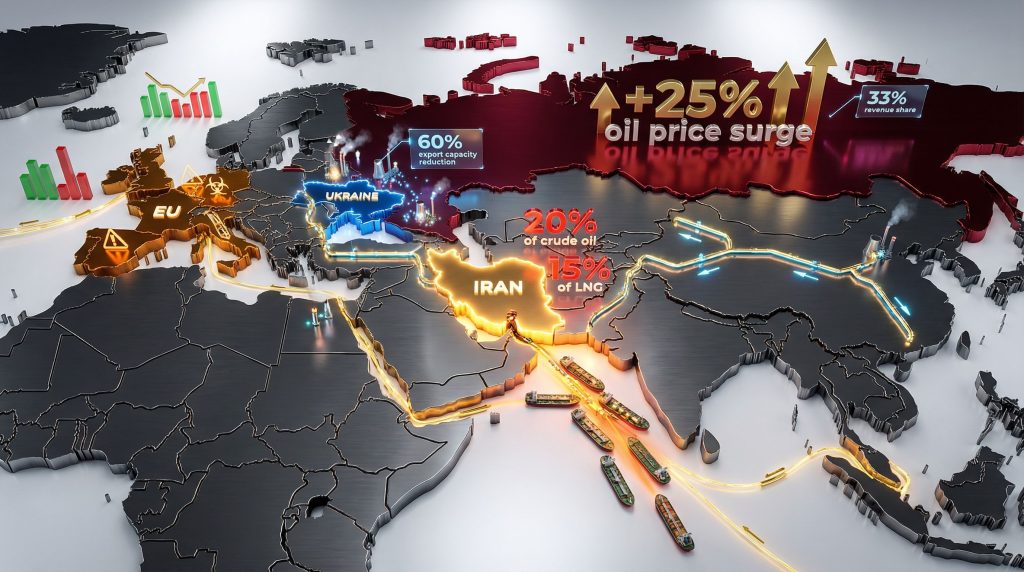
The current crisis has fundamentally disrupted global energy flows through unprecedented maritime chokepoint restrictions. Current estimates indicate approximately 20% of global crude oil supplies and 15% of liquefied natural gas now face transit difficulties through traditional Middle Eastern routes, forcing massive supply chain reconfigurations across international markets.
This disruption has triggered oil price rally factors exceeding 25% in key benchmarks, with Brent crude climbing from approximately $72 per barrel to over $90 per barrel within weeks of the crisis escalation. The speed and magnitude of these increases have created economic multiplier effects rippling through manufacturing, transportation, and consumer sectors worldwide.
The Strait of Hormuz Bottleneck Effect
Maritime energy transport through the Strait of Hormuz represents one of the world's most critical economic lifelines, with the waterway typically handling massive volumes of crude oil and natural gas daily. The effective closure or severe restriction of this transit route has forced energy companies to pursue costly alternative shipping arrangements, including longer routes around the Cape of Good Hope.
These alternative shipping patterns have increased transportation costs by significant margins while extending delivery timeframes by weeks. European refineries now face supply uncertainties not experienced since the early stages of the Russia-Ukraine conflict, while Asian markets scramble to secure alternative LNG supplies.
The timeline of escalating disruptions since February 2026 shows a clear pattern of increasing market stress. Each incident generates greater price volatility and supply chain adjustments across multiple energy sectors. Consequently, this has created a complex energy security environment that challenges traditional market assumptions.
Price Volatility as a Geopolitical Weapon
Currency impacts from energy price volatility have created particular challenges for energy-dependent economies across Europe and Asia. The euro has faced pressure against the dollar as European industrial competitiveness declines due to higher energy input costs. Similarly, emerging market currencies with significant energy import bills have experienced additional stress.
Natural gas markets have undergone substantial restructuring across major trading hubs, with European gas storage levels dropping to concerning winter preparedness thresholds. Furthermore, Qatar's LNG market implications have forced European buyers into bidding wars reminiscent of the 2022 energy crisis, driving contract prices to levels that threaten industrial sector viability.
Forward curve dynamics in energy markets now reflect extended periods of elevated pricing. This suggests market participants expect the Iran energy crisis impacting Russia-Ukraine war to persist for months rather than weeks.
How Does Energy Market Disruption Benefit Russia's War Strategy?
Russia's energy sector has experienced an unexpected transformation from heavily sanctioned pariah to premium-priced necessity within global energy markets. This reversal represents one of the most significant shifts in energy geopolitics since the initial sanctions implementation following the February 2022 invasion of Ukraine.
The revenue windfall mechanism operates through multiple channels: direct price increases on existing export volumes, improved pricing differentials relative to international benchmarks, and expanded market access as buyers seek alternatives to Middle Eastern supplies.
The Revenue Windfall Mechanism
Russian state budget dependency on energy exports, historically accounting for approximately 33% of total government revenues, has become dramatically more valuable during the current crisis. Monthly export revenues have potentially doubled compared to pre-crisis levels, providing Moscow with unexpected fiscal flexibility for military expenditure.
Before the Middle Eastern conflict escalation, Russian crude consistently traded at substantial discounts to international benchmarks due to sanctions pressure and buyer reluctance. This discount frequently reached $15 per barrel below Brent crude pricing, severely constraining Russian energy revenues.
The price premium transformation has reversed this dynamic entirely, with Russian crude now occasionally commanding premiums of $5 per barrel above international benchmarks. This $20 per barrel swing represents a fundamental restructuring of Russian energy economics, potentially adding billions to monthly state revenues.
| Metric | Pre-Crisis | Current | Change |
|---|---|---|---|
| Brent Crude Price | $72/barrel | $90+/barrel | +25% |
| Russian Oil Premium | -$15 discount | +$5 premium | +$20 swing |
| Monthly State Revenue | $3B estimated | $6B estimated | +100% |
Sanctions Circumvention Through Market Forces
US Treasury sanctions modifications have provided unexpected relief for Russian energy flows during the crisis. The suspension of sanctions on Russian crude already in transit represents a significant policy adjustment driven by global energy security concerns rather than strategic considerations regarding the Russia-Ukraine conflict.
China and India continue dominating Russian crude purchases, with their combined share reaching 85% of Russian oil exports during February 2026 according to Centre for Research on Energy and Clean Air data. In addition, this concentration has intensified as Middle Eastern alternatives become less available, strengthening Russia's position with its primary customers.
Alternative payment systems have evolved beyond simple currency substitution, with Russian energy transactions increasingly conducted through non-dollar mechanisms. These include yuan-denominated contracts, barter arrangements, and specialised banking channels designed to circumvent SWIFT restrictions.
Why Are Ukraine's Allies Pressuring for Energy Infrastructure Restraint?
Ukraine's strategic targeting of Russian energy infrastructure has achieved significant tactical successes while creating diplomatic complications for allied nations dependent on stable global energy markets. The campaign represents one of Ukraine's most effective asymmetric warfare strategies, directly impacting Russian state finances that fund military operations.
However, the timing of these strikes coincides with global energy market stress from the Iranian crisis. This creates compound supply disruptions that extend far beyond the immediate Russia-Ukraine theatre, demonstrating how the Iran energy crisis impacting Russia-Ukraine war complicates allied strategic coordination.
The Strategic Calculus Behind Diplomatic Pressure
European energy security dynamics reflect the continent's continued exposure to Russian energy supplies despite diversification efforts since 2022. The European Union remains connected to Russian gas flows representing 34% of total volume, while Russian LNG accounts for 49% of the country's total liquefied natural gas exports to European markets.
Industrial sector vulnerability assessments across Europe reveal manufacturing competitiveness declining rapidly under dual energy price pressures from both the Iranian crisis and Ukrainian strikes on Russian infrastructure. Chemical, steel, and aluminium production facilities face particular stress as energy-intensive industries.
Corporate distress indicators have reached levels exceeding pre-2022 crisis measurements. The Weil European Distress Index shows businesses entering this latest volatility period from materially weaker financial positions than during previous energy crises.
Ukraine's Energy Strike Campaign Analysis
Ukrainian military operations have targeted Russian energy infrastructure with increasing frequency and sophistication throughout March 2026. Ten major attacks on Russian energy facilities during the month demonstrate Ukraine's enhanced long-range strike capabilities and strategic focus on economic warfare tactics.
The Ust-Luga terminal strike on March 27, 2026, represents the campaign's most significant achievement, with satellite imagery confirming extensive fire damage to the facility. Ukrainian officials claim the attack eliminated 60% of the port's export capacity, directly impacting Russia's ability to monetise elevated global oil prices.
Reciprocal targeting strategies have escalated throughout the crisis, with Russian forces responding to Ukrainian infrastructure strikes by intensifying attacks on Ukrainian power generation and distribution facilities. This escalation cycle has left over one million Ukrainians without electricity and heating during winter months.
What Are the Broader Economic Implications for Global Markets?
Global energy market disruptions from the Iranian crisis have created economic stress patterns extending far beyond traditional energy sectors. Financial markets now price persistent elevated energy costs into long-term economic forecasts, suggesting structural rather than temporary impacts on global growth trajectories.
Inflation pressure has intensified across major economies as energy costs feed through transportation, manufacturing, and consumer sectors. Central banks face difficult policy decisions between controlling inflation through interest rate increases and supporting economic growth during energy-driven recession risks. This presents additional challenges beyond the US oil production decline already affecting market dynamics.
European Corporate Distress Indicators
Retail and consumer goods sectors show particular vulnerability to sustained energy price elevation, with operating margins compressed by both higher input costs and reduced consumer spending power. The sector has reached its highest distress levels since the 2008 global financial crisis according to restructuring specialists monitoring European markets.
Infrastructure, utilities, and power sectors have emerged as the third most distressed category across European markets. This represents a significant sectoral shift, as these capital-intensive industries typically provide stable returns during economic volatility rather than experiencing distress.
The pace of deterioration concerns restructuring experts, who note that businesses enter this crisis already weakened by previous energy shocks. Companies operating with compressed margins and delayed investment programmes have reduced capacity to absorb additional energy cost pressures. Moreover, the situation has been exacerbated by broader global economic uncertainties affecting international markets.
Key risk factors include:
• Accelerated timeline: Energy price impacts develop faster than traditional business cycles
• Reduced financial buffers: Companies lack reserves built during previous profitable periods
• Capital intensity: Infrastructure sectors require sustained investment despite margin pressure
• Systemic importance: Utilities and power generation affect entire economic ecosystems
Energy Transition Acceleration Patterns
Renewable energy investment has experienced acceleration as businesses and governments seek energy independence from volatile fossil fuel markets. Solar and wind project development timelines have compressed as energy security considerations override traditional cost-benefit analyses.
Nuclear power revival discussions have intensified across European policy circles, with several nations reconsidering previous phase-out schedules. The crisis has highlighted nuclear energy's role in providing baseload power independence from both Russian gas and Middle Eastern oil market volatility.
How Do Middle Eastern Dynamics Influence European Energy Policy?
Middle Eastern energy supply disruptions have forced European energy policy makers to confront the limitations of diversification strategies implemented since 2022. While Europe successfully reduced Russian pipeline gas dependency, alternative suppliers in the Middle East now face their own supply constraints.
Furthermore, LNG market restructuring reflects these new supply realities, with European buyers competing against Asian customers for limited available cargoes from unaffected producers like the United States and Australia.
LNG Market Restructuring
Qatar's supply disruption effects cascade through European gas markets due to the country's significant role in global LNG production and export capacity. European gas storage facilities face depletion pressure as winter heating demand continues while replacement supplies carry premium pricing.
Bidding war dynamics have emerged among European buyers seeking LNG spot cargoes, with contract prices reaching levels that threaten industrial customer viability. Power generators face particular pressure as gas-fired plants provide crucial backup for renewable energy systems.
European gas storage levels have declined to approximately 45% capacity, well below the 85% levels maintained before the crisis. This storage depletion occurs during months when facilities typically rebuild reserves for subsequent winter heating seasons.
Strategic Reserve Deployment and Market Stabilisation
International Energy Agency emergency release protocols have activated 400 million barrel strategic reserve commitments from member nations. However, these releases primarily target crude oil markets rather than natural gas supplies, limiting their effectiveness in addressing European energy sector stress.
US Navy escort considerations for energy shipments reflect the militarisation of energy security concerns. Protection for LNG tankers and crude oil shipments through alternative routes has become a strategic military priority rather than purely commercial shipping insurance matter.
The next major ASX story will hit our subscribers first
What Economic Scenarios Could Emerge from Prolonged Crisis?
Economic modelling for extended Iranian energy crisis scenarios reveals multiple potential pathways with dramatically different implications for global growth, inflation, and geopolitical stability. The range of outcomes depends heavily on crisis duration, scope of energy market disruption, and effectiveness of international coordination mechanisms.
Baseline scenarios assume 6-12 month crisis duration with gradual supply chain adaptation and alternative energy source development. Pessimistic scenarios model 18-24 month disruption with expanded regional conflict affecting additional Middle Eastern producers.
Stagflation Risk Assessment
Inflation pressure points across major economies show concerning similarities to 1970s stagflation periods, when energy price shocks combined with economic stagnation created persistent policy challenges. Current conditions include elevated energy costs, supply chain disruptions, and reduced economic growth potential.
Food security implications emerge through fertiliser supply chain disruptions, as natural gas represents a crucial input for nitrogen fertiliser production. Agricultural commodity prices face upward pressure from both higher energy costs and reduced fertiliser availability during critical growing seasons.
Central bank policy response limitations become apparent as traditional monetary policy tools prove inadequate for addressing supply-side inflation drivers. Interest rate increases can reduce demand but cannot increase energy supply, creating potential for economic contraction without meaningful inflation reduction.
Geopolitical Realignment Possibilities
Energy alliance restructuring between major powers accelerates as traditional supplier relationships face disruption. European nations actively pursue energy partnerships with North American producers, whilst Asian economies strengthen ties with Russian and Central Asian suppliers.
Alternative supply route development requires multi-year infrastructure investments, suggesting permanent changes to global energy flows rather than temporary crisis adaptations. Pipeline projects, LNG terminal expansion, and renewable energy capacity additions will reshape energy geopolitics for decades.
How Does This Crisis Reshape Ukraine War Financing Dynamics?
The Iranian crisis has fundamentally altered the economic dynamics of the Russia-Ukraine conflict by providing Russia with unexpected revenue increases whilst simultaneously constraining Ukrainian allies' economic capacity to provide sustained support.
Russia's enhanced fiscal position creates military financing capabilities not available since the conflict's early stages, when international sanctions had not yet fully impacted Russian energy revenues. This demonstrates how the Iran energy crisis impacting Russia-Ukraine war has created unexpected strategic advantages for Moscow.
Russia's Enhanced Fiscal Position
War chest replenishment through energy premium pricing provides Russia with military financing flexibility previously constrained by sanctions and international isolation. Estimated monthly energy revenue increases of 100% create fiscal space for sustained military operations and equipment procurement.
Budget reallocation patterns within Russian federal spending show increased military expenditure allocations funded directly by enhanced energy revenues. Defence spending increases occur without requiring cuts to social programmes or domestic infrastructure investment, reducing internal political pressure on the Russian government.
Sanctions effectiveness erosion becomes evident as energy revenue growth offsets financial restrictions in other economic sectors. Traditional sanctions targeting banking, technology, and luxury goods have diminished impact when energy exports provide sufficient foreign currency earnings.
Ukraine's Resource Acquisition Challenges
Ukrainian diplomatic efforts in Gulf states reflect energy security concerns as much as financial support requirements. Recent diplomatic tours to Saudi Arabia, UAE, Qatar, and Jordan aim to secure fuel supplies for military operations rather than solely seeking financial assistance.
Allied support sustainability faces constraints as European governments balance domestic economic pressures with Ukrainian assistance commitments. Higher energy costs reduce European fiscal capacity whilst simultaneously increasing Ukrainian support requirements. In addition, the OPEC production impact creates additional uncertainty for long-term energy pricing stability.
What Are the Key Metrics for Measuring Crisis Impact?
Measuring the Iranian energy crisis impact requires tracking multiple interconnected indicators across energy markets, economic performance, and geopolitical stability. Traditional energy price metrics provide incomplete pictures without broader economic and strategic context.
Comprehensive crisis assessment frameworks must incorporate financial market indicators, corporate distress measurements, and geopolitical risk assessments to capture full crisis implications.
Energy Market Performance Indicators
| Metric | Pre-Crisis | Current | Change |
|---|---|---|---|
| Brent Crude Price | $72/barrel | $90+/barrel | +25% |
| WTI Crude Price | $68/barrel | $87/barrel | +28% |
| Russian Urals Premium | -$15 discount | +$5 premium | +$20 swing |
| EU Gas Storage | 85% | 45% | -40 percentage points |
| Asian LNG Spot Price | $11/MMBtu | $18/MMBtu | +64% |
| Baltic Dry Index | 1,200 | 1,800 | +50% |
Corporate Distress Tracking
European restructuring activity has accelerated across multiple sectors, with professional services firms reporting increased demand for crisis management and debt restructuring expertise. Infrastructure sector stress indicators suggest systemic risks developing in capital-intensive industries.
Consumer goods sector vulnerability metrics show margin compression and reduced profitability across retail and manufacturing segments. Companies with high energy input costs face particular pressure as they struggle to pass increased costs to consumers experiencing reduced purchasing power.
Financial market indicators including credit spreads, equity volatility, and currency movements provide real-time assessment of crisis confidence impacts across international markets.
Frequently Asked Questions About Iran's Energy Crisis Impact
Understanding the crisis requires addressing common questions about duration, economic impact, and conflict resolution possibilities. These questions reflect both immediate practical concerns and longer-term strategic implications for global energy security.
How long could elevated energy prices persist?
Duration dependency on Middle Eastern conflict resolution creates uncertainty for energy market planning and economic forecasting. Historical analysis suggests energy price spikes from geopolitical events typically last 6-18 months, depending on conflict scope and alternative supply development.
Market rebalancing timeline estimates vary significantly based on assumptions about alternative supply route development, strategic reserve depletion rates, and demand destruction from sustained high prices. Optimistic scenarios suggest 6-month rebalancing periods, whilst pessimistic projections extend to 2-year adjustment timeframes.
Could this crisis end the Russia-Ukraine conflict?
Economic pressure points affect both Russian and Ukrainian strategic calculations, though impacts flow in opposite directions. Russia benefits from enhanced revenue whilst Ukraine faces increased operational costs and reduced allied support capacity.
Negotiation leverage shifts through energy dynamics create new diplomatic possibilities, as European allies may prioritise conflict resolution to restore energy market stability. However, military momentum and territorial control remain primary factors in conflict progression.
What Strategic Lessons Emerge for Global Energy Security?
The crisis demonstrates the interconnected nature of global energy systems and the speed with which geopolitical events can reshape economic fundamentals. Traditional energy security strategies focused on diversification prove insufficient when multiple supply regions face simultaneous disruption.
These events highlight the need for more robust crisis response mechanisms and deeper structural changes to global energy infrastructure.
Diversification Imperatives
Supply chain resilience building requires geographic, technological, and institutional diversification beyond traditional approaches focused solely on supplier country variety. Effective resilience demands redundant infrastructure, alternative transportation routes, and flexible contract structures.
Regional energy independence acceleration becomes a strategic priority rather than purely economic optimisation objective. Nations now prioritise energy security considerations alongside cost efficiency and environmental impact in energy policy development.
Technology investment prioritisation shifts toward solutions providing energy independence rather than simply cost reduction. Renewable energy, energy storage, and alternative fuel technologies receive enhanced support as strategic security investments.
Geopolitical Risk Pricing Models
Energy market volatility prediction requires enhanced modelling of geopolitical risk factors beyond traditional supply and demand fundamentals. Crisis events demonstrate how quickly geopolitical developments can override economic factors in energy pricing.
Crisis response mechanism optimisation needs improvement in international coordination, strategic reserve management, and alternative supply activation procedures. Current response frameworks prove inadequate for addressing simultaneous disruptions across multiple energy supply regions.
International cooperation framework strengthening becomes essential for managing energy crises affecting multiple regions and energy types simultaneously. Enhanced cooperation mechanisms must address both immediate crisis response and long-term structural vulnerability reduction.
The Iran energy crisis impacting Russia-Ukraine war demonstrates how regional conflicts can reshape global energy economics with consequences extending far beyond immediate participants. Understanding these dynamics requires comprehensive analysis of energy markets, geopolitical relationships, and economic resilience factors that determine crisis outcomes.
This analysis is based on publicly available information and market data as of March 2026. Energy market conditions remain highly volatile, and readers should consult current sources for the most recent developments. Investment decisions should not be based solely on the analysis presented here, and readers should seek professional financial advice for specific investment guidance.
Looking to Capitalise on Energy Market Volatility?
Discovery Alert's proprietary Discovery IQ model delivers real-time alerts on significant energy and commodity discoveries across the ASX, helping investors identify opportunities emerging from global supply disruptions and market volatility. Whether you're tracking uranium exploration during energy transitions or base metals discoveries amid infrastructure demand, begin your 14-day free trial today to position yourself ahead of market-moving announcements.