
May 14, 2026
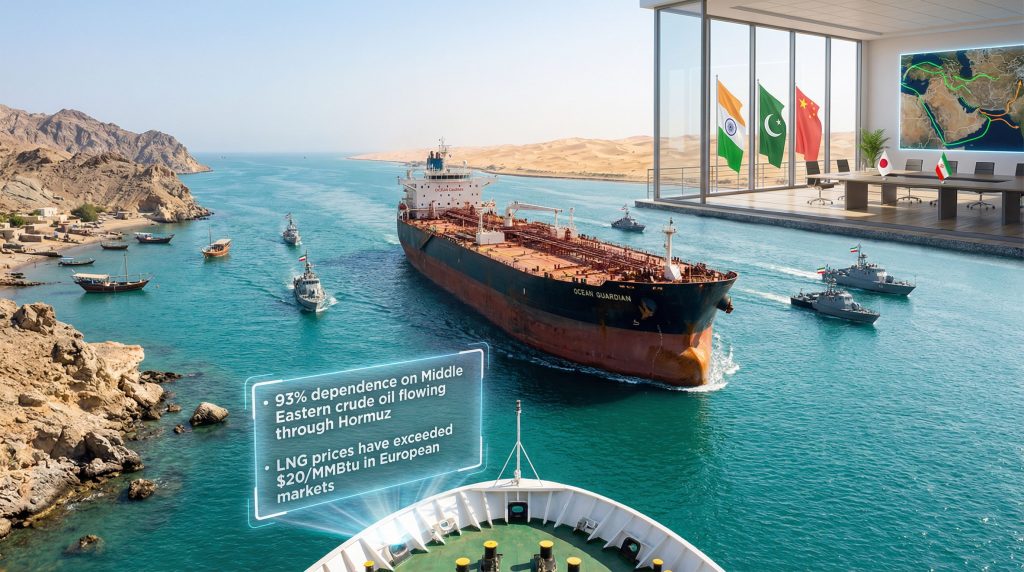
Global maritime commerce operates through a complex network of strategic chokepoints that control the flow of energy resources, with the Strait of Hormuz representing perhaps the most critical pressure point in international trade. When geopolitical tensions escalate in these waterways, nations must rapidly adapt their energy security strategies through diplomatic channels rather than relying solely on military intervention. The current situation where Iran says ready to discuss Hormuz passage with Japan exemplifies this diplomatic approach to resolving critical maritime access disputes.
The evolution of bilateral negotiation frameworks for maritime passage has emerged as a sophisticated alternative to traditional multilateral approaches, particularly when dealing with regional powers that maintain selective enforcement policies based on political alignment.
Understanding Iran's Differentiated Maritime Control Strategy
Iran has implemented a nuanced approach to Strait of Hormuz management that distinguishes between what it categorises as hostile and neutral nations. This policy framework represents a fundamental shift from traditional maritime law enforcement, where passage rights typically apply uniformly to all commercial vessels regardless of flag state political positioning.
The Iranian Foreign Ministry has articulated that the strait remains open for commercial traffic, with restrictions applying specifically to vessels from countries participating in military actions against Iranian interests. This selective enforcement mechanism creates a two-tiered system where diplomatic relationships directly influence commercial maritime access.
Key Elements of Iran's Maritime Policy:
- Bilateral assessment of each nation's political stance
- Military oversight of all transit authorisation decisions
- Flexible negotiation protocols for non-hostile states
- Security coordination requirements for approved vessels
- Real-time monitoring of vessel movements and cargo verification
Recent vessel transit data reveals the operational reality of this selective approach. Multiple Iranian-flagged tankers carrying crude oil to China have successfully transited the strait, while vessels from nations involved in military operations face significant restrictions. Furthermore, the 296,068 DWT Cuma, 317,534 DWT Stream, and 317,536 DWT Serena all completed passages with Iranian crude destined for Chinese ports, demonstrating the preferential treatment given to allied commercial relationships.
When big ASX news breaks, our subscribers know first
Japan's Strategic Position in Hormuz Negotiations
Japan's unique diplomatic positioning stems from its historical neutrality in Middle Eastern conflicts combined with substantial energy import requirements that create mutual economic incentives for negotiated solutions. The country's approach reflects this carefully cultivated non-aligned stance, particularly relevant when considering broader Saudi exploration licenses and regional energy dynamics.
Japanese maritime operators maintain exceptionally rigorous safety protocols that exceed international baseline requirements, creating compatibility with Iranian security preferences. These operators were among the first to suspend Gulf operations when regional tensions escalated, demonstrating risk-averse decision-making that aligns with Iran's stated preference for coordinated rather than confrontational maritime management.
Japan's Negotiating Advantages:
| Factor | Advantage | Impact on Negotiations |
|---|---|---|
| Energy Dependency | High reliance on Middle Eastern imports | Creates urgency for diplomatic solutions |
| Military Neutrality | No participation in regional conflicts | Positions Japan as non-threatening partner |
| Safety Standards | Strictest maritime protocols globally | Reduces Iranian security concerns |
| Diplomatic History | Maintained relations during sanctions | Provides established communication channels |
Iranian Foreign Minister Abbas Araghchi specifically confirmed that Japan qualified for potential safe passage arrangements, stating that he certainly meant Japan when referring to countries whose ships could pass through the strait. This explicit confirmation demonstrates Japan's priority status in Iranian diplomatic calculations.
Consequently, the practical implications of Japan's approach extend beyond immediate energy security concerns. Japanese shipowners' established protocols for rapid operational response to maritime threats distinguish the country from military allies who pursue coalition-based solutions. This independent risk assessment capability positions Japan as a mediator-stakeholder rather than an adversarial party.
Current Diplomatic Initiatives Across Multiple Nations
Several countries have initiated direct bilateral discussions with Iran regarding maritime passage rights, representing a shift toward diplomatic rather than military solutions for critical infrastructure protection. These negotiations demonstrate the practical effectiveness of country-specific agreements over multilateral frameworks, particularly in light of OPEC production impacts on global energy markets.
Active Diplomatic Engagements:
India has conducted government-level talks to ensure safe passage for additional LPG tankers following the successful transit of two India-flagged vessels on March 13, 2026. The Indian government is negotiating arrangements for six additional LPG tankers, suggesting a phased approach to expanding commercial operations through diplomatic channels.
China has established comprehensive commercial arrangements that permit Iranian crude exports to Chinese ports. Multiple Very Large Gas Carriers (VLGCs) carrying Iranian LPG have successfully transited to Chinese destinations, indicating robust bilateral coordination mechanisms.
Pakistan demonstrates operational bilateral coordination through successful tanker transits without Iranian interference. Pakistan-bound tankers, including vessels transiting as recently as March 15, 2026, have passed without incident, suggesting either pre-established agreements or Iranian recognition of Pakistan as a neutral party.
Military Coordination vs. Diplomatic Solutions
The contrast between diplomatic and military approaches becomes evident when examining alliance responses. UK, France, Italy, Japan, Canada, Germany, and the Netherlands expressed readiness to contribute to military escort efforts on March 19, 2026, yet these commitments have not translated into operational deployment.
Maritime security experts note the technical complexity of military solutions. Joshua Tallis, Research Program Director at the Center for Naval Analyses, observed that securing a narrow strait during active conflict against missiles, drones, and mines represents a technically complex evolution that proves far riskier than most allies would accept in a conflict where they are not primary parties.
This expert assessment explains why diplomatic approaches may succeed where military coordination fails. Nations prioritise risk avoidance over military alliance obligations when dealing with non-core security interests, making bilateral negotiation more attractive than collective military action.
Operational Framework for Safe Passage Protocols
The practical mechanics of negotiated transit arrangements involve multiple coordination layers between requesting nations and Iranian maritime authorities. While formal protocol documentation remains limited in public sources, successful transits provide behavioural evidence of operational procedures.
Essential Protocol Components:
- Pre-transit diplomatic notification through established governmental channels
- Vessel documentation verification including ownership, cargo, and destination details
- Route coordination through designated maritime corridors along the Iranian coastline
- Communication protocols for real-time transit monitoring
- Security assessment by Iranian military authorities for final approval
Iranian officials have indicated protocol flexibility rather than rigid predetermined procedures, allowing case-by-case customisation based on diplomatic relationships and security assessments. Foreign Minister Araghchi stated that Iran is prepared to provide safe passage if contacted, with discussions focused on finding ways to ensure safe transit through collaborative arrangement.
The communication infrastructure supporting these protocols appears to leverage existing maritime monitoring systems rather than requiring new technological implementation. Vessels successfully transiting include India-flagged LPG tankers, Pakistani crude carriers, and Chinese shadow fleet VLGCs, suggesting standardised low-friction procedures for approved nations.
Timing and Coordination Evidence
Recent diplomatic timelines suggest negotiation periods of approximately one to two weeks for initial agreements, with ongoing coordination required for each subsequent transit. India's talks for additional LPG tankers began after initial March 13 passages, with negotiations ongoing through March 21, indicating roughly an eight-day window for expanded operational agreements.
The absence of reported incidents during approved transits suggests either effective deterrence through monitoring or actual escort provision by Iranian naval forces. The distinction materially affects operational risk assessment for commercial operators considering Hormuz transit during ongoing regional tensions.
Market Response to Diplomatic Progress
Energy markets have demonstrated acute sensitivity to both military developments and diplomatic progress in the Hormuz crisis, with pricing mechanisms increasingly reflecting the effectiveness of negotiated solutions versus confrontational approaches. However, these developments must be viewed alongside broader market dynamics, including oil price rally insights and their global implications.
LNG prices have exceeded $20/MMBtu in European markets, representing more than double pre-conflict levels, while diplomatic progress has provided modest price relief for specific regional markets with established bilateral arrangements. The market differentiation between nations with negotiated access and those relying on military solutions creates pricing disparities based on diplomatic positioning.
Regional Market Impacts
Asian buyers have increasingly turned to alternative supply sources, including recently issued OFAC waivers covering Russian crude exports. The first Russian cargo to depart for the Philippines since 2021 left Kozmino on March 16, 2026, carrying Espo Blend crude aboard the 115,191 DWT Sara Sky, with arrival expected in Bataan on March 23.
The spike in LNG prices has prompted concerns from export project developers about potential demand destruction if prospective buyers lose confidence in the fuel's reliability. Industry officials note that price volatility represents the biggest risk for capital-intensive LNG projects requiring long-term purchase agreements.
US Treasury Department sanctions waivers have created temporary market stabilisation mechanisms, including authorisation for Iranian crude loaded before March 20, 2026, to be sold and offloaded until April 19, 2026. These measures demonstrate policymaker recognition that diplomatic solutions may prove more immediately effective than military intervention for market stability.
Alternative Transportation Corridor Development
The Hormuz crisis has accelerated development of alternative energy transportation networks, fundamentally reshaping global logistics planning for critical commodities. These alternative routes represent both immediate crisis response and long-term strategic diversification for energy importers, particularly relevant given US-China trade implications on global supply chains.
Northern Iraq-Turkey Pipeline Expansion
Iraq resumed crude exports from northern Kirkuk fields to Turkey's Ceyhan port on March 18, 2026, at an initial rate of 250,000 barrels per day. This northern route provides partial compensation for Iraq's lost access to 3.4 million barrels per day of export capacity through Basrah, which remains constrained by Hormuz transit limitations.
Overland Transportation Networks
Central Asian pipeline networks have gained strategic importance as maritime chokepoint alternatives. These routes, while requiring longer transit times and higher transportation costs, provide supply chain diversification that reduces dependency on single maritime passages.
In addition, nations with significant strategic petroleum reserves have activated emergency protocols to maintain supply continuity during the Hormuz crisis. This reserve utilisation demonstrates the value of domestic storage capacity as a buffer against maritime chokepoint disruptions.
The next major ASX story will hit our subscribers first
Regional Power Dynamics and Energy Security
Gulf oil producers have expressed concerns that interim diplomatic measures may inadvertently strengthen Iranian influence while leaving regional allies exposed to continued maritime access restrictions. Senior Gulf officials have indicated preference for direct resolution of Hormuz passage rights rather than temporary workarounds.
The differentiated impact on various Middle Eastern exporters creates uneven market dynamics. Iranian crude continues flowing primarily to China through negotiated arrangements, while exports from US-aligned Gulf producers remain constrained by the broader maritime security environment. These dynamics are further complicated by oil trade war effects on global pricing mechanisms.
Strategic Implications for Energy Chokepoints
The Hormuz negotiations establish precedents for how critical maritime passages may be managed during future conflicts, with potential applications to other strategic waterways including the Suez Canal and Malacca Strait. The success of bilateral diplomatic approaches over multilateral frameworks could influence international maritime law and energy trade protocols.
Energy security prioritisation in diplomatic negotiations represents a fundamental shift in how nations manage crisis response. Commercial shipping protection through political channels rather than military escort provides a model for future chokepoint management that may prove more sustainable than armed intervention.
Furthermore, the diplomatic approach demonstrates the effectiveness of selective engagement over blanket confrontation. This targeted diplomacy creates incentives for neutral positioning while maintaining commercial relationships that benefit all parties involved.
Investment and Infrastructure Implications
The crisis has highlighted the vulnerability of concentrated energy transportation routes and accelerated investment in alternative infrastructure. Pipeline capacity expansion, strategic reserve enlargement, and regional refining optimisation have gained urgency as supply chain diversification strategies.
Maritime security analysts note that diplomatic solutions may prove more durable than military intervention for maintaining long-term energy flows. The establishment of bilateral transit agreements creates stable frameworks that can persist beyond immediate crisis periods, providing predictability for commercial planning and investment decisions.
According to Kyodo News, Japanese officials have confirmed ongoing discussions with Iranian counterparts regarding safe passage protocols. Moreover, reports from Bloomberg indicate that Iran's readiness to facilitate Japanese vessels represents a significant diplomatic breakthrough in regional maritime security.
Consequently, the situation where Iran says ready to discuss Hormuz passage with Japan exemplifies how diplomatic engagement can provide practical solutions to critical infrastructure challenges. This approach offers a sustainable alternative to military intervention while maintaining commercial relationships essential for global energy security.
Disclaimer: This analysis is based on publicly available information and expert assessments. Geopolitical situations remain fluid, and readers should consult current sources for the most up-to-date developments. Investment and operational decisions should consider multiple scenarios and professional risk assessment.
Want to Capitalise on Emerging Energy Market Opportunities?
Discovery Alert's proprietary Discovery IQ model delivers real-time alerts on significant ASX mineral discoveries, instantly empowering subscribers to identify actionable opportunities ahead of the broader market during periods of geopolitical volatility and shifting energy dynamics. Begin your 14-day free trial today and secure your market-leading advantage in the evolving commodities landscape.