
June 30, 2026
Maritime corridors worldwide face unprecedented strain as geopolitical tensions reshape global energy security frameworks. The Iran mining Hormuz Strait scenario represents a critical flashpoint where naval warfare capabilities, electronic disruption technologies, and strategic chokepoint geography create cascading vulnerabilities throughout international supply chains. Understanding these interconnected risks requires examining how asymmetric naval tactics could transform energy markets within hours rather than months, particularly when considering oil price rally insights and broader geopolitical implications.
Strategic Geography: How Narrow Waterways Amplify Naval Mining Effectiveness
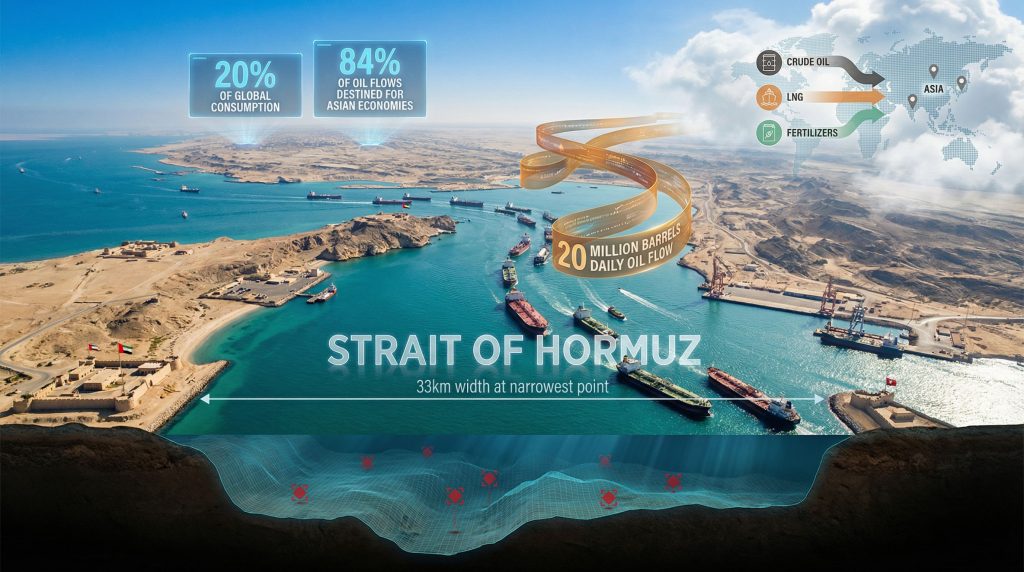
The Persian Gulf's natural constraints create optimal conditions for maritime disruption operations. At its narrowest point, the Strait of Hormuz spans merely 33 kilometers between Oman's Musandam Peninsula and Iran's strategic positions. This geographic bottleneck forces commercial vessels through predictable shipping lanes where deep-water channels concentrate maritime traffic.
Iran's coastal installations provide tactical advantages for potential mining operations. Intelligence assessments indicate the nation maintains approximately 6,000 naval mines according to Congressional Research Service evaluations from 2025. This substantial inventory includes various mine types designed for different deployment scenarios and water depths.
The strait's bathymetry compounds operational challenges for mine clearance efforts. Deep shipping channels require specialised demining equipment, while shallow areas near coastlines present additional hazards for naval operations. Historical precedent from the 1980s Tanker War demonstrates how mines missiles and small boats deployed in these waters can effectively disrupt commercial shipping for extended periods.
Electronic Warfare Integration Multiplies Physical Threats
Modern naval disruption extends beyond physical mining to encompass electronic warfare capabilities. GPS jamming operations have reportedly affected over 1,000 vessels in recent regional conflicts, creating navigation hazards that compound mining risks. These electronic countermeasures integrate with physical deterrence strategies to create multilayered threat environments.
Communication system disruptions further complicate merchant vessel operations in contested waters. Ships lose critical navigation data while simultaneously facing potential physical hazards, creating conditions where even experienced crews struggle to maintain safe passage through familiar shipping lanes.
When big ASX news breaks, our subscribers know first
Global Energy Flow Vulnerabilities: Quantifying Supply Chain Exposure
The Strait of Hormuz serves as a critical artery for global energy distribution, handling approximately 20 million barrels of crude oil daily. This volume represents roughly 20% of worldwide consumption, with 84% of these flows destined for Asian markets. The concentration of energy supplies through this single chokepoint creates systemic vulnerabilities across multiple commodity sectors, particularly when analysing natural gas forecasts and regional demand patterns.
Liquefied natural gas transit through Hormuz accounts for approximately one-fifth of global LNG trade. Asian economies particularly depend on these shipments, with Japan, South Korea, and China receiving substantial portions of their energy imports via this route. Seasonal variations in demand patterns create additional complexity for supply chain planning.
| Energy Commodity | Daily Transit Volume | Global Market Share | Primary Destinations |
|---|---|---|---|
| Crude Oil | 20 million barrels | 20% | Asia Pacific (84%) |
| LNG | Seasonal variability | 20% | Japan, South Korea, China |
| Refined Products | 5-7 million barrels | 15% | Global distribution |
Alternative Route Limitations Expose Infrastructure Gaps
Existing pipeline infrastructure cannot compensate for complete Hormuz disruptions. Saudi Arabia's East-West pipeline system provides maximum capacity of approximately 7 million barrels daily, whilst Iran's Goreh-Jask pipeline operates at substantially lower effective throughput. Combined alternative routing capabilities handle roughly 35-40% of normal Hormuz volumes under optimal conditions.
The geographic constraints facing alternative supply routes highlight strategic vulnerabilities in global energy infrastructure. Pipeline systems require substantial maintenance and security arrangements that may prove challenging during regional conflicts. Furthermore, the Iran mining Hormuz Strait threat significantly impacts these calculations by creating uncertainty around traditional backup systems.
Strategic petroleum reserves maintained by major consuming nations provide limited buffering capacity. While countries like Japan, South Korea, and the United States maintain substantial emergency stockpiles, sustained disruptions exceeding 90-180 days would strain these resources significantly.
Insurance Market Dynamics: War Risk Assessment and Maritime Coverage
Maritime insurance markets respond dramatically to perceived threats in strategic waterways. Historical precedent from the 1980s Tanker War shows war risk premiums escalating from baseline rates of 0.5% to 10-20% of cargo value during active conflict periods. Modern insurance mechanisms face similar pressure when naval mining threats materialise.
Current shipping industry responses demonstrate the immediate impact of enhanced regional risks. Recent reporting indicates only a handful of tankers have transited Hormuz during heightened tensions, despite offers of government-backed insurance coverage. This operational reality illustrates how perceived risks often exceed actual incident rates in determining commercial behaviour.
Electronic Countermeasures Create Compounding Insurance Challenges
GPS jamming operations affecting navigation systems create additional liability concerns for maritime insurers. When vessels lose positioning capability in congested shipping lanes, collision risks increase substantially. Insurance companies must evaluate both direct conflict risks and secondary hazards created by electronic warfare activities.
The integration of cyber warfare potential against shipping communication systems represents an evolving risk category for maritime insurance. Traditional war risk policies may not adequately address electronic attacks that disable vessel systems without causing physical damage. This coverage gap creates uncertainty for shipowners and operators in contested maritime environments.
Military Response Scenarios: Naval Escort Feasibility and Resource Requirements
Military assessment of naval escort operations reveals substantial logistical challenges in mined waterways. Joint Chiefs of Staff evaluations indicate that successful convoy protection requires extensive mine detection capabilities, specialised clearance vessels, and sustained operational commitment across multiple service branches.
Resource allocation for extended escort operations demands significant naval assets. Analysis suggests that effective protection of commercial shipping through contested waters requires:
- Specialised mine countermeasure vessels for advance clearance operations
- Surface combatants providing escort and area defence capabilities
- Maritime patrol aircraft for reconnaissance and threat detection
- Logistics support vessels maintaining operational sustainability
- Command and control infrastructure coordinating complex multi-platform operations
Recent operational confusion regarding escort implementation highlights the gap between policy announcements and actual military capability deployment. Energy department communications errors about naval escort operations underscore the complexity of coordinating civilian agency messaging with military operational realities.
International Coalition Requirements for Sustained Operations
Historical maritime security responses demonstrate the necessity of multilateral cooperation for effective shipping lane protection. Individual nations lack sufficient naval resources to provide comprehensive convoy protection across extended timeframes. Coalition frameworks require extensive diplomatic coordination alongside military planning.
United Nations Convention on the Law of the Sea enforcement mechanisms provide legal frameworks for international maritime security operations. However, implementation requires consensus among regional stakeholders who may have conflicting strategic interests, especially given the broader context of US-China trade war analysis affecting regional alliances.
Market Psychology: Investment Strategies During Supply Disruption Events
Energy sector equity performance during supply shock events follows predictable patterns based on historical precedent. The 1990-1991 Gulf War provides instructive analysis: when Iraqi forces disrupted approximately 4.3 million barrels daily (7% of global supply), crude oil prices spiked from $15/barrel to over $40/barrel within weeks.
A Hormuz mining scenario would represent a significantly larger supply disruption, potentially affecting 20% of global oil supplies versus the 7% impact during the Kuwait crisis. Historical price volatility models suggest proportionally larger market responses, though strategic petroleum reserve releases and demand destruction could moderate price increases.
The Iran mining Hormuz Strait scenario particularly affects global markets due to its scale and the concentration of affected supply routes. CBS reports on Iranian mining activities indicate the immediate market psychology impacts when such operations commence.
Portfolio Positioning for Energy Security Disruptions
Investment strategies during maritime chokepoint crises typically involve:
- Energy sector overweighting in anticipation of supply premium pricing
- Strategic metal positioning as shipping disruptions affect commodity flows
- Alternative energy acceleration as security concerns drive policy changes
- Regional equity rebalancing based on supply chain vulnerability assessments
Geographic diversification becomes critical during energy supply crises. Asian equity markets face disproportionate impacts due to energy import dependencies, while North American markets may benefit from domestic production advantages. European markets experience intermediate effects based on alternative supply access and strategic reserve utilisation.
The next major ASX story will hit our subscribers first
Long-term Strategic Implications: Infrastructure Development and Energy Transition Acceleration
Prolonged maritime disruptions could accelerate alternative energy infrastructure development timelines. Policy makers facing supply security challenges may prioritise renewable energy projects and domestic production capabilities over traditional cost-benefit analyses. This policy shift creates investment opportunities in previously marginal energy technologies, particularly those supporting energy transition security initiatives.
Pipeline development projects gain strategic importance during maritime chokepoint crises. Central Asian corridor development, previously considered economically marginal, becomes strategically critical for energy security diversification. Investment in pipeline infrastructure, LNG terminals, and strategic storage facilities accelerates based on national security rather than purely commercial considerations.
Regional power dynamics evolve as energy transit vulnerabilities reshape diplomatic relationships. China's Belt and Road Initiative gains strategic significance as alternative supply corridor development becomes priority for energy-importing nations. However, countries are simultaneously exploring options like Saudi exploration licenses to diversify supply sources.
Critical Questions About Naval Mining Disruption Scenarios
Can naval mines be effectively detected and neutralised during active conflicts?
Modern mine detection requires specialised sonar equipment and substantial time investment. Effective clearance operations during active hostilities face additional challenges from ongoing mine deployment and electronic countermeasures affecting detection systems.
What immediate price impacts would mining operations trigger in global oil markets?
Historical precedents suggest potential price increases of 20-50% within days of confirmed mining operations. Market sentiment, strategic reserve release coordination, and alternative supply activation determine actual price trajectories beyond initial shock responses.
How long could alternative routes sustain global energy requirements?
Existing pipeline infrastructure handles approximately 35-40% of normal Hormuz volumes under optimal conditions. This capacity limitation requires either significant demand reduction or alternative sourcing arrangements to prevent supply shortages during extended disruptions.
Which economies face the greatest vulnerability to Hormuz disruptions?
Asian economies, particularly Japan, South Korea, and India, demonstrate the highest exposure due to substantial Middle Eastern energy import dependencies. These nations maintain strategic reserves but face long-term vulnerability during sustained disruptions exceeding 90-180 days.
Furthermore, the Iran mining Hormuz Strait threat compounds existing vulnerabilities in global energy distribution networks, requiring comprehensive risk assessment across multiple scenarios and timeframes.
Investment Considerations: Investors analysing maritime security risks should examine energy infrastructure diversification, alternative supply development, and strategic reserve adequacy across different geographic markets. Energy transition acceleration during security crises creates both challenges and opportunities across multiple sectors beyond traditional oil and gas investments.
Looking for Investment Opportunities Amid Global Energy Security Challenges?
Discovery Alert's proprietary Discovery IQ model delivers real-time alerts on significant ASX mineral discoveries, instantly empowering subscribers to identify actionable opportunities ahead of the broader market during times of geopolitical uncertainty. Begin your 14-day free trial today and secure your market-leading advantage in the evolving energy and commodities landscape.