June 28, 2026
Global energy systems face unprecedented volatility as traditional supply mechanisms encounter systematic disruption across multiple vectors. The convergence of enhanced sanctions enforcement, regional military escalation, and strategic infrastructure vulnerabilities has created a complex risk matrix that challenges conventional market stability assumptions. Understanding these multifaceted Iran oil supply risks requires examining both immediate operational constraints and longer-term structural adaptations within the global petroleum marketplace, particularly as markets witness an oil price rally driven by geopolitical tensions.
Current Scale of Iranian Export Constraints
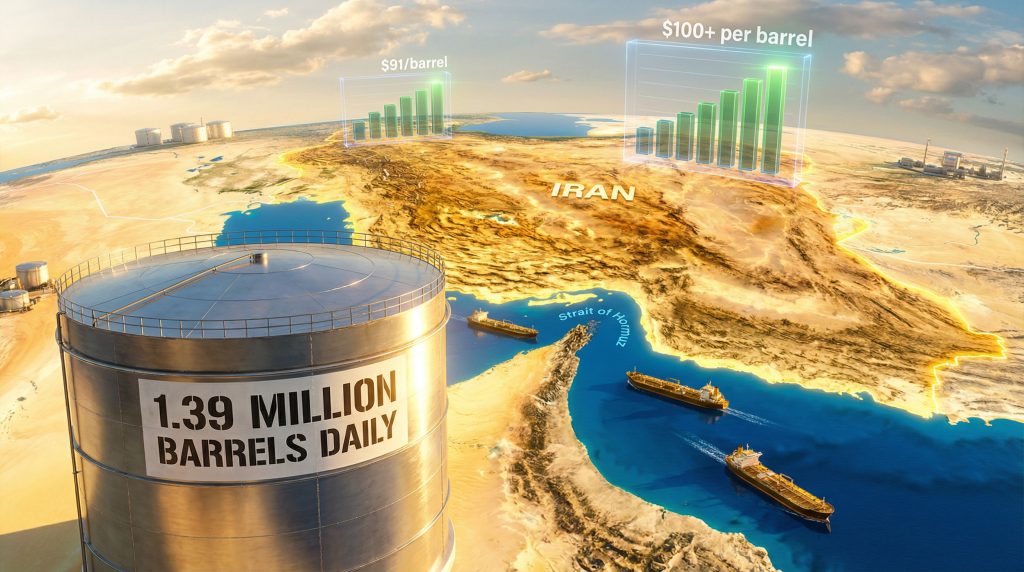
Iranian petroleum exports have contracted significantly under intensified sanctions regimes, with current volumes estimated at approximately 1.2-1.4 million barrels daily according to International Energy Agency assessments through 2024. This reduction reflects both enhanced enforcement mechanisms and operational constraints from regional conflict dynamics.
The sanctions framework has achieved unprecedented effectiveness through systematic targeting of Iranian maritime assets. A substantial portion of Iran's oil tanker fleet now operates under U.S. Treasury sanctions, creating operational complexities that extend beyond simple volume restrictions. These vessels face significant constraints in accessing international ports, insurance coverage, and traditional banking channels.
Key operational impacts include:
- Extended waiting periods for ship-to-ship transfers in international waters
- Discount spreads ranging from $8-15 per barrel below benchmark pricing
- Increased reliance on alternative payment mechanisms bypassing traditional banking
- Operational shutdowns affecting one-third of available tanker capacity
Market participants have documented Iranian crude trading at substantial discounts to Brent crude due to buyer risk assessments and logistical constraints, according to S&P Global Platts pricing data. These discounts reflect both sanctions compliance costs and the operational complexity of handling restricted petroleum flows.
When big ASX news breaks, our subscribers know first
Critical Chokepoint Analysis and Strategic Vulnerabilities
The Strait of Hormuz represents the world's most critical energy transit point, handling approximately 21 million barrels daily according to U.S. Energy Information Administration assessments. This throughput represents roughly 20-21% of global petroleum consumption, making any disruption capable of triggering significant market volatility.
Regional infrastructure concentrates additional vulnerability points across multiple production and processing nodes. Saudi Arabia's Ras Tanura complex, with crude oil refining capacity of approximately 550,000 barrels per day, exemplifies the scale of individual facilities whose disruption could affect global supply chains. The facility combines refining operations with major petroleum export terminals, creating multiple potential impact vectors.
Critical infrastructure components include:
- Qatar's North Field expansion facilities reaching 110 million tonnes per annum LNG capacity
- UAE's Fujairah storage terminals with combined capacity exceeding 14 million barrels
- Iraq's Basrah Oil Terminal complex handling 4.8-5.1 million barrels daily export capacity
- Regional pipeline networks providing alternative routing options
The concentration of processing and export infrastructure within relatively small geographic areas amplifies potential disruption effects. Historical precedents, including the 2019 attacks on Saudi facilities, demonstrated how individual incidents could affect 5% of global oil supply and trigger 20% price increases within hours. Furthermore, oil supply risks mount as Iran lays mines in the Strait of Hormuz, significantly escalating regional tensions.
Military Escalation Scenarios and Market Response Mechanisms
Regional military tensions create multiple pathways for supply disruption, each carrying distinct market implications. Scenario modelling by energy analysts suggests various conflict progression tracks could produce differentiated price impacts based on scope and duration.
Price impact modelling across escalation scenarios:
| Conflict Scope | Brent Crude Projection | Supply Volume Impact |
|---|---|---|
| Limited Iranian Facilities | $85-95/barrel | 1.2-1.4 million bpd |
| Strait Partial Closure | $100-120/barrel | 10-15 million bpd |
| Regional Infrastructure | $120-150/barrel | 20+ million bpd |
| Extended Disruption | $150+/barrel | 25+ million bpd |
Academic modelling by Cambridge Energy Research Associates and Pacific Northwest National Laboratory suggests simultaneous infrastructure damage affecting 25+ million barrels daily could temporarily spike prices to $120-180/barrel before demand destruction mechanisms activate. These projections reflect both immediate supply constraints and secondary effects on global petroleum logistics networks.
International Energy Agency assessments indicate that loss of Iranian supply alone could push prices into the $85-100 range depending on timing and coordinated market responses from other producers and strategic reserve managers. However, stagnant oil prices in recent periods highlight the complex interplay between supply risks and market dynamics.
Strategic Reserve Deployment and Emergency Response Protocols
Major consuming nations maintain strategic petroleum reserves specifically designed to address supply disruptions of this magnitude. The U.S. Strategic Petroleum Reserve holds approximately 714 million barrels as of 2024, providing technical capacity for large-scale emergency releases.
Historical precedent from March 2022 demonstrates coordination mechanisms when the U.S. announced a 180 million barrel release over six months following geopolitical disruptions. The International Energy Agency simultaneously coordinated a collective 60 million barrel emergency release from member nations' reserves, establishing templates for future coordination.
Emergency response logistics considerations:
- U.S. SPR releases typically require 4-6 weeks to reach markets due to pipeline constraints
- International coordination through IEA mechanisms requires 3-7 days for consensus building
- Combined G7 reserve capacity could theoretically support 400+ million barrel releases
- Sustained releases face infrastructure bottlenecks at refineries and distribution terminals
A coordinated 400 million barrel release would represent approximately 20 days of global consumption, providing significant market buffering capacity during extended supply disruptions.
Alternative Supply Route Development and Logistics Adaptation
Supply disruption scenarios activate alternative routing mechanisms designed to maintain petroleum flows despite regional constraints. These adaptations involve both existing infrastructure utilisation and emergency protocol implementation across multiple supply chains.
Saudi Arabia's approach involves offering spot crude allocations, departing from normal long-term contract preferences to maintain market stability. This represents a significant operational shift for a producer that typically prioritises contract security over spot market flexibility.
Enhanced alternative routing options:
- Iraq's northern pipeline to Ceyhan providing 600,000 barrels daily alternative capacity
- Oman's Qalhat terminal expansion supporting increased throughput capability
- Emergency tanker fleet redeployment involving 10-15% of global crude carrier capacity
- Enhanced utilisation of existing pipeline infrastructure outside Persian Gulf region
The global tanker fleet comprises approximately 2,000 crude oil carriers, making redeployment of 200-300 vessels operationally feasible for alternative routing requirements. Clarkson Research data indicates sufficient fleet flexibility to support major routing adaptations within 30-60 day timeframes.
Consequently, oil price movements often reflect these logistical adjustments and supply chain reconfigurations.
Geopolitical Realignment Effects on Energy Security
Regional diplomatic developments create both opportunities and constraints for energy security enhancement. The March 2023 China-brokered rapprochement between Iran and Saudi Arabia established alternative economic pathways that could circumvent Western sanctions through Asian market integration.
The agreement, signed March 10, 2023, ended a seven-year diplomatic freeze and included restoration of bilateral cooperation frameworks, embassy reopening protocols, and implementation of previous cooperation agreements. Chinese Ministry of Foreign Affairs documentation confirms the trilateral nature of this diplomatic breakthrough.
Abraham Accords framework developments present alternative cooperation pathways between Arab states and Israel, potentially reshaping regional energy cooperation structures. The UAE signed the initial agreement in August 2020, followed by Bahrain, Morocco, and Sudan through early 2021, establishing precedents for broader regional integration.
Potential Saudi participation considerations:
- Crown Prince Mohammed bin Salman's documented leadership role in modernisation initiatives
- Historical precedent of Saudi Arabia's 2002 Crown Prince Abdullah Peace Plan
- Cautious Saudi Foreign Minister statements regarding normalisation benefits
- Strategic timing related to succession planning and regional stability priorities
These diplomatic realignments could create alternative energy cooperation frameworks that reduce dependence on traditional transit routes while establishing new supply chain partnerships. Moreover, Iran war puts at risk key infrastructure that supplies the world's oil and gas markets.
The next major ASX story will hit our subscribers first
Advanced Evasion Techniques and Shadow Fleet Operations
Iranian operators have developed sophisticated circumvention mechanisms that demonstrate the evolution of sanctions evasion capabilities. These techniques involve complex operational procedures designed to maintain petroleum flows despite regulatory constraints.
Ship-to-ship transfer operations in international waters have become increasingly sophisticated, utilising advanced navigation systems and coordination protocols to minimise detection risks. These operations typically occur in designated maritime areas outside territorial jurisdiction, complicating enforcement efforts.
Shadow fleet operational characteristics:
- Flag-switching and vessel identification manipulation to avoid sanctions targeting
- Alternative payment mechanisms utilising cryptocurrency and barter arrangements
- Satellite tracking avoidance through AIS transponder manipulation
- Complex ownership structures obscuring beneficial ownership identification
Maritime tracking services document significant numbers of Iranian vessels anchoring in international waters, particularly off Chinese ports, to facilitate these circumvention operations. Multiple news reports from Reuters and Lloyd's List Intelligence confirm this operational pattern through AIS tracking data analysis.
In addition, these operations contribute to concerns about a potential US oil production decline as domestic producers face increased competition from discounted Iranian crude entering global markets through illicit channels.
Regional Production Rebalancing and Emergency Protocols
Gulf producers have implemented emergency response protocols designed to address supply disruption scenarios through coordinated production adjustments and inventory management strategies.
Kuwait's temporary production shutdown protocols demonstrate the security-focused decision making that characterises regional producer responses during heightened conflict periods. These shutdowns prioritise facility protection over short-term production maximisation, reflecting long-term asset protection strategies.
Emergency production management approaches:
- Temporary facility shutdowns for security assessment and protection enhancement
- Inventory buffer expansion to support supply continuity during disruptions
- Alternative export terminal utilisation to distribute transportation risks
- Enhanced coordination with international buyers regarding supply guarantee mechanisms
Qatar's LNG operations have implemented enhanced security protocols while maintaining export commitments to Asian markets, demonstrating the balance between operational security and commercial obligations during regional tension periods.
Furthermore, OPEC market influence remains crucial in coordinating these emergency responses and maintaining global market stability during crisis periods.
Technology Integration for Supply Chain Monitoring
Advanced monitoring systems enhance both sanctions enforcement effectiveness and legitimate supply chain visibility through integrated satellite tracking and blockchain verification protocols.
Digital monitoring capabilities provide real-time supply chain visibility that benefits both regulatory compliance and commercial operations. These systems combine satellite imaging, maritime tracking data, and financial transaction monitoring to create comprehensive supply chain oversight.
Enhanced monitoring system capabilities:
- Satellite-based vessel tracking with advanced analytics for route optimisation
- Blockchain verification systems for cargo authentication and compliance documentation
- AI-powered pattern recognition for identifying sanctions evasion attempts
- Integrated financial monitoring linking payments to physical cargo movements
These technological developments create more transparent and efficient market operations while supporting regulatory compliance requirements across international jurisdictions.
Investment Implications and Market Structure Evolution
Persistent Iran oil supply risks create sustained risk premiums that benefit diversified producers outside traditional Middle Eastern supply chains. This premium pricing reflects market recognition of concentration risks within Persian Gulf production and export infrastructure.
Energy security concerns drive investment priorities toward infrastructure resilience and supply chain diversification. Major consuming nations prioritise strategic reserve expansion and alternative supply route development, creating opportunities within energy infrastructure sectors.
Investment theme developments:
- Strategic reserve expansion projects across major consuming nations
- Alternative pipeline and export terminal development outside Persian Gulf region
- Enhanced security technology integration across energy infrastructure
- Renewable energy acceleration driven by supply security considerations
The sustained volatility creates opportunities for energy infrastructure development that reduces dependence on concentrated supply sources while building more resilient global energy systems.
Long-term Energy Security Framework Development
The current crisis demonstrates how geopolitical tensions rapidly transform global energy dynamics through multiple simultaneous disruption vectors. Enhanced sanctions enforcement, military conflict escalation, and strategic chokepoint vulnerabilities combine to create unprecedented supply chain risks requiring adaptive management frameworks.
Supply chain diversification emerges as a critical strategic priority for major consuming nations seeking to reduce exposure to concentrated production regions. This diversification involves both alternative supplier development and enhanced domestic production capabilities where economically viable.
Strategic reserve management becomes increasingly sophisticated as nations recognise the need for rapid deployment capabilities during extended supply disruptions. Technical improvements in reserve release logistics and international coordination mechanisms enhance overall system resilience.
The acceleration of alternative energy development reflects long-term recognition that reducing dependence on volatile geopolitical regions provides fundamental energy security benefits. These investments create structural demand reductions for traditional petroleum products over extended timeframes.
Iran oil supply risks exemplify the complex intersection of geopolitical tensions, economic sanctions, and energy infrastructure vulnerabilities that characterise modern global energy markets. Market participants must prepare for sustained volatility while policymakers develop more resilient energy security frameworks capable of managing multiple simultaneous disruption scenarios.
This analysis is provided for educational purposes and does not constitute investment advice. Energy market conditions involve significant risks and uncertainties that require professional assessment for individual investment decisions.
Ready to Capitalise on Energy Market Volatility?
Discovery Alert's proprietary Discovery IQ model delivers real-time alerts on significant ASX mineral discoveries, instantly empowering subscribers to identify actionable opportunities ahead of the broader market during periods of global uncertainty. Begin your 14-day free trial today and secure your market-leading advantage in the resources sector.