June 28, 2026
When Diplomacy and Military Action Collide: Understanding the U.S.-Iran Standoff
Few geopolitical fault lines carry as much consequence for global stability as the relationship between Washington and Tehran. Trump threatens Iran with annihilation after U.S. strikes represents one of the most alarming escalations in this decades-long rivalry. The narrow waterway separating the Arabian Peninsula from Iran has historically served as both a vital artery for world commerce and a pressure valve for regional tension. When that valve fails, the reverberations extend far beyond the Persian Gulf, touching energy markets, international law, and the calculus of nuclear deterrence.
The events of late June 2026 compress diplomatic negotiation, military strikes, annihilation rhetoric, and a fragile ceasefire into a single volatile weekend — a sequence that has fundamentally altered how analysts assess the risk of broader conflict in the region.
When big ASX news breaks, our subscribers know first
The Structural Fragility of the Ceasefire Framework
More than a week before the June 28 escalation, U.S. President Donald Trump and Iranian President Masoud Pezeshkian had signed a memorandum of understanding designed to serve as the foundation for a permanent peace agreement. The 60-day ceasefire embedded within that framework was intended to create enough breathing room for substantive negotiations to advance.
From the outset, however, the agreement carried structural vulnerabilities. It lacked clearly defined enforcement mechanisms, relied on mutual trust between two deeply adversarial governments, and attempted to freeze a conflict in which multiple armed actors maintained operational independence from central command decisions.
Both Washington and Tehran would go on to accuse each other of being the first to violate the ceasefire terms, creating a dual-accusation dynamic that made de-escalation politically difficult for either side to pursue without appearing to capitulate.
How Did the Ceasefire Break Down?
The sequence of maritime incidents that ultimately shattered the ceasefire unfolded rapidly:
- Thursday, June 26: Iran struck the Singapore-flagged cargo vessel Ever Lovely in the Strait of Hormuz near the coast of Oman. The ship continued its passage through the strait.
- Saturday, June 27: A drone strike attributed to Iran hit the Panamanian-flagged tanker M/T Kiku, which was transiting the strait carrying more than 2 million barrels of crude oil.
- Early Sunday, June 28: U.S. Central Command fighter jets struck 10 Iranian military targets in and near the strait in direct retaliation for the M/T Kiku attack.
Furthermore, these geopolitical trade tensions had been building for months, making the maritime flashpoint almost inevitable given the structural weaknesses embedded in the original agreement.
The Strait of Hormuz: Why This Waterway Changes Everything
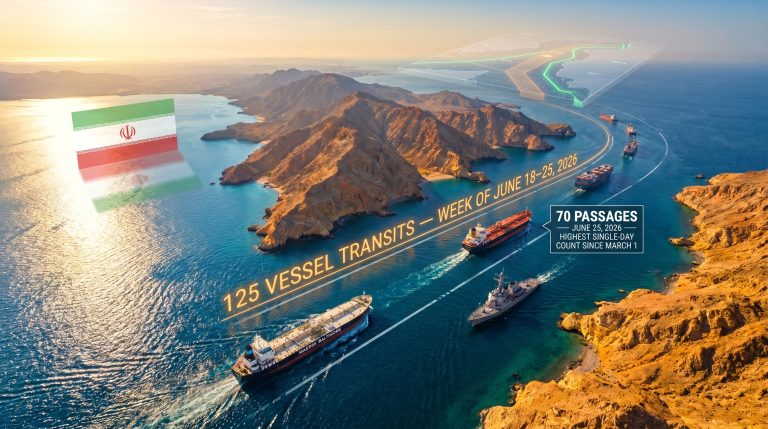
To understand why events in this narrow channel trigger such outsized global consequences, it is necessary to appreciate the Strait of Hormuz's role in the global energy architecture. An estimated 20 to 21 percent of all global oil trade transits through this passage, making it the single most critical maritime chokepoint for energy supply on the planet.
Unlike other strategic waterways that have viable alternative routing options, the Strait of Hormuz has no realistic bypass for the volume of hydrocarbons it handles. Saudi Arabia and the UAE have invested in limited overland pipeline capacity to reduce their exposure, but these alternatives cannot absorb a full disruption.
Any sustained interference with tanker transit carries immediate consequences for everything from Asian manufacturing costs to European fuel prices. Monitoring global crude oil shipments through this corridor has consequently become one of the most closely watched indicators in commodity markets worldwide.
The decision by Iran to use maritime attacks as its primary instrument of ceasefire violation reflects a deliberate strategic logic: targeting shipping imposes maximum economic pain on the international community while stopping short of a direct territorial assault on U.S. forces.
What U.S. Strikes Actually Targeted
U.S. Central Command's strike package was carefully constructed to degrade Iran's capacity to threaten maritime traffic without triggering a full-scale land war. The selection of targets sent multiple simultaneous signals to Tehran.
| Target Category | Strategic Purpose |
|---|---|
| Drone and missile storage facilities | Reduce offensive capacity against commercial shipping |
| Coastal radar installations | Degrade Iran's maritime surveillance and targeting capability |
| Air defence systems | Suppress anti-access capabilities across the strait |
| Military surveillance infrastructure | Blind Iranian situational awareness |
| Communication systems | Disrupt operational coordination |
| Minelayer capabilities | Protect freedom of navigation |
| Kharg Island oil export terminals | Apply direct economic pressure on Iran's primary crude export hub |
The inclusion of Kharg Island in the strike package deserves particular attention. Kharg Island handles the overwhelming majority of Iran's crude oil exports. Striking it was not a purely military decision; it was an economic coercion signal, demonstrating that Washington was prepared to mirror the economic damage Iran was attempting to impose on global shipping.
The Escalation Rhetoric: A Timeline of Annihilation Threats
The language Trump deployed throughout this crisis represents some of the most extreme presidential rhetoric directed at a foreign nation in modern American history. Understanding the timeline provides important context for how the threats escalated in specificity and severity.
- April 2026: Trump warns on Truth Social that an entire civilisation could die and raises the specter of nuclear confrontation, urging Iran to act quickly or face complete destruction.
- May 2026: A follow-up post states Iran's clock is ticking and warns there will be nothing left of the country if it fails to comply.
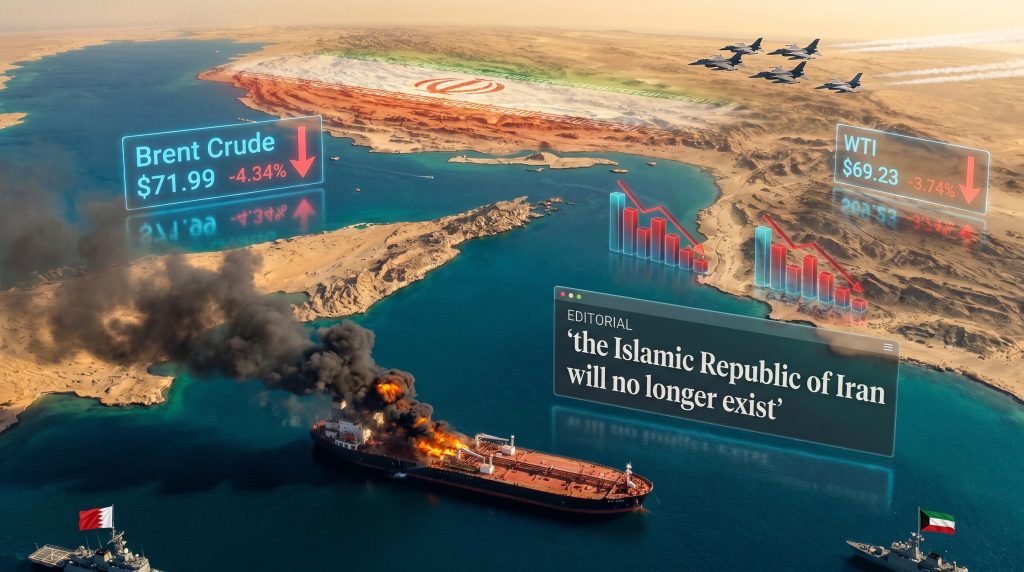
- June 28, 2026: Following the retaliatory strikes, Trump threatens Iran's annihilation, stating the Islamic Republic of Iran would cease to exist if the U.S. were forced to militarily complete the job it started. Additional threats referenced destroying every bridge and power plant in the country.
Trump issued an 8 p.m. Eastern deadline for Iran to accept revised ceasefire terms and reopen the Strait of Hormuz. Iran's Supreme National Security Council ultimately accepted the ceasefire proposal before the deadline expired, suspending the planned escalation.
The threats were therefore conditional rather than executed, but the international community's reaction to the rhetoric itself proved significant regardless of whether the strikes materialised.
Regional Spillover: Kuwait and Bahrain Enter the Frame
The conflict's bilateral character dissolved when Iran launched retaliatory strikes targeting U.S. military installations in both Kuwait and Bahrain following the American strikes on Iranian coastal facilities.
Kuwait's military confirmed its air defence systems were actively engaged against incoming missile and drone attacks. Bahrain's Ministry of Foreign Affairs issued a formal condemnation, characterising Iran's actions as a deliberate and systematic pattern of repeated aggression rather than an isolated incident.
Iran separately claimed that 14 million of its citizens had volunteered to take up arms in response to the U.S. strikes, a figure that, while difficult to verify independently, illustrates the domestic mobilisation narrative Tehran was actively constructing.
The involvement of Kuwait and Bahrain fundamentally transforms the conflict's strategic geometry. Both countries host significant U.S. military infrastructure, which made them logical targets for Iranian retaliation. However, their involvement means that any further escalation risks drawing Gulf Cooperation Council members into active hostilities, converting a bilateral standoff into a broader regional war.
Despite the intensity of the attacks, Central Command confirmed that commercial vessel transits through the Strait of Hormuz continued, a fact that proved critical to energy market pricing in the hours that followed.
The next major ASX story will hit our subscribers first
International Law and the War Crimes Question
Trump's threats to destroy bridges, power plants, and civilian infrastructure drew immediate condemnation from the international community and raised serious questions under international humanitarian law.
Under the Geneva Conventions and customary international humanitarian law, attacks on objects indispensable to the survival of the civilian population or civilian infrastructure not constituting a direct military objective are prohibited. Proportionality assessments are mandatory before any strike that may cause incidental civilian harm.
Amnesty International's formal response warned publicly that threats to target civilian infrastructure, including power plants and bridges used primarily by non-combatant populations, could constitute war crimes if carried out without satisfying proportionality and military necessity standards.
UN Secretary-General Antonio Guterres condemned the annihilation rhetoric as a violation of international law. Pope Leo XIV described threats directed at civilian infrastructure as genuinely unacceptable.
The legal scrutiny surrounding presidential rhetoric itself, rather than executed strikes, marks a notable evolution in how international humanitarian law discourse is being applied in modern conflicts.
How Energy Markets Processed the Crisis
One of the most analytically significant aspects of the June 28 escalation was the counterintuitive behaviour of oil markets. Despite the severity of the military exchanges and the explicit threats of civilisational destruction, crude oil prices fell rather than surged.
| Benchmark | August Futures Settlement | Daily Change | Notable Context |
|---|---|---|---|
| Brent Crude | $71.99 per barrel | -4.34% | Tanker exits ease near-term supply fears |
| WTI Crude | $69.23 per barrel | -3.74% | First sub-$70 close since February 27, 2026 |
The February 27, 2026 date carries particular significance: it was the day immediately preceding the formal outbreak of the Iran war, making WTI's return below $70 a remarkable marker of how much market sentiment had shifted toward pricing containment rather than catastrophe.
Why Did Prices Fall Instead of Rise?
The explanation lies in a distinction professional energy traders make between rhetorical risk and operational supply disruption. When tankers continued exiting the strait and Central Command confirmed that commercial transits remained uninterrupted, the market interpreted this as evidence that the waterway had not been physically closed.
Iran's acceptance of ceasefire terms before U.S. markets opened Monday further reinforced this containment narrative. Consequently, this removed the most acute near-term supply disruption scenario from the pricing model. For a broader understanding of the crude oil geopolitical analysis underpinning these market dynamics, the long-term structural relationship between regional conflict and energy pricing remains a critical framework.
This dynamic illustrates a broader principle in commodity market psychology: extreme political rhetoric, when not accompanied by actual supply disruption, can paradoxically reduce volatility by forcing rapid resolution.
Three Scenarios for What Comes Next
The ceasefire accepted by Iran's Supreme National Security Council on June 28 does not resolve the underlying structural tensions that produced this crisis. Three plausible trajectories deserve serious consideration.
Scenario A: Stabilised Ceasefire and Diplomatic Progress
Both parties honour the revised ceasefire terms, the Strait of Hormuz remains open to commercial traffic, and nuclear and sanctions negotiations resume. This scenario requires sustained political will on both sides and an absence of further maritime provocations.
Scenario B: Controlled Escalation Below Full-Scale Conflict
Sporadic maritime incidents continue but remain below the threshold that would trigger comprehensive military engagement. Gulf states absorb retaliatory strikes without directly entering the conflict. Oil markets remain volatile but functional, with prices fluctuating based on individual incident severity rather than sustained disruption. The oil price crash outlook under this scenario would depend heavily on whether OPEC production decisions interact with reduced Iranian export capacity.
Scenario C: Breakdown and Broader Regional War
A significant maritime incident, civilian casualty event, or miscalculation in the strait triggers irreversible escalation. Gulf Cooperation Council members are drawn into active hostilities. The trade war and oil prices dynamic would compound these pressures, as existing tariff structures and supply chain disruptions interact with energy supply shocks to amplify the economic damage well beyond the Gulf region.
Frequently Asked Questions
What Triggered the Latest U.S. Strikes on Iran in June 2026?
U.S. Central Command launched strikes against 10 Iranian military targets following an Iranian drone strike on the Panamanian-flagged tanker M/T Kiku, which was carrying more than 2 million barrels of crude oil through the Strait of Hormuz. The attack was deemed a violation of the existing ceasefire agreement.
Did Trump Threaten to Destroy Iran as a Nation?
Yes. Trump threatens Iran with annihilation featured prominently across multiple social media posts and public statements. He stated that if the U.S. were forced to militarily complete the job it had started, the Islamic Republic of Iran would no longer exist. He also threatened to destroy bridges, power plants, and other infrastructure. The planned escalation was suspended after Iran's Supreme National Security Council accepted revised ceasefire terms.
Which Countries Did Iran Strike in Retaliation?
Iran launched missile and drone strikes against U.S. military installations in Kuwait and Bahrain in response to the American strikes on Iranian coastal facilities.
Are Trump's Infrastructure Threats Legal Under International Law?
Amnesty International and international legal experts have warned that threats to destroy civilian infrastructure, including power plants and bridges, may constitute violations of international humanitarian law. The UN Secretary-General and Pope Leo XIV also condemned the rhetoric. Legality ultimately depends on whether targets constitute direct military objectives and whether proportionality standards are satisfied.
Why Did Oil Prices Fall Despite the Escalation?
Brent crude dropped 4.34% to $71.99 per barrel and WTI declined 3.74% to $69.23 per barrel because tanker exits from the strait eased immediate supply disruption concerns and Central Command confirmed commercial transits were continuing. Markets priced containment rather than catastrophic disruption.
Is a Ceasefire Still in Effect?
As of June 28, 2026, Iran's Supreme National Security Council accepted a revised ceasefire proposal, suspending planned U.S. escalation. However, the agreement remains structurally fragile given that both parties have repeatedly accused each other of prior violations, and Trump threatens Iran with annihilation rhetoric has not been formally withdrawn.
This article is based on publicly available information as of June 28, 2026. Geopolitical situations of this nature evolve rapidly. Readers should consult current news sources for the latest developments. Nothing in this article constitutes financial or investment advice. Scenario projections represent analytical frameworks rather than predictions, and actual outcomes may differ materially from those described.
Want to Position Yourself Ahead of the Next Major Market-Moving Discovery?
Geopolitical shocks like the U.S.-Iran standoff serve as a reminder that commodity markets can shift rapidly — and Discovery Alert's proprietary Discovery IQ model ensures subscribers receive real-time alerts on significant ASX mineral discoveries the moment they are announced, turning complex market signals into actionable investment opportunities. Explore historic discoveries and the substantial returns they have generated, then begin your 14-day free trial to secure a genuine market-leading edge before the broader market catches on.