May 21, 2026
The global energy landscape faces unprecedented transformation as traditional supply-demand dynamics undergo fundamental restructuring. Historical patterns of energy security, built around predictable trade routes and established chokepoint management, are being challenged by new forms of strategic leverage that combine geographic control with economic coercion. This shift represents more than tactical maneuvering between nation-states; it signals the emergence of infrastructure-based power projection that could reshape international commodity flows for decades to come. Iran oil trade control in Strait of Hormuz has become a defining factor in this new paradigm.
Understanding Tehran's Strategic Maritime Control Framework
Geographic Foundations of Energy Leverage
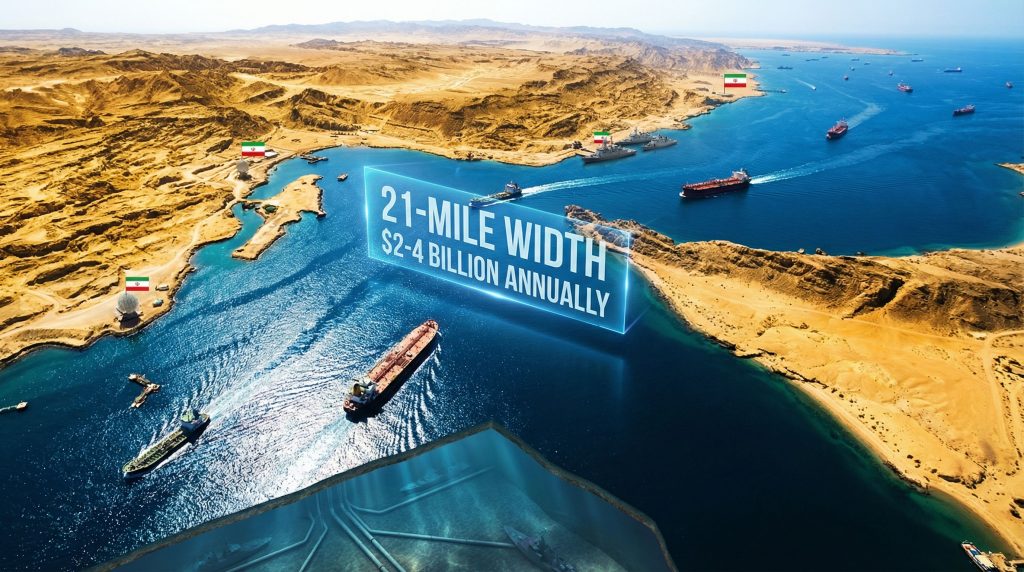
Iran's positioning along the Persian Gulf represents one of the most strategically valuable coastlines in global energy infrastructure. The nation controls approximately 1,200 miles of coastline along both the Persian Gulf and Gulf of Oman, providing unparalleled oversight of vessel movements through the 21-mile-wide Strait of Hormuz. This geographic advantage has been transformed from defensive positioning into active market control through sophisticated operational tactics.
Between March 1 and April 7, 2026, eastbound Hormuz transits declined dramatically to just 92 vessels, with approximately 65% carrying Iranian cargo or operating under Iranian approval. This operational control demonstrates Iran's transition from formal blockade rhetoric to practical transit management, maintaining the appearance of international commerce while controlling which vessels receive passage approval.
The selective nature of this control becomes evident through specific case studies. The tanker Ping Shun, carrying 80,000 tonnes of Iranian Light crude, was initially destined for India's Vadinar refinery but underwent mid-voyage rerouting to China, illustrating Iran's ability to influence cargo destinations even after departure. Similarly, the tanker Jaya, carrying 280,000 tonnes of Iranian crude, maintained position near Singapore for several weeks before proceeding to India, demonstrating staged access protocols for non-Chinese buyers.
Compared to other global chokepoints, Iran's control mechanism differs significantly from traditional models:
- Suez Canal: Operates through standardized toll collection and scheduling systems
- Malacca Strait: Relies on multilateral maritime security coordination
- Bab el-Mandeb: Subject to periodic disruption but lacks sustained unilateral control
- Strait of Hormuz: Now functions under discretionary approval systems with payment requirements
Evolution from Sanctions Target to Market Gatekeeper
Iran's strategic transformation accelerated significantly following the escalation of regional tensions in early 2026. The country entered this phase with export momentum already building, reaching 2.2 million barrels per day in February 2026, representing the highest level since 2018. Despite broader Gulf supply disruptions in March, Iranian crude exports declined only modestly to 1.9 million barrels per day.
This transition involved rapid depletion of previously accumulated floating storage reserves. Iranian floating storage declined from a peak of 55 million barrels in December 2025 to 34 million barrels by February 2026, and further to 23 million barrels by early April 2026, marking the lowest level since October 2025. This drawdown indicates a strategic shift from managing excess supply cushions to deploying marginal, supply-critical barrels into tight markets.
The U.S. policy response revealed the limits of sanctions mechanisms when confronted with physical supply shortages. Washington implemented several tactical adjustments:
- March 12, 2026: Authorization for Russian crude release from floating storage
- March 20, 2026: Temporary approval for Iranian barrel sales through April 19, 2026
- Ongoing: OFAC waiver authority for Iranian barrels "already at sea"
These interventions represent tactical acknowledgment that physical shortages supersede traditional sanctions frameworks, particularly when alternative supply sources cannot immediately compensate for lost volumes. Furthermore, these developments highlight how tariffs impact insights and broader geopolitical shifts affect energy markets.
Syria's political transition in early 2025 eliminated a traditional Iranian buyer consuming 80,000-100,000 barrels per day, forcing Iran to develop new market relationships and payment mechanisms. This demand restructuring accelerated Iran's integration with Chinese independent refineries and Southeast Asian transshipment hubs.
When big ASX news breaks, our subscribers know first
Economic Mechanisms Behind Hormuz Strategy
Revenue Generation Through Transit Control
Iran's monetization of Strait of Hormuz control operates through a formalized tariff structure that transforms the waterway from international commons into toll-generating infrastructure. According to statements from Iran's Oil, Gas and Petrochemical Products Exporters' Union, the proposed transit fee stands at $1 per barrel for all crude oil shipments.
Early implementation evidence suggests significant revenue potential. At least one vessel has reportedly paid approximately $2 million for passage, with settlement conducted in yuan to avoid traditional USD-denominated banking channels. Applying the proposed tariff to historical Hormuz transit volumes reveals substantial annual revenue projections:
| Transit Volume | Daily Revenue | Annual Revenue | Strategic Implications |
|---|---|---|---|
| 10 million b/d | $10 million | $3.65 billion | Conservative baseline scenario |
| 15 million b/d | $15 million | $5.48 billion | Moderate recovery scenario |
| 21 million b/d | $21 million | $7.67 billion | Historical peak utilization |
Current transit levels of approximately 1.5-2 million barrels per day equivalent suggest Iran is prioritizing strategic positioning over immediate revenue maximization. The selective approval process enables Iran to maintain leverage while gradually expanding the toll-paying precedent among international shippers.
Comparative analysis with established transit fees demonstrates Iran's pricing strategy:
- Panama Canal: $5-6 per barrel equivalent for crude transit
- Suez Canal: $500,000-$1 million per vessel (approximately $1.50-3.00 per barrel)
- Proposed Hormuz toll: $1 per barrel
This positioning suggests Iran aims for volume-based revenue generation rather than premium pricing that might encourage alternative routing or accelerated infrastructure development outside the Gulf.
Yuan-Denominated Payment Systems and Currency Diversification
China's absorption of Iranian crude reached 1.6 million barrels per day in March 2026, representing the highest monthly intake since November 2025 and approximately 16% of China's total seaborne crude imports of 10 million barrels per day. This volume demonstrates China's role as the primary demand center capable of processing Iranian crude despite sanctions constraints, particularly as oil price dynamics continue to evolve.
The transaction infrastructure supporting these flows operates through deliberately segmented channels:
Payment Mechanisms:
- Yuan-denominated transactions via smaller regional Chinese banks
- Avoidance of major state-owned financial institutions
- Bypassing SWIFT and traditional correspondent banking channels
- Integration with existing China-Russia yuan-denominated oil trade
Operational Structure:
- Chinese state-owned enterprises continue abstaining from direct Iranian purchases
- Independent "teapot" refineries in Shandong province absorb majority of volumes
- Ship-to-ship transfers in Singapore and Malaysia enable cargo repositioning
- Rizhao and Dongjiakou ports facilitate onward movement into Chinese independent refining sector
This segmentation allows Chinese policy makers to maintain official compliance postures while independent refiners access competitively priced crude through alternative payment rails. The model has potential for significant scaling, particularly as Iran's proposed toll collection system could further normalize yuan usage in energy transactions.
Historical precedent exists for sustained yuan-denominated energy trade, as a significant share of China's oil trade with Russia already occurs outside USD-denominated channels. Iran's transit toll framework could accelerate this trend by creating infrastructure-level demand for yuan holdings among international shipping companies.
For U.S. monetary policy, sustained expansion of yuan-denominated energy transactions represents more than tactical circumvention of sanctions. It introduces parallel trade frameworks that could gradually erode dollar dominance in global commodity markets, particularly if other energy exporters adopt similar yuan-accepting policies.
Iranian Crude Price Transformation Analysis
The most dramatic indicator of Iran's enhanced market position appears in crude pricing dynamics. Iranian Light crude has achieved a remarkable $13 per barrel swing in relative valuation, moving from a $12 per barrel discount to ICE Brent to a $1 per barrel premium specifically for deliveries into China.
This pricing transformation reflects several converging factors:
Supply Constraints:
- Iranian Light (32-33 degrees API) and Iran Heavy (29-30 degrees API) represent essential medium-sour crude grades for many Asian refineries
- Alternative medium-sour supplies from other Gulf producers face transit constraints through Hormuz
- Reduced availability creates pricing power for accessible Iranian grades
Demand Dynamics:
- Asian refineries configured for medium-sour crude face limited substitution options
- Chinese independent refineries prioritize crude availability over pricing
- Indian buyers emerging as secondary demand source despite payment complexities
Market Structure Changes:
- Previously sanctioned barrels transition to "must-have" feedstock status
- Floating storage depletion eliminates supply buffers that previously moderated pricing
- Geographic arbitrage opportunities limited by Iran oil trade control in Strait of Hormuz
The premium pricing for Iranian crude into China specifically demonstrates sophisticated price discrimination based on buyer payment capabilities and strategic importance. This suggests Iran has developed nuanced understanding of customer willingness to pay and capacity to execute transactions outside traditional banking channels.
Compared to historical sanctions-era pricing patterns, current Iranian crude premiums represent unprecedented market positioning for a heavily sanctioned commodity. This pricing power indicates that geographic control over transit routes can overcome traditional sanctions mechanisms when supply-demand fundamentals favor the controlling party.
Strategic Vulnerabilities Among Major Importing Nations
China's Calculated Risk Management Framework
China's approach to Iranian crude imports demonstrates sophisticated risk management that balances energy security needs with compliance considerations. The 1.6 million barrels per day intake through independent refiners represents deliberate policy segmentation that enables access to competitively priced crude while maintaining official distance through state-owned enterprises.
Operational Risk Mitigation:
- Geographic Diversification: Shandong province teapot refineries located strategically to process Iranian volumes alongside other crude sources
- Payment Channel Isolation: Yuan transactions via smaller regional banks reduce exposure to major financial institutions
- Supply Source Balancing: Iranian volumes complement rather than replace traditional suppliers like Saudi Arabia and Russia
Strategic Advantages:
- Access to discounted crude during periods of supply tightness
- Development of yuan-denominated energy trade infrastructure
- Strengthened bilateral relationships with Iran outside Western sanctions frameworks
- Enhanced energy security trends through supply source diversification
China's independent refinery sector provides operational flexibility that larger state-owned enterprises cannot match. These facilities can adjust crude slates rapidly, process varying quality grades, and execute transactions through alternative financial channels without direct government oversight.
The Shandong province concentration around Rizhao and Dongjiakou ports enables efficient logistics for Iranian crude imports, with established ship-to-ship transfer capabilities and storage infrastructure designed for diverse crude sources.
India's Emerging Energy Diplomacy Challenges
India faces more complex constraints in developing Iranian crude imports due to larger exposure to U.S. financial systems and greater reliance on traditional banking channels. However, energy security pressures are driving innovative approaches to Iranian engagement.
Supply Diversification Strategies:
- Venezuelan Crude: Increased imports as alternative to Middle Eastern supplies constrained by Hormuz transit issues
- LPG Imports: Iranian LPG cargoes of 12,000 and 44,000 tonnes discharged at Mangalore represent testing of alternative product streams
- Refined Products: High-sulfur fuel oil and naphtha imports from Iran supplement crude imports
Payment Infrastructure Development:
- Exploration of rupee-denominated payment mechanisms
- Potential barter arrangements involving Indian manufactured goods
- Investigation of cryptocurrency settlement options for smaller transactions
The case of the tanker Jaya, carrying 280,000 tonnes of Iranian crude with expected April 10 arrival in India after weeks near Singapore, demonstrates India's cautious approach to Iranian crude imports. Extended staging periods allow for verification of payment arrangements and regulatory compliance before final delivery.
India's Vadinar refinery maintenance schedule from April 9 provides convenient cover for crude sourcing adjustments, enabling Indian buyers to test Iranian supply chains without immediate commercial pressure.
Gulf State Infrastructure Response Strategies
Saudi Arabia's East-West Pipeline represents the most significant bypass route for Hormuz-dependent exports, with current capacity of 5 million barrels per day operating at approximately 66% utilization (3.3 million barrels per day). This infrastructure provides Saudi Arabia with strategic independence from Hormuz transit while requiring substantial security investments to protect against potential attacks.
Saudi Arabia's Diversification Efforts:
- Red Sea Terminal Development: Expansion of Yanbu and other Red Sea export facilities to handle increased crude flows
- Pipeline Capacity Optimization: Operational adjustments to maximize East-West Pipeline throughput
- Market Share Protection: Competitive pricing strategies to maintain customer relationships despite higher logistics costs
UAE's Alternative Route Development:
- Fujairah Pipeline: 1.8 million barrels per day capacity currently operating at 45% utilization (0.8 million barrels per day)
- Strategic Petroleum Reserves: Deployment of government-held crude stocks to maintain export volumes
- Regional Hub Positioning: Development of Fujairah as distribution center for non-Hormuz energy flows
Kuwait and Iraq Constraints:
- Iraq-Turkey Pipeline: 0.6 million barrels per day capacity currently suspended due to security and political risks
- Iran Jask Terminal: 0.3 million barrels per day capacity remains inactive under Iranian control
These infrastructure limitations demonstrate the strategic vulnerability of Gulf producers lacking direct bypass routes. Kuwait, in particular, faces complete dependence on Hormuz transit, creating potential for significant Iranian leverage over Kuwait's export capabilities.
Comparative Analysis of Bypass Route Capabilities
Infrastructure Capacity and Operational Resilience
Current bypass route utilization reveals significant unused capacity that could theoretically compensate for Hormuz disruptions, but operational and strategic constraints limit practical deployment:
Saudi East-West Pipeline Analysis:
- Operational Capacity: 5.0 million b/d maximum throughput
- Current Utilization: 3.3 million b/d (66% capacity utilization)
- Expansion Potential: 1.7 million b/d additional throughput available
- Strategic Limitations: Single-point vulnerability to targeted attacks, higher transportation costs, limited terminal capacity at Red Sea ports
UAE Fujairah Infrastructure:
- Pipeline Capacity: 1.8 million b/d maximum throughput
- Current Utilization: 0.8 million b/d (45% capacity utilization)
- Expansion Potential: 1.0 million b/d additional throughput
- Limitations: Limited scope for capacity expansion, dependence on Abu Dhabi production levels
Investment Requirements for Route Expansion:
Major infrastructure development would require substantial capital expenditure and extended timelines:
- Saudi Red Sea Capacity Doubling: Estimated $15-20 billion investment over 5-7 years
- UAE Fujairah Expansion: $8-12 billion for significant capacity increases
- New Kuwait Bypass Pipeline: $20-25 billion for 2-3 million b/d capacity to Mediterranean or Red Sea
Operational Resilience Factors:
Security infrastructure represents a critical ongoing cost for bypass route operations. The Saudi East-West Pipeline requires extensive protection along its 1,200-kilometer length, including:
- Continuous monitoring systems
- Rapid response teams positioned along the route
- Backup pumping stations and emergency repair capabilities
- Cybersecurity protection for control systems
Maintenance requirements create periodic vulnerabilities, as scheduled downtime for pipeline inspection and equipment replacement can temporarily reduce bypass capacity. These maintenance windows create opportunities for adversaries to time disruptive actions when alternative routes operate at reduced capacity.
Timeline Constraints for Infrastructure Development
New bypass route development faces significant timeline challenges that limit strategic responsiveness:
Planning and Approval Phase: 2-3 years for environmental impact assessments, route optimization, and regulatory approvals
Construction Phase: 4-6 years for major pipeline projects crossing multiple geographic zones
Testing and Commissioning: 6-12 months for operational verification and safety certification
Full Operational Capacity: Additional 6-12 months for optimization and capacity ramp-up
These timelines indicate that current bypass route capacity represents the maximum available alternative for at least 5-7 years, creating extended periods of potential Iranian leverage over Gulf energy exports.
Geopolitical risks affecting investment decisions include potential changes in regional security situations, international sanctions frameworks, and bilateral relationships between Gulf states and major consuming nations. These uncertainties complicate long-term infrastructure planning and financing arrangements.
Long-Term Geopolitical Implications and Power Balance Restructuring
Iran's Transition from Regional Pariah to Pivot State
Iran's successful leverage over Strait of Hormuz transit represents a fundamental shift in Middle Eastern power dynamics, transitioning Iran from sanctions-constrained regional actor to infrastructure gatekeeper with global influence. This transformation enables Iran to project power beyond traditional military or economic capabilities through control of critical supply chain chokepoints.
Regional Influence Expansion:
- Diplomatic Leverage: Ability to grant or restrict market access for neighboring states creates new bargaining chips in bilateral negotiations
- Economic Integration: Yuan-denominated payment systems strengthen ties with China while reducing dependence on Western financial infrastructure
- Alliance Formation: Enhanced coordination with Russia in developing alternative trade and payment mechanisms
Integration with China-Russia Economic Bloc:
The Iran oil trade control in Strait of Hormuz strengthens the emerging China-Russia-Iran economic alignment by creating practical mechanisms for sustained trade outside Western-dominated systems. Furthermore, US-China trade strategies continue to evolve in response to these shifting power dynamics. This includes:
- Joint development of yuan-denominated commodity trading platforms
- Shared infrastructure for sanctions-resistant payment systems
- Coordinated energy export strategies that maximize collective leverage over consuming nations
Iran's success in monetizing geographic control could inspire similar approaches by other strategically positioned nations controlling energy transit routes, potentially creating multiple chokepoints operating under non-Western oversight.
U.S. Strategic Response Options and Constraints
Washington faces increasingly limited options for responding to Iranian transit control, as traditional sanctions mechanisms prove inadequate against adversaries controlling physical infrastructure. Additionally, concerns about global recession risk continue to influence policy decisions. Military intervention scenarios carry substantial costs and uncertain outcomes:
Military Intervention Analysis:
- Operational Requirements: Sustained naval presence, air superiority maintenance, and potential amphibious operations along Iran's coastline
- Cost Estimates: $50-100 billion annually for comprehensive military operations, plus reconstruction costs for damaged infrastructure
- Alliance Coordination Challenges: Limited European and Asian partner support for military solutions that could further destabilize energy markets
Sanctions Effectiveness Degradation:
Traditional sanctions frameworks lose effectiveness when target nations control critical infrastructure that consuming nations require for economic stability. Iran's position demonstrates how geographic advantages can neutralize financial and commercial restrictions.
Alternative Strategic Approaches:
- Accelerated Energy Transition Investment: $500 billion-$1 trillion in renewable energy and storage infrastructure to reduce dependence on Middle Eastern oil
- Strategic Reserve Expansion: Doubling or tripling national petroleum reserves to provide extended supply buffers during transit disruptions
- Alternative Supplier Development: Enhanced engagement with African, Latin American, and North American producers to diversify supply sources
Global Energy Architecture Evolution
Acceleration of Energy Transition Policies
Iran's effective control over Hormuz transit creates powerful incentives for consuming nations to accelerate energy transition initiatives that reduce dependence on Middle Eastern oil:
European Response:
- Renewable Energy Investment: €300-500 billion additional investment in wind, solar, and storage capacity over 5-10 years
- LNG Infrastructure: Expanded import terminals and storage facilities to replace lost crude access
- Energy Efficiency Programs: Accelerated industrial and transportation efficiency improvements to reduce overall energy demand
Asian Adaptation Strategies:
- Nuclear Power Expansion: Japan, South Korea, and China accelerating nuclear capacity deployment
- Coal-to-Liquids Technology: Development of synthetic fuel production capabilities using domestic coal resources
- Regional Cooperation: Enhanced energy sharing agreements and emergency supply protocols among Asian nations
Strategic Petroleum Reserve Utilization Patterns
Current crisis management relies heavily on coordinated strategic reserve releases, but sustained Iranian control over Hormuz could exhaust available emergency stocks within 6-12 months:
IEA Coordination Mechanisms:
- Current Release Rates: 60-90 million barrels released over 6 months
- Maximum Sustainable Releases: 150-200 million barrels annually without compromising emergency response capabilities
- Replenishment Challenges: Limited ability to refill reserves while alternative supply sources operate at capacity
National Reserve Utilization:
- U.S. Strategic Petroleum Reserve: 400 million barrels available, but optimal release rate limited to 1-2 million barrels per day
- China Strategic Reserves: Estimated 200-300 million barrels, with limited transparency on release capabilities
- Japan and South Korea: Combined 150-200 million barrels, primarily for domestic emergency needs
Scenario Analysis for Future Development Pathways
De-escalation Framework Possibilities
Negotiated Settlement Structure:
Potential resolution frameworks could involve revenue-sharing arrangements that provide Iran with sustained income while restoring international access to Hormuz transit. Key components might include:
- International Oversight: Joint Iranian-international management of transit fees and vessel approval processes
- Graduated Sanctions Relief: Phased removal of economic restrictions in exchange for transit guarantees and pricing transparency
- Regional Security Architecture: Multilateral agreements governing Gulf waterway security and emergency response protocols
Market Normalization Timeline:
Recovery from current disruptions would likely follow a staged pattern:
- Phase 1 (Months 1-6): Gradual restoration of transit volumes to 50-70% of pre-crisis levels
- Phase 2 (Months 6-18): Price premium elimination as supply buffers rebuild and alternative routes scale
- Phase 3 (Months 18-36): Investment flow restoration for regional energy infrastructure and production capacity expansion
Revenue-Sharing Mechanisms:
Sustainable settlements might involve international participation in transit fee collection and distribution:
- Iranian retention of 60-70% of transit revenues
- International development fund receiving 20-30% for regional infrastructure projects
- Emergency response fund receiving 10% for crisis management and strategic reserve maintenance
Escalation Risk Assessment and Consequences
Extended Closure Scenarios:
Prolonged Iranian control over Hormuz could trigger broader economic and political consequences:
Global Recession Probability Modeling:
- 6-Month Closure: 40-60% probability of recession in energy-importing economies
- 12-Month Closure: 80-90% probability of severe global recession
- 18+ Month Closure: Near-certain global economic crisis with potential for social and political instability
Strategic Reserve Depletion Timeline:
- IEA Coordinated Reserves: Effective capacity exhausted within 8-12 months of sustained closure
- National Emergency Stocks: Critical levels reached within 12-18 months
- Commercial Inventory: Minimum operating levels within 3-6 months of disruption
Alternative Energy Adoption Acceleration:
Extended crisis could trigger unprecedented energy transition investment:
- Global Investment Scale: $2-5 trillion over 5 years in renewable energy and storage
- Technology Development: Accelerated deployment of hydrogen, synthetic fuels, and advanced battery systems
- Infrastructure Transformation: Rapid electrification of transportation and industrial processes
Military Intervention Consequences:
Armed intervention to restore Hormuz access carries substantial risks and uncertain outcomes, as reported by international analysts focusing on the region's stability:
Infrastructure Damage Assessment:
- Iranian Facilities: Potential destruction of oil production and export infrastructure
- Regional Impact: Collateral damage to Saudi, UAE, and Kuwaiti facilities
- Global Market Effect: Potential loss of 15-25% of global oil supply for 6-24 months
Regional Conflict Expansion:
Military action could trigger broader Middle Eastern instability:
- Proxy Conflict Activation: Iranian-supported groups throughout the region
- Israeli-Iranian Escalation: Direct confrontation between regional military powers
- Saudi-Iranian Proxy War: Intensification of existing conflicts in Yemen and Syria
The next major ASX story will hit our subscribers first
Strategic Implications for Global Energy Security
Investment Strategy Adjustments for Market Participants
Current developments require fundamental reassessment of energy sector investment strategies:
Geographic Diversification Imperatives:
- Supply Source Diversification: Increased investment in African, Latin American, and North American production capacity
- Transit Route Redundancy: Infrastructure development supporting multiple export pathways for major producing regions
- Regional Processing Capacity: Strategic placement of refining and storage facilities outside chokepoint-dependent locations
Infrastructure Resilience Prioritization:
Investment criteria must incorporate resilience against supply chain disruptions:
- Bypass Route Development: Pipelines and terminals enabling alternative export pathways
- Storage Infrastructure: Expanded strategic and commercial inventory capacity
- Processing Flexibility: Refining capabilities adaptable to diverse crude sources
Alternative Energy Transition Acceleration:
Traditional energy transition timelines may require compression due to supply security concerns:
- Renewable Energy Scaling: Accelerated deployment of wind, solar, and storage capacity
- Hydrogen Infrastructure: Development of hydrogen production, transportation, and utilization systems
- Synthetic Fuel Technology: Investment in coal-to-liquids, gas-to-liquids, and renewable synthetic fuel production
Policy Response Coordination Requirements
Effective response to Iranian transit control requires enhanced international cooperation, particularly as regional toll mechanisms become more structured:
International Framework Development:
- Emergency Response Protocols: Coordinated strategic reserve releases and supply sharing agreements
- Alternative Infrastructure Investment: Joint financing for bypass routes and resilience infrastructure
- Technology Transfer: Accelerated sharing of energy transition and efficiency technologies
Strategic Reserve Management Optimization:
Current strategic reserve systems require enhancement to address extended supply disruptions:
- Capacity Expansion: Doubling or tripling national emergency stock levels
- Release Coordination: Improved mechanisms for synchronized international reserve utilization
- Replenishment Strategies: Sustainable approaches for reserve refilling during ongoing supply constraints
Diplomatic Engagement Strategy Evolution:
Long-term stability requires development of sustainable frameworks for managing energy chokepoints:
- Multilateral Oversight: International involvement in critical transit point management
- Revenue Sharing: Mechanisms for providing transit-controlling nations with sustainable income streams
- Conflict Prevention: Early warning and mediation systems for potential supply disruption scenarios
The Iran oil trade control in Strait of Hormuz represents a fundamental shift in global energy security dynamics, demonstrating how geographic advantages can overcome traditional economic and military pressure mechanisms. Success in navigating this challenge will require coordinated international responses that address both immediate supply security needs and long-term energy architecture transformation. Investment strategies, policy frameworks, and international cooperation mechanisms developed in response to current disruptions will likely define energy security approaches for the coming decades.
This analysis is provided for informational purposes and should not be considered investment advice. Energy market developments involve substantial risks and uncertainties that could significantly impact global economic conditions. Readers should conduct their own research and consult with qualified professionals before making investment decisions.
Ready to Navigate Global Energy Market Disruptions?
As Iran's control over the Strait of Hormuz reshapes energy security dynamics and creates new investment paradigms, Discovery Alert's proprietary Discovery IQ model provides crucial real-time intelligence on ASX mineral discoveries that could benefit from these shifting market conditions. Stay ahead of energy transition opportunities and resource security plays by accessing instant notifications on significant discoveries across critical minerals, oil and gas exploration, and strategic commodities. Begin your 14-day free trial today to position yourself at the forefront of these transformative market developments.