June 15, 2026
The Geography of Vulnerability: How One Narrow Passage Shapes Global Energy
Every so often, a single geographic feature reminds the world just how brittle its energy infrastructure truly is. The Strait of Hormuz, a passage barely 33 kilometres wide at its narrowest navigable point, sits at the intersection of Iranian and Omani territorial waters and serves as the exit valve for a substantial portion of the world's daily oil supply. When diplomatic tensions transform this waterway from a transit corridor into a contested zone, the consequences ripple outward across commodity markets, shipping lanes, and national energy security strategies simultaneously.
The current impasse surrounding the Iran Strait of Hormuz reopening deal is not simply a bilateral disagreement between Washington and Tehran. It is a masterclass in how deeply interconnected the region's conflict dynamics have become, and why resolving any single thread of this diplomatic knot requires pulling on several others at once.
When big ASX news breaks, our subscribers know first
The Strait's Outsized Role in Global Energy Supply
To understand why the current negotiations carry such extraordinary weight, it helps to quantify what the Strait of Hormuz actually moves on any given day. Furthermore, the crude oil geopolitical trends surrounding this corridor have intensified considerably throughout 2025 and into 2026, making the current moment particularly consequential for global supply chains.
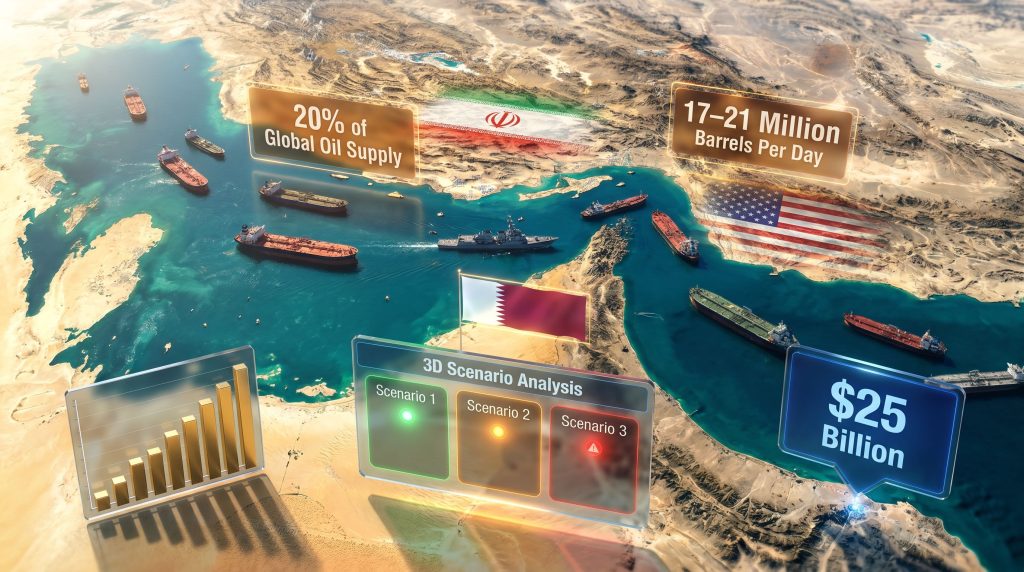
- Roughly 20% of global petroleum liquids transit this corridor under normal operating conditions
- Daily throughput ranges between 17 and 21 million barrels of crude oil, condensate, and refined petroleum products
- The passage serves as the primary export route for Saudi Arabia, Iraq, Kuwait, the UAE, and Iran itself
- Qatari liquefied natural gas (LNG) exports also pass through this chokepoint, making Qatar's position as the world's largest LNG exporter contingent on Hormuz access
This last point is frequently underappreciated in mainstream coverage. The Hormuz disruption is not purely a crude oil story. The broader LNG supply implications for freight markets, natural gas pricing in Asia and Europe, and petrochemical feedstock supply chains are all indirectly exposed to any sustained interference with transit through this corridor.
Why Partial Disruptions Generate Disproportionate Price Responses
A counterintuitive feature of energy chokepoint economics is that markets do not need a complete closure to generate severe price volatility. The mere credible threat of disruption is sufficient to move benchmarks significantly, because traders must price in tail risk across the entire forward curve simultaneously.
Historical episodes confirm this pattern. During periods of heightened Hormuz tension over the past two decades, crude prices have frequently spiked well ahead of any physical supply interruption materialising. The current episode is consistent with this dynamic: prices rose sharply above year-opening levels as Iran's actions disrupted commercial shipping earlier in 2026, and they have only partially retreated since, with markets still embedding a geopolitical risk premium into benchmark pricing.
Analysts have warned that prolonged disruption could tighten global supply balances further, particularly as emergency petroleum reserves across several major importing nations have already been drawn down to help stabilise markets during the disruption period.
The depletion of strategic petroleum reserve (SPR) buffers is a critically important subplot here. SPR drawdowns are a finite tool. Once deployed, restocking takes time and competes with commercial demand. If negotiations collapse and disruption intensifies, the cushioning capacity available to importing nations will be structurally smaller than it was at the start of this crisis.
What the Iran Strait of Hormuz Reopening Deal Actually Involves
The proposed framework under discussion is considerably more complex than a simple agreement to reopen a shipping lane. It encompasses at least four interlocking components, none of which have been finalised as of the most recent reporting. Reuters has confirmed that a draft agreement has been circulated between negotiating teams, underscoring the seriousness with which both parties are engaging.
| Negotiation Component | Iran's Stated Position | U.S. Stated Position |
|---|---|---|
| Strait of Hormuz | Reopen only after U.S. naval blockade lifted first | Reopen as part of a broader compliance package |
| Frozen Financial Assets | Demands release of tens of billions in frozen funds | Phased relief tied to verifiable compliance milestones |
| Nuclear Program | Willing to enter talks; no resolution in current draft | Seeks commitments on highly enriched uranium stockpile |
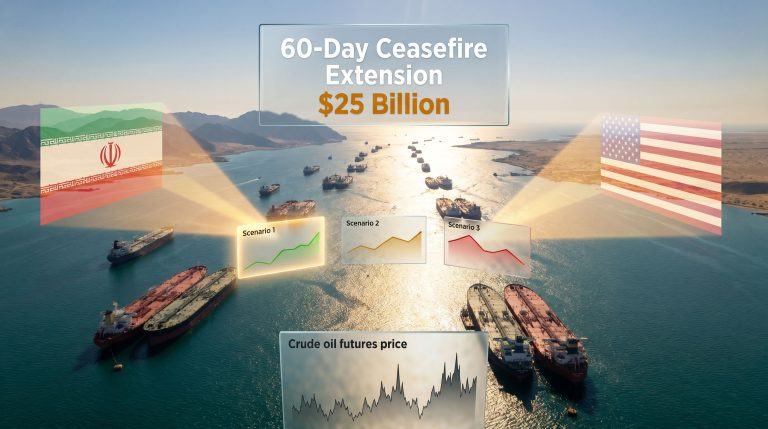
| Ceasefire Duration | Approximately 60-day extension proposed | Extension conditional on de-escalation verification |
Reuters has reported that a draft agreement includes Iranian access to approximately $25 billion in frozen financial assets, though Iranian negotiators have indicated this figure falls short of their expectations relative to the total volume of funds frozen under international sanctions. Washington has been clear that any financial relief would be structured as a phased, compliance-contingent release rather than an upfront transfer.
The Supreme Leader Approval Gap
Perhaps the most structurally significant obstacle is one that receives less attention than the financial and sequencing disputes. Iran's Supreme Leader had not approved the draft memorandum of understanding circulating between negotiating teams as of the latest available reporting. This is not a procedural formality.
In Iran's governmental architecture, the Supreme Leader holds ultimate authority over foreign policy and military decisions. No agreement reached at the negotiating table can be operationalised without this approval, regardless of what technical teams have agreed to.
This creates an asymmetry in the negotiating dynamic. U.S. officials and President Trump have publicly signalled confidence about imminent deal closure, while Iranian officials have consistently adopted a more cautious tone, acknowledging progress while emphasising that critical provisions remain unresolved. This pattern of divergent public messaging has been a recurring feature of U.S.-Iran diplomatic engagements and should be read as a structural signal rather than a tactical posture.
The Lebanon Complication: How Regional Conflicts Contaminate Bilateral Diplomacy
One of the least appreciated dimensions of the current impasse is how the Israel-Lebanon conflict has injected itself into the Iran-U.S. negotiating track in ways that neither party can fully control. Consequently, these geopolitical trade tensions have produced a negotiating environment far more volatile than either side anticipated at the outset of talks.
Israeli military strikes on Beirut, conducted in response to Hezbollah projectile fire into northern Israel, prompted Iran to issue direct warnings that attacks on Lebanese territory would not go without consequence. More pointedly, Iran's parliamentary speaker stated publicly that continued Israeli military operations in Lebanon undermine the rationale for ongoing diplomatic engagement with Washington, since the U.S. has not demonstrated the capacity or willingness to restrain Israeli actions.
This dynamic exposes a fundamental structural problem in the negotiation architecture:
- The Iran-U.S. track is being conducted without direct bilateral diplomatic relations, relying entirely on Qatari intermediaries
- Third-party mediation, while valuable, introduces delays and limits accountability for commitments made in indirect channels
- Iran has explicitly linked its willingness to continue negotiations to developments in a separate conflict theater that Washington does not directly control
- Any escalation involving Hezbollah or Israeli forces in Lebanon can, at any moment, trigger an Iranian suspension of engagement with no advance warning
Qatar's mediating role deserves specific acknowledgment here. Doha occupies a diplomatically unique position, hosting major U.S. military infrastructure while simultaneously maintaining functional working relationships with Tehran. Qatari officials travelled to Tehran in mid-June 2026 to continue facilitating discussions, underscoring how central this intermediary channel has become to keeping talks alive.
The Sequencing Problem: The Structural Heart of the Stalemate
Beyond the financial disputes and the Lebanon variable, a more fundamental disagreement about the order of concessions may be the most difficult obstacle to resolve. However, understanding the sequencing impasse requires appreciating how the oil market disruption risks generated by this stalemate compound the pressure on both sides to reach agreement.
Iran's negotiating position holds that it will reopen the Strait of Hormuz to commercial shipping only after the United States lifts its naval blockade on Iranian ports. Washington's apparent preference is for a simultaneous or compliance-first framework, where Iran demonstrates verifiable steps before receiving concrete concessions.
This is not a dispute that additional diplomatic skill can easily bridge, because it reflects deep mutual distrust about which party will honour commitments once the other has moved. Both sides have historical grievances to point to. The U.S. withdrawal from the 2015 Joint Comprehensive Plan of Action (JCPOA) under the first Trump administration remains a live reference point for Iranian negotiators when assessing the reliability of American compliance commitments.
Scenario Analysis: Three Paths Forward and Their Market Implications
Given the current state of negotiations, three broad scenarios merit structured consideration.
Scenario 1: Deal Signed Within Weeks
- Supreme Leader approval is secured and the sequencing dispute is resolved through a mutual simultaneous-concessions framework
- The Strait reopens to commercial traffic; the 60-day ceasefire extension takes effect
- Market outcome: Rapid crude price correction as the risk premium unwinds; LNG freight rates normalise; war-risk insurance premiums decline sharply
- Probability consideration: Possible but requires resolution of the Lebanon complication and Supreme Leader sign-off simultaneously
Scenario 2: Prolonged Stalemate
- The Israel-Lebanon conflict escalates further, prompting Iran to pause engagement; or the sequencing dispute proves irresolvable for 30 to 90 additional days
- Talks continue through Qatari intermediaries but produce no binding agreement in the near term
- Market outcome: Elevated price volatility persists; continued SPR drawdowns reduce future buffer capacity; pressure intensifies on energy-import-dependent economies in Asia and Europe
Scenario 3: Full Diplomatic Breakdown
- A significant military exchange involving Iranian, Israeli, or U.S. forces collapses the April ceasefire entirely
- The Strait of Hormuz remains closed to commercial shipping indefinitely; Iranian ports remain blockaded
- Market outcome: Sharp crude price spike toward or beyond 2026 highs; global shipping disruption; accelerated emergency reserve depletion; recession risk for energy-import-dependent economies
In this third scenario, the safe-haven market response would likely mirror or exceed the dramatic gold and defensive asset moves witnessed during prior episodes of acute Middle Eastern instability.
A critical asymmetry exists in how markets have positioned themselves: much of the optimism around a potential deal is already reflected in current pricing. This means the downside risk of a breakdown is arguably larger than the upside of a confirmed agreement from a pure price movement perspective.
The next major ASX story will hit our subscribers first
What a 60-Day Ceasefire Extension Actually Means
It is worth pausing on what the proposed 60-day ceasefire extension represents in strategic terms. Even if agreed, this framework would not resolve any of the underlying disputes driving U.S.-Iran tensions. The nuclear enrichment question, the sanctions architecture, the frozen asset question, and the broader question of Iran's regional posture would all remain entirely unaddressed.
A 60-day extension buys time. It does not buy solutions. The pattern observable in prior diplomatic engagements with Iran suggests that short-term frameworks frequently get renewed when neither side is ready to either escalate or fully resolve, creating a protracted managed-tension dynamic that keeps risk premiums structurally elevated in oil markets for extended periods.
This is the aspect of the current situation that commodity analysts and energy security professionals tend to weight most heavily: not the immediate outcome of the current round of talks, but the multi-year trajectory of a U.S.-Iran relationship that has not had a durable settlement framework since 2015. The New York Times has provided in-depth coverage of how this broader strategic context is shaping the current negotiating environment.
FAQ: Iran Strait of Hormuz Reopening Deal
What is the Iran Strait of Hormuz reopening deal?
It is a proposed agreement between the U.S. and Iran designed to restore commercial shipping access through the Strait of Hormuz, extend the existing ceasefire by approximately 60 days, lift the U.S. naval blockade on Iranian ports, and open a formal negotiating track on Iran's nuclear programme.
Has the deal been signed?
No. As of the most recent reporting in June 2026, Iran's Supreme Leader had not approved the draft memorandum of understanding, and multiple core provisions including financial release terms and the sequencing of concessions remained unresolved.
Why is the Strait of Hormuz so strategically significant?
Approximately 20% of the world's daily oil supply transits the strait, along with substantial volumes of Qatari LNG. It is the single most consequential energy shipping chokepoint on the planet, and any disruption directly affects global crude supply balances, shipping costs, and energy pricing.
What financial terms are being discussed?
Reports indicate a draft agreement includes Iranian access to approximately $25 billion in frozen funds, though Tehran has sought a larger figure. Washington has indicated any release would be phased and tied to compliance milestones rather than delivered upfront.
Who is mediating the talks?
Qatar is playing the central intermediary role, with Qatari officials travelling to Tehran in June 2026 to facilitate ongoing discussions between the two sides.
How does the Israel-Lebanon conflict affect the negotiations?
Iranian officials have explicitly stated that continued Israeli military operations in Lebanon undermine the logic of ongoing diplomatic engagement with Washington, introducing a volatile external variable that neither Iran nor the U.S. directly controls.
Disclaimer: This article contains forward-looking analysis and scenario projections based on publicly available information as of June 2026. It does not constitute financial or investment advice. Energy market outcomes are subject to rapid change based on geopolitical developments, and past price behaviour during Hormuz disruptions is not necessarily indicative of future market responses.
Want to Stay Ahead of the Commodity Market Moves Driven by Geopolitical Disruption?
When energy chokepoints like the Strait of Hormuz generate the kind of market volatility explored above, the ripple effects extend well beyond crude oil — and Discovery Alert's proprietary Discovery IQ model scans ASX announcements in real time to surface actionable mineral discovery opportunities before the broader market reacts. Explore historic examples of major discoveries and their market returns, then start your 14-day free trial at Discovery Alert to ensure you're positioned ahead of the next significant move.