June 15, 2026
The Fragile Architecture Behind the Iran and US Strait of Hormuz Agreement
Energy markets have a long memory when it comes to chokepoint disruptions. From the 1973 Arab oil embargo to the tanker wars of the 1980s, history repeatedly demonstrates that the world's most consequential shipping corridors carry geopolitical risk that no futures contract can fully price in advance. The current situation surrounding the Iran and US Strait of Hormuz agreement follows this same pattern, but with layers of complexity that previous episodes did not face. What appears on the surface to be a straightforward diplomatic handshake is, on closer inspection, a multi-actor strategic puzzle where the pieces are still being negotiated, not assembled.
When big ASX news breaks, our subscribers know first
Understanding What the Iran and US Strait of Hormuz Agreement Actually Involves
The framing of this situation as a signed "deal" is premature and potentially misleading for anyone attempting to assess near-term market risk. What exists at this stage is more accurately described as a preliminary de-escalation framework built across three interconnected operational pillars.
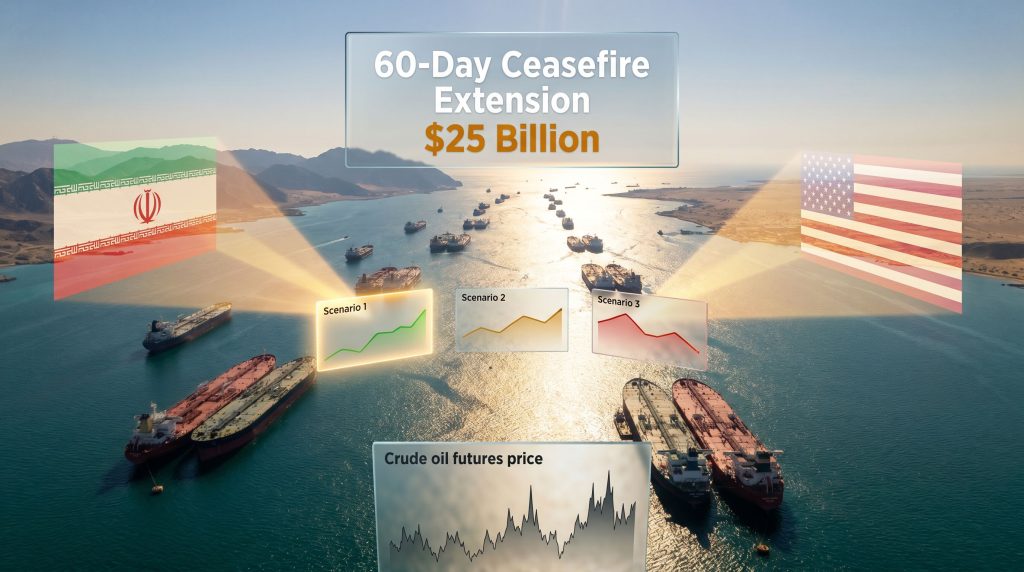
The first pillar addresses maritime access, specifically the restoration of commercial shipping through the Strait of Hormuz following Iran's effective disruption of traffic flows earlier in 2026. The second pillar involves a reported 60-day ceasefire extension, designed to create a diplomatic runway for deeper engagement rather than resolve underlying tensions. The third pillar is a nuclear negotiation trigger, which commits parties to a structured process without actually resolving the enrichment or stockpile questions at the heart of the U.S.-Iran security dispute.
Critically, the draft memorandum of understanding had not received approval from Iran's Supreme Leader Mojtaba Khamenei as of the proposed signing window, according to reporting from Bloomberg. Without that constitutional endorsement, no framework carries enforceable weight within Iran's governance architecture. This is not a procedural technicality. It is the central approval mechanism in the Iranian political system, and its absence explains why President Trump's stated Sunday timeline was not met.
The table below summarises where each key component currently stands:
| Component | Reported Status | Key Condition |
|---|---|---|
| Strait of Hormuz reopening | Proposed, pending finalisation | Contingent on signed MOU |
| 60-day ceasefire extension | Reported but unconfirmed | Requires Supreme Leader approval |
| U.S. port blockade easing | Conditional offer | Phased, compliance-dependent |
| Iranian frozen asset release | $25 billion reported in draft | Not yet formally agreed |
| Nuclear weapons commitment | Principle agreed in concept | Enrichment details deferred |
| Highly enriched uranium stockpile | Unresolved | Subject to future negotiation |
Why a Deadline Failed and What That Reveals About the Negotiation Structure
The Approval Architecture Problem
Iran's diplomatic decision-making does not function through a single executive authority the way Western negotiating frameworks often assume. The Supreme Leader's endorsement is not a formality applied after negotiations conclude. It is a constitutional prerequisite that shapes what Iranian negotiators can even tentatively agree to. Reporting from Iran's semi-official Fars News Agency confirmed that an official close to the negotiating team indicated no agreement would be reached by the Trump administration's proposed timeline.
This structural reality has an important implication for market participants: deadline statements made by one party in a negotiation where the other party's approval mechanism is multi-layered are inherently unreliable as timing signals.
Lebanon as a Complicating Variable
What began as a bilateral framework between Washington and Tehran has been materially complicated by the Lebanon dimension. Israeli strikes on Beirut, triggered by Hezbollah projectile launches into northern Israel, created a direct linkage that Iranian officials publicly articulated. Iranian parliamentary speaker Mohammad Bagher Ghalibaf stated that continuing negotiations carried little value if the United States could not ensure Israeli military operations against Lebanon ceased.
This cross-theatre entanglement transforms the negotiation's risk profile in a specific way:
- Neither the U.S. nor Iran has full operational control over Israeli military decisions
- Any escalation involving Hezbollah or Israeli forces can unilaterally disrupt progress between the two primary negotiating parties
- The more actors whose behaviour can trigger a breakdown, the shorter the effective shelf life of any agreed deadline
Furthermore, the geopolitical trade tensions emanating from this region extend well beyond the strait itself, reshaping how major economies position their energy security strategies.
"When a bilateral negotiation becomes structurally contingent on the conduct of a third-party actor over whom neither side has operational authority, setting firm signing timelines becomes an exercise in optimism rather than strategy."
Qatar's Role and Its Inherent Processing Costs
Qatari mediators travelled to Tehran during the proposed signing window, confirming that direct U.S.-Iran communication channels remain insufficient for final-stage negotiation. Qatar's mediation role is meaningful, but it introduces processing time into every exchange. Each position shift must travel through an intermediary layer before reaching the other party. In a negotiation where hours matter for market stability, this architecture adds friction that purely bilateral talks would not face.
The Strait of Hormuz: Why This Chokepoint Commands a Disproportionate Premium
Scale and Systemic Exposure
The Strait of Hormuz is approximately 33 kilometres wide at its narrowest navigable point, yet it carries an estimated 20% of global oil trade and roughly 25-30% of globally traded liquefied natural gas, according to the U.S. Energy Information Administration. No other single maritime passage combines this volume concentration with this level of geopolitical exposure.
Disruption to this corridor produces cascading effects across multiple supply chain nodes simultaneously:
- Crude oil export volumes from Saudi Arabia, Iraq, the UAE, Kuwait, and Qatar all transit this passage
- LNG shipment schedules for Asian buyers, particularly Japan, South Korea, and China, are directly affected — and the LNG supply dynamics across global markets make this exposure increasingly consequential
- Tanker routing costs spike as vessels are forced onto Cape of Good Hope alternative routing, adding approximately 15-20 days of transit time per voyage
- War risk insurance premiums for vessels operating in the Persian Gulf region increase sharply, raising operational costs for every barrel moved
Oil Price Dynamics: What the Numbers Are Telling Markets
The sequence of market events since Iran's disruption of Strait traffic in early 2026 illustrates classic chokepoint price mechanics. The oil price shock experienced by energy executives underscores how rapidly sentiment can shift when a critical corridor faces closure.
- Initial disruption phase: Crude prices spiked sharply as supply uncertainty entered forward curves
- Diplomatic expectation phase: Prices retreated from peak levels as ceasefire talks gained credibility
- Current stasis phase: Crude remains materially elevated relative to pre-disruption benchmarks, reflecting a residual risk premium that has not compressed to zero despite negotiation progress
The persistence of this elevated pricing is analytically significant. Energy markets are not fully pricing in a successful resolution. The gap between current prices and pre-disruption levels represents the market's implied probability-weighted assessment of failure scenarios. Consequently, the ongoing crude price volatility continues to challenge forward planning for buyers and producers alike.
Strategic Petroleum Reserve Drawdowns: A Buffer That Cannot Be Replenished Instantly
Several major consuming nations activated emergency petroleum reserve releases during the peak disruption phase. This intervention performed its intended function, suppressing price spikes beyond what supply fundamentals alone would have produced. However, it created a secondary dynamic that persists regardless of how the current negotiation concludes:
- Drawn-down reserves must be restocked, generating incremental demand in forward oil markets
- The restocking timeline typically extends 6-18 months depending on the pace of repurchase programmes
- This re-stocking overhang has the potential to support crude prices even after the Strait reopens, preventing an immediate return to pre-disruption price levels
The Financial and Nuclear Sticking Points Preventing Finalisation
The $25 Billion Asset Release Disagreement
Reuters reported that a draft framework could provide Iran with access to approximately $25 billion in frozen sovereign funds. However, the U.S. position introduces a sequencing structure that fundamentally conflicts with Iran's preference. Washington's approach would phase the financial relief in tranches, each contingent on verifiable Iranian compliance with agreed terms.
Iran's reported preference leans toward front-loaded access, reflecting a deep institutional distrust of compliance-contingent arrangements that were not honoured under previous agreements. This is not simply a disagreement about timing. It reflects competing assessments of credibility and leverage. Iran's position is shaped by prior experience with agreements where promised financial relief moved more slowly than required compliance.
The Nuclear File: Deliberate Bifurcation
A strategically important distinction is emerging between two separate nuclear questions being treated differently within the current negotiating framework:
| Issue | Iran's Reported Position | U.S. Reported Position |
|---|---|---|
| Nuclear weapons development | Willing to commit against | Requires verifiable mechanism |
| Uranium enrichment levels | Defers to future negotiation | Wants stockpile reduction now |
| Highly enriched uranium stocks | Unresolved | Central precondition for sanctions relief |
Iran appears to be offering a weapons-development commitment as a near-term concession while deliberately parking enrichment infrastructure questions for later rounds. This bifurcation strategy allows Iran to offer something tangible while preserving its most significant piece of leverage for subsequent negotiations. Whether the U.S. accepts this sequencing or insists on upfront enrichment commitments will likely determine the timeline to any finalised agreement. Al Jazeera's ongoing coverage of Iran's reassertion of control over the strait underscores how fluid these dynamics remain.
Scenario Framework: Three Pathways From Here
Scenario 1: Delayed but Successful Signing (Base Case)
Conditions required for this outcome:
- Supreme Leader endorsement secured within days of the missed deadline
- Lebanon situation stabilises sufficiently to be ring-fenced from the bilateral negotiation
- Qatar mediates a workable compromise on asset release sequencing
Market implication: Strait reopens, crude prices decline toward pre-disruption ranges over a 4-8 week normalisation window, risk premium compresses but does not fully disappear given ongoing nuclear uncertainty.
Scenario 2: Prolonged Stalemate (Elevated Risk Case)
Conditions for this outcome:
- Lebanon escalation continues, hardening Iranian parliamentary opposition to the framework
- Asset release sequencing remains unresolved across multiple negotiating rounds
- The 60-day ceasefire window expires before a memorandum of understanding is signed
Market implication: Crude prices remain structurally elevated, tanker insurance costs stay at war-risk premiums, and alternative routing demand persists as a cost embedded in global energy prices. The resulting oil price volatility would compound existing pressures already weighing on international trade flows.
Scenario 3: Negotiation Collapse and Re-escalation (Tail Risk Case)
Conditions for this outcome:
- A significant military incident involving Iranian, Israeli, or U.S. forces breaks the operational ceasefire
- Iran's Supreme Leader publicly rejects the framework rather than simply delaying endorsement
- U.S. re-imposes or escalates port blockade measures in response to an Iranian provocation
Market implication: Oil prices retest or exceed prior spike highs, emergency reserve protocols are reactivated under conditions of a more depleted buffer, and global supply chain stress reaches a severity comparable to the worst phases of the 1973 and 1979 disruptions.
"Scenario 1 remains the most probable near-term outcome based on continued mediation activity and the existence of a draft MOU. However, the probability gap between Scenario 1 and Scenario 2 has narrowed materially given the unresolved approval structure and Lebanon's destabilising influence on the negotiation timeline."
The next major ASX story will hit our subscribers first
Reading the Signals: What to Monitor Before Markets Move
Energy market participants and investors exposed to oil price volatility should prioritise the following leading indicators over headline diplomatic statements:
- Supreme Leader public statements: A formal endorsement or rejection from Khamenei represents the single most definitive signal available. All other signals are secondary until this approval question is resolved
- Qatari mediator communiqués: Active movement in the mediation channel indicates live negotiation rather than performative diplomacy
- Real-time Strait of Hormuz tanker traffic data: Vessel tracking services will confirm any operational reopening before official announcements, often providing 12-24 hours of advance market signal
- Crude oil futures curve structure: Shifts between backwardation and contango in the forward curve will reflect market confidence in resolution timelines more accurately than any single price point
- U.S. sanctions register updates: Any modification to the Iranian port blockade designation in official U.S. Treasury or Commerce Department filings would signal U.S. concessions moving from negotiation to implementation
The Structural Lesson This Negotiation Teaches About Energy Security
The 2026 Hormuz disruption has confirmed what energy security analysts have theorised for decades: control over critical maritime transit corridors functions as a potent diplomatic instrument, capable of generating immediate, measurable economic pressure on global markets without requiring conventional military escalation to a war footing.
Perhaps more importantly, this episode reveals a structural vulnerability in bilateral diplomatic frameworks when applied to a region defined by multilateral security interdependencies. A U.S.-Iran shipping agreement that can be disrupted by Israeli-Hezbollah exchanges in Lebanon is not truly a bilateral agreement. It is a multilateral security equation dressed in bilateral clothing.
For energy-importing nations, the practical implications extend beyond the immediate crisis:
- Strategic petroleum reserve buffers have been drawn down and require replenishment at a time when supply uncertainty persists
- Alternative routing infrastructure, while available, imposes a permanent cost premium that does not disappear when the Strait reopens
- The demonstrated willingness and capability of a regional power to weaponise a maritime chokepoint will inform long-term supply diversification investment decisions for years beyond this specific event
The Iran and US Strait of Hormuz agreement, if and when it is finalised, will mark a temporary resolution of an acute crisis rather than the elimination of the underlying strategic risk. The chokepoint will remain, the geopolitical tensions will persist in modified form, and the market premium assigned to Hormuz exposure will compress but not disappear.
Readers seeking additional context on upstream developments across the Middle East region can explore related coverage at World Oil, which provides ongoing reporting on industry dynamics relevant to Persian Gulf energy markets.
This article contains forward-looking analysis, scenario projections, and market assessments that involve inherent uncertainty. Nothing in this article constitutes financial or investment advice. Readers should conduct independent research and consult qualified financial professionals before making investment decisions.
Want to Stay Ahead of ASX Mineral Discoveries Linked to Global Energy Shifts?
Discovery Alert's proprietary Discovery IQ model scans ASX announcements in real time, delivering instant alerts on significant mineral discoveries — from critical minerals tied to energy security to commodities directly influenced by geopolitical disruptions like the Hormuz crisis — ensuring subscribers can act on actionable opportunities ahead of the broader market. Explore how historic mineral discoveries have generated substantial returns and begin your 14-day free trial today to position yourself at the forefront of the next major find.