July 19, 2026
Understanding Iran's Strategic Position in Global Oil Supply Chains
Strategic scenario modeling for energy markets requires deep analysis of supply chain vulnerabilities that extend far beyond surface-level geopolitical headlines. The current landscape presents a complex matrix of interconnected risks, where Iran tensions fuel oil supply risk considerations across multiple dimensions of global energy security architecture.
Furthermore, these tensions highlight the fragility of global energy networks, particularly when examining oil price movements that respond rapidly to geopolitical developments.
When big ASX news breaks, our subscribers know first
Iran's Production Capacity and Export Infrastructure
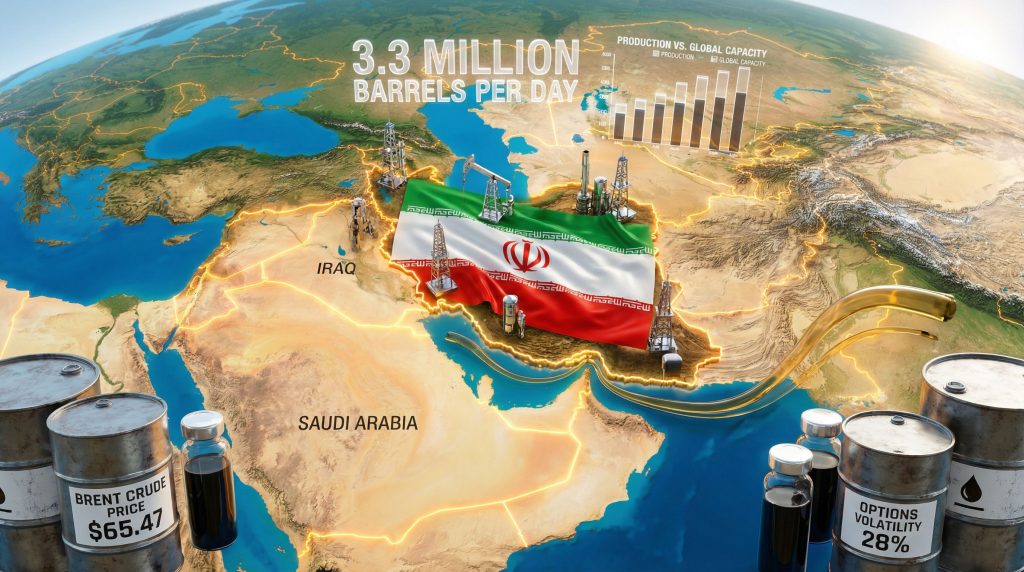
Iran's energy infrastructure represents one of the most technically sophisticated yet geopolitically vulnerable networks in the global oil supply system. The country currently maintains production capacity of approximately 3.3 million barrels per day, positioning it as a significant contributor to global crude markets despite ongoing sanctions pressures.
The nation's export terminal infrastructure centres on several critical chokepoints, with the majority of shipments flowing through facilities in the Persian Gulf region. These terminals face multiple vulnerability factors:
- Weather-related disruptions affecting loading operations
- Maintenance requirements that can temporarily reduce capacity
- Security concerns in regional shipping lanes
- Technical infrastructure limitations during peak demand periods
Iran's refining capacity versus crude export ratios reveal important strategic considerations. The country maintains substantial domestic refining capabilities, allowing for flexibility between domestic consumption and export optimisation based on market conditions and geopolitical factors.
Historical Precedents for Iranian Supply Disruptions
Historical analysis provides crucial context for understanding potential market impacts from Iranian supply interruptions. The 1979 Revolution created unprecedented disruptions in global energy markets, demonstrating how domestic political upheaval can rapidly translate into worldwide supply constraints.
During the Iran-Iraq War period from 1980-1988, sustained production losses illustrated the vulnerability of regional energy infrastructure to prolonged conflict. These historical precedents establish baseline scenarios for modern risk assessment frameworks.
Sanctions effectiveness timelines show varying degrees of market adaptation. Previous enforcement periods revealed how global markets gradually adjust through alternative supply routing, strategic reserve utilisation, and demand modification patterns. Understanding these oil price stagnation dynamics provides crucial insight into market resilience mechanisms.
What Geopolitical Scenarios Could Trigger Major Supply Shocks?
Contemporary risk modelling identifies several critical pathways through which Iranian energy supplies could face significant disruption, each carrying distinct probability profiles and market impact trajectories.
Domestic Unrest Escalation Pathways
Political instability within Iran presents multiple escalation scenarios that could directly impact oil production and export capabilities. Current protest movements carry the potential to spread into oil-producing regions, particularly in Khuzestan Province, where much of the country's production infrastructure is concentrated.
Worker strike potential represents a particularly significant risk factor. Energy sector labour actions have historically proven capable of rapidly reducing production capacity, even without physical infrastructure damage. Strike scenarios could impact:
- Production operations at major fields
- Pipeline transportation systems
- Export terminal loading procedures
- Maintenance schedules critical for sustained output
Infrastructure sabotage risk assessment reveals vulnerabilities across the production and transportation network. Critical facilities face exposure to both organised resistance activities and opportunistic disruption attempts during periods of heightened social unrest.
U.S. Military Intervention Probability Matrix
Military intervention scenarios require careful analysis of target selection and corresponding production impact modelling. Potential strike targets could include production facilities, export terminals, or transportation infrastructure, each carrying different recovery timelines and market impact profiles.
Regional retaliation risks extend beyond Iran's borders, potentially affecting neighbouring producers in the Persian Gulf region. The interconnected nature of regional energy infrastructure means that military actions could create cascading effects across multiple supply sources.
Strait of Hormuz closure contingency planning remains a critical consideration, given that approximately 20% of global oil transit flows through this strategic waterway. Closure scenarios, even temporary ones, would create immediate supply constraints affecting global markets.
Sanctions Intensification and Enforcement Mechanisms
Current sanctions frameworks could face significant expansion through various enforcement mechanisms. Secondary sanctions targeting Chinese buyers represent a particularly impactful escalation pathway, given China's role as a major purchaser of Iranian crude.
Maritime enforcement expansion possibilities include enhanced interdiction capabilities and broader geographic coverage of shipping route monitoring. Financial system isolation deepening effects could further constrain Iran's ability to monetise energy exports through traditional commercial channels.
How Are Oil Markets Currently Pricing Iranian Risk Premiums?
Financial markets provide real-time assessment of Iranian supply risk through multiple pricing mechanisms that reflect investor sentiment and professional risk evaluation.
Futures Market Risk Indicators
Current market pricing reveals significant risk premium incorporation across multiple indicators. West Texas Intermediate futures recently reached $61.15 per barrel, representing a 2.8% daily increase driven largely by Iranian tension escalation.
WTI-Brent spread analysis during tension spikes shows characteristic patterns that help quantify market risk assessment. The spread between these benchmark crudes often widens during geopolitical stress periods, reflecting regional supply security concerns.
Options volatility patterns demonstrate heightened uncertainty expectations. Traders are demanding elevated premiums for bullish contracts, with record volumes of Brent call options changing hands during recent tension periods. This options activity indicates professional market participants are positioning for potential upside price movements.
Consequently, backwardation versus contango structural shifts provide additional insight into market timing expectations. Current market structure suggests investors anticipate near-term supply risks outweighing longer-term abundance concerns. Professional oil futures analysis reveals these structural patterns as key indicators of market sentiment.
Physical Market Stress Signals
Physical crude markets offer complementary risk indicators through regional price differentials and trading patterns. The Murban-Dubai differential has expanded significantly, now trading at approximately $2.50 per barrel versus $1.00 per barrel at the start of 2026.
This differential expansion represents clear Iran risk pricing in Asian crude markets, where much of Iranian production would typically flow. Asian crude premiums have evolved to reflect supply security concerns, with buyers willing to pay elevated prices for more secure supply sources.
European refinery margins demonstrate similar stress signals, as processors adjust their crude purchasing strategies to account for potential supply disruptions. These margin changes cascade through regional product markets, affecting end-user pricing across multiple energy sectors.
Iran Risk Premium Indicators
| Metric | Pre-Tension Level | Current Level | Risk Signal |
|---|---|---|---|
| Brent Crude Price | $62.50 | $65.47 | +4.7% |
| WTI Crude Price | $59.50 | $61.15 | +2.8% |
| Murban-Dubai Spread | $1.00 | $2.50 | High Risk |
| Options Volatility | 18% | 28% | Elevated |
Which Alternative Supply Sources Could Offset Iranian Losses?
Global energy markets maintain several alternative supply mechanisms designed to address potential Iranian production shortfalls, though each carries distinct capacity limitations and response timing constraints.
OPEC+ Spare Capacity Assessment
Saudi Arabia represents the primary alternative supply source, maintaining maximum sustainable production capacity that could partially offset Iranian losses. However, Saudi spare capacity deployment requires careful coordination with broader OPEC+ production strategies and market stability objectives.
UAE and Kuwait emergency response capabilities provide additional buffer capacity, though their combined maximum output increase remains limited compared to potential Iranian supply disruption scenarios. Iraq's infrastructure constraints and expansion timeline present both opportunities and limitations for rapid capacity increases.
Current OPEC+ spare capacity estimates suggest the cartel could potentially offset moderate Iranian supply reductions, but complete export elimination would require additional market responses beyond traditional OPEC+ mechanisms.
Non-OPEC Production Flexibility
U.S. shale oil response capabilities offer significant potential supply increases, though response lag times typically extend several months for meaningful production additions. Shale drilling and completion timelines mean that immediate supply gaps cannot be instantly filled through domestic U.S. production increases.
Brazilian pre-salt production acceleration potential represents another significant alternative source. Brazil's offshore production systems can increase output more rapidly than many conventional sources, though maximum acceleration remains constrained by existing infrastructure capacity.
Guyana's output scaling possibilities continue expanding as new offshore developments come online. However, Guyana's total production capacity, while growing rapidly, remains insufficient to offset major Iranian supply losses independently.
Strategic Petroleum Reserve Deployment Options
International Energy Agency coordinated release mechanisms provide the most immediate response capability for Iranian supply disruptions. IEA member countries maintain substantial strategic reserves designed specifically for emergency supply situations.
U.S. Strategic Petroleum Reserve drawdown capacity could provide significant short-term supply additions, though sustained releases require careful consideration of refill strategies and long-term energy security objectives. Current U.S. SPR levels maintain sufficient capacity for extended emergency releases.
China's strategic inventory utilisation patterns remain less transparent but represent substantial potential supply additions to global markets. Chinese strategic reserve deployment could significantly moderate Asian crude price increases during Iranian supply disruptions.
The next major ASX story will hit our subscribers first
What Secondary Market Effects Amplify Iranian Supply Risks?
Iranian supply risk analysis must account for potential secondary effects that could amplify initial supply constraints through interconnected market mechanisms and concurrent disruption scenarios.
Caspian Pipeline Consortium Disruption Synergies
Current disruptions at the Caspian Pipeline Consortium terminal demonstrate how multiple supply constraints can compound market stress. Kazakh oil loading operations face combined challenges from weather conditions, security concerns, and maintenance requirements, reducing daily loadings to approximately 900,000 barrels per day from normal capacity.
Weather-related export delays present ongoing challenges that could coincide with Iranian supply disruptions, creating combined supply constraints affecting global markets. Alternative routing capacity for Caspian production remains limited, meaning these disruptions cannot be easily circumvented.
Kazakhstan's efforts to redirect flows through alternative routes help minimise supply impacts but cannot completely offset CPC terminal capacity reductions. These routing alternatives face their own capacity and logistical constraints.
Venezuelan Crisis Interaction Effects
Combined supply risk from dual Iranian and Venezuelan disruptions represents a particularly challenging scenario for global energy markets. Both countries maintain significant heavy crude production that serves specific refinery configurations, making direct substitution difficult.
Refinery configuration impacts for heavy crude processing mean that Iranian and Venezuelan supply losses cannot be easily replaced by light crude alternatives. Specialised refining capacity for heavy crude creates supply chain bottlenecks that amplify pricing effects.
U.S. sanctions policy coordination challenges arise when multiple sanctioned producers face simultaneous disruptions, potentially creating pressure for policy modifications or enforcement adjustments to prevent severe market disruption.
Regional Contagion Scenarios
Iraqi production stability faces potential stress under regional conflict scenarios, given the country's geographic proximity and complex political relationships with Iran. Iraqi energy infrastructure could face both direct and indirect impacts from escalated Iranian tensions.
Kuwaiti and UAE vulnerability assessments reveal potential exposure to regional disruption through shipping route interference or direct security challenges. These countries' export facilities rely on Persian Gulf shipping lanes that could face constraints during military conflict scenarios.
Qatar LNG export security implications extend beyond crude oil markets, potentially affecting global natural gas supplies during regional conflict. LNG export disruptions could compound energy market stress, particularly for European and Asian importers.
How Do Current Market Fundamentals Moderate Price Volatility?
Despite geopolitical risk premiums, underlying market fundamentals provide important moderating factors that could limit sustained price increases even during significant Iranian supply disruptions.
Global Inventory Buffer Analysis
OECD commercial stock levels currently maintain substantial buffers above five-year averages, providing important supply cushions during temporary disruption periods. These commercial inventories can help bridge supply gaps while alternative sources increase production or strategic reserves are deployed.
China's crude oil stockpiling programme represents a major market stabilising factor. Chinese strategic and commercial inventory builds have created substantial supply buffers that could be released during price spike periods, helping moderate Asian market volatility.
Floating storage economics during supply disruptions offer additional market flexibility. When supply disruptions create price spikes, economically stored crude in tankers can be released to market, providing additional supply sources beyond traditional production and strategic reserves.
Demand Elasticity and Substitution Patterns
Economic slowdown effects on consumption growth present important demand-side moderating factors. Reduced economic activity typically correlates with decreased energy consumption, helping balance supply constraints through natural demand reduction.
Natural gas switching potential in power generation offers fuel substitution possibilities that could reduce crude oil demand during price spike periods. Industrial and utility consumers maintain fuel switching capabilities that provide demand elasticity during supply crises.
Renewable energy acceleration under high oil prices creates both immediate and long-term demand impacts. High energy prices typically accelerate renewable deployment schedules and increase conservation incentives across multiple economic sectors.
While geopolitical risk premiums can spike oil prices rapidly, the current global oversupply situation and substantial strategic reserves provide significant downside protection against sustained price rallies, even during major supply disruptions.
What Investment Strategies Address Iranian Supply Risk Exposure?
Professional investment approaches to Iranian supply risk require multi-dimensional strategies that address both upside opportunities and downside protection across various asset classes and market sectors.
Energy Sector Portfolio Positioning
Upstream producer valuation sensitivity analysis reveals significant variation in how different production companies respond to Iranian supply risk scenarios. Companies with low-cost production profiles and spare capacity tend to benefit most from price increases resulting from supply disruptions.
Refining margin expansion opportunities emerge during supply disruption scenarios, particularly for refiners with flexible crude processing capabilities. Refineries that can process various crude types often see margin improvements when supply constraints create regional price differentials.
Additionally, oil price rally insights demonstrate how refining companies position themselves during geopolitical stress periods to maximise operational advantages.
Midstream infrastructure resilience factors become increasingly important during supply disruption periods. Pipeline, terminal, and transportation companies with diverse routing capabilities and strategic positioning often outperform during geopolitical stress periods.
Commodity Trading and Hedging Approaches
Calendar spread strategies during geopolitical stress can provide attractive risk-adjusted returns for sophisticated traders. Near-term contract premiums during supply disruption scenarios often create opportunities for experienced commodity traders.
Cross-commodity arbitrage opportunities with natural gas frequently emerge during oil supply disruptions. Energy traders often identify profitable spreads between oil and gas markets when supply constraints affect relative pricing relationships.
Currency hedging considerations become critical for oil-importing economies during supply disruption scenarios. Countries with significant energy import requirements often face combined challenges from higher oil prices and currency depreciation.
Alternative Energy Acceleration Scenarios
Renewable investment flow redirection patterns often accelerate during oil price spike periods, creating opportunities in clean energy technology sectors. High fossil fuel prices increase renewable energy economic competitiveness and policy support.
Critical mineral demand spikes under energy transition acceleration create opportunities in lithium, copper, rare earth, and other strategic materials markets. Energy transition acceleration during supply crises increases demand for critical mineral inputs.
Grid stability investments during supply uncertainty often receive increased policy and investment focus. Energy security concerns typically drive increased investment in grid modernisation and energy storage infrastructure.
Frequently Asked Questions About Iranian Oil Supply Risks
How quickly could Iranian oil exports be disrupted?
Iranian export disruption timelines vary significantly depending on the specific scenario and mechanism involved. Infrastructure vulnerability assessments suggest that complete export halts could occur within days during severe military conflict scenarios, while graduated sanctions enforcement might reduce exports over weeks or months.
Export terminal shutdown scenarios demonstrate how critical infrastructure damage could rapidly eliminate export capacity. Iran's export terminals face vulnerability to both military action and domestic sabotage, potentially creating immediate supply disruptions.
International buyer response mechanisms also affect disruption speed. Even if Iranian production continues, international purchaser reluctance or inability to buy Iranian crude can effectively halt exports through commercial rather than physical constraints. Market experts often reference historical oil price crash review scenarios to understand rapid market adjustments.
What would happen to global oil prices in different disruption scenarios?
Partial export reduction scenarios involving approximately 500,000 barrels per day typically result in price increases of $5-15 per barrel, depending on market conditions and alternative supply availability. These moderate disruptions can usually be offset through strategic reserve releases and spare capacity deployment.
Complete export halt scenarios could drive price increases of $20-50 per barrel or more, particularly if combined with other supply constraints or seasonal demand peaks. Complete Iranian export elimination would require substantial alternative supply deployment and demand response.
Regional price differential evolution during Iranian supply disruptions typically favours Middle Eastern crude alternatives and penalises Asian refineries heavily dependent on Iranian supplies. European markets often face moderate impacts compared to Asian markets during Iranian supply constraints.
How long could alternative suppliers compensate for Iranian losses?
OPEC+ response timelines for moderate Iranian supply losses typically extend 30-90 days for full deployment, depending on spare capacity availability and production increase logistics. Saudi Arabia and UAE can respond most quickly, while other producers require longer lead times.
Strategic reserve drawdown duration limits vary by country and reserve levels. The United States could maintain substantial release rates for 6-12 months, while other IEA countries have varying capacity and duration capabilities for emergency releases.
Market rebalancing mechanisms typically require 3-6 months for full adjustment to major supply disruptions. Complete market rebalancing involves demand response, alternative supply development, and inventory level adjustments across global markets.
Long-term Implications for Global Energy Security Architecture
Iranian supply risk scenarios provide important insights into structural energy security challenges that extend beyond immediate market impacts toward fundamental energy system resilience requirements.
Supply Chain Diversification Imperatives
Import dependency reduction strategies gain increased urgency during Iranian supply risk scenarios. Countries heavily dependent on Middle Eastern oil imports often accelerate domestic production development and alternative supply relationship building during geopolitical stress periods.
Regional energy partnership strengthening represents a crucial long-term response to supply security concerns. Bilateral and multilateral energy cooperation agreements often emerge from supply crisis experiences, creating more resilient energy relationship networks.
Critical infrastructure protection investments typically increase following supply disruption scenarios. Both producing and consuming countries often enhance physical security measures and cyber protection capabilities for essential energy infrastructure.
Energy Transition Policy Acceleration
Renewable energy deployment urgency factors receive enhanced policy focus during fossil fuel supply disruption scenarios. High oil prices and supply uncertainty typically accelerate renewable energy development timelines and policy support measures.
Grid modernisation investment priorities often shift toward enhanced flexibility and storage capabilities during energy supply uncertainty periods. Smart grid technology deployment and energy storage capacity expansion receive increased investment priority during supply crisis scenarios.
Energy storage capacity expansion requirements become more apparent during supply disruption scenarios, as the need for supply buffering capabilities extends beyond traditional strategic petroleum reserves toward broader energy system resilience.
Furthermore, oil market volatility during crisis periods often reinforces the strategic importance of energy diversification policies.
In conclusion, understanding how Iran tensions fuel oil supply risk remains critical for global energy market participants, as these dynamics increasingly influence both short-term pricing mechanisms and long-term strategic planning initiatives across the entire energy sector.
Disclaimer: This analysis contains forward-looking scenarios and speculative assessments regarding geopolitical developments and market responses. Actual events may differ significantly from projected scenarios. Energy market investments carry substantial risks, and professional consultation is recommended for investment decisions. The geopolitical situation remains highly fluid, and market conditions can change rapidly based on developments not captured in this analysis.
Ready to capitalise on energy market volatility ahead of major discoveries?
Discovery Alert's proprietary Discovery IQ model delivers real-time alerts on significant ASX mineral discoveries, including energy and critical minerals essential to global supply chains, instantly empowering subscribers to identify actionable opportunities ahead of the broader market. Understand why historic discoveries can generate substantial returns by exploring Discovery Alert's dedicated discoveries page, showcasing exceptional outcomes from major mineral finds, and begin your 30-day free trial today to position yourself ahead of the market.