May 15, 2026
The ongoing geopolitical landscape presents significant challenges for investors navigating an environment where traditional market frameworks struggle to address emerging complexities. When major powers maintain prolonged tensions, the resulting uncertainty creates ripple effects throughout global financial systems that extend far beyond immediate conflict zones. The indefinite extension of ceasefire between Iran and the US exemplifies this dynamic, where diplomatic arrangements create new forms of market volatility rather than providing clear resolution pathways.
Understanding how extended geopolitical uncertainty affects different asset classes requires examining both immediate supply chain disruptions and longer-term structural changes that emerge from sustained regional tensions. Market participants must navigate an environment where traditional correlations break down and new risk premiums become embedded across multiple sectors simultaneously.
What Does the Indefinite Iran-US Ceasefire Extension Mean for Global Markets?
The indefinite extension of ceasefire between Iran and the US represents a diplomatic framework that has evolved beyond its original April 8 timeline into an open-ended arrangement. According to trading floor analysis from Fat Tail Investment Research, the current situation maintains significant operational tensions despite the ceasefire designation. Chief Trader Murray Doors noted that both blockades remain in place, with Iranian forces continuing to operate along coastal areas while avoiding direct confrontation with US naval assets.
Furthermore, Trump extends Iran ceasefire indefinitely amid impasse over peace talks, highlighting the complex political calculations driving this extended timeline. The maritime dimension of the ceasefire reveals its limitations as a peace mechanism.
Breaking Down the Extended Ceasefire Framework
Since hostilities began in late February 2026, Iranian forces have targeted 34 ships according to recent trading floor commentary, with a notable escalation occurring in the Wednesday preceding current market analysis. Three vessels were attacked during this incident, with two subsequently seized, demonstrating that the ceasefire extension permits continued low-level maritime operations.
The asymmetrical nature of enforcement creates ongoing uncertainty for shipping lanes and commodity flows. Iranian tankers can still operate along their coastal waters, while international shipping remains vulnerable to seizure operations. This operational reality means the indefinite extension functions more as managed escalation control rather than genuine conflict resolution.
Economic Implications of Prolonged Maritime Tensions
The extended timeline creates compounding pressure across multiple economic sectors. Agricultural planning cycles face particular disruption, with April representing a critical planting period for North American corn and grain production. Fertilizer shortages stemming from Strait of Hormuz disruptions threaten to reduce crop yields, potentially triggering food price inflation within six months.
Industrial supply chains experience similar stress patterns. The concentration of 20-25% of global sulfur production in the Middle East, with over half flowing through the Strait of Hormuz, creates cascading effects across copper processing, lithium production, and uranium refining operations. These interdependencies mean the indefinite extension perpetuates supply constraints across critical materials in energy transition sectors.
Market psychology during extended uncertainty periods often follows predictable patterns where initial volatility gives way to adaptation phases, but underlying risk premiums become permanently elevated. The current environment suggests markets are pricing for sustained elevated baselines rather than eventual normalisation.
When big ASX news breaks, our subscribers know first
How Are Energy Markets Responding to Extended Geopolitical Uncertainty?
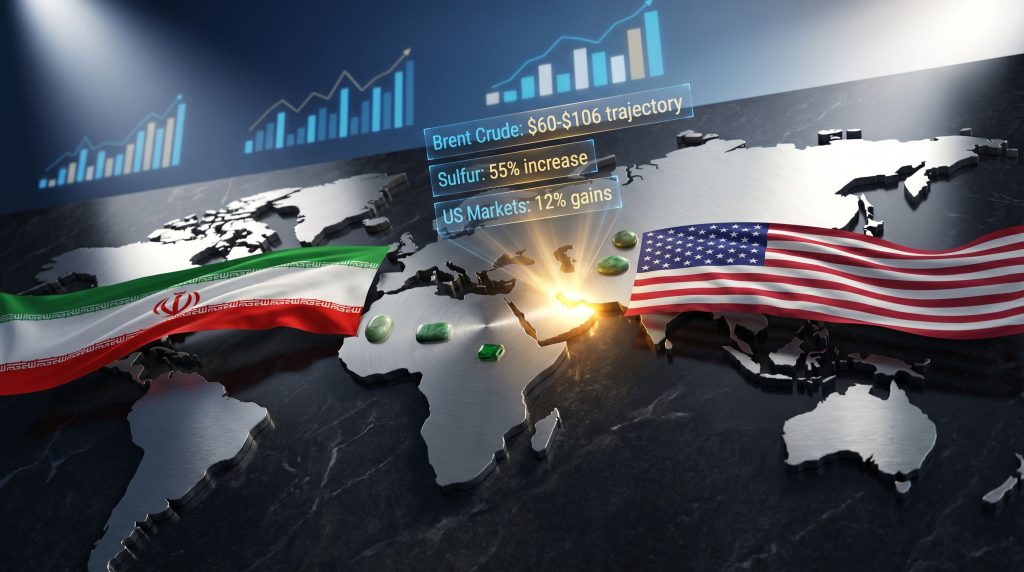
Energy markets have exhibited extreme volatility patterns under the indefinite extension framework, with Brent crude trading around $106 per barrel according to recent market commentary. This represents more than a 50% increase from pre-crisis levels of $60-70 per barrel, reflecting both immediate supply disruptions and forward-looking security premiums.
Oil Price Dynamics Under Indefinite Ceasefire Conditions
The technical setup for crude oil presents what market professionals describe as a "straddle buying moment" where significant movement appears likely in either direction. Analysis from trading floors suggests oil could either blast to $140 on escalation scenarios or collapse to $80-90 if diplomatic progress accelerates. This extreme range reflects maximum uncertainty about trajectory despite the ceasefire extension.
Even under optimistic resolution scenarios, energy analysts project that security premiums will remain embedded in pricing structures. A successful diplomatic outcome might see oil stabilising "just below $80" with a $10-15 security premium factored in permanently, according to market commentary. This suggests the indefinite extension has fundamentally altered oil price dynamics rather than creating temporary disruption.
Critical Materials Supply Chain Vulnerabilities
The correlation between energy and critical materials pricing has strengthened significantly under extended tensions. Uranium prices have increased 55% alongside oil's 50% gain, while sulfur has similarly risen 55%, demonstrating synchronised commodity stress across the periodic table. This pattern reflects broader uranium market volatility trends emerging from supply constraints.
| Commodity | Price Increase | Supply Risk Level | Primary Impact Sector |
|---|---|---|---|
| Brent Crude | 50%+ | Critical | Transportation/Energy |
| Uranium | 55%+ | Elevated | Nuclear Power |
| Sulfur | 55%+ | Critical | Mining/Agriculture |
The inventory dynamics reveal a critical inflection point where floating storage reserves become the primary supply source. Market analysis indicates that shipments arriving in Australia represent the last pre-blockade inventory, with future supplies dependent entirely on floating inventories that face depletion pressures.
What Strategic Calculations Drive the Indefinite Extension Decision?
The political calculus behind the indefinite extension reveals asymmetrical leverage dynamics that favour Iranian negotiating positions. Market observers note that Trump's political calendar creates time pressure that Iranian leadership appears willing to exploit through continued low-level maritime operations despite the ceasefire framework.
US Domestic Political Pressures and Economic Considerations
Trading floor analysis suggests the indefinite extension serves primarily to manage domestic US political pressures rather than representing genuine Iranian concessions. The timing coincides with what professionals characterise as Trump being "backs against the wall" in terms of election cycle positioning and inflation management objectives.
The continuation of maritime seizures despite ceasefire extension indicates Iranian forces maintain both operational capacity and political willingness to test enforcement boundaries. This creates ongoing pressure for US decision-making while avoiding direct military confrontation that could trigger broader escalation.
Iranian Leadership Dynamics and Negotiation Leverage
Iranian strategic calculations appear focused on maximising negotiating leverage through sustained operational pressure while avoiding actions that would justify US military escalation. The ability to continue coastal tanker operations and selective ship seizures provides tactical advantages within the ceasefire framework.
Market commentary suggests Iranian leadership "know exactly the position he's in and they're having quite a bit of fun making him squirm," indicating confidence in their strategic positioning during the extended negotiation period. This asymmetry creates ongoing uncertainty about resolution timelines and ultimate outcomes.
How Are Financial Markets Interpreting Extended Uncertainty?
Financial markets have exhibited significant divergence patterns under the indefinite extension, with US equity markets gaining approximately 12% since early April while Australian markets have managed only 3.45% over the same period. This 8.55 percentage point performance gap reflects different regional exposures to commodity price volatility and supply chain disruptions.
Equity Market Divergence Patterns
US market strength appears driven by earnings performance, with 75% of reported S&P companies beating expectations. Notable individual performances include:
- Boeing: Significant gains following strong earnings
- Intel: 20% increase on semiconductor strength
- Nvidia: Approximately 75% gains on AI-related momentum
- Genova: 7% increase after earnings beats
However, market professionals express scepticism about the sustainability of these gains. The rally exhibits characteristics of a "panic short squeeze rather than" fundamental strength, with technical indicators suggesting potential vulnerability to correction despite reaching all-time highs.
Hedge Fund Performance Under Geopolitical Stress
The hedge fund industry has experienced severe stress under extended uncertainty, with major funds reporting losses ranging from 20% to 38% since the beginning of 2026. These losses stem from crowded trades unwinding simultaneously as market darling positions collapsed under commodity price pressures.
A prominent example involves Cochlear, which declined from $240 to $98 following missed sales targets and workflow disruptions. The company also required an additional $10 million in provisioning due to Middle East exposure, illustrating how geopolitical tensions create unexpected operational costs across seemingly unrelated sectors.
"Historical analysis shows markets often experience initial volatility followed by adaptation phases during prolonged geopolitical standoffs, with energy and defence sectors typically outperforming while consumer discretionary faces headwinds."
Which Industries Face the Greatest Impact from Prolonged Tensions?
The indefinite extension creates sector-specific challenges that vary based on supply chain dependencies and operational exposure to Middle Eastern trade routes. Mining operations face particular pressure through both input cost inflation and production target difficulties.
Australian Mining Sector Vulnerabilities
Lynas Rare Earths exemplifies the challenges facing critical minerals producers, with the company declining 10% for the week following a 20% miss on production estimates at their new Kalgoorlie processing facility. The transition from Malaysian to Australian processing operations has encountered technical difficulties that compound supply chain pressures from Middle Eastern sulfur shortages.
The company specifically highlighted sulfur shortages as a constraint factor, reflecting broader industry exposure to Strait of Hormuz disruptions. However, this challenge also represents opportunities within the broader mining industry evolution as companies adapt to supply chain realities.
Agricultural Sector Planning Disruptions
Agricultural planning cycles face critical timing pressures as April represents the key planting period for North American corn and grain production. Fertilizer shortages stemming from Middle Eastern phosphate and sulfur disruptions threaten to reduce planting intentions and crop yields.
The combination of elevated diesel costs and reduced fertilizer availability creates a dual pressure system where farmers face higher input costs alongside potentially lower yields. This dynamic suggests food price inflation could emerge within six months if current supply constraints persist through the growing season.
Technology Sector Resilience Factors
Technology companies have demonstrated relative resilience during the extended uncertainty period, with AI and legal technology segments showing particular strength. Nuix provides an example of sector opportunities, as the company's AI-powered legal research capabilities gain relevance during complex geopolitical environments requiring enhanced due diligence and compliance frameworks.
The company recently received positive legal outcomes with federal court dismissal of regulatory cases that had created overhang pressure since its problematic listing period. While technical charts still show downtrend characteristics, the resolution of legal uncertainties combined with AI market momentum creates potential recovery scenarios.
What Scenarios Could Emerge from the Extended Ceasefire?
The indefinite timeline creates multiple potential pathways with significantly different implications for global markets and commodity pricing structures. Each scenario carries distinct probability weightings and market impact characteristics. Additionally, the broader US-China trade war impact continues to influence global economic dynamics during this period.
Diplomatic Resolution Pathway Analysis
A comprehensive diplomatic resolution would likely trigger significant oil price normalisation, though market analysis suggests prices would stabilise with permanent security premiums rather than returning to pre-crisis levels. Expectations centre on stabilisation "just below $80" with embedded $10-15 security premiums reflecting ongoing regional tensions.
Resolution scenarios would benefit sectors currently experiencing supply chain stress, particularly agriculture, mining, and transportation. However, the timeline for supply chain normalisation could extend several months due to inventory rebuilding requirements and operational adjustments.
Escalation Risk Factors and Market Implications
Escalation scenarios could trigger oil prices toward $140 per barrel according to trading floor analysis, with corresponding impacts across energy-intensive sectors. The current technical setup for crude oil suggests vulnerability to rapid upward movement if ceasefire violations occur.
Manufacturing sectors with high energy intensity would face additional margin pressure under escalation scenarios, while energy producers and strategic commodity holders would benefit from further price increases. Currency implications could see safe-haven flows toward USD and precious metals.
Status Quo Maintenance Scenario
The continuation of current conditions represents perhaps the most challenging scenario for portfolio management, as it perpetuates elevated uncertainty without clear directional signals. This environment favours defensive positioning and commodity exposure while penalising growth-oriented strategies dependent on supply chain normalisation.
| Scenario | Probability Assessment | Oil Price Impact | Market Sentiment |
|---|---|---|---|
| Diplomatic Resolution | Moderate | -$20-30/barrel | Risk-on positioning |
| Status Quo Extension | High | +$10-15 premium | Continued uncertainty |
| Escalation | Lower but significant | +$40-60/barrel | Risk-off rotation |
The next major ASX story will hit our subscribers first
How Should Investors Position for Extended Geopolitical Uncertainty?
Extended geopolitical uncertainty requires portfolio strategies that balance defensive positioning with opportunistic exposure to sectors that benefit from sustained tensions. The indefinite extension of ceasefire between Iran and the US suggests investors must prepare for prolonged rather than temporary positioning adjustments.
Defensive Portfolio Strategies
Energy sector exposure provides natural hedging against escalation scenarios while offering participation in any sustained security premium pricing. Companies with diversified geographic exposure and strong balance sheets offer better resilience during extended uncertainty periods.
Commodity exposure through physical holdings or futures positions can provide inflation protection while benefiting from supply constraint premiums. Critical materials including rare earths, uranium, and agricultural inputs represent specific opportunities within broader commodity themes.
Opportunity Identification in Crisis Markets
Technology sectors with applications in security, compliance, and supply chain management may find enhanced demand during extended geopolitical tensions. AI-powered solutions for legal research, risk management, and operational optimisation could see accelerated adoption.
Infrastructure investments in alternative energy, strategic storage, and transportation diversification align with long-term themes emerging from current supply chain vulnerabilities. These sectors benefit from both current disruptions and policy responses likely to emerge from the crisis.
Risk Management Framework for Extended Uncertainty
Position sizing becomes critical during volatile periods where individual positions can experience extreme movements within short timeframes. The $240 to $98 decline in Cochlear demonstrates how quickly fundamental changes can affect individual holdings.
Diversification across geopolitical risk factors requires exposure to assets that perform differently under various scenario outcomes. This includes balancing growth exposure with defensive positions and maintaining flexibility to adjust allocations as conditions evolve.
Liquidity management assumes greater importance during periods where market conditions can shift rapidly based on news flow and diplomatic developments. Maintaining access to capital for opportunistic positioning while avoiding forced selling during volatile periods becomes essential.
What Long-Term Implications Could Reshape Global Trade?
The indefinite extension of ceasefire between Iran and the US may accelerate structural changes in global trade patterns that extend well beyond the immediate conflict resolution. According to recent reports, the US will indefinitely extend ceasefire, though it remains unclear if Iran agrees to the same terms. These adaptations could create permanent shifts in supply chain architecture and energy market dynamics.
Supply Chain Reconfiguration Trends
The vulnerability of critical materials flows through single chokepoints has highlighted the risks of concentrated supply chains. Industries dependent on Middle Eastern sulfur, phosphates, and energy inputs are likely to pursue diversification strategies that prioritise resilience over cost optimisation.
Alternative shipping routes and strategic stockpiling policies may become standard operational features rather than emergency measures. Companies are learning to operate with higher inventory levels and multiple supplier relationships to mitigate future disruption risks.
Energy Transition Impact Assessment
Extended energy price volatility and supply uncertainty may accelerate renewable energy adoption as organisations seek to reduce exposure to geopolitical risk. However, the critical materials required for renewable infrastructure also face supply chain constraints, creating complex transition dynamics.
Energy independence policies across major economies could gain political momentum as the costs of energy import dependency become more apparent. This shift would favour domestic energy production and storage capabilities while reducing reliance on potentially unstable regions.
Diplomatic Architecture Evolution
The role of third-party mediators in managing extended conflicts may influence future crisis management frameworks. Regional powers with neutral positioning could find enhanced influence in global diplomatic structures as alternatives to traditional superpower mediation.
Economic interdependence as a conflict prevention tool faces testing under current conditions, as trade relationships alone appear insufficient to prevent extended standoffs when core security interests are perceived to be at stake.
Navigating Markets During Extended Geopolitical Standoffs
The indefinite extension of ceasefire between Iran and the US creates a unique investment environment where traditional crisis management approaches may prove insufficient. Markets must adapt to sustained elevated uncertainty rather than binary resolution outcomes.
Key Monitoring Indicators for Market Participants
Diplomatic milestone tracking becomes essential for anticipating market direction changes. However, the current framework suggests that ceasefire extensions may become routine rather than progress indicators, requiring more nuanced interpretation of negotiation dynamics.
Economic data points signalling resolution progress include inventory rebuild rates, shipping lane utilisation, and commodity price technical patterns. Energy price behaviour relative to news flow provides insights into market confidence regarding diplomatic outcomes.
Market sentiment measurement tools must account for the possibility that current conditions represent a new equilibrium rather than temporary disruption. This requires adjusting volatility expectations and risk premium calculations for extended uncertainty periods.
Strategic Patience vs. Tactical Positioning
Long-term investment themes may require modification to account for permanently elevated geopolitical risk premiums across multiple sectors. The assumption that globalised supply chains will return to pre-crisis optimisation levels may prove overly optimistic.
Short-term volatility management requires recognition that news flow and diplomatic developments can trigger rapid position adjustments across multiple asset classes simultaneously. Portfolio construction must balance conviction positioning with flexibility to respond to changing conditions.
The indefinite nature of the current ceasefire framework suggests investors should prepare for extended rather than temporary positioning requirements, fundamentally altering the approach to both defensive strategies and opportunistic positioning across global markets.
Ready to Capitalise on Market-Moving Mining Discoveries?
Discovery Alert's proprietary Discovery IQ model delivers instant notifications on significant ASX mineral discoveries, empowering investors to identify actionable opportunities ahead of the broader market during these volatile geopolitical times. Explore how historic discoveries have generated substantial returns and begin your 14-day free trial today to position yourself strategically in critical materials and mining opportunities.