June 21, 2026
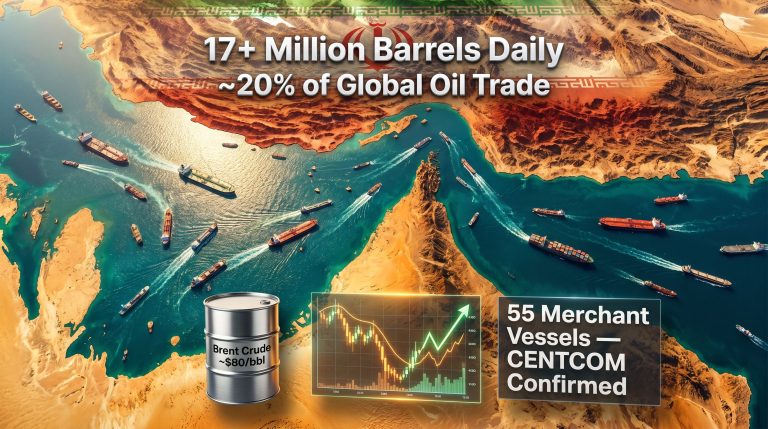
Global energy markets face unprecedented transformation as geopolitical volatility fundamentally alters risk assessment frameworks across commodity trading systems. The Iran US-Israel war demonstrates how regional conflicts can trigger systemic changes that extend far beyond immediate supply disruptions, reshaping international energy security paradigms and investment allocation strategies. Furthermore, this oil price rally highlights the interconnected nature of global energy systems where regional disruptions can trigger persistent volatility patterns.
Understanding the Strategic Energy Implications
Energy market analysts increasingly recognise that modern conflicts create cascading effects throughout global supply chains, forcing institutional reassessment of baseline risk premiums and infrastructure vulnerability mapping. Moreover, the interconnected nature of international energy systems means that regional disruptions can trigger price volatility patterns that persist long after initial trigger events.
Critical Infrastructure Assessment Framework:
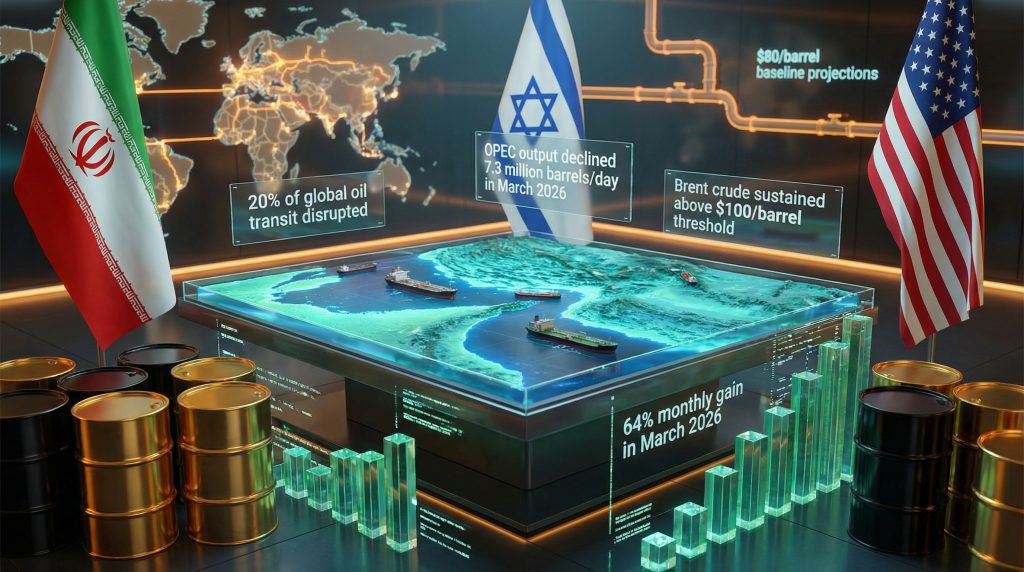
• Transit chokepoint vulnerabilities affecting 20% of global oil flows
• Regional production capacity declining by 7.3 million barrels per day during peak disruption periods
• Price threshold maintenance with sustained levels above $100 per barrel
• Supply chain bottleneck identification across refinery and distribution networks
Financial markets demonstrate heightened sensitivity to geopolitical developments, with commodity futures experiencing extreme volatility patterns. Brent crude futures reached $105.8 per barrel, representing a 64% monthly surge that constituted the highest monthly percentage gain in Reuters LSEG data records spanning from June 1988 to April 2026.
Energy security experts from Ambit Institutional Equities project that post-conflict oil price baselines will stabilise around $80 per barrel for Brent crude, elevated from historical norms due to three structural factors: infrastructure damage requiring extended recovery periods, persistent geopolitical risk premiums affecting market pricing mechanisms, and strategic inventory restocking by major consuming nations.
When big ASX news breaks, our subscribers know first
What Are the Immediate Market Disruptions from Regional Conflict?
Regional conflicts demonstrate the fragility of global energy infrastructure when critical transit routes face operational constraints. The Strait of Hormuz closure impact illustrates how geographic chokepoints can disrupt international commodity flows, creating immediate price pressures across multiple energy sectors. Additionally, the Saudi exploration impact shows how broader regional developments affect global supply expectations.
Production Capacity Impact Analysis:
| Metric | February 2026 | March 2026 | Change |
|---|---|---|---|
| OPEC Output (million bpd) | Baseline | -7.3 million bpd | -7.3 million |
| Brent Crude Price | Sub-$100 | $105.8 | +64% monthly |
| WTI Crude Price | Baseline | $103 | +1.7% daily |
| Market Volatility | Moderate | Extreme | Critical |
The magnitude of OPEC production decline represents the largest coordinated output reduction in recent energy market history, demonstrating how the Iran US-Israel war can rapidly transform global supply availability. This production constraint occurred alongside infrastructure damage that affected refining capacity and distribution networks throughout the region.
Financial Market Response Patterns:
• Record volatility levels with 64% monthly gains representing unprecedented commodity price movements
• Sustained price floors maintaining $100+ per barrel levels through multiple trading sessions
• Options market reactions showing extreme implied volatility across energy sector derivatives
• Currency market impacts affecting petrodollar strength and international trade settlements
Maritime insurance premiums increased substantially across affected shipping routes, with vessel operators implementing alternative routing strategies to avoid high-risk transit zones. These operational adjustments created additional cost pressures throughout global supply chains, contributing to sustained price elevation beyond immediate production disruptions. Consequently, analysis of current tensions reveals the broader implications for global energy security.
How Are Global Supply Chains Adapting to Prolonged Uncertainty?
International energy supply chains demonstrate remarkable adaptability when faced with systematic disruptions, implementing both immediate response mechanisms and longer-term structural modifications. Strategic petroleum reserve deployments represent coordinated efforts by major consuming nations to maintain supply stability during crisis periods.
Emergency Response Mechanisms:
• Coordinated reserve releases from strategic stockpiles across multiple nations
• Alternative transportation routing bypassing compromised transit corridors
• Enhanced international cooperation through established energy security frameworks
• Accelerated production ramping in non-affected geographic regions
Shipping companies rapidly developed bypass corridors to maintain crude oil delivery schedules, though these alternative routes typically involve longer transit times and higher operational costs. The Cape of Good Hope routing alternative, while viable, adds approximately 14-21 days to delivery schedules compared to traditional Strait of Hormuz passages.
Critical Assessment Framework
Critical Assessment: Energy supply chain resilience depends increasingly on geographic diversification and redundant transportation networks, requiring substantial capital investment in alternative infrastructure capacity.
Infrastructure Resilience Planning:
Pipeline operators conduct comprehensive vulnerability assessments to identify potential security risks and develop contingency protocols for rapid response scenarios. These assessments encompass both physical infrastructure protection and cybersecurity frameworks designed to prevent operational disruptions through technological attacks. In addition, live coverage of regional developments highlights the ongoing operational challenges facing energy infrastructure.
International Energy Agency coordination protocols facilitate rapid information sharing and resource allocation during emergency scenarios, enabling more effective collective responses to supply disruptions. Enhanced early warning systems provide improved market transparency and reduce uncertainty-driven price volatility.
What Long-Term Energy Security Implications Are Emerging?
The evolution of geopolitical risk assessment frameworks reflects fundamental shifts in how energy market participants evaluate and price uncertainty factors. Traditional risk models prove inadequate for capturing the complexity of modern supply chain vulnerabilities and their potential cascade effects across global markets.
Enhanced Risk Premium Framework:
| Assessment Category | Traditional Model | Enhanced Framework | Implementation Timeline |
|---|---|---|---|
| Geographic Concentration | Regional | Global Systemic | Immediate |
| Infrastructure Vulnerability | Asset-Specific | Network-Wide | 6-12 months |
| Supply Diversification | Limited | Comprehensive | 1-3 years |
| Emergency Protocols | Basic | Integrated | Ongoing |
Market structure transformations accelerate renewable energy investment as stakeholders seek to reduce exposure to geopolitically sensitive fossil fuel supply chains. This transition involves substantial capital allocation toward energy storage infrastructure, smart grid development, and distributed generation systems. Furthermore, the energy transition shift gains momentum as an alternative to volatile traditional energy sources.
Strategic Partnership Realignments:
• Bilateral energy cooperation agreements establishing stable long-term supply relationships
• Technology sharing partnerships for enhanced energy security infrastructure
• Regional energy integration projects reducing dependence on volatile supply sources
• Investment coordination mechanisms for strategic energy infrastructure development
Energy independence initiatives gain momentum as nations recognise the strategic importance of domestic production capacity and technological self-sufficiency. These programmes encompass both traditional energy resource development and accelerated deployment of renewable energy technologies.
How Are Energy Investment Patterns Shifting During Crisis?
Capital allocation strategies undergo fundamental restructuring as investors reassess risk-return profiles across energy sector segments. Traditional energy infrastructure investments focus increasingly on projects located in politically stable jurisdictions with established regulatory frameworks and proven operational security.
Investment Priority Rebalancing:
- Political stability assessment becoming primary evaluation criteria
- Infrastructure security requiring enhanced due diligence protocols
- Supply chain resilience prioritised over pure cost optimisation
- Technology redundancy integrated into project planning frameworks
- Regulatory predictability weighted heavily in jurisdiction selection
Geographic diversification strategies emphasise portfolio exposure across multiple stable regions rather than concentration in lowest-cost production areas. This approach accepts higher baseline costs in exchange for reduced geopolitical risk exposure and improved supply reliability.
Technology Development Acceleration
Energy storage infrastructure attracts substantial investment as grid operators recognise the strategic value of buffer capacity during supply disruptions. Grid-scale battery deployment projects accelerate beyond previous timelines, with lithium-ion and emerging flow battery technologies receiving priority funding.
Smart grid infrastructure development focuses on system resilience and flexibility, enabling rapid adaptation to changing supply conditions. These technological investments create operational redundancy that reduces vulnerability to single-point-of-failure scenarios affecting traditional energy systems.
What Economic Scenarios Are Energy Analysts Modelling?
Economic forecasting models incorporate multiple variables reflecting the complex interplay between geopolitical developments, infrastructure recovery timelines, and market psychology factors. Short-term projections emphasise price stabilisation challenges despite potential Iran US-Israel war resolution progress.
De-escalation Timeline Analysis
Recent diplomatic statements suggest potential conflict resolution pathways, with US leadership indicating military operations could conclude within two to three weeks. Iranian officials expressed willingness to end hostilities contingent upon security guarantees preventing conflict repetition. US diplomatic officials indicate visibility of potential conclusion after five weeks of active conflict.
However, energy markets continue demonstrating elevated volatility despite these diplomatic developments. Oil prices increased approximately 2% following de-escalation statements, indicating market scepticism regarding immediate supply restoration capabilities. Similarly, natural gas trends reflect broader commodity market uncertainty.
Medium-Term Structural Projections:
• Infrastructure recovery timelines extending 6-18 months beyond conflict conclusion
• Risk premium persistence maintaining elevated baseline pricing for 2-3 years
• Supply chain redesign creating permanent alternative routing preferences
• Technology adoption acceleration particularly in energy storage and grid modernisation
Demand elasticity models suggest that sustained higher prices will trigger consumption pattern adjustments across multiple economic sectors. Industrial users implement efficiency improvements and alternative energy sourcing strategies, while consumer markets adapt to higher transportation and heating costs.
Investment Climate Transformation
Energy project financing incorporates enhanced political risk assessment protocols, requiring more comprehensive insurance coverage and contingency planning. Traditional project economics models expand to include scenario analysis covering multiple geopolitical risk factors and their potential operational impacts.
The next major ASX story will hit our subscribers first
How Are Different Regions Responding to Energy Security Challenges?
Regional energy security strategies reflect diverse geographic, economic, and political circumstances while sharing common objectives of supply diversification and infrastructure resilience enhancement. Asian markets implement accelerated strategic petroleum reserve expansion programmes to provide buffer capacity during future disruptions.
Asia-Pacific Strategic Adaptations
Asian consuming nations prioritise long-term supply agreements with politically stable producers, accepting price premiums in exchange for delivery reliability guarantees. These contracts typically include force majeure protections and alternative sourcing provisions to maintain supply continuity during crisis periods.
Renewable energy deployment accelerates across the region as governments recognise the strategic benefits of domestic energy generation capacity. Solar and wind projects receive expedited permitting and enhanced financial support as part of comprehensive energy security strategies. Additionally, trade war effects influence regional energy cooperation agreements.
European Policy Evolution Framework
European energy policy emphasises reduced dependence on geopolitically volatile supply sources through comprehensive diversification programmes. Infrastructure investment priorities include enhanced energy storage capacity, improved grid interconnection systems, and distributed generation networks.
Emergency response protocols receive substantial upgrades, incorporating lessons learned from previous supply disruptions and enhanced coordination mechanisms with neighbouring nations. These frameworks enable rapid resource sharing and collective response capabilities during future crisis scenarios.
North American Market Dynamics
North American energy markets benefit from substantial domestic production capacity and established infrastructure networks, positioning the region as a potential alternative global supplier during international disruptions. Export capacity expansion projects receive accelerated development timelines to capitalise on international demand.
Strategic reserve management involves coordinated release and replenishment strategies designed to stabilise global markets while maintaining domestic supply security. These operations require careful timing to maximise market impact while preserving emergency capacity for extended crisis scenarios.
What Investment Opportunities Are Emerging from Energy Market Disruption?
Traditional energy sector opportunities focus on companies operating in politically stable jurisdictions with established regulatory frameworks and proven operational security records. Exploration companies developing resources in North America, Australia, and Northern Europe attract premium valuations due to reduced geopolitical risk exposure.
Upstream Sector Opportunities:
• Shale production operators in established North American basins
• Offshore development projects in stable maritime jurisdictions
• Enhanced recovery technologies maximising existing field productivity
• Exploration programmes targeting low-risk geographic regions
Pipeline infrastructure investments prioritise alternative route development connecting secure production areas with major consuming markets. These projects typically involve substantial capital requirements but offer stable long-term cash flows with reduced geopolitical risk exposure.
Technology and Innovation Investments
Energy storage technology represents a rapidly expanding investment category as grid operators recognise the strategic value of buffer capacity during supply disruptions. Battery technology development focuses on cost reduction, energy density improvements, and extended operational lifespans.
Emerging Technology Categories:
| Technology Segment | Investment Focus | Timeline | Market Potential |
|---|---|---|---|
| Grid-Scale Batteries | Cost Reduction | 2-5 years | High Growth |
| Smart Grid Systems | Resilience Enhancement | 3-7 years | Substantial |
| Alternative Fuels | Production Scaling | 5-10 years | Transformative |
| Energy Management | Efficiency Optimisation | 1-3 years | Immediate |
Alternative fuel development attracts crisis-driven innovation funding as investors recognise the long-term potential for reduced fossil fuel dependence. Hydrogen production, advanced biofuels, and synthetic fuel technologies receive accelerated research and development support.
How Will Post-Conflict Energy Markets Differ from Pre-Crisis Structures?
Post-conflict energy market structures will incorporate permanently elevated risk assessment standards and enhanced supply chain redundancy requirements. Investment decision-making frameworks expand to include comprehensive geopolitical analysis and scenario planning for multiple risk factors.
Permanent Risk Assessment Changes
Due diligence protocols require enhanced political risk evaluation incorporating governance indicators, regional stability assessments, and supply chain mapping analysis. These expanded frameworks increase project development timelines but provide improved protection against future disruptions.
Supply chain redundancy becomes a mandatory component of energy infrastructure development rather than an optional cost consideration. Multiple pathway requirements increase capital costs but provide operational flexibility and reduced vulnerability to single-point-of-failure scenarios.
International Cooperation Enhancement
Emergency response mechanisms receive substantial strengthening through enhanced institutional arrangements, improved communication protocols, and coordinated resource allocation procedures. These systems enable more effective collective responses to future supply disruptions.
Investment Climate Evolution: Energy markets will permanently incorporate higher baseline risk premiums, geographic diversification requirements, and enhanced technology redundancy standards in project evaluation and pricing mechanisms.
Market Structure Innovations:
• Enhanced transparency requirements for supply chain mapping and risk disclosure
• Standardised emergency protocols enabling rapid international coordination
• Technology sharing frameworks accelerating resilience infrastructure deployment
• Flexible contracting mechanisms adapting to volatile geopolitical conditions
The transformation represents a fundamental shift from cost-optimised energy systems toward resilience-prioritised frameworks accepting higher baseline costs in exchange for improved operational security and supply reliability.
Understanding these evolving market dynamics becomes essential for stakeholders navigating an energy landscape where the Iran US-Israel war and similar geopolitical considerations play an expanded role in operational planning, investment decisions, and risk management strategies across all energy sector segments.
Looking for Investment Opportunities in Energy Sector Disruptions?
Discovery Alert's proprietary Discovery IQ model delivers real-time alerts on significant ASX mineral discoveries, including energy-related commodities that could benefit from current market volatility and supply chain disruptions. Explore Discovery Alert's discoveries page to understand how major mineral discoveries have generated substantial returns, then begin your 14-day free trial today to position yourself ahead of the market during these transformative energy sector developments.