May 15, 2026
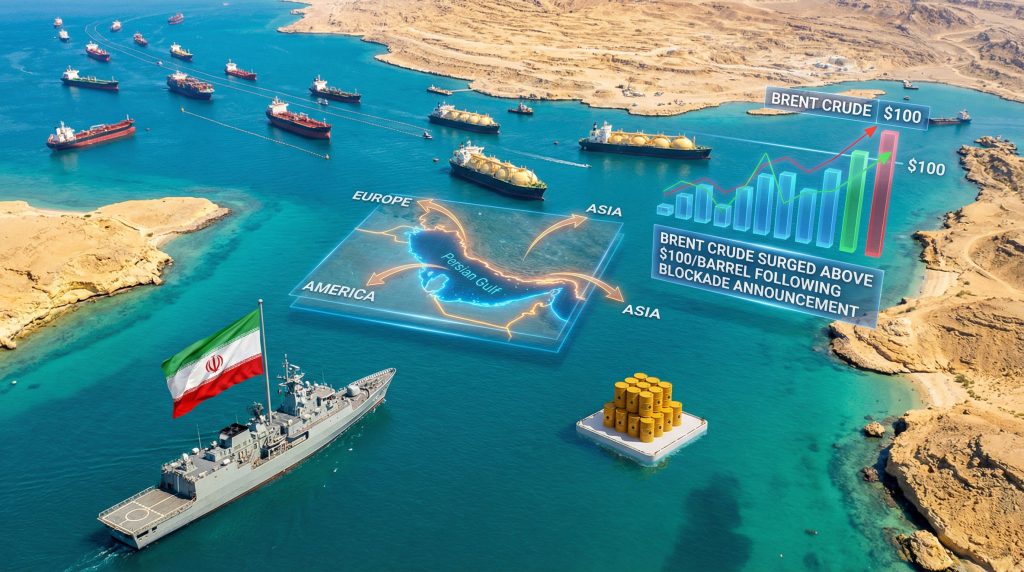
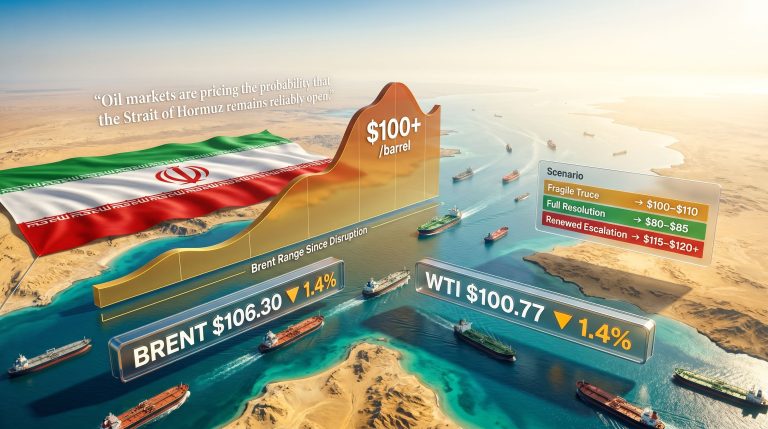
The global energy landscape faces unprecedented volatility as geopolitical tensions escalate, with the Iran US naval blockade scenario presenting one of the most significant threats to international supply chains. Understanding these oil price movements during periods of regional instability requires examining the complex interplay between maritime enforcement, economic sanctions, and strategic response mechanisms that govern international energy flows.
Strategic Implications of Port-Specific Maritime Enforcement
Naval blockades represent one of the most direct forms of economic warfare, capable of disrupting global energy flows within hours of implementation. The distinction between targeted port enforcement and comprehensive regional closures fundamentally shapes market responses and international diplomatic dynamics.
Understanding Maritime Enforcement Mechanisms
Port-specific blockades operate through selective enforcement targeting particular loading facilities, while regional strategies attempt comprehensive control over entire transit routes. Historical analysis reveals that targeted approaches often prove more sustainable, as they avoid triggering broader international maritime law violations while maintaining economic pressure.
The 1980-1988 Iran-Iraq conflict demonstrated how port-specific attacks could remove substantial volumes from global markets. During this period, approximately 546 merchant vessels were attacked, disrupting 2-3 million barrels per day at peak intensity. This historical precedent illustrates how strategic targeting of key infrastructure can achieve significant economic impact without requiring comprehensive regional control.
Furthermore, the Iran US naval blockade considerations must account for modern shipping patterns and technological capabilities. Contemporary enforcement mechanisms utilise advanced surveillance and communication systems that enable more precise targeting whilst reducing risks to neutral shipping.
Legal Frameworks Governing Naval Blockades
International maritime law establishes specific requirements for legitimate blockade operations under the UN Convention on the Law of the Sea (UNCLOS). Enforcement mechanisms must include:
- Declared intent with public notification
- Clearly defined enforcement perimeters
- International community notification requirements
- Compliance with innocent passage provisions
The San Remo Manual on International Law provides additional guidance on legitimate blockade operations, emphasising proportionality and civilian protection requirements. These frameworks become particularly relevant when examining the legal justifications for sustained maritime enforcement operations.
Timeline Analysis of Escalation Patterns
Energy market disruptions typically follow predictable escalation sequences. Initial diplomatic tensions create price volatility through speculation, followed by actual supply constraints as shipping routes become restricted. Resolution phases often involve gradual normalisation as alternative supply arrangements develop and diplomatic solutions emerge.
Previous Strait of Hormuz crises demonstrate average resolution timeframes ranging from 2-4 weeks for diplomatic solutions to 6-12 months for comprehensive market adaptation when conflicts persist. However, each Iran US naval blockade scenario presents unique characteristics that may alter these historical patterns.
When big ASX news breaks, our subscribers know first
Oil Price Volatility During Supply Disruptions
Energy markets exhibit highly sensitive price discovery mechanisms during supply disruptions, with Brent crude serving as the primary global benchmark. Understanding these dynamics requires examining both immediate shock responses and longer-term adaptation patterns, particularly when considering the US-China market impact on global energy flows.
Brent Crude Price Formation Under Stress
Historical precedents reveal consistent patterns in oil price responses to supply disruptions. Market participants must understand how geopolitical events translate into actual price movements across different timeframes and intensity levels.
| Disruption Event | Price Impact | Duration | Peak Premium |
|---|---|---|---|
| 2019 Aramco Attack | $60 → $72/barrel | 14 days | 19.2% increase |
| 2022 Russia Invasion | $91 → $139/barrel | 16 weeks | 52.7% increase |
| 2011 Libya Crisis | $111 → $128/barrel | 6 weeks | 15.3% increase |
These patterns demonstrate that market responses depend heavily on actual versus perceived supply removal, strategic petroleum reserve release capacity, and alternative supplier activation timelines. Moreover, OPEC production impact decisions significantly influence how quickly markets can adapt to supply disruptions.
Supply Chain Disruption Quantification
The removal of 1.5 million barrels per day from Iranian production represents approximately 1.5% of global crude oil supply. However, market impact extends beyond simple arithmetic due to supply chain concentration effects. Persian Gulf producers collectively supply approximately 40% of seaborne crude trade, creating amplified regional vulnerability.
In addition, Trump's escalating trade tensions with Iran demonstrate how political rhetoric can amplify market uncertainty even before actual supply constraints materialise.
Energy analysts note that each 1 million barrel per day supply disruption historically correlates to $5-15 per barrel price premiums, depending on global inventory levels and spare capacity availability.
Regional Price Differential Analysis
Supply disruptions create regional pricing disparities as markets adjust to constrained availability. Asian markets typically experience higher premiums due to transportation distance and limited alternative suppliers. European markets benefit from greater supplier diversification and strategic storage capacity.
Spot market availability becomes critically important during disruptions, as approximately 50% of global crude trade occurs on spot markets while the remainder operates through longer-term contracts with built-in adjustment mechanisms.
Countries Facing Critical Energy Supply Vulnerabilities
Geographic concentration of energy imports creates asymmetric vulnerability patterns across consuming nations. India's position illustrates how rapid economic growth combined with limited domestic production creates acute exposure to supply disruptions, particularly when considering energy export challenges facing major suppliers.
India's Structural Energy Dependencies
India imports approximately 80-85% of its crude oil consumption, totaling 4-5 million barrels per day. This dependency creates multiple vulnerability vectors that become particularly acute during Iran US naval blockade scenarios.
Crude Oil Import Structure:
- Middle East suppliers: 60% of total imports
- African producers: 20% of imports
- Russian crude: 15% of imports
- Other sources: 5% of imports
The concentration of supply sources through Persian Gulf routes creates chokepoint vulnerabilities that extend beyond bilateral relationships with individual producers. Consequently, any disruption to regional shipping lanes affects multiple supplier relationships simultaneously.
Vessel Stranding and Logistics Disruption
Maritime disruptions create cascading effects throughout energy supply chains. Tanker vessels require weeks to traverse international shipping routes, meaning disruptions strand substantial volumes in transit. During the 2019 U.S. sanctions on Iran, 16-20 Indian-flagged tankers waited at Iranian loading ports seeking clearance, demonstrating how quickly logistics can become paralysed.
Current Exposure Indicators:
- 15 India-flagged vessels reportedly affected by restrictions
- 9 LPG carriers successfully relocated through coordination
- Multiple foreign-flagged carriers serving Indian destinations also stranded
European and Asian Market Comparison
European markets demonstrate greater supply diversification through Norwegian North Sea production, strategic petroleum reserves exceeding 90-day consumption, and multiple pipeline connections from Russia, Kazakhstan, and North Africa. Furthermore, advanced LNG import infrastructure enables global sourcing capability.
Asian markets, particularly India, China, and Japan, face greater vulnerability due to limited domestic production capacity and concentration of suppliers in the Persian Gulf region. Additionally, longer transportation distances increase logistics complexity whilst rapidly growing consumption outpaces domestic resource development.
LPG and LNG Market Disruption Dynamics
Liquefied petroleum gas (LPG) and liquefied natural gas (LNG) markets operate under fundamentally different trading structures compared to crude oil, creating unique vulnerability patterns during supply disruptions. These markets demonstrate how natural gas trends can diverge significantly from traditional petroleum market dynamics.
LPG Market Structure Constraints
The global LPG market demonstrates significantly lower spot market availability compared to crude oil, creating particular vulnerabilities during Iran US naval blockade scenarios.
- Only 10% of global LPG trades on spot markets
- 90% operates through annual contracts with predetermined volumes and pricing
- Limited flexibility for rapid supply source substitution
This structural difference means LPG shortages develop more rapidly and prove more difficult to resolve through market mechanisms. During disruptions, consumers must either accept higher prices for limited spot availability or face supply shortages until contract arrangements can be renegotiated.
Domestic Production Reallocation Challenges
LPG production often shares feedstock sources with petrochemical manufacturing, creating internal competition during supply disruptions. Indian producers increased domestic LPG output by 40% to 50,000 metric tonnes per day during initial supply constraints, then reduced to 45,000 tonnes as petrochemical demand required feedstock reallocation.
This reallocation created secondary shortages in plastic bag manufacturing, pharmaceutical packaging materials, and industrial chemical intermediates. However, such adjustments demonstrate how domestic production can provide temporary buffer capacity during international supply disruptions.
LNG Price Doubling Effects
LNG markets exhibit extreme price volatility during supply disruptions due to limited short-term substitution options. Price increases of 100% or more trigger demand destruction across multiple sectors.
Industrial Demand Destruction Sequence:
- Power generation shifts to coal or other alternatives
- Fertilizer production curtailment due to feedstock costs
- Steel and cement manufacturing reductions
- Chemical industry production adjustments
This demand destruction provides natural market-balancing mechanisms but creates broader economic disruption across energy-intensive industries. Nevertheless, these adjustments enable markets to function even under severe supply constraints.
Historical Context of Persian Gulf Energy Crises
Previous energy disruptions in the Persian Gulf region provide essential context for understanding current market dynamics and potential resolution scenarios. These historical precedents help assess how modern Iran US naval blockade situations might develop and resolve.
The Tanker War Precedent (1980-1988)
The Iran-Iraq conflict created the most sustained energy disruption in modern history, providing crucial insights for contemporary scenarios.
Key Characteristics:
- 8-year duration with varying intensity levels
- 546 merchant vessels attacked throughout the conflict
- 2-3 million barrels per day removed at peak disruption
- Kharg Island terminal repeatedly targeted and rebuilt
Resolution required comprehensive ceasefire arrangements and extensive infrastructure reconstruction. International convoy protection eventually enabled limited tanker operations, demonstrating how military solutions can provide temporary stability whilst diplomatic efforts continue.
Recent Disruption Patterns (2019-2022)
Modern conflicts exhibit different characteristics than historical precedents, reflecting technological advances and changed geopolitical dynamics.
2019 Aramco Facility Attack:
- 5.7 million barrels per day offline (largest single-day disruption in 40 years)
- Rapid Saudi response through strategic reserves and spare capacity
- 2-week market stabilisation due to coordinated OPEC response
2022 Russian Sanctions Impact:
- Gradual removal of 3 million barrels per day Russian crude
- Phased implementation allowing market adaptation
- Alternative supplier development across Middle East and Americas
Military vs. Economic Pressure Evolution
Contemporary conflicts increasingly rely on economic rather than military pressure mechanisms. Sanctions, export controls, and financial restrictions provide greater precision whilst avoiding direct military confrontation. However, naval blockades represent escalation toward traditional military pressure tactics.
For instance, the Iran US naval blockade considerations reflect this evolution from purely economic sanctions to more direct maritime enforcement mechanisms. This escalation pattern typically indicates that conventional diplomatic and economic pressures have proven insufficient to achieve desired policy objectives.
Geopolitical Implications Beyond Energy Markets
Energy disruptions create broader geopolitical consequences that extend far beyond commodity pricing, influencing alliance structures and international law precedents. Understanding these wider implications becomes crucial when assessing potential outcomes from Iran US naval blockade scenarios.
Regional Alliance Dynamics
Persian Gulf energy disruptions force regional powers to clarify alliance commitments and defence obligations. Gulf Cooperation Council members must balance economic interests against security concerns, whilst maintaining relationships with both conflicting parties.
India's position illustrates emerging market dilemmas where economic growth requirements demand stable energy supplies, strategic autonomy principles resist exclusive alignment with any power bloc, and regional stability interests favour diplomatic rather than military solutions.
International Maritime Law Implications
Naval blockade operations establish precedents for future maritime enforcement actions. UNCLOS provisions regarding innocent passage and freedom of navigation face practical testing during actual conflicts. Enforcement decisions influence future blockade legitimacy standards, international shipping insurance frameworks, and naval convoy protection protocols.
Furthermore, these precedents affect neutral nation rights and obligations, potentially reshaping how international maritime commerce operates during periods of regional tension.
Nuclear Negotiations Leverage Assessment
Energy market disruptions often correlate with broader diplomatic negotiations. Economic pressure through energy supply constraints can provide leverage in unrelated negotiations, including nuclear nonproliferation agreements, regional security arrangements, and trade relationships.
However, excessive economic pressure risks hardening negotiation positions rather than encouraging compromise, particularly when domestic political legitimacy depends on demonstrating resistance to external pressure. This dynamic becomes particularly relevant in Iran US naval blockade scenarios where nuclear negotiations remain ongoing.
The next major ASX story will hit our subscribers first
Industrial Disruption Across Economic Sectors
Energy supply constraints create cascading effects throughout industrial economies, with particularly severe impacts on energy-intensive manufacturing and transportation sectors. These disruptions demonstrate how geopolitical tensions translate into practical economic consequences.
Petrochemical Manufacturing Constraints
Petrochemical production faces dual pressure from energy supply disruptions, creating ripple effects throughout manufacturing supply chains.
Feedstock Competition:
- LPG diversion to cooking gas reduces petrochemical inputs
- Naphtha availability decreases as refiners prioritise fuel production
- Natural gas substitution becomes economically unviable due to LNG price increases
Production Curtailment Effects:
- Plastic bag manufacturing experiences 15-25% production decreases
- Pharmaceutical packaging faces severe shortages affecting medical supply chains
- Industrial chemical intermediates require expensive substitution or production delays
Transportation Sector Adaptation
Transportation fuel markets exhibit both panic buying and strategic stockpiling behaviours during supply disruptions. These market responses often amplify actual supply constraints through demand acceleration.
Diesel Consumption Patterns:
- 8% consumption increase due to panic buying and strategic stockpiling
- Commercial fleet operators accelerate fuel purchasing schedules
- Industrial generators increase backup fuel storage
Alternative Fuel Considerations:
- Compressed natural gas (CNG) becomes less attractive due to LNG price increases
- Electric vehicle adoption may accelerate due to petroleum price volatility
- Biofuel blending increases as refiners seek volume expansion
Power Generation Vulnerabilities
Electricity generation sectors demonstrate varying vulnerability levels depending on fuel mix diversity. Regions with greater fuel diversification prove more resilient to specific supply disruptions.
Natural Gas Dependence:
- Gas-fired power plants face operational constraints from LNG price doubling
- Peak demand periods require expensive alternative generation sources
- Grid stability concerns emerge in regions with limited fuel diversity
Coal Substitution Capacity:
- Environmental regulations may restrict coal plant operations
- Transportation logistics for increased coal deliveries create bottlenecks
- Maintenance requirements for mothballed coal facilities cause delays
Alternative Energy Supply Scenarios
Supply disruption resolution requires coordinated deployment of multiple alternative sourcing strategies, each with distinct timeframes and capacity constraints. Understanding these alternatives becomes crucial for assessing how markets might adapt to sustained Iran US naval blockade scenarios.
Strategic Petroleum Reserve Utilisation
Government-controlled strategic reserves provide immediate supply stabilisation capability, offering the most rapid response mechanism for supply disruptions.
Global SPR Capacity Analysis:
- United States: 714 million barrel capacity (45-day consumption equivalent)
- International Energy Agency: Coordinated 1.5 billion barrel global capacity
- Release coordination mechanisms enable sustained market intervention
Historical SPR Deployment:
- 2022 Russian sanctions response: 260 million barrel coordinated release
- Market impact: $10-15 per barrel price moderation over 4-6 months
- Replenishment challenges: Require 12-18 months for full restoration
Accelerated Production Capacity Development
Alternative supply development requires significant lead times but provides sustainable solutions for extended supply disruptions.
U.S. Shale Production Response:
- 3-6 month drilling timeline for new well completion
- Transportation infrastructure may require expansion for increased volumes
- Environmental permitting can create regulatory delays
OPEC Spare Capacity Utilisation:
- Saudi Arabia: 2-3 million barrel per day spare capacity
- UAE and Kuwait: Combined 1 million barrel per day additional capacity
- Political coordination required for sustained production increases
Regional Energy Security Partnerships
Long-term supply security requires diversified partnership arrangements that reduce dependence on any single supplier or transit route.
Indo-Pacific Energy Cooperation:
- Australia LNG expansion provides Asian market alternative to Middle Eastern suppliers
- Russian pipeline capacity offers overland alternatives to maritime transport
- African producer development creates additional supply diversification
Technology Transfer Agreements:
- Renewable energy deployment reduces petroleum import dependence
- Energy storage infrastructure enables grid stability with variable renewable sources
- Industrial efficiency improvements reduce overall energy intensity
Duration and Resolution Timeline Analysis
Understanding potential conflict duration requires examining historical precedents alongside current diplomatic and economic pressure mechanisms. These assessments help market participants plan appropriate response strategies.
Diplomatic Resolution Scenarios
Failed negotiations in international venues indicate escalated tensions but do not preclude future diplomatic breakthrough opportunities. Resolution probability depends on several key factors.
Breakthrough Condition Requirements:
- Face-saving mechanisms for all parties to claim partial victory
- Economic pressure relief through graduated sanctions relaxation
- Security guarantee arrangements addressing underlying strategic concerns
- Third-party mediation by neutral nations or international organisations
Timeline Probability Assessment:
- 2-4 weeks: Short-term ceasefire arrangements with limited scope
- 2-6 months: Comprehensive diplomatic framework development
- 6-12 months: Full normalisation including sanctions relief and relationship restoration
Economic Pressure Point Analysis
Sustained energy export restrictions create mutual economic pressure on all parties, potentially accelerating diplomatic solutions whilst also risking further escalation.
Iranian Revenue Impact:
- $50-75 billion annual oil and gas export revenue at risk
- Government budget constraints limiting domestic spending capability
- Currency devaluation pressure affecting import capacity for essential goods
Global Market Adaptation Capacity:
- 6-month timeline for significant alternative supply development
- 12-18 month period for comprehensive supply chain restructuring
- Strategic reserve depletion limits sustained government intervention capability
Military Escalation Risk Factors
Naval blockade operations carry inherent escalation risks that influence resolution probability and market stability. These factors must be carefully managed to prevent broader regional conflict.
Escalation Triggers:
- Civilian vessel incidents during enforcement operations
- Regional power intervention to protect shipping interests
- Retaliation against non-Iranian regional infrastructure
De-escalation Mechanisms:
- International convoy protection reducing direct confrontation
- Humanitarian exemptions for food and medical supplies
- Neutral zone establishment for continued diplomatic engagement
Market Participant Expectations and Strategies
Energy market participants must develop adaptive strategies capable of responding to various resolution scenarios whilst managing immediate operational constraints. These strategies reflect lessons learned from previous supply disruptions and current market structures.
Short-term Price Volatility Management
Commodity price management during supply disruptions requires sophisticated hedging strategies that account for extreme price movements and liquidity constraints.
Hedging Instrument Utilisation:
- Futures contracts provide price certainty but require margin maintenance
- Options strategies offer downside protection whilst preserving upside participation
- Swap agreements enable fixed-price arrangements for essential supply volumes
Volatility Trading Opportunities:
- Backwardation structures in futures curves indicate tight near-term supply
- Calendar spread trading captures time-based price differentials
- Cross-commodity arbitrage between crude oil, refined products, and natural gas
Supply Chain Diversification Implementation
Long-term supply security requires fundamental supply chain restructuring that reduces dependence on vulnerable transit routes and supplier concentrations.
Supplier Portfolio Management:
- Geographic diversification across multiple continents and political systems
- Transportation route redundancy through pipeline, railway, and maritime alternatives
- Storage capacity expansion enabling greater supply buffering capability
Contract Structure Adaptation:
- Flexible sourcing clauses enabling supplier substitution during disruptions
- Force majeure provisions clarifying responsibility allocation during political events
- Price adjustment mechanisms reflecting actual transportation and risk costs
Investment Infrastructure Implications
Energy infrastructure investment decisions must incorporate geopolitical risk factors whilst maintaining economic viability under normal market conditions.
Renewable Energy Acceleration:
- Energy security motivations complement environmental objectives
- Grid modernisation requirements enable greater renewable integration
- Storage technology deployment addresses renewable energy intermittency
Traditional Energy Infrastructure:
- Pipeline diversity projects reduce chokepoint vulnerabilities
- Refinery capacity optimisation for flexible crude slate processing
- Strategic storage expansion both government and commercial facilities
Disclaimer: This analysis is based on historical precedents and current market structures. Actual outcomes may vary significantly based on rapidly evolving geopolitical developments, policy decisions, and market participant actions. Energy market investments carry substantial risks including price volatility, regulatory changes, and force majeure events. This content is for informational purposes only and should not constitute investment advice. Readers should consult qualified financial advisors and conduct independent research before making investment decisions.
Looking for Energy Market Trading Opportunities During Geopolitical Crises?
Discovery Alert's proprietary Discovery IQ model delivers real-time alerts on significant energy and resource discoveries across the ASX, helping investors identify actionable opportunities during periods of market volatility and supply disruption. With expert analysis of commodity market movements and emerging resource developments, subscribers gain the insights needed to navigate uncertain geopolitical environments and capitalise on sector developments ahead of the broader market.