July 1, 2026
The escalation of Iran-US tensions in early 2026 has created unprecedented challenges for global energy markets, forcing investors to reassess traditional risk management approaches. Furthermore, the convergence of diplomatic breakdowns, strategic chokepoint vulnerabilities, and military positioning has generated complex scenarios that extend far beyond immediate supply concerns. Consequently, market participants must navigate environments where oil price movements reflect geopolitical uncertainty rather than fundamental supply-demand dynamics.
Understanding Current Iran-US Tensions and Their Energy Market Impact
The escalation between Iran and the United States has reached unprecedented levels in early 2026, creating ripple effects throughout global energy infrastructure. This tension stems from multiple converging factors, with Iran's domestic instability serving as a catalyst for broader international confrontations. The situation has prompted significant US military deployments to the Persian Gulf region, fundamentally altering the strategic balance in one of the world's most critical energy corridors.
Military positioning has become increasingly visible, with full carrier strike group deployments accompanied by advanced fighter squadron rotations including F-22, F-35, and F-16 aircraft. Enhanced surveillance operations have intensified monitoring of Iranian activities, while intelligence gathering efforts have expanded across the region. This military buildup serves dual purposes: deterring Iranian aggression while maintaining operational readiness for potential conflict scenarios.
The sanctions architecture represents another dimension of US strategy, targeting Iranian nuclear research facilities alongside high-ranking government officials. Interior Ministry leadership faces direct sanctions, while financial networks facilitating regime operations encounter systematic disruption. Oil export infrastructure and shipping networks remain primary targets, creating uncertainty about Iran's ability to maintain energy export revenues that fund government operations and regional proxy activities.
Market psychology has shifted dramatically in response to these developments. Professional traders now incorporate geopolitical risk premiums that reflect potential supply disruptions extending beyond Iran's direct exports. The interconnected nature of Persian Gulf energy infrastructure means that Iranian military actions could affect neighbouring producers' ability to maintain export schedules, creating cascading supply concerns.
Andrew Lipow, president of Lipow Oil Associates, emphasised that current market movements are primarily driven by geopolitical factors rather than fundamental supply-demand dynamics. According to his analysis, traders continue reacting to diplomatic headlines regarding both Iran-US meetings and Russia-Ukraine negotiations, with markets pricing additional supply disruption risks into forward pricing curves.
The timing of military exercises adds complexity to market interpretation of Iranian intentions. Revolutionary Guards naval drills temporarily restricting Strait of Hormuz passage demonstrate Iran's capability to disrupt global energy flows without engaging in direct warfare. These exercises serve as both military training and strategic signalling, communicating Iran's willingness to escalate tensions if diplomatic negotiations fail to produce acceptable outcomes.
When big ASX news breaks, our subscribers know first
Oil Markets React to Iran-US Escalation Dynamics
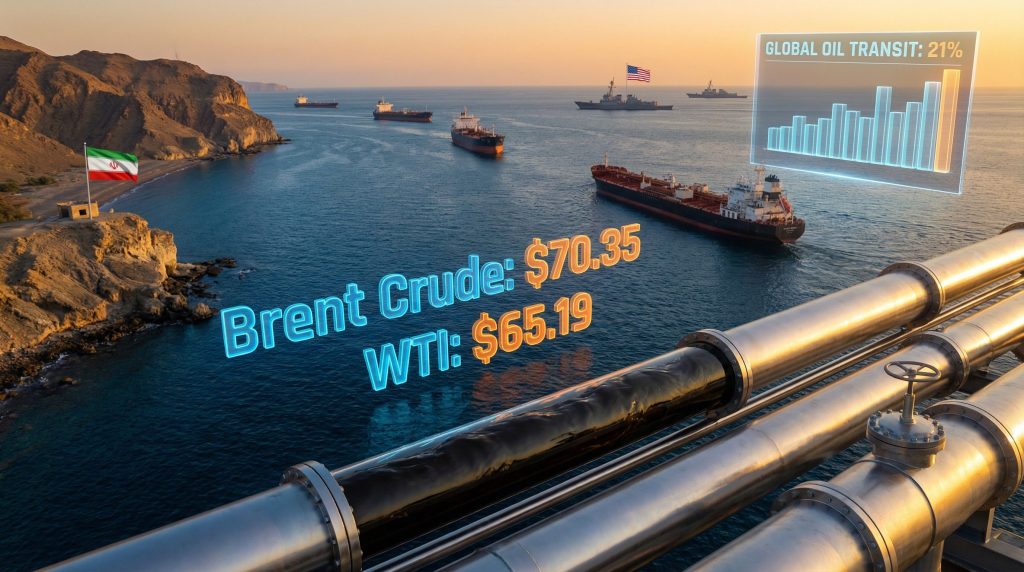
Energy markets demonstrated extreme volatility during the February 19, 2026 trading session, with both Brent crude and West Texas Intermediate contracts achieving their highest settlements since January 30. Brent crude futures settled at $70.35 per barrel, representing a $2.93 gain or 4.35% increase, while WTI crude futures reached $65.19 per barrel with a $2.86 gain or 4.59% advance.
Daily Market Performance Overview:
| Contract Type | Settlement Price | Daily Gain | Percentage Change |
|---|---|---|---|
| Brent Crude | $70.35/barrel | +$2.93 | +4.35% |
| WTI Crude | $65.19/barrel | +$2.86 | +4.59% |
| US Heating Oil | Market Variable | ~$0.XX | +5.00% |
The timing of price surges reveals market sensitivity to third-party threat assessments. Phil Flynn, senior analyst with Price Futures Group, noted that contracts rallied significantly during late trading hours following media reports about Israeli military alert level increases. These reports suggested heightened probabilities of coordinated US-Israel military action against Iran, prompting immediate risk premium adjustments across energy commodity markets.
Inventory dynamics provided technical support for the geopolitically-driven price rally. American Petroleum Institute figures revealed unexpected decreases in US crude, gasoline, and distillate inventories during the previous week. This inventory tightening contrasted sharply with Reuters poll expectations that crude stocks would increase by 2.1 million barrels, creating supply buffer concerns that amplified geopolitical risk pricing.
Professional trading strategies have evolved to incorporate volatility arbitrage opportunities between Brent and WTI spreads. The $5.16 differential between WTI ($65.19) and Brent ($70.35) on February 19 reflected regional supply concerns and transportation cost differentials. Traders actively monitor these spreads for arbitrage opportunities while managing exposure to geopolitical event risk.
Market participants recognise that current pricing reflects forward-looking risk assessment rather than actualised supply disruptions. The oil market incorporates probability-weighted scenarios including complete Strait of Hormuz closures, Iranian export embargos, and regional conflict escalation. This forward-looking approach explains why markets react dramatically to diplomatic headlines and military positioning reports even without actual supply interruptions.
Heating oil futures jumped approximately 5% during the same trading session, reflecting concerns about winter energy security and supply chain vulnerabilities. This sector demonstrates particular sensitivity to Middle Eastern supply disruption scenarios because alternative sourcing requires longer lead times and higher transportation costs.
Strategic Importance of the Strait of Hormuz in Global Energy Security
The Strait of Hormuz represents the world's most critical energy transit chokepoint, handling approximately 21% of global oil trade alongside 25% of liquefied natural gas shipments. Iran's control of the northern coastline provides strategic leverage that extends far beyond its own energy exports, affecting the global economy through its influence over regional producers' access to international markets.
Daily energy flows through this narrow waterway average approximately 21 million barrels of oil, with major regional producers including Saudi Arabia, UAE, Kuwait, Iraq, and Iran depending on strait transit for export access. Geographic constraints create vulnerability that no amount of military protection can completely eliminate, as demonstrated by Iran's ability to temporarily restrict passage through announced military exercises.
Regional Producer Strait Dependency:
• Saudi Arabia: Primary export route for Eastern Province production
• UAE: Critical for Abu Dhabi and Dubai crude exports
• Kuwait: Essential for northern oil field shipments
• Iraq: Major route for southern oil terminal exports
• Iran: Direct control provides strategic leverage
Historical precedent demonstrates the strait's vulnerability and market impact across multiple decades. The 1987-1988 Tanker War resulted in oil price doubling as military confrontations directly threatened commercial shipping. Iranian threats in 2012 pushed Brent crude to $128 per barrel without actual closures, while 2019 tanker attacks generated 4% immediate price increases through fear alone.
Bjarne Schieldrop, SEB chief commodities analyst, highlighted Iran's strategic calculation regarding strait closure scenarios. His analysis suggests that Iran recognises disrupting oil exports through the Strait of Hormuz and triggering oil price rallies to $150 per barrel represents exactly the outcome current US leadership seeks to avoid. This understanding provides Iran with diplomatic leverage while creating credible deterrence against maximum US pressure campaigns.
Alternative routing options exist but carry significant cost penalties and capacity limitations. Red Sea shipping routes add 15-20% to transportation costs while requiring additional transit time that reduces supply chain flexibility. Trans-Arabia pipeline systems provide some alternative capacity, though insufficient to replace strait transit volumes during extended closures.
The February 19 temporary strait closure during Iranian military exercises provided direct demonstration of closure capabilities. Despite lasting only a few hours without full warfare engagement, the action generated measurable geopolitical risk pricing in commodity markets. This incident proved that Iran can create global market volatility through announced exercises rather than requiring actual military confrontation.
Insurance markets reflect strait vulnerability through war risk premium adjustments that increase shipping costs during tension periods. Lloyd's of London underwriters regularly adjust Persian Gulf transit premiums based on threat assessments, creating additional cost pressures that compound direct supply concerns.
How Do Nuclear Negotiations Affect Oil Pricing?
Diplomatic initiatives involving Iran-US tensions operate through complex mediation networks designed to prevent direct confrontation while addressing core security concerns. Oman has emerged as the primary host for initial negotiation rounds, leveraging its historical role as a neutral intermediary between Washington and Tehran. Qatar provides crucial logistical support and venue flexibility, while Turkey facilitates communication channels between parties with limited direct diplomatic engagement.
According to recent nuclear talks coverage, Egypt's participation adds regional stability perspectives that extend beyond bilateral Iran-US issues. Egyptian officials emphasise how Persian Gulf conflicts affect Red Sea shipping security and Suez Canal transit revenues, creating broader Middle Eastern economic implications that influence negotiation dynamics.
Nuclear agreement parameters reveal significant gaps between proposed Iranian concessions and US demands. Iranian proposals include reducing uranium enrichment levels to 3.67% from current near-weapons-grade concentrations, implementing enhanced International Atomic Energy Agency inspection protocols, and reducing support for regional proxy forces including Houthis and Hezbollah organisations.
Negotiation Position Comparison:
Iranian Concessions:
• Uranium enrichment reduction to 3.67%
• Enhanced IAEA inspection access
• Proxy force disarmament programs
• Nuclear facility operational transparency
US Demands:
• Complete dismantlement of Natanz, Fordow, Isfahan facilities
• Total cessation of uranium enrichment activities
• Ballistic missile program termination
• Comprehensive sanctions relief contingency
Market reactions to diplomatic developments demonstrate energy sector sensitivity to negotiation progress. Iranian Foreign Minister statements regarding understanding on guiding principles for nuclear talks generated immediate downward oil price pressure, indicating that markets interpret diplomatic advancement as reducing geopolitical risk premiums. Conversely, when Ukraine-Russia peace talks ended without breakthrough, energy prices surged as broader conflict scenarios gained credibility.
The involvement of multiple mediating parties suggests that neither direct US-Iran negotiations nor single-broker diplomatic approaches proved viable for addressing current tensions. This diplomatic architecture reflects the complexity of issues extending beyond nuclear programs to include regional security arrangements, sanctions relief sequencing, and verification mechanisms for compliance monitoring.
Furthermore, analysis from US-Iran confrontation experts indicates a 65% probability of US military strikes against Iran by the end of April 2026. This timeline pressure affects market psychology by creating urgency around diplomatic breakthrough requirements while maintaining military escalation scenarios as primary risk factors.
Broader Global Energy Market Implications
Middle Eastern production networks face cascading risks extending beyond direct Iranian supply disruptions. Iraqi oil exports through Persian Gulf terminals encounter vulnerability from military actions targeting regional infrastructure. Kuwaiti and Saudi shipping routes require navigation through contested waters where military exercises and potential confrontations create operational hazards affecting insurance costs and delivery schedules.
UAE strategic reserve evaluations reflect government preparations for extended supply disruption scenarios. These reserves provide temporary buffer capacity during crisis periods, though their release timing and volume depend on threat duration assessments and coordination with international strategic reserve policies from major consuming nations.
Alternative supply route development has accelerated as energy companies respond to persistent Persian Gulf instability. Red Sea shipping infrastructure investments focus on expanding port capacity and improving loading efficiency to handle potential strait closure scenarios. Overland pipeline projects through Turkey offer direct access to European markets while bypassing maritime chokepoints entirely.
Arctic shipping route exploration for Russian oil represents longer-term supply diversification, though climate and infrastructure constraints limit immediate capacity expansion. These northern routes become increasingly viable as climate patterns shift and ice coverage decreases, providing alternative energy flows that reduce dependence on traditional Middle Eastern transit corridors.
Regional Impact Assessment:
• Production Disruption Risk: 15-25% of regional output vulnerable
• Transit Alternative Costs: 15-20% premium for Red Sea routing
• Strategic Reserve Capacity: 30-60 days emergency supply
• Infrastructure Investment: $50-75 billion alternative route development
Investment patterns reflect energy security premium pricing as institutional investors reposition portfolios based on geopolitical stability assessments. North American oil producers attract increased allocation as domestic energy security becomes prioritised over cost optimisation. Strategic petroleum reserve companies gain attention as governments evaluate emergency supply management capabilities.
Currency hedging strategies have evolved to address oil price volatility impacts on importing nations. Countries with significant energy import dependencies implement sophisticated hedging programs to manage budget exposure while maintaining supply security during crisis periods.
Compounding Effects of Multiple Global Conflicts
Russia-Ukraine diplomatic failures create parallel energy market stress that compounds Iran-US tensions. The February 17-18 Geneva peace talks concluded without breakthrough, with Ukrainian President Volodymyr Zelenskyy accusing Moscow of stalling US-mediated efforts to end the four-year conflict. This diplomatic failure increases the probability of sustained sanctions on Russian energy exports while maintaining European supply security concerns.
Russian energy sanctions enforcement has intensified following diplomatic breakdown, potentially removing additional supply volumes from global markets during the same period when Iran-US tensions threaten Persian Gulf exports. John Kilduff, partner with Again Capital, noted renewed efforts to restrict Russian exports, suggesting that failed negotiations could finally produce material drops in Russian oil reaching international markets.
Ukrainian power grid attacks continue despite negotiation attempts, affecting European energy demand patterns and winter heating fuel requirements. These infrastructure disruptions create knock-on effects that influence global energy flows as European nations seek alternative supply sources to compensate for Ukrainian transit disruptions and increased regional consumption needs.
The convergence of Iranian supply threats and Russian export restrictions creates unprecedented scenarios where two major global oil producers simultaneously face potential supply disruptions. Historical precedent provides limited guidance for markets managing dual-source supply risk, particularly when both conflicts involve nuclear-armed nations with significant military capabilities.
However, these complex dynamics also highlight opportunities in trade war oil impact scenarios where geopolitical realignments create new supply-demand patterns. Additionally, market participants must consider how OPEC meeting impact decisions will interact with broader geopolitical tensions affecting global energy flows.
Investment Strategies Emerging from Iran-US Tensions
Professional investment managers are implementing defensive positioning strategies that prioritise energy security over cost optimisation. Portfolio reallocations favour North American oil producers with domestic supply chains insulated from Middle Eastern geopolitical risks. Companies with strategic petroleum reserve contracts gain attention as governments evaluate emergency supply management requirements during extended crisis periods.
Commodity trading patterns focus on volatility arbitrage opportunities between different crude oil benchmarks while managing exposure to geopolitical event risk. Professional traders monitor Brent-WTI spreads alongside heating oil futures as protective positions against winter demand spikes during supply disruption scenarios.
Investment Strategy Framework:
Defensive Positioning:
• North American producer overweighting
• Strategic reserve company allocation
• Currency hedging for import-dependent economies
• Renewable energy acceleration investments
Opportunistic Trading:
• Brent-WTI spread arbitrage
• Heating oil futures protection
• Volatility options strategies
• Regional refinery capacity plays
Currency hedging becomes critical for nations with substantial energy import dependencies as oil price volatility creates budget uncertainty and balance of payments pressure. Central banks implement sophisticated hedging programs to manage fiscal exposure while maintaining energy supply security during crisis periods.
Moreover, renewable energy investments receive additional support as energy security considerations override pure economic calculations. Government policies accelerate clean energy deployment to reduce dependence on volatile fossil fuel imports, creating investment opportunities in solar, wind, and energy storage technologies that provide strategic as well as environmental benefits.
The next major ASX story will hit our subscribers first
Scenario Analysis for Energy Market Outcomes
Scenario planning requires probability-weighted analysis across multiple potential outcomes, each carrying different implications for global energy markets and investment strategies. Professional risk managers develop comprehensive frameworks that address diplomatic, military, and economic variables while acknowledging significant uncertainty in timeline and escalation dynamics.
Optimistic Scenario (35% probability):
Diplomatic breakthrough achieved within 45 days through multilateral mediation efforts. Iranian nuclear compliance demonstration through uranium enrichment reduction and enhanced IAEA access protocols. US sanctions relief provided in phases tied to verification milestones. Oil prices stabilise in $60-70 per barrel range as geopolitical risk premiums dissipate. Strategic petroleum reserves return to normal release schedules.
Base Case Scenario (45% probability):
Extended negotiations spanning 3-6 months with periodic tension escalation and de-escalation cycles. Intermittent Iranian military exercises creating temporary supply disruption threats without actual export curtailment. Oil price volatility maintains elevated levels in $70-85 per barrel range. Increased strategic reserve coordination between major consuming nations. Alternative supply route investments accelerate despite lack of immediate necessity.
Pessimistic Scenario (20% probability):
Military confrontation between US-Israel coalition and Iran resulting in Strait of Hormuz closure lasting 2-6 weeks. Iranian proxy force activation across multiple Middle Eastern locations. Oil prices spike to $120-150 per barrel range creating global recession risks. Emergency strategic reserve releases coordinated internationally. Alternative energy acceleration programs receive crisis-level government support and funding.
Each scenario carries distinct investment implications and risk management requirements. The optimistic outcome favours traditional energy sector positioning with reduced hedging requirements, while pessimistic scenarios demand comprehensive protection strategies including currency hedging, alternative energy investments, and strategic reserve exposure.
What Indicators Should Market Participants Monitor?
Energy market participants require systematic monitoring frameworks that track diplomatic progress, military positioning, and economic indicators providing early warning of escalation or de-escalation trends. Professional risk managers develop comprehensive dashboard systems incorporating multiple information sources to support real-time decision making.
Diplomatic Progress Indicators:
• Iranian Foreign Ministry negotiation statements and timeline commitments
• US Treasury Department sanction modification announcements
• Regional mediator communication updates from Oman, Qatar, and Turkey
• IAEA inspection protocol implementation progress reports
Military Positioning Signals:
• Satellite imagery analysis of US naval deployment concentrations
• Iranian Revolutionary Guard exercise scheduling and scope announcements
• Israeli military readiness level adjustments and public communications
• Regional ally force positioning changes and coordination activities
Economic and Supply Metrics:
• Iranian oil export volume tracking through satellite and shipping data
• Strategic petroleum reserve inventory levels and release coordination
• Asian refinery crude purchasing pattern modifications
• Insurance market war risk premium adjustments for Persian Gulf transit
Market psychology indicators include options market implied volatility levels, which provide forward-looking insights into professional trader expectations for price range expansion. Credit markets offer additional perspective through energy sector bond spreads and sovereign debt pricing for oil-dependent economies.
Technical analysis of inventory data requires distinguishing between seasonal patterns and geopolitically-driven stockpiling behaviour. Abnormal inventory accumulation by major consuming nations provides early indication of supply security concerns while inventory releases signal confidence in diplomatic resolution prospects.
In addition to these factors, analysts must consider broader oil price crash analysis frameworks that incorporate multiple variables affecting global energy markets simultaneously. This comprehensive approach enables better risk assessment during periods of heightened geopolitical uncertainty.
The intersection of Iran-US tensions with broader geopolitical conflicts creates an unprecedented challenge for global energy markets, requiring sophisticated risk management approaches that extend beyond traditional supply-demand analysis. Success in navigating these markets demands constant monitoring of diplomatic developments alongside military positioning while maintaining flexibility to adjust strategies as scenarios evolve. Investment managers and energy companies that develop comprehensive analytical frameworks incorporating geopolitical risk assessment will be best positioned to capitalise on opportunities while managing downside exposure during this period of elevated uncertainty.
Energy security considerations will likely remain paramount throughout 2026 as multiple conflict zones threaten traditional supply arrangements simultaneously. Market participants must prepare for sustained volatility while building resilient supply chains and investment strategies that perform across multiple potential outcomes.
Looking to Navigate Energy Market Volatility?
Discovery Alert's proprietary Discovery IQ model delivers real-time alerts on significant ASX mineral discoveries, helping subscribers identify actionable opportunities in resource stocks that often correlate with global commodity market movements. Begin your 14-day free trial today to gain a market-leading advantage during periods of heightened uncertainty across energy and commodity markets.