June 15, 2026
Iran war sends shockwaves through Central Asia's fragile economies as global supply chain dependencies have created an intricate web of vulnerabilities that few anticipated would converge so dramatically. When major trade arteries face disruption, the ripple effects traverse continents, affecting regions seemingly distant from the original crisis point. This interconnected reality has become starkly apparent as Middle Eastern conflicts reshape economic flows across Eurasia, exposing structural weaknesses in landlocked economies that relied heavily on established transit corridors.
The current situation illustrates how geographic constraints can amplify external shocks, transforming regional conflicts into global economic challenges. Nations positioned between major powers often find themselves caught in crosscurrents beyond their control, their prosperity tied to shipping routes and energy flows that can shift overnight due to geopolitical tensions.
Economic Foundations Built on Geographic Vulnerability
Central Asian economies demonstrate the precarious nature of landlocked development strategies. These nations spent decades constructing trade relationships and logistical networks designed to overcome their geographic isolation, only to discover how quickly established systems can unravel.
Historical Dependencies and Modern Realities
The region's economic architecture reflects layers of historical influence and modern adaptation. Soviet-era infrastructure initially directed commerce northward through Russian territory, but post-independence diversification efforts created new pathways southward and westward. Iranian ports became crucial gateways, handling substantial volumes of Central Asian exports and imports.
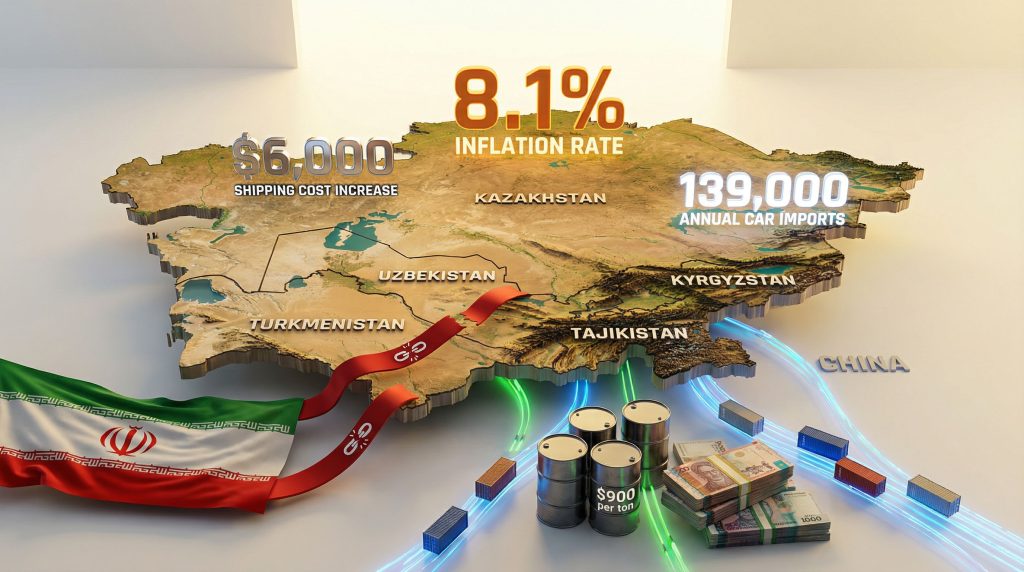
This diversification strategy, while reducing dependence on any single route, created new vulnerabilities. The 139,000 vehicles that arrived in Kyrgyzstan during 2025 from South Korea, China, Japan, and the United States typically transited through Dubai and Iran's Bandar Abbas port. Many of these vehicles were subsequently re-exported to Russia, creating a complex triangular trade pattern that benefited Kyrgyz dealers through favourable tax arrangements.
Import Dependency Patterns
Consumer markets across Kazakhstan, Uzbekistan, and Turkmenistan exhibit concerning reliance on foreign suppliers for essential goods. Food security represents a particular vulnerability, with processed goods imports constituting significant portions of domestic consumption. This dependency extends beyond luxury items to basic household necessities, creating direct transmission channels for external price shocks to reach ordinary consumers.
The automotive sector exemplifies this vulnerability pattern. Used vehicle imports form substantial business ecosystems in several Central Asian countries, with established supply chains connecting East Asian manufacturers to regional consumers via Middle Eastern transit points. When these routes face disruption, entire sectors experience immediate impacts.
When big ASX news breaks, our subscribers know first
Supply Chain Disruptions Cascade Across Regional Networks
Transportation cost escalations have reached unprecedented levels, fundamentally altering trade economics across Central Asia. Moreover, the oil price rally compounds these challenges as shipping expenses from the UAE increased by 125-180 percent, transforming previously profitable trade relationships into financially precarious arrangements.
Maritime to Overland Route Transitions
The shift from maritime to overland transportation represents more than simple route substitution. Dubai to Bishkek shipping costs escalated from a range of $1,300-$3,000 per vehicle to $3,500-$6,000 or higher, while simultaneously adding significant time delays. These cost increases threaten both domestic sales and re-export profit margins that sustained regional trading networks.
Overland alternatives through Saudi Arabia and other countries introduce additional complications beyond increased costs and time. Each jurisdiction maintains distinct regulatory requirements, creating bureaucratic bottlenecks that compound transit delays. A 10-day delay has become standard for traders attempting to reroute cargo away from traditional Persian Gulf pathways.
Port Congestion and Storage Challenges
Iranian port facilities face unprecedented congestion as security concerns slow cargo release procedures. Vessels experience holds lasting 15-20 days, with some extending to a full month. Port personnel exercise extreme caution due to ongoing military activities across the Persian Gulf, creating psychological barriers to normal operations beyond formal policy restrictions.
This congestion forces traders to maintain expensive storage arrangements in multiple locations. Dubai-based importers like those serving Kyrgyzstan's automotive market must warehouse "entrusted goods" while awaiting clarity on transportation timelines, bearing financial risks if port situations deteriorate further.
Energy Price Transmission Mechanisms
Oil procurement costs demonstrate the immediate impact of supply chain disruptions on energy-dependent economies. Russian oil prices increased from $700 per tonne to approaching $900 as alternative buyers sought supplies outside traditional Persian Gulf sources. Countries like China, India, Japan, and South Korea, previously reliant on Strait of Hormuz transit, redirected demand toward Russian suppliers, creating price pressure in markets previously considered separate from Middle Eastern conflicts.
This price escalation affects multiple economic layers simultaneously. Transportation costs increase due to higher fuel prices, while energy-importing governments face budget pressures from rising subsidy costs or the political challenges of passing increases to consumers.
Regional Economic Exposure Assessment
Economic vulnerability varies significantly across Central Asian countries based on trade patterns, energy dependencies, and fiscal capacity. Furthermore, the trade war impacts from broader global tensions amplify these regional challenges. The following analysis reveals how different nations experience varying levels of exposure to external supply shocks:
| Country | Primary Vulnerability | Trade Exposure | Key Impact Sectors |
|---|---|---|---|
| Tajikistan | Consumer goods imports | $484M Iran bilateral trade (2025) | Household products, construction materials |
| Kyrgyzstan | Vehicle imports & energy costs | 139,000 annual car imports | Automotive, fuel distribution |
| Kazakhstan | Industrial inputs & export routes | Grain export disruptions | Agriculture, energy exports |
| Uzbekistan | Consumer goods supply chains | Manufacturing input delays | Textiles, food processing |
| Turkmenistan | Transit hub revenues | Gas export route alternatives | Natural gas, transit fees |
Sectoral Impact Analysis
The automotive sector faces immediate disruption as established import channels encounter substantial cost increases and timing uncertainties. Kyrgyzstan's position as a regional automotive hub depends on efficient access to East Asian vehicle supplies, with many units destined for re-export to Russian markets. Current shipping cost increases of 125-180 percent threaten the viability of this trade model.
Food processing industries across the region depend heavily on Iranian agricultural products and industrial inputs. Supply chain delays create inventory management challenges for businesses accustomed to predictable delivery schedules. Retailers report depleting existing stock to maintain price stability, but acknowledge building pressure as replacement goods face significant delays.
Construction sectors experience material shortages as building supplies typically routed through Iranian ports encounter extended delays. This impacts urban development projects and infrastructure maintenance across multiple countries simultaneously.
Inflationary Pressures Accelerate Across the Region
Regional inflation reached 8.1 percent in February 2026, marking the highest rate in the Europe and Central Asia region according to International Monetary Fund data. This acceleration reflects direct transmission of transportation cost increases and energy price rises to consumer markets.
Consumer Price Impact Documentation
Household goods price increases affect daily necessities across Central Asian markets. In Tajikistan, laundry detergent prices increased from 50 somoni (approximately $5) to 65 somoni ($6.50) within a week, representing a 30 percent price jump for a basic consumer product. This pattern extends across various household necessities, creating cumulative pressure on family budgets.
Shopkeepers report maintaining price stability temporarily by depleting existing inventory, but acknowledge that replacement goods arrive with significantly higher costs. This inventory depletion strategy provides short-term consumer price protection while building pressure for substantial increases once stock levels require replenishment at current market rates.
Energy Cost Pass-Through Effects
Energy import costs create multiplier effects throughout regional economies. Oil price escalation from $700 to $900 per tonne affects not only direct fuel costs but also transportation expenses for all imported goods. Energy-importing countries like Kyrgyzstan and Tajikistan face particular challenges as government budgets accommodate higher subsidy costs or consumers absorb direct price increases.
These energy cost increases compound transportation expense rises, creating dual pressures on import-dependent economies. Industries requiring reliable energy supplies for production face reduced profit margins or must pass costs to consumers already experiencing price pressures from other sectors.
Government Budget Strain Indicators
Fiscal deficits risk expansion as energy subsidies become unsustainable at current price levels. Import duty revenues decline due to reduced trade volumes, while governments face pressure to maintain social stability through continued subsidisation of essential goods and energy supplies.
Currency depreciation pressures emerge as countries with limited foreign reserve cushions struggle to maintain import capacity at elevated prices. Central banks face difficult choices between maintaining exchange rate stability and preserving foreign currency reserves for essential imports.
Alternative Trade Route Development
Geographic necessity drives exploration of alternative transportation corridors as traditional routes face extended disruption. In addition, the geopolitical landscape influences route selection as South Caucasus routes through Georgia and Azerbaijan offer potential alternatives, though these pathways require substantial infrastructure development and involve different regulatory frameworks.
Logistics Cost Restructuring Analysis
Overland versus maritime cost comparisons reveal complex trade-offs beyond simple price calculations. Maritime routes typically offer superior cost efficiency for bulk commodities, while overland alternatives provide greater schedule reliability despite higher unit costs. Current disruptions force traders to prioritise delivery certainty over cost optimisation.
Afghanistan transit corridors present theoretical alternatives despite security concerns that complicate commercial operations. These routes could potentially serve specific trade flows, though security insurance costs and operational uncertainties limit practical viability for most commercial applications.
The China-Pakistan Economic Corridor represents a longer-term alternative for western trade access, though geographic distances and infrastructure limitations constrain immediate applicability for most Central Asian trade flows.
Infrastructure Investment Requirements
Alternative corridor development requires substantial infrastructure investments that exceed individual country capabilities. Regional cooperation initiatives must address transportation capacity, customs procedures, and security arrangements across multiple jurisdictions.
Warehouse capacity building in alternative hub cities becomes essential as traders require storage facilities to manage extended transit times and schedule uncertainties. Dubai's role as a regional distribution centre cannot easily be replicated without significant investment in logistics infrastructure.
Macroeconomic Growth Trajectory Revisions
World Bank projections indicate regional growth slowing from earlier forecasts of 2.4 percent to 2.1 percent in 2026, representing the slowest economic expansion since 2020. This revision reflects accumulating impacts from supply chain disruptions, energy cost increases, and reduced consumer spending capacity.
Investment Climate Deterioration
Supply chain uncertainty creates investment hesitancy as businesses postpone expansion plans pending resolution of transportation and cost challenges. Foreign direct investment flows face scrutiny as international companies reassess regional operational viability under current conditions. Additionally, tariffs impact investment decisions as companies navigate an increasingly complex trade environment.
Tourism and services sectors experience secondary impacts as reduced consumer spending affects domestic economic activity. Regional integration benefits diminish as cross-border trade faces increased costs and timing uncertainties.
Economic Integration Consequences
Eurasian Economic Union trade flows encounter disruption as member countries experience differential impacts from supply chain changes. Kazakhstan and Kyrgyzstan face distinct challenges that complicate regional economic coordination efforts.
China's expanding economic influence becomes more pronounced as alternative supplier relationships develop. Russian energy suppliers gain market share as traditional Middle Eastern sources become less accessible or reliable.
The next major ASX story will hit our subscribers first
Policy Response Strategies and Implementation
Central Asian governments implement emergency economic measures designed to maintain stability while addressing immediate supply challenges. Strategic petroleum reserve buildups in Kazakhstan and Uzbekistan represent attempts to buffer against future supply disruptions. Meanwhile, developments such as Saudi exploration licenses may offer long-term supply diversification opportunities.
Emergency Economic Measures
Import diversification incentives for private sector traders encourage development of alternative supply relationships beyond traditional Iranian routes. These programmes typically include reduced tariffs for goods sourced through alternative corridors and financial support for traders exploring new supplier relationships.
Currency stabilisation interventions aim to manage inflation expectations while maintaining import capacity. Central banks balance foreign reserve preservation with exchange rate stability, often accepting some depreciation to maintain adequate import financing capability.
Diplomatic Balancing Approaches
Multi-vector foreign policy strategies seek to maintain neutrality while securing alternative supply arrangements. Regional cooperation initiatives focus on sharing logistics infrastructure costs and coordinating responses to common challenges.
Bilateral agreements with China, Turkey, and Gulf states provide supply security alternatives, though these arrangements often require concessions in other policy areas. Countries negotiate access to alternative transportation routes while managing existing diplomatic relationships.
Long-Term Structural Transformation Prospects
Trade geography transformation appears likely to persist beyond immediate conflict resolution, as businesses and governments recognise vulnerabilities in previous arrangements. Permanent shifts toward China-centric supply chains may reduce Iranian economic integration even after regional tensions subside. The current crisis, as outlined in The Diplomat's analysis of regional impacts, underscores the need for structural economic reforms.
Economic Diversification Imperatives
Domestic production capacity building for essential goods gains political priority as governments seek reduced import dependencies. Agricultural self-sufficiency initiatives receive increased investment as food security concerns motivate policy changes.
Manufacturing base development aims to reduce import dependencies for basic consumer goods, though this requires substantial capital investment and technology transfer arrangements. Regional economies must balance import substitution goals with comparative advantage considerations.
Enhanced Regional Cooperation Mechanisms
Crisis resilience planning encourages regional cooperation initiatives that pool resources and coordinate responses to external shocks. These arrangements typically include emergency supply sharing agreements and coordinated transportation infrastructure development.
Consequently, Iran war sends shockwaves through Central Asia's fragile economies, demonstrating the importance of diversified supply chains and regional integration as buffers against external economic shocks. Future economic planning must account for the reality that geographic vulnerabilities require proactive management rather than reactive responses.
Disclaimer: This analysis is based on publicly available information and economic projections that may change as regional situations evolve. Economic forecasts involve uncertainties and should not be considered definitive predictions of future conditions.
Could Supply Chain Disruptions Create New Investment Opportunities?
Current disruptions in Central Asian supply chains and energy markets highlight the volatility that can create significant opportunities for astute investors monitoring regional developments. Discovery Alert's proprietary Discovery IQ model delivers real-time alerts on significant ASX mineral discoveries, helping subscribers identify actionable opportunities in commodities affected by geopolitical events like those unfolding across Central Asia and the Middle East. Begin your 14-day free trial today to position yourself ahead of market-moving developments.