May 17, 2026
Global energy market vulnerabilities extend far beyond traditional supply disruption calculations, revealing complex interconnections between geopolitical risk, algorithmic trading systems, and structural economic dependencies. Understanding these transmission mechanisms becomes essential as Middle Eastern conflicts demonstrate their capacity to reshape international commodity pricing through cascading effects across financial markets, shipping routes, and monetary policy frameworks. Furthermore, the Iran war impacts on Brent oil prices reflect deeper systemic fragilities within global energy infrastructure.
The current trajectory of oil price volatility reflects deeper systemic fragilities within global energy infrastructure, where chokepoint dependencies and automated trading systems amplify geopolitical shocks beyond their fundamental impact on physical supply balances.
Strategic Energy Chokepoint Analysis: Beyond Simple Supply Mathematics
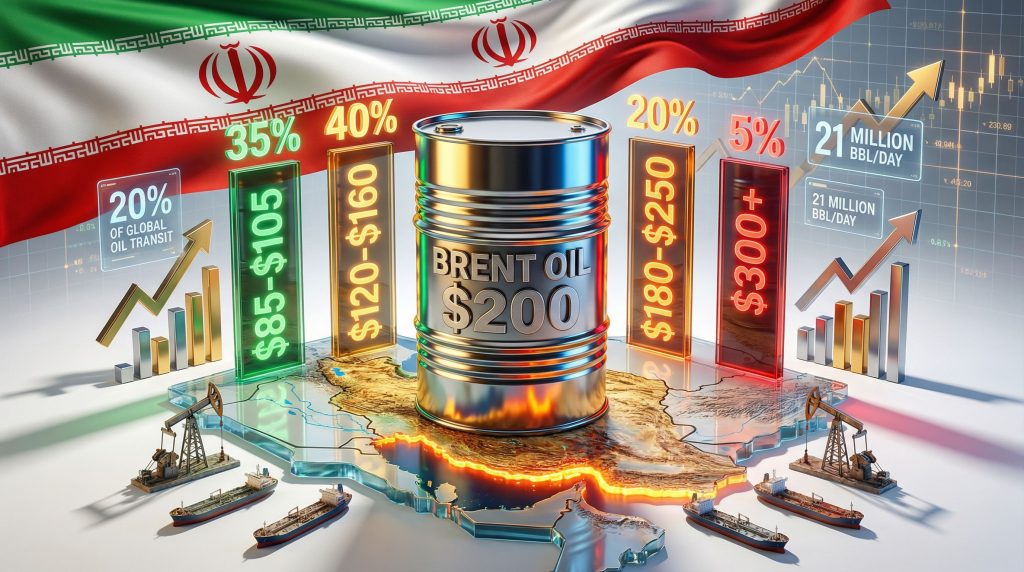
Modern oil pricing mechanisms operate through multiple layers of vulnerability that extend beyond immediate production disruptions. The Strait of Hormuz represents the most critical global energy transit point, with approximately 21 million barrels daily flowing through this narrow waterway, constituting roughly one-fifth of global crude oil movement.
Recent market events demonstrate how quickly geopolitical tensions translate into price volatility. Following attacks on commercial shipping and explicit threats from Iranian military leadership regarding oil price manipulation, Brent crude reached $100 per barrel intraday on March 12, 2026, marking a significant psychological threshold for energy markets.
The geographic concentration of energy transit creates multiple vulnerability points across the global supply chain:
Critical Maritime Chokepoints:
- Strait of Hormuz: 21 million barrels daily with limited pipeline alternatives
- Suez Canal: 5.5 million barrels daily with Cape of Good Hope routing options
- Bab el-Mandeb: 6.2 million barrels daily connecting Red Sea traffic
- Turkish Straits: 3.4 million barrels daily linking Black Sea exports
Each chokepoint presents unique vulnerability characteristics based on alternative routing capacity, political stability, and infrastructure resilience. The Hormuz passage scores highest on vulnerability assessments due to limited pipeline capacity for rerouting Gulf production to alternative export terminals.
Regional Production Flexibility Under Stress Conditions
Middle Eastern spare production capacity represents the primary buffer against supply disruptions, though political and technical constraints limit maximum utilization rates. Saudi Arabia maintains approximately 2-2.5 million barrels daily in spare capacity, representing the largest single emergency production buffer globally.
The United Arab Emirates contributes an additional 0.8-1.2 million barrels daily in potential emergency production, though full utilization depends on political calculations regarding regional conflict escalation. Iraqi production faces secondary exposure despite being geographically removed from immediate conflict zones, as export infrastructure relies heavily on Gulf shipping routes.
Contemporary market dynamics reflect this production flexibility through immediate price responses to geopolitical announcements. Australian energy securities, including coal producers Yancoal and Whitehaven, experienced positive price movements as markets recognised substitute fuel demand potential during crude oil price spikes. Additionally, the OPEC production impact remains crucial for understanding global supply adjustments.
When big ASX news breaks, our subscribers know first
Multi-Scenario Oil Price Framework: Modeling Escalation Pathways
Strategic scenario analysis reveals four distinct escalation pathways with corresponding oil price implications, each carrying different probability distributions and duration characteristics.
Limited Engagement Scenario: Diplomatic Resolution Path
Probability Assessment: 35%
Price Range: $85-105 per barrel
This baseline scenario assumes current hostilities remain contained through targeted strikes without broader regional spillover effects. Key assumptions include partial Strait of Hormuz functionality, coordinated Saudi-UAE production increases of 1.5-2 million barrels daily, and strategic petroleum reserve releases totalling 60-90 million barrels over six months.
Market psychology under this scenario would likely experience initial volatility spikes followed by gradual price normalisation as alternative supply mechanisms compensate for Iranian production shortfalls. The duration assumption of 3-6 months reflects historical precedent for limited Middle Eastern military engagements.
Regional Proxy Network Activation Scenario
Probability Assessment: 40%
Price Range: $120-160 per barrel
This scenario involves Iran activating proxy forces across Iraq, Syria, and Yemen to systematically target regional energy infrastructure beyond immediate conflict zones. Critical variables include 15-25% reduction in Gulf production capacity and insurance premium increases of 300-500% for tanker transit through affected waterways.
European natural gas supplies would face secondary disruptions through interconnected regional conflicts, creating additional energy market stress. The extended conflict duration of 6-18 months would sustain elevated oil prices with periodic volatility spikes during infrastructure attacks.
Contemporary market behaviour suggests increased probability weighting toward this scenario, as evidenced by Australian 10-year bond yields reaching 15-year highs near 5%, reflecting expectations for energy-driven inflation and corresponding monetary policy responses. Moreover, oil price trade impacts further complicate these dynamics.
Direct Naval Blockade Implementation
Probability Assessment: 20%
Price Range: $180-250 per barrel
Complete Iranian closure of Hormuz shipping lanes would trigger the most severe price response short of expanded regional warfare. This scenario removes 18-20 million barrels daily from global markets while alternative pipeline capacity proves insufficient for full replacement.
Emergency rationing programmes would likely emerge in developed economies as strategic petroleum reserves face depletion within 6-9 months. The psychological impact on global economic confidence would compound direct energy cost increases, creating feedback effects through financial markets.
Expanded Regional Infrastructure War
Probability Assessment: 5%
Price Range: $300+ per barrel
The most extreme scenario involves systematic targeting of Saudi, UAE, and Kuwaiti production facilities, removing 40-50% of Gulf production capacity from global markets. Global recession probability would exceed 80% under these conditions, necessitating emergency economic measures including potential price controls.
This scenario represents a permanent shift in global energy architecture, forcing accelerated transitions toward alternative energy sources and geographic diversification of supply chains. Consequently, energy transition challenges would intensify globally.
Algorithmic Trading Amplification: Technology-Driven Price Acceleration
Modern oil markets operate through high-frequency trading systems that can magnify geopolitical shocks beyond fundamental supply-demand calculations. Three primary mechanisms drive this amplification effect across contemporary energy futures markets.
Momentum Trading Algorithm Response:
These systems automatically detect price breakouts and execute additional buy orders, creating feedback loops during crisis periods. Initial Iran conflict price movements likely experienced 15-20% amplification beyond fundamental factors through algorithmic momentum strategies.
Cross-Asset Risk Parity Adjustments:
Institutional portfolios automatically rebalance during volatility spikes, often selling oil-sensitive equities while purchasing crude futures as inflation hedges. This correlation strengthens during geopolitical crises, creating additional upward pressure on energy prices.
Options Market Delta Hedging:
Elevated implied volatility in oil options creates additional futures market pressure through delta hedging requirements from market makers. This mechanism can sustain elevated price levels even after initial geopolitical shocks subside.
The March 2026 market response demonstrates these amplification effects in real-time, with rapid price movements to $100 per barrel occurring before confirmed supply disruptions, indicating algorithm-driven speculation rather than fundamental shortage conditions.
Central Banking and Monetary Policy Trade-offs
Oil price shocks of current magnitudes force central banks into complex policy trade-offs between inflation control and economic growth support. Federal Reserve response frameworks typically operate through tiered intervention levels based on sustained price ranges.
Policy Response Matrix:
- $100-120 per barrel: Likely pause on rate cuts while maintaining current policy stance
- $120-150 per barrel: Potential emergency rate cuts to offset demand destruction effects
- $150+ per barrel: Coordinated global central bank intervention becomes probable
The European Central Bank faces additional complexity due to energy import dependency, where oil price increases directly feed into core inflation measurements. Australian monetary policy reflects these pressures through bond market pricing, with major banks now anticipating interest rate increases to combat imported inflation from energy costs.
Reserve Bank of Australia considerations extend beyond domestic inflation targets to encompass global energy price pass-through effects on consumer spending and business investment decisions. However, tariffs and inflation dynamics add another layer of complexity to monetary policy decisions.
Investment Strategy Framework During Energy Market Volatility
Upstream Energy Sector Positioning
Companies with low-cost production profiles and minimal geopolitical exposure benefit most from sustained high oil prices. Strategic positioning should focus on operators maintaining:
- Production costs below $40 per barrel for sustained profitability margins
- Minimal direct geopolitical exposure to Middle Eastern operations
- Strong balance sheet flexibility for capital allocation during price volatility
Downstream refining operations face margin compression during crude price spikes, particularly companies with limited hedging programmes or fixed-price supply contracts.
Alternative Energy Acceleration Dynamics
Sustained oil prices above $120 per barrel historically accelerate renewable energy investment timelines and adoption rates. Electric vehicle economics improve dramatically at these price levels, while industrial energy efficiency investments increase by 40-60% during extended high-price periods.
Cross-Asset Correlation Analysis During Crisis Periods
| Asset Class | Crisis Correlation | Strategic Implication |
|---|---|---|
| Gold | +0.65 | Enhanced inflation hedge demand |
| USD Index | -0.45 | Commodity currency outperformance |
| Emerging Market Bonds | -0.70 (importers) | Differentiate by energy trade balance |
| Technology Equities | -0.35 | Interest rate sensitivity amplification |
These correlations strengthen during geopolitical energy crises, creating opportunities for portfolio diversification and risk management through strategic asset allocation adjustments. Furthermore, tariff economic implications may alter these traditional correlations.
Risk Management and Corporate Hedging Strategies
Transportation Sector Vulnerability
Airlines and shipping companies face the most direct exposure to sustained oil price increases. Effective hedging strategies include collar options approaches combining protective calls with premium-generating puts, alongside operational hedging through route optimisation and fuel efficiency programmes.
Manufacturing sectors with high energy intensity require comprehensive hedging programmes covering both direct fuel costs and electricity price exposure through utility rate structures linked to natural gas pricing.
Portfolio-Level Protection Mechanisms
Inflation-Protected Securities: Treasury Inflation-Protected Securities (TIPS) and inflation-linked international bonds provide direct protection against energy-driven inflation pass-through effects.
Commodity Exposure Strategies: Direct commodity investments through exchange-traded funds or futures contracts can provide portfolio hedging, though timing and position sizing remain critical for effectiveness.
Geographic Diversification Benefits: Energy-exporting economies may outperform during sustained price increases, though political risk considerations require careful evaluation of country-specific exposures.
The next major ASX story will hit our subscribers first
Long-term Structural Market Evolution
Accelerated Energy Transition Timeline
Extended oil prices above $150 per barrel historically trigger permanent consumption pattern shifts that persist beyond immediate crisis periods:
- Electric vehicle adoption acceleration by 2-3 years ahead of baseline projections
- Industrial energy efficiency investments increase 40-60% above normal levels
- Renewable energy project economics improve dramatically through competitive pricing
Geopolitical Energy Partnership Realignment
Extended Iran conflicts could fundamentally reshape global energy relationships through increased US-Saudi strategic cooperation, European acceleration of energy independence programmes, and Asian economies diversifying supply sources away from Middle Eastern dependencies. The Iran war's impact on energy transition becomes increasingly significant in this context.
Strategic Reserve Policy Framework Evolution
Current crisis conditions may prompt fundamental changes in strategic petroleum reserve policies across developed economies:
- Increased reserve targets from current 60-90 days toward 90-120 day coverage
- Coordinated release mechanisms between allied nations during supply disruptions
- Enhanced monitoring systems for private sector inventory levels and emergency capacity
These structural changes would create permanent shifts in global oil market dynamics, reducing vulnerability to future geopolitical supply disruptions while maintaining price stability during crisis periods.
Navigating Uncertainty Through Comprehensive Scenario Planning
Iran war impacts on Brent oil prices extend far beyond simple supply disruption mathematics, operating through complex interconnections between geopolitical escalation patterns, financial market dynamics, and structural economic vulnerabilities. Market participants must develop robust analytical frameworks incorporating multiple transmission channels simultaneously.
Current price levels reflecting significant risk premiums maintain meaningful potential for further escalation toward $200 per barrel thresholds. Investment success requires sophisticated scenario planning methodologies, diversified hedging strategies, and careful attention to both direct energy exposure and indirect economic impacts across asset classes.
The fundamental insight for investors and policymakers involves recognising that Iran war impacts on Brent oil prices operate through multiple simultaneous channels rather than linear cause-effect relationships. Understanding these interconnections provides essential foundations for effective decision-making within increasingly uncertain global energy environments.
Disclaimer: This analysis contains forward-looking statements and scenario projections that involve inherent uncertainties and assumptions. Oil price predictions, geopolitical assessments, and investment strategy recommendations should not be considered as financial advice. Readers should conduct independent research and consult qualified financial professionals before making investment decisions. Past performance and historical correlations do not guarantee future results.
Looking to Capitalise on Energy Market Volatility?
Discovery Alert's proprietary Discovery IQ model delivers real-time alerts on significant ASX mineral discoveries, including energy and resource companies positioned to benefit from global commodity price movements. Gain immediate market insights into actionable opportunities ahead of broader market recognition and begin your 14-day free trial today to secure your investment edge.