August 9, 2026
Industrial supply chains across emerging economies face unprecedented strain when regional conflicts disrupt established trading corridors and energy flows. Manufacturing ecosystems built on decades of optimised logistics and sourcing relationships suddenly confront cascading vulnerabilities that expose the fragility of globalised production networks. India's economic framework exemplifies this challenge, where interdependent supply chains spanning multiple continents create systemic risks during geopolitical turbulence. The Iran war impact on India's supply chain demonstrates how regional conflicts can trigger widespread industrial disruptions across manufacturing sectors.
Understanding India's Strategic Vulnerability to Middle Eastern Disruptions
India's manufacturing ecosystem demonstrates acute dependency on Middle Eastern energy sources, creating structural vulnerabilities when regional conflicts escalate. The nation's industrial framework relies on imported petroleum products, natural gas, and petrochemical feedstocks that flow through established supply corridors now threatened by ongoing geopolitical tensions.
Critical Energy Dependencies by Source Region
Table: India's Energy Import Dependency Matrix
| Energy Type | Middle East Share | Primary Suppliers | Strategic Buffer Days |
|---|---|---|---|
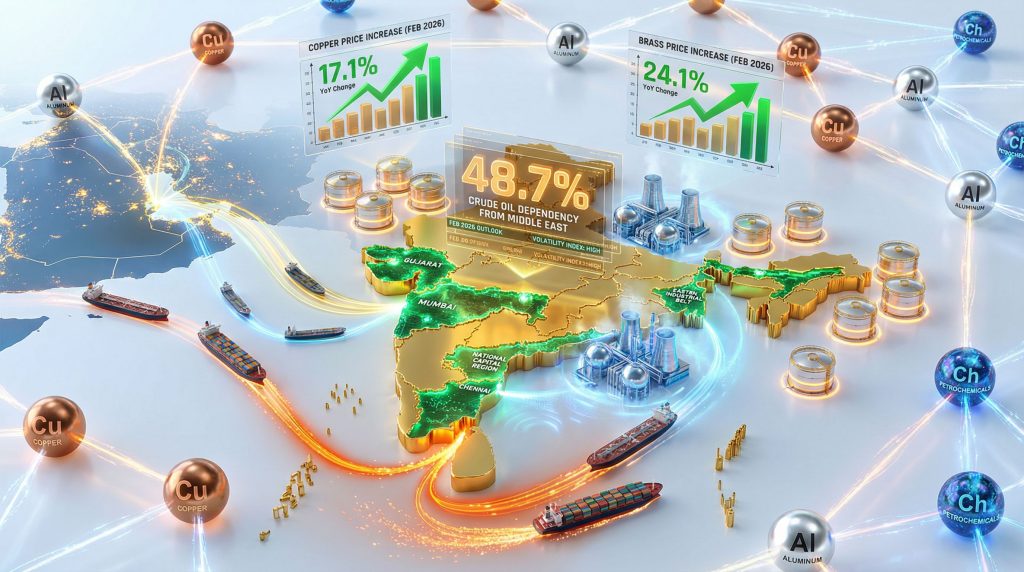
| Crude Oil | 48.7% | Saudi Arabia, UAE, Iraq | 40-45 days |
| LNG | 68.4% | Qatar, UAE | 15-20 days |
| LPG | 91%+ | Saudi Arabia, UAE | 30 days |
The concentration of energy imports from Middle Eastern suppliers creates cascading risks throughout India's industrial base. Liquefied natural gas dependency on Qatar and UAE reaches 68.4% of total LNG imports, while LPG dependency exceeds 91% from Saudi Arabian and UAE sources. These dependencies become particularly acute given India's limited strategic reserves, with LNG storage providing only 15-20 days of operational buffer compared to crude oil's 40-45 days.
Expert analysis from CareEdge Ratings reveals that geopolitical disruptions create asymmetric impacts across firm sizes. Micro, small, and medium enterprises demonstrate particular vulnerability due to limited financial hedging capabilities and constrained working capital flexibility. This size-based vulnerability amplifies during sustained supply disruptions when larger corporations can absorb temporary cost increases that prove devastating for smaller operations.
Supply Chain Architecture Vulnerabilities
India's energy infrastructure optimisation around Middle Eastern suppliers reflects decades of geographic proximity advantages, established logistics networks, and long-term contractual relationships. Alternative sourcing from US LNG involves 14-16 day shipping distances compared to 4-5 days from Qatar, while African crude sourcing requires significant refining capacity adjustments for different crude grades.
The strategic petroleum reserve system maintains 17-23 days of national consumption coverage at current demand levels approaching 4 million barrels daily. LNG regasification capacity concentrates at limited coastal terminals including Dahej, Hazira, and Kochi facilities, creating bottleneck vulnerabilities during supply disruptions.
Furthermore, the impact extends to energy security strategies that must adapt to evolving regional dynamics.
When big ASX news breaks, our subscribers know first
What Sectors Face the Greatest Cost Escalation Risks?
Manufacturing industries with embedded petroleum product dependencies experience disproportionate margin compression when energy supply chains face disruption. Analysis of sectoral vulnerability patterns reveals specific exposure concentrations that amplify cost pressures during geopolitical tensions.
High-Risk Manufacturing Segments
Table: Petroleum Product Dependency by Industrial Sector
| Sector | Petroleum Dependency | Vulnerability Characteristic |
|---|---|---|
| Air Transport Operations | 48.7% | Direct jet fuel exposure |
| Trade and Distribution | 46.8% | Logistics cost sensitivity |
| Auxiliary Transport Services | 27.7% | Fleet operation dependency |
| Electricity Generation | 16.8% | Feedstock cost pressure |
| Land Transport | 16.5% | Diesel price correlation |
| Agriculture | 10.3% | Mechanisation fuel needs |
| Chemical Manufacturing | 9.5% | Petrochemical feedstock |
Air transport operations demonstrate the highest petroleum dependency at 48.7% of intermediate consumption, creating severe margin compression risks when jet fuel prices escalate. Trade and distribution networks show 46.8% exposure, transmitting cost pressures throughout retail supply chains and consumer goods availability.
S&P Global Market Intelligence analysis identifies cascading cost transmission mechanisms. Elevated petrochemical commodity prices, increased shipping and logistics expenses, insurance premium escalations, and rupee weakening combine to raise input costs across diverse industrial segments. These range from processed food and hospitality to textiles and automotive manufacturing.
Oil Marketing Companies and Margin Compression
Oil marketing companies face direct crude price volatility exposure with limited regulatory flexibility for retail fuel price adjustments. Government pricing mechanisms create artificial ceilings on pass-through ability, forcing companies to absorb cost increases through margin compression or inventory accounting adjustments.
Fertiliser manufacturing demonstrates similar constraints, where natural gas feedstock typically comprises 40-50% of ammonia-based production costs. Urea price controls limit farmer-facing price adjustments while government subsidy mechanisms operate with 2-3 quarter lag periods, creating interim margin pressure for manufacturers.
Chemical and petrochemical industries operate with integrated supply chains featuring long-term contracts containing staggered price adjustment clauses typically involving 30-60 day lags. Working capital requirements spike during price volatility periods as inventory revaluation exposure creates financing pressure, particularly affecting smaller manufacturers with limited credit facility access.
How Do Shipping Route Diversions Amplify Supply Chain Costs?
Maritime logistics disruptions create multiplicative cost effects throughout import-dependent manufacturing sectors. When traditional shipping lanes become compromised by regional conflicts, alternative routing strategies impose significant time penalties and cost escalations that cascade through industrial supply networks.
Alternative Route Impact Analysis
Vessel diversions from traditional Suez Canal routing to Cape of Good Hope alternatives add 14+ days transit time, triggering conflict surcharges and capacity constraints that directly impact Indian importers' operational costs.
Table: Shipping Cost Escalation Factors
| Disruption Factor | Cost Impact | Timeline Effect |
|---|---|---|
| Route Diversions | 15-25% freight increase | +14 days transit |
| Insurance Premiums | 8-12% additional cost | Immediate |
| Conflict Surcharges | Variable by carrier | Per voyage |
| Fuel Consumption | 40-45% increase | Extended voyage |
Traditional routing from Middle Eastern suppliers to Indian west coast terminals requires 12-14 days transit time via Suez Canal corridors. Alternative Cape of Good Hope routing extends voyage duration to 26-28 days, creating 12-14 additional days per voyage cycle. This reduces annual vessel utilisation from approximately 20-22 voyages yearly to 16-18 voyages yearly on affected routes.
Maritime Cost Breakdown Analysis
Freight cost escalation operates through multiple simultaneous channels during route diversions. Longer voyage distances increase bunker fuel consumption by 40-45%, with marine fuel pricing maintaining 0.8-0.9 correlation with crude oil prices. Carriers implement fuel surcharges within 2-4 weeks to recover elevated operating costs.
Insurance premium escalation proves particularly significant for Middle Eastern cargo, with war risk premiums typically spiking 50-200 basis points (0.5-2.0% of cargo value). Additional coverage requirements for piracy and regional conflict risks force some insurers to implement temporary coverage limitations or exclusions, further constraining available capacity.
Port congestion effects compound transit delays through reduced berth predictability and increased detention charges at Indian terminals during cargo coordination disruptions. Demurrage costs escalate 2-3% per additional day of delay while container utilisation inefficiencies emerge from mismatched arrival scheduling. These challenges highlight the importance of implementing robust haulage operations safety protocols to maintain operational continuity.
Which Raw Materials Experience the Sharpest Price Volatility?
Input cost inflation affects multiple manufacturing categories simultaneously during supply chain disruptions, with metal commodities and petrochemical derivatives demonstrating acute sensitivity to geopolitical tensions. February 2026 witnessed severe price escalations across critical industrial materials, reflecting the Iran war impact on India's supply chain.
February 2026 Material Price Escalation
Table: Critical Raw Material Price Increases
| Material Category | Month-over-Month Increase | Supply Chain Characteristic |
|---|---|---|
| Brass Metal | 24.1% | Highest volatility observed |
| Copper Wire | 20.7% | Electrical infrastructure |
| Aluminium Powder | 17.5% | Manufacturing feedstock |
| Copper Metal/Rings | 17.1% | Industrial demand sensitive |
| Aluminium Alloys | 14.8% | Automotive/aerospace |
| PVC Insulated Cables | 13.4% | Construction dependency |
Brass metal experienced the most severe price escalation at 24.1% month-over-month increase, reflecting supply chain concentration and limited alternative sourcing options. Copper wire prices surged 20.7% as electrical infrastructure projects faced material shortages, while aluminium powder increased 17.5% due to manufacturing feedstock constraints.
The S&P Global Market Intelligence input price index reached a 15-month high of 54.7 in February. This increased from 52.5 in January and 53.6 in February 2025. Readings above 50 indicate expansion in input cost pressures, suggesting sustained inflation momentum across manufacturing sectors.
Metal Market Vulnerability Patterns
Copper-related products demonstrate particular sensitivity to supply disruptions due to concentrated mining operations and limited refining capacity alternatives. Electrical infrastructure components experience amplified price pressure as construction and renewable energy projects compete for constrained copper supplies.
Aluminium powder and alloy pricing reflects aerospace and automotive industry demand competing with traditional manufacturing applications. Supply chain concentration in bauxite mining regions creates vulnerability when shipping routes face disruption or alternative suppliers require significant lead times for capacity adjustments.
PVC insulated cable pricing increases reflect petrochemical feedstock cost transmission combined with copper conductor price escalation. Construction industry demand remains relatively inelastic in short timeframes, forcing contractors to absorb cost increases or delay project timelines. Additionally, understanding natural gas forecasts becomes crucial for industrial planning.
What Manufacturing Sectors Show Greatest Margin Compression Risk?
Industries with limited pricing flexibility face severe profitability challenges when input costs spike rapidly during geopolitical disruptions. Regulatory constraints, competitive market dynamics, and contract obligations create varying degrees of cost absorption pressure across manufacturing segments.
Sector-Specific Vulnerability Assessment
HDFC Bank analysis reveals that sectors with structural dependency on petroleum and natural gas feedstocks face disproportionate margin compression. Pricing flexibility remains constrained by regulatory frameworks or competitive market dynamics. A 10% increase in crude oil and related products could push headline Wholesale Price Index higher by 100-150 basis points.
Air Transport Operations
- Jet fuel comprises 30-40% of airline operating costs
- Limited capacity reduction flexibility due to fixed aircraft fleet expenses
- Fuel surcharge mechanisms provide only partial and delayed pass-through capability
- Ancillary revenue streams offer limited margin absorption capacity
Fertiliser Manufacturing Constraints
- Natural gas feedstock represents 40-50% of ammonia-based production costs
- Government price controls limit farmer-facing pricing adjustments
- Seasonal demand patterns restrict pricing flexibility windows during kharif and rabi cropping cycles
- Subsidy adjustment mechanisms operate with significant lag periods
Chemical and Petrochemical Industries
- Long-term supply contracts feature staggered price adjustment clauses with 30-60 day lags
- Integrated supply chains create inventory revaluation exposure during price volatility
- Customer contracts often include price escalation clauses with 2-3 quarter implementation delays
- Working capital requirements spike during sustained cost pressure periods
How Does Wholesale vs. Retail Inflation Respond Differently?
Price transmission mechanisms vary significantly between wholesale and consumer markets, with industrial inputs demonstrating faster adjustment to supply shocks compared to final goods pricing. Understanding these differential responses enables better forecasting of inflation persistence and policy implications.
Inflation Transmission Timeline
Wholesale Price Index demonstrates higher sensitivity to energy cost fluctuations due to petroleum and natural gas weighting of 10.4% compared to 4.8% in Consumer Price Index calculations. This structural difference creates earlier and more pronounced wholesale inflation responses during energy supply disruptions.
Wholesale Price Index Projections
- March 2026 forecast range: 3.5-3.7% representing a 37-month high
- FY27 average projection: 4-5% sustained inflation
- February 2026 actual: 2.13% representing an 11-month high
Consumer Price Impact Scenarios
- FY27 retail inflation projection: 5-5.5% average
- Pass-through timeline: 2-3 quarters for complete transmission
- February 2026 retail inflation: 3.21% year-over-year from 2.74% in January
Price Pass-Through Mechanisms
Consumer inflation typically lags wholesale price increases by 2-3 quarters as manufacturers initially absorb cost increases through margin compression before implementing price adjustments. S&P Global Market Intelligence projects retail inflation averaging 5% in 2026. Meanwhile, stronger household spending supported by goods and services tax rationalisation may enable firms to pass increased costs to consumers whilst absorbing remaining pressures through reduced profit margins.
Manufacturing companies typically absorb 30-40% of initial cost increases while passing 60-70% to customers over 6-9 month periods. This absorption capacity varies significantly by sector, with regulated industries like electricity and fertilisers facing greater absorption pressure due to pricing control mechanisms. The complexities mirror broader energy transition challenges faced globally.
The next major ASX story will hit our subscribers first
What Strategic Mitigation Frameworks Can Indian Companies Deploy?
Forward-thinking organisations implement comprehensive risk management approaches to minimise supply chain vulnerabilities and cost volatility exposure during extended geopolitical disruptions. Multi-layered mitigation strategies address immediate operational challenges whilst building long-term resilience.
Supply Chain Resilience Strategies
Geographic Diversification Initiatives
- Supplier base expansion beyond Middle Eastern concentration through systematic evaluation of US LNG partnerships and African crude sourcing alternatives
- Southeast Asian regional supply chain development for petrochemical derivatives and alternative feedstock sourcing
- Technology transfer arrangements with alternative suppliers to reduce switching costs and technical barriers
Financial Risk Management Tools
- Commodity price hedging instruments including crude oil futures, natural gas swaps, and currency forwards to stabilise input cost projections
- Working capital optimisation through inventory management systems that balance carrying costs against supply disruption risks
- Credit facility diversification to maintain operational flexibility during extended cost pressure periods
Operational Contingency Development
- Multiple transportation route mapping including alternative shipping corridors and domestic logistics networks
- Strategic inventory buffer enhancement calculated against typical disruption duration and cost escalation patterns
- Supplier relationship diversification with qualified secondary and tertiary sourcing options pre-negotiated
Advanced Risk Assessment Frameworks
Manufacturing companies increasingly deploy scenario planning methodologies that model various geopolitical disruption intensities and durations. These frameworks incorporate probabilistic assessments of supply route availability, alternative supplier capacity, and cost escalation trajectories under different conflict scenarios.
Technology Integration Solutions
- Real-time supply chain monitoring systems providing early warning capabilities for logistics disruptions
- Artificial intelligence-driven demand forecasting that incorporates geopolitical risk factors into production planning
- Blockchain-based supplier verification systems enabling rapid qualification of alternative sourcing options
Industry Collaboration Mechanisms
- Joint procurement initiatives among manufacturing companies to increase bargaining power with alternative suppliers
- Shared logistics infrastructure development including regional storage facilities and distribution networks
- Information sharing protocols for supply chain intelligence and risk assessment coordination
Furthermore, companies should consider insights from oil price rally analysis to inform their strategic planning decisions.
How Can Policy Frameworks Support Industrial Resilience?
Government intervention mechanisms prove crucial for stabilising supply chains during geopolitical disruptions, requiring coordinated approaches across multiple ministries and regulatory agencies. Effective policy frameworks balance immediate crisis response with long-term structural improvements to supply chain resilience.
Energy Security Enhancement Measures
Strategic Reserve Expansion
- Mandatory LNG storage requirement implementation expanding from current 15-20 days to proposed 45-60 days of consumption coverage
- Strategic petroleum reserve capacity increase targeting 90-day import coverage aligned with International Energy Agency participation requirements
- Distributed storage infrastructure development reducing geographic concentration risks at existing coastal terminals
Alternative Energy Acceleration
- Renewable energy transition policies reducing fossil fuel dependency through solar and wind capacity expansion targeting 40% renewable share by 2030
- Green hydrogen production scaling initiatives enabling domestic fertiliser feedstock production and industrial fuel alternatives
- Nuclear power capacity enhancement providing baseload generation alternatives to natural gas-fired plants
Trade and Logistics Infrastructure
Alternative Shipping Route Development
- Port infrastructure capacity enhancement at eastern coast facilities reducing dependency on western terminals for Middle Eastern imports
- Inland waterway development enabling alternative distribution channels for imported commodities
- Regional connectivity improvement through road and rail infrastructure supporting domestic production networks
Financial Support Mechanisms
- Trade finance facility expansion specifically targeting small and medium enterprises during supply chain disruptions
- Export credit guarantee enhancement for domestic manufacturers seeking alternative raw material sourcing options
- Foreign exchange hedging support enabling smaller companies to manage currency exposure during volatile periods
According to a Mint analysis, the Iran conflict impacts multiple sectors through the "three Fs" – food, fuel, and fertilisers. This comprehensive analysis reinforces the need for coordinated policy responses across various industrial segments.
Regulatory Framework Optimisation
Policy coordination across petroleum ministry, commerce department, and central bank enables comprehensive response to supply chain disruptions. Streamlined approval processes for alternative supplier qualification and temporary tariff adjustments provide operational flexibility during crisis periods.
Strategic Classification Systems
- Critical mineral designation enabling priority processing for alternative sourcing arrangements
- Supply chain mapping requirements for essential industries facilitating rapid disruption assessment
- Emergency procurement authorisation reducing bureaucratic delays during acute shortages
What Long-Term Structural Changes May Emerge?
Sustained geopolitical tensions often catalyse permanent shifts in supply chain architecture, potentially reshaping India's industrial sourcing patterns and energy infrastructure for decades. These structural transformations reflect strategic reassessment of supply security versus cost optimisation trade-offs.
Supply Chain Regionalisation Trends
Domestic Production Capability Enhancement
- Manufacturing capacity development in critical materials and components previously imported from volatile regions
- Technology transfer acceleration through foreign direct investment policies targeting strategic industries
- Research and development investment in alternative materials and production processes reducing external dependencies
Regional Trade Partnership Strengthening
- ASEAN Plus framework expansion enabling preferential sourcing arrangements for critical materials
- Bilateral trade agreement renegotiation incorporating supply chain resilience provisions and strategic reserve sharing mechanisms
- Regional infrastructure development supporting alternative logistics corridors independent of traditional shipping routes
Energy Transition Acceleration
The ongoing regional conflicts demonstrate vulnerabilities that accelerate transition toward renewable energy independence and domestic production capabilities. Investment patterns shift toward technologies and infrastructure reducing reliance on geopolitically sensitive sourcing regions. The Iran war impact on India's supply chain reinforces the urgency of energy diversification strategies.
Green Hydrogen Economy Development
- Industrial-scale green hydrogen production enabling ammonia synthesis for fertiliser manufacturing without natural gas imports
- Steel production transition toward hydrogen-based direct reduction processes reducing coking coal dependency
- Chemical industry feedstock substitution through renewable electricity and hydrogen-based synthesis pathways
Electric Vehicle Infrastructure Scaling
- Commercial vehicle electrification reducing diesel dependency in logistics and transportation sectors
- Battery manufacturing localisation reducing dependency on imported energy storage components
- Charging infrastructure deployment supporting electric vehicle adoption across industrial and consumer segments
Financial Market Evolution
Extended supply chain vulnerabilities drive development of sophisticated risk management instruments and market mechanisms supporting supply chain resilience. Financial innovation addresses gaps in traditional hedging tools and creates new categories of geopolitical risk products.
Risk Management Product Development
- Supply chain disruption insurance products providing coverage for extended lead times and alternative sourcing costs
- Commodity price corridor instruments enabling long-term price stability without full hedging commitment
- Geopolitical risk indices enabling systematic assessment and pricing of regional conflict exposure
Investment Pattern Shifts
- Infrastructure investment prioritisation toward domestic production capacity and alternative energy systems
- Private equity focus on supply chain resilience technologies and regional sourcing capabilities
- Venture capital deployment in alternative materials research and production scaling initiatives
The BBC reports on escalating regional tensions highlight the ongoing nature of these challenges, reinforcing the need for sustained resilience-building efforts across Indian manufacturing sectors.
However, the Iran war impact on India's supply chain extends beyond immediate operational challenges. It represents a fundamental shift in how industrial economies must approach supply security in an increasingly multipolar world. Companies and policymakers who recognise this transformation and adapt accordingly will position themselves advantageously for the evolving global trade environment.
Disclaimer: This analysis involves forecasts and speculation regarding future economic conditions, geopolitical developments, and market responses. Actual outcomes may vary significantly from projections presented. Readers should conduct independent research and consult qualified advisors before making investment or business decisions based on this information.
Ready to Invest in the Next Major Mineral Discovery?
Discovery Alert instantly alerts investors to significant ASX mineral discoveries using its proprietary Discovery IQ model, turning complex mineral data into actionable insights. Understand why historic discoveries can generate substantial returns by visiting Discovery Alert's dedicated discoveries page, showcasing examples of exceptional outcomes.