August 20, 2026
The Transit Trap: Why Controlling a Waterway Proved More Powerful Than Owning the Oil
Energy security analysts have long measured national risk exposure through a single lens: how much oil a country produces or holds in reserve. The assumption embedded in decades of supply modelling was that abundance equates to safety. The events of 2026 dismantled that assumption with brutal efficiency. When the Strait of Hormuz effectively closed, the world did not run short of oil in the ground — it ran short of oil in motion, and the distinction proved catastrophic for nations that had never built a meaningful buffer against that reality.
Understanding the Iran war oil reserves equation requires separating two entirely different concepts: geological wealth and logistical control. Iran sits atop one of the most formidable reserve positions on the planet, yet the conflict it triggered demonstrated that possessing vast underground resources offers little protection when the export corridor connecting those resources to global markets is weaponised.
When big ASX news breaks, our subscribers know first
Why Iran's Oil Reserves Matter More Than Its Production
Iran's Proven Reserve Position: A Geopolitical Asset Frozen in Time
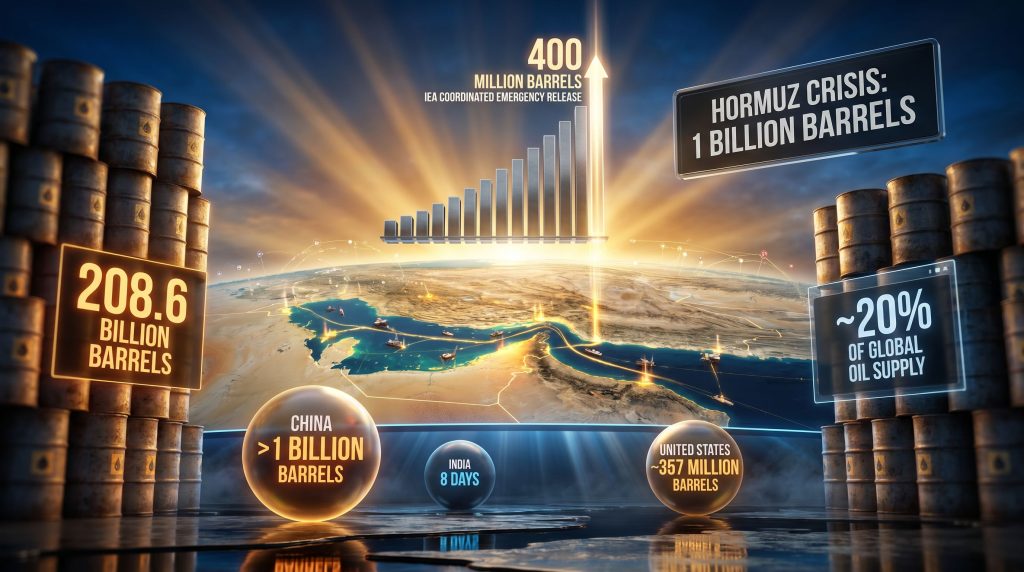
Iran's subsurface endowment is genuinely staggering in scale. The country holds an estimated 208.6 billion barrels of proven oil reserves as of 2025, placing it among the three or four largest reserve holders globally depending on the assessment methodology applied. This figure represents somewhere between 9.5% and 11.8% of total world proven reserves — a share larger than the combined reserves of the United States, Canada's conventional fields, and Russia.
Earlier estimates from 2016 placed Iran's proven reserves at approximately 157.53 billion barrels, with subsequent upward revisions reflecting expanded field assessments across formations including the giant Ahvaz, Marun, and Gachsaran fields in Khuzestan Province. At current domestic consumption rates and without any export activity, Iran's reserves could theoretically sustain internal energy needs for roughly 239 years — a number that illustrates the sheer geological scale involved. For further context on Iran's oil reserves, official geological assessments confirm this extraordinary resource base.
| Reserve Metric | Data Point |
|---|---|
| Proven Reserves (2016 Estimate) | 157.53 billion barrels |
| Proven Reserves (2025 Estimate) | ~208.6 billion barrels |
| Global Reserve Ranking | #3 to #4 |
| Share of World Proven Reserves | ~9.5% to 11.8% |
| Domestic Sustainability (No Exports) | ~239 years |
The Paradox of Abundance: Why Reserve Size Did Not Prevent a Supply Crisis
The 2026 disruption was not caused by depletion. Iran's reserves remain largely intact. The supply shock emerged because Iran leveraged its geographic position at the mouth of the Persian Gulf to interrupt the flow of oil produced by other nations transiting through the Strait of Hormuz.
Approximately 20% of globally traded oil and LNG passes through this 33-kilometre-wide chokepoint — a volume representing the daily energy requirements of Japan, India, South Korea, and much of Southeast Asia combined. Iran's floating storage position, estimated at approximately 60 million barrels held offshore in tankers, began depleting toward the end of May 2026 as the blockade persisted. However, the more significant effect was the interruption of Gulf producer exports passing through waters Iran could effectively patrol and deny.
Critical Insight: The Iran conflict exposed a flaw in conventional energy security thinking. Reserve volume, production capacity, and even diversified supplier networks provide limited protection if the physical transit infrastructure connecting supply to demand can be switched off by a single actor with geographic leverage.
This transit vulnerability is distinct from the oil market disruption risks most supply models are designed to capture. Standard reserve adequacy calculations assume supply disruptions affect production, not movement. The Hormuz closure was effectively an attack on global infrastructure — not geology.
How the Hormuz Closure Stress-Tested Global Strategic Petroleum Reserves
The Scale of the Disruption
The near-complete closure of the Strait of Hormuz persisted for over three months, removing roughly one-fifth of globally traded oil and LNG from accessible markets. Brent crude prices surged to approximately $120 per barrel during peak disruption. Analysts estimated that without emergency reserve interventions from IEA member nations, prices could plausibly have reached $150 per barrel — a level not seen since the extreme conditions of the 2008 commodity super-cycle.
The Middle East supplies approximately 60% of Asia's total energy import requirements, making Asian economies disproportionately exposed to Hormuz-dependent supply chains. Europe, by contrast, received partial insulation from its greater diversification toward Atlantic basin LNG — though this advantage was structural rather than the result of any specific crisis planning. The broader picture of crude oil volatility throughout this period reflected just how quickly transit disruptions can reshape global pricing dynamics.
Emergency Reserve Drawdowns: The Sixth IEA Coordinated Release
All 32 IEA member nations participated in a coordinated emergency release totalling 400 million barrels — the largest single release in the agency's history and its sixth coordinated drawdown since the organisation was established following the 1973 Arab Oil Embargo. The IEA's 90-day net import coverage requirement, a standard forged from the lessons of that earlier crisis, provided the institutional architecture that made the coordinated response possible within days of the conflict escalating.
The United States contributed the largest individual share of the release. U.S. Strategic Petroleum Reserve levels declined to approximately 357 million barrels, representing a drawdown of roughly 60 million barrels since the conflict began — levels approaching those last recorded in 1983. Japan released approximately 80 million barrels from its national reserves as part of the coordinated effort.
| Country / Entity | Reserve Action | Estimated Volume |
|---|---|---|
| IEA (32 Members Combined) | Coordinated emergency release | 400 million barrels |
| United States | Largest individual contributor | ~60 million barrels drawn |
| Japan | National reserve release | ~80 million barrels |
| U.S. SPR Post-Drawdown Level | Remaining balance | ~357 million barrels |
China's Strategic Hedge: The Non-IEA Buffer That Worked
China's experience during the crisis offered a masterclass in strategic reserve utility. Although not a full IEA member and therefore outside the coordinated release mechanism, China entered the conflict having spent years assembling what is widely considered the world's largest strategic petroleum reserve, estimated to hold in excess of one billion barrels.
Rather than competing aggressively in a spot market where supply was constrained and prices were spiking, Beijing reduced crude purchases by more than one-third and drew on its domestic stockpile. The result was that China effectively insulated its industrial economy from the acute energy price distress experienced across other parts of Asia. The strategy saved Beijing an estimated billions of dollars in avoided premium pricing and prevented the kind of demand-side austerity measures that battered less-prepared economies.
Underappreciated Dynamic: China's reserve strategy functions not just as insurance but as a market power tool. By stepping away from spot markets during a supply squeeze, China simultaneously protected its own economy and avoided amplifying the price spike that its continued purchasing would have generated. Adequate reserves, at sufficient scale, allow large importers to become price-stabilising actors rather than price-amplifying ones.
Which Countries Were Most Vulnerable and Why
A Tiered Risk Framework for Energy Vulnerability
The conflict revealed that energy vulnerability operates across at least three distinct dimensions: the adequacy of domestic reserves relative to import exposure, geographic dependence on Hormuz-transiting supply chains, and fiscal capacity to absorb price shocks through subsidies or demand management tools.
Tier 1: Critically Exposed (Minimal Reserves, High Import Dependence)
-
India — The world's most populous nation, third-largest global oil importer, and second-largest importer of liquefied petroleum gas. India is not a full IEA member and therefore neither participates in coordinated releases nor benefits from the institutional early-warning frameworks those mechanisms provide. Its strategic petroleum reserve covers only eight days of imports, a figure that stands in stark contrast to the IEA's 90-day minimum benchmark. Reaching that standard would require acquiring more than 400 million additional barrels at an estimated cost of approximately $28 billion at $70 per barrel.
-
Pakistan — Entered the conflict relying on the Middle East for approximately 90% of its oil and LNG imports. Building a 90-day reserve buffer from its current position would require approximately 35 million additional barrels of storage capacity — a significant capital commitment for a fiscally constrained sovereign.
-
Thailand and other Southeast Asian economies with limited domestic storage infrastructure faced similar structural vulnerabilities, forcing demand-side responses including consumption rationing and shortened industrial working hours.
Tier 2: Structurally Deficient Despite IEA Membership
- Australia occupied a uniquely anomalous position as the only full IEA member that consistently failed to meet the agency's 90-day reserve requirement in the years preceding the conflict.
Tier 3: Exposed but Partially Buffered
- European markets entered the disruption with an established gas storage network designed primarily for seasonal demand management. With imported LNG now accounting for more than 40% of European gas supply — and over 60% of those LNG imports sourced from the United States rather than Hormuz-transiting Gulf producers — Europe's supply chain was less directly exposed than Asia's, though far from immune to price contagion.
The Global Strategic Reserve Expansion Race Now Underway
Country-by-Country SPR Expansion Plans
The disruption has catalysed a wave of strategic reserve building across import-dependent economies. Each national response reflects a different combination of fiscal capacity, political urgency, and structural import exposure. Furthermore, the oil price shock experienced during the conflict has accelerated political will in ways that pre-war risk assessments consistently failed to generate.
India
New Delhi has directed Oil and Natural Gas Corporation (ONGC) to develop a 1.75 million-tonne reserve — approximately 13 million barrels — that would expand India's emergency storage capacity by roughly one-third. Given that the IEA projects India will become the single largest source of global oil demand growth through 2030, reserve adequacy is increasingly a structural economic priority rather than a reactive crisis response.
Pakistan
Pakistan is pursuing domestic storage expansion with a target build-out of approximately 35 million additional barrels, seeking to achieve the equivalent of a 90-day import buffer and reduce its near-total dependence on Middle Eastern supply chains.
Australia
Canberra has committed to a $7 billion investment to achieve a minimum 50 days of fuel storage, a significant step toward closing its long-standing compliance gap with IEA standards — though still short of the full 90-day benchmark.
Singapore
Asia's leading oil refining hub is actively evaluating expanded strategic oil and gas storage infrastructure, leveraging its existing position as a regional trading and distribution centre.
Europe
European policymakers are examining whether government-controlled LNG storage expansion would reduce the region's dependence on U.S. import flows and provide meaningful insulation against future Hormuz-adjacent disruptions.
Gulf National Oil Companies
In a strategically significant inversion, energy producers are also seeking to expand storage capacity outside their home region to preserve export flexibility during future crises. Saudi Aramco, which already operates storage facilities in Japan, South Korea, Egypt, and northwest Europe, has signalled interest in further geographic diversification of its storage network — an acknowledgement that even producers benefit from pre-positioned inventory outside the Hormuz corridor.
Quantifying the Demand Surge: How Much Oil Does the Reserve Race Actually Require?
Scenario Analysis for Oil Markets
The aggregate storage expansion plans across all identified nations could generate demand for approximately 500 million barrels of crude and refined products. Global inventory drawdowns since the start of the conflict have already consumed approximately 400 million barrels of existing stockpiles, with further draws expected to continue through summer 2026 even as Hormuz shipping resumes. Combined restocking demand — new SPR construction plus existing inventory replenishment — amounts to approximately 1 billion barrels of additional demand.
| Demand Component | Volume Estimate |
|---|---|
| New SPR Construction Demand | ~500 million barrels |
| Existing Inventory Replenishment | ~400 million barrels |
| Total Combined Additional Demand | ~1 billion barrels |
Scenario A: Orderly Recovery (Base Case)
The IEA projects global oil supply could surge in the year following the conflict as Middle Eastern production recovers, potentially generating a surplus exceeding 4 million barrels per day. Under this scenario, even substantial storage-driven demand may be insufficient to push crude prices sharply higher, as recovering supply absorbs the restocking impulse. Monitoring current crude prices throughout this recovery phase will consequently be essential for importers calibrating their restocking timelines.
Scenario B: Delayed Gulf Recovery (Upside Risk)
If Middle Eastern production recovery proves slower than anticipated due to infrastructure damage, logistical constraints, or renewed instability, the projected supply surplus narrows considerably. Combined with approximately 1 billion barrels of restocking demand, this scenario could sustain price support well above pre-war levels for an extended period.
Scenario C: The Structural Hoarding Premium (Long-Term)
A world with substantially larger strategic reserves distributed across more nations may exhibit structurally lower price volatility over time. Large importers with adequate reserves, replicating China's wartime behaviour, would tend to reduce spot market purchases during periods of tight supply, dampening price spikes and creating a more stable long-run price environment. The near-term demand catalyst and the long-run stabilising effect are not contradictory — they operate across different time horizons.
Investor Note: The reserve expansion race represents a multi-year demand tailwind for crude oil and refined product storage infrastructure. However, the pace of Gulf supply recovery remains the critical variable determining whether restocking demand generates price appreciation or is absorbed by recovering production. These are forward-looking scenarios involving significant uncertainty, and should not be interpreted as forecasts.
The next major ASX story will hit our subscribers first
Redesigning the Global Energy Security Architecture
From Just-in-Time to Just-in-Case
The Iran war oil reserves paradox has effectively terminated the era of just-in-time energy supply chain management for import-dependent economies. The conflict demonstrated that disruptions previously modelled as low-probability tail risks — a multi-month closure of the world's most critical oil transit chokepoint — are operationally plausible and can persist far beyond the timeframes that standard scenario planning assumes.
Nations that entered the crisis without adequate reserves were compelled into economically damaging demand-side responses: fuel subsidies, consumption rationing, shortened working weeks, and emergency austerity measures. The cost asymmetry between building reserves in advance and managing scarcity reactively has now been demonstrated in real time. As reported by the BBC, the human and economic toll across affected nations reinforced precisely why pre-positioned stockpiles matter.
Four Principles Reshaping Reserve Strategy
-
Minimum adequacy thresholds must be enforced — The IEA's 90-day import coverage standard has been validated as a meaningful minimum floor. Nations below this threshold experienced disproportionate economic damage relative to those meeting or exceeding it.
-
Geographic diversification of storage infrastructure reduces single-point failure risk — The Gulf producer model of pre-positioning oil in multiple international locations offers a template for importers seeking resilience against corridor-specific disruptions.
-
Demand-reduction protocols complement physical reserves — Fiscally constrained nations unable to fund large physical stockpiles should develop pre-approved demand management frameworks activatable rapidly during supply emergencies, rather than improvising responses under crisis conditions.
-
Non-IEA major importers require institutional integration — India's exclusion from the IEA's coordinated release mechanism exposed a structural gap in the global emergency response architecture. Expanding coordination frameworks to include major non-member importers represents a systemic priority for international energy governance.
Frequently Asked Questions: Iran War, Oil Reserves, and Global Energy Security
What Are Iran's Proven Oil Reserves?
Iran holds approximately 208.6 billion barrels of proven oil reserves as of 2025, placing it among the three or four largest reserve holders globally. This represents roughly 9.5% to 11.8% of total world proven reserves.
Why Did the Iran War Cause an Oil Supply Crisis if Iran Has Massive Reserves?
The supply disruption resulted from Iran's effective closure of the Strait of Hormuz rather than any depletion of Iranian reserves. The blockade cut off approximately 20% of global oil and LNG supply flows, creating a transit corridor crisis that was entirely independent of reserve volumes underground. The role of OPEC market influence in moderating the subsequent price environment proved critical in limiting the duration of the acute supply shock.
How Much Oil Did the IEA Release During the Iran War?
The IEA coordinated a release of 400 million barrels across its 32 member nations — the largest emergency release in the agency's history and its sixth coordinated drawdown since the organisation was established following the 1973 oil embargo.
What Is India's Current Strategic Petroleum Reserve Capacity?
India's strategic petroleum reserve covers approximately eight days of imports, far below the IEA's 90-day standard. Reaching IEA compliance would require acquiring more than 400 million additional barrels at an estimated cost of approximately $28 billion.
How Much Additional Oil Demand Will the Global SPR Expansion Generate?
New storage construction plans, combined with the need to replenish approximately 400 million barrels of inventories drawn down during the conflict, could generate total additional demand of approximately 1 billion barrels. In fact, global oil stockpile data confirms that the scale of drawdowns during the crisis was unprecedented in the IEA's history.
What Is China's Strategic Petroleum Reserve?
China is estimated to hold the world's largest strategic petroleum reserve at more than one billion barrels. During the Iran war oil reserves crisis, China reduced crude purchases by more than one-third and drew on domestic stockpiles rather than competing in a constrained spot market, saving Beijing billions in avoided premium pricing.
Key Takeaways: Strategic Lessons from the Iran War Oil Shock
-
Reserve volume does not equal supply security — Iran's 208+ billion barrels did not prevent a global supply crisis; geographic control of transit infrastructure proved more decisive than underground resource endowment
-
The IEA's 90-day standard was empirically validated — Nations meeting or exceeding this threshold demonstrated measurably greater economic resilience throughout the disruption
-
China's reserve strategy is a replicable model — Large importers with adequate stockpiles can effectively withdraw from crisis-period spot markets, reducing both their own economic exposure and the price amplification their continued purchasing would have generated
-
Approximately 1 billion barrels of additional demand is now in the pipeline from SPR construction programmes and inventory restocking requirements — a significant but likely time-distributed demand catalyst for crude markets
-
The architecture of global energy security is being fundamentally redesigned around the principle that low-probability, high-impact supply disruptions must be treated as planning assumptions, not statistical outliers requiring no advance preparation
-
The Iran war oil reserves paradox will reshape how governments, multilateral institutions, and energy companies model supply risk for the remainder of this decade and beyond
Disclaimer: This article contains forward-looking scenarios, projections, and analytical assessments drawn from publicly available information. These should not be construed as financial advice or investment recommendations. All scenarios involve material uncertainty, and actual market outcomes may differ substantially from those described. Readers should conduct independent research before making any investment or policy decisions.
Want to Capitalise on the Next Major Resource Discovery Before the Market Catches On?
The strategic reserve race now reshaping global energy security is creating significant ripple effects across commodity markets and ASX-listed resource companies — and Discovery Alert's proprietary Discovery IQ model delivers real-time alerts the moment significant mineral discoveries are announced on the ASX, ensuring subscribers can act on actionable opportunities ahead of the broader market. Explore historic examples of major discoveries and their extraordinary returns on Discovery Alert's dedicated discoveries page, or start your 14-day free trial today to position yourself at the forefront of the next significant find.