June 19, 2026
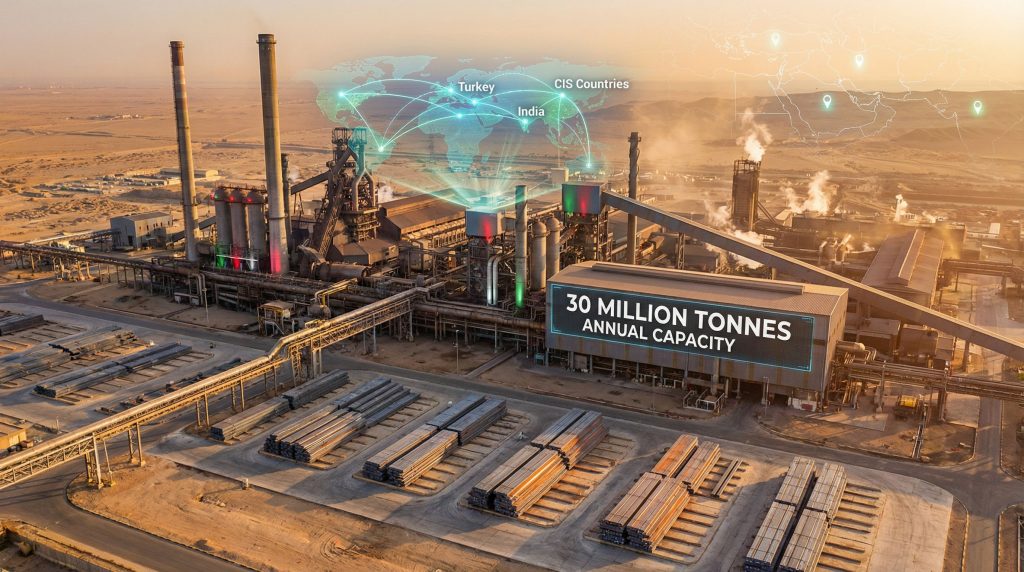
Global steel markets face unprecedented challenges as Iranian steel plants damaged by air strikes expose critical vulnerabilities in Middle Eastern industrial networks. The concentration of manufacturing capacity in politically unstable regions creates cascading risks that extend far beyond immediate production zones, forcing market participants to reconsider fundamental assumptions about supply chain resilience and strategic resource allocation.
Recent infrastructure attacks targeting major Iranian steel facilities have illuminated critical weaknesses in Middle Eastern industrial networks, where integrated production systems depend heavily on shared energy infrastructure and transportation corridors. These vulnerabilities represent systemic risks that commodity markets are only beginning to price adequately.
Steel Production Concentration Creates Single Points of Failure
Middle Eastern steel production networks exhibit dangerous levels of concentration, with individual facilities representing outsized portions of regional capacity. Iran's steel sector demonstrates this vulnerability acutely, where Mobarakeh Steel (MSC) produced 7.1 million tonnes of steel in 2025 and Khouzestan Steel (KhSC) produced 4.2 million tonnes in the same period, according to market intelligence data.
These two major facilities alone represent over 11.3 million tonnes of combined production capability, creating substantial single points of failure within the broader regional supply network. The concentration becomes more concerning when considering that Iran's semi-finished exports reached approximately 550,000 tonnes per month in 2024, making these facilities critical nodes in global steel trade flows.
Infrastructure Dependencies Amplify Risk Exposure
The interconnected nature of industrial infrastructure in the region creates multiplier effects when disruptions occur. Steel production facilities depend on complex networks including:
- Power generation systems with dedicated capacity requirements
- Natural gas supply networks from shared regional fields
- Transportation corridors linking production to export terminals
- Water treatment facilities essential for cooling and processing
Recent attacks on Iranian facilities have demonstrated these interdependencies in practice. The South Pars gas field disruptions affected multiple steel producers simultaneously, whilst power grid damage at individual facilities created broader electricity supply constraints across industrial zones.
Critical Facility Assessment
Damage Assessment of Major Iranian Steel Facilities
| Facility | Annual Capacity | Infrastructure Hit | Operational Impact |
|---|---|---|---|
| Mobarakeh Steel (MSC) | 7.1 million tonnes | Power substation, 914MW + 250MW units | Short-term outages pending evaluation |
| Khouzestan Steel (KhSC) | 4.2 million tonnes | Two storage silos | Blast furnaces unaffected |
| Foolad Atieh | Undisclosed | Direct facility strike | Operations suspended for safety |
The targeting of storage infrastructure at KhSC specifically impacts export capacity, whilst power system damage at MSC threatens broader production continuity. These attacks demonstrate how adversaries can achieve maximum economic disruption through strategic infrastructure targeting rather than direct production line strikes.
When big ASX news breaks, our subscribers know first
Production Impact Scenarios Reveal Market Vulnerabilities
Immediate production disruptions from infrastructure attacks create ripple effects throughout global steel supply chains. The scale of these impacts depends critically on facility-specific vulnerabilities and regional supply alternatives, particularly as tariffs impact investments worldwide.
Storage facility damage at major Iranian producers affects approximately 15-20% of monthly export volumes based on the country's 550,000 tonnes per month semi-finished export capacity. This calculation suggests potential export disruptions of 82,500-110,000 tonnes monthly during repair periods.
Short-Term Capacity Constraints
Power infrastructure damage creates the most significant operational constraints. MSC's 914MW and 250MW power generation units sustained direct hits, with electricity supply disruptions likely affecting multiple production lines simultaneously. Industry assessments indicate:
- 30-40% capacity reduction during power system repairs
- 2-3 month delays for semi-finished product export contracts
- Cascading effects on downstream steel processing facilities
Production checks continue at affected facilities, with full capacity assessments pending expert evaluation of damaged infrastructure systems.
Regional Supply Chain Disruptions
The concentration of Iranian steel plants damaged by air strikes creates immediate sourcing challenges for regional buyers. Market participants report:
- Contract delays affecting established supply relationships
- Alternative sourcing requirements from Turkish, Indian, and CIS producers
- Transportation network adjustments to accommodate revised trade flows
- Quality specification challenges when switching between suppliers
Domestic billet and slab pricing faces pressure as Iranian producers assess damage and adjust output projections. However, initial market reactions suggest relatively contained price movements, with longer-term supply constraints potentially creating more significant volatility.
Geopolitical Escalation Threatens Broader Regional Production
The most concerning development involves stated intentions for retaliatory attacks across the wider Gulf region. Iranian military sources, through the Islamic Revolutionary Guard Corps-linked Tasnim news agency, have identified specific targets including:
- Saudi Arabia's Hadeed steel operations
- UAE's Emirates Steel (Emsteel) complex
- Qatar Steel national production facilities
- Kuwait Steel and Bahrain Steel infrastructure
- Israeli steel production assets
This escalation scenario would transform localised production disruptions into a region-wide industrial crisis affecting millions of tonnes of annual steel capacity.
Energy Infrastructure Interdependencies
Critical Market Reality: Middle Eastern steel production networks share energy infrastructure dependencies that create cascading failure risks across multiple facilities when key supply nodes are disrupted.
Recent attacks on the South Pars gas field demonstrate this vulnerability, with multiple steel producers experiencing simultaneous gas and power shortages. This shared infrastructure model, whilst economically efficient during stable periods, becomes a strategic weakness during conflicts.
Regional Capacity at Risk
Gulf Cooperation Council Steel Production Exposure
| Country | Key Facilities | Strategic Vulnerability | Production Integration |
|---|---|---|---|
| Saudi Arabia | Hadeed integrated operations | High energy dependence | Domestic market focus |
| UAE | Emirates Steel complex | Port infrastructure exposure | Export orientation |
| Qatar | Qatar Steel | Gas supply concentration | Regional distribution |
| Kuwait/Bahrain | National facilities | Geographic proximity | Limited scale |
The potential for coordinated attacks across these facilities represents a scenario that could remove substantial production capacity from global markets simultaneously, creating unprecedented supply chain disruptions similar to those experienced during US steel tariffs implementation.
Market Adaptation Strategies Emerge Under Pressure
Steel market participants are implementing immediate risk mitigation strategies as regional tensions escalate. These adaptations span geographic diversification, inventory management, and contractual protection mechanisms.
Supply Source Diversification
Companies are accelerating sourcing agreements with non-Middle Eastern suppliers to reduce regional concentration risk. Priority alternative sources include:
Turkey: Monthly capacity of approximately 400,000 tonnes with transport cost premiums of $15-25 per tonne above Middle Eastern origin material.
India: Expanded export capacity reaching 800,000 tonnes monthly but carrying higher transport costs of $35-45 per tonne to key consuming markets.
CIS Countries: Combined capacity of 600,000 tonnes monthly with variable transport premiums of $20-30 per tonne depending on specific origin and destination corridors.
Risk Management Evolution
Contract negotiations increasingly incorporate geopolitical risk provisions, including:
- Enhanced force majeure clauses covering infrastructure attacks
- Alternative supply guarantees from geographically diverse sources
- Price adjustment mechanisms for transport cost premiums
- Delivery timeline flexibility accommodating supply disruptions
Insurance markets are responding with elevated war risk premiums and, in some cases, complete exclusions for facilities in active conflict zones.
Long-Term Structural Changes Reshape Industry Planning
The current crisis is accelerating fundamental changes in how steel markets approach geographic risk and supply chain resilience. These shifts represent permanent alterations to global commodity trade patterns rather than temporary adjustments, particularly as Trump tariffs impact reshapes international trade relationships.
Distributed Production Models
Industrial planners are moving away from concentrated regional capacity models toward distributed production networks that can absorb localised disruptions without system-wide failures. This transition involves:
- Multi-regional sourcing strategies spanning multiple continents
- Redundant capacity planning with backup suppliers in stable jurisdictions
- Technology standardisation enabling rapid supplier switching
- Regional inventory buffers reducing just-in-time supply vulnerabilities
Investment Flow Redirections
Capital allocation patterns are shifting toward politically stable jurisdictions, even when economic returns may be lower than higher-risk alternatives. Investment criteria now routinely include:
- Political stability indices as primary screening factors
- Infrastructure resilience assessments evaluating defensive capabilities
- Regulatory consistency metrics measuring long-term policy predictability
- Regional conflict probability modelling using geopolitical risk frameworks
Strategic Response Frameworks for Market Participants
Companies operating in global steel markets require comprehensive risk management frameworks addressing both immediate operational challenges and long-term strategic positioning.
Operational Risk Mitigation
Scenario Planning: Multiple contingency strategies covering various disruption scales, from single-facility outages to region-wide production losses.
Financial Protection: Currency hedging, commodity price insurance, and political risk coverage protecting against various disruption scenarios.
Supply Chain Flexibility: Pre-negotiated agreements with alternative suppliers enabling rapid sourcing adjustments without lengthy contract renegotiations.
Strategic Market Positioning
Market participants not directly affected by regional disruptions face significant opportunities for market share expansion and premium pricing. These advantages include:
- Increased demand from buyers seeking stable supply sources
- Premium pricing opportunities for guaranteed delivery capabilities
- Long-term contract advantages as buyers prioritise supply security over cost optimisation
- Vertical integration benefits for companies controlling multiple supply chain stages
The next major ASX story will hit our subscribers first
National Security Implications Drive Policy Responses
Governments across major steel-consuming regions are reassessing industrial policy frameworks to address supply chain vulnerabilities exposed by Middle Eastern conflicts, particularly given the broader implications of the US–China trade war.
Critical Infrastructure Classification
Steel production is increasingly viewed as critical national infrastructure requiring protective measures similar to those applied to defence contractors and essential utilities. Policy responses include:
- Strategic reserve requirements for key industrial materials
- Domestic capacity mandates ensuring minimum production levels within national borders
- Supply chain mapping identifying single points of failure in import networks
- Alternative supplier certification pre-qualifying diverse source options
International Trade Framework Evolution
Traditional free trade principles face tension with supply security imperatives as governments balance economic efficiency against strategic resilience. This evolution includes government intervention measures designed to protect domestic production capabilities.
Bilateral Security Agreements: Trade relationships incorporating mutual supply guarantees during crisis periods.
Regional Bloc Strengthening: Enhanced cooperation within politically aligned trading groups to reduce dependence on unstable regions.
Emergency Allocation Protocols: Pre-negotiated frameworks for distributing scarce supplies during major disruptions.
Frequently Asked Questions
How quickly can damaged steel facilities return to full production capacity?
Recovery timelines depend heavily on infrastructure damage scope. Power system repairs typically require 3-6 months, whilst major production line reconstruction can extend 6-12 months depending on component availability and security conditions during repair work.
Which steel product categories face the most significant supply disruptions?
Semi-finished products including billets and slabs experience the most immediate impact, as these represent the primary export products from affected Iranian facilities. Construction-grade steel faces secondary effects through increased input costs and longer supply chains.
How do insurance markets respond to targeted industrial facility attacks?
War risk premiums increase substantially for facilities in active conflict zones, with some insurers excluding coverage entirely. Companies may be forced to self-insure or seek government-backed insurance programmes for critical industrial operations.
What alternatives exist for buyers previously dependent on Iranian steel exports?
Primary alternatives include Turkish producers offering shorter transport routes, Indian facilities with substantial export capacity, and CIS country suppliers. However, each alternative carries different cost structures, quality specifications, and delivery timeframes requiring careful evaluation.
How do regional conflicts affect global steel pricing mechanisms?
Conflicts create geographic pricing premiums for stable-origin material, increase volatility in spot markets, and drive longer-term contract negotiations to incorporate geopolitical risk premiums. Price discovery mechanisms must account for supply reliability alongside traditional cost factors.
The current situation regarding Iranian steel plants damaged by air strikes represents a fundamental shift in how global steel markets must approach geographic risk assessment. Furthermore, these developments underscore the critical importance of supply chain diversification and strategic planning in an increasingly interconnected yet volatile global economy.
This analysis reflects market conditions and geopolitical developments as of the assessment date. Commodity markets and regional security situations remain highly dynamic, with new developments potentially altering supply chain impacts and strategic considerations. Market participants should continuously monitor evolving conditions and adjust risk management strategies accordingly.
Are You Positioned for the Next Major Mineral Discovery Opportunity?
As global steel supply chains face unprecedented disruptions, the spotlight intensifies on alternative mineral sources and exploration companies that could reshape market dynamics. Discovery Alert's proprietary Discovery IQ model instantly identifies significant ASX mineral discoveries, transforming complex geological data into actionable investment insights that could help investors capitalise on supply chain shifts and emerging opportunities. Begin your 14-day free trial today to stay ahead of market-moving discoveries before they impact global commodity flows.