July 24, 2026
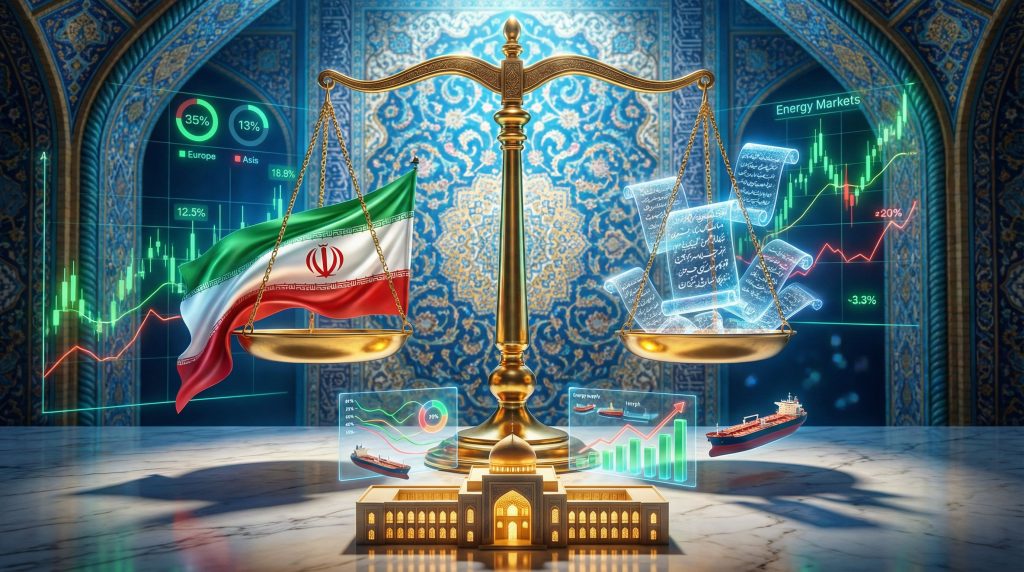
Iran's Constitutional Framework During Crisis Periods
The sudden emergence of reports regarding Khamenei killed in US-Israeli attack scenarios highlights critical vulnerabilities in Iran's governmental succession protocols during wartime. Iran's governmental structure operates through a dual executive system that distinguishes between supreme religious authority and administrative governance. The Supreme Leader holds ultimate authority over military forces, judicial appointments, and foreign policy decisions, while the President manages day-to-day governmental operations.
This constitutional arrangement, established following the 1979 Islamic Revolution, creates unique succession challenges during periods of national emergency. The Assembly of Experts, comprising 86 senior Islamic scholars, bears constitutional responsibility for selecting Supreme Leader successors. These clerics, elected every eight years through direct popular vote, must evaluate candidates based on religious scholarship and political leadership capabilities.
However, Iran's constitution provides limited guidance for succession protocols during active military conflict. Furthermore, the interconnected nature of modern supply chains means that political instability in one region can rapidly affect global pricing mechanisms, insurance markets, and shipping routes thousands of miles away.
Emergency Governance Protocols
Constitutional provisions for interim governance remain ambiguously defined in Iranian law. Unlike Western democratic systems with clear lines of presidential succession, Iran's theocratic framework lacks explicit protocols for managing power transitions during wartime. The Assembly of Experts theoretically must convene to select new leadership, but logistical challenges during active conflict could complicate this process significantly.
Historical precedent from the 1989 transition following Ayatollah Khomeini's death occurred during peacetime, providing limited applicable guidance for wartime scenarios. The Assembly completed that selection within days, but current geopolitical tensions could extend deliberation periods substantially.
Religious qualification requirements further constrain potential successors. Candidates must demonstrate advanced Islamic jurisprudence knowledge and possess recognised leadership experience within Iran's clerical hierarchy. These criteria effectively limit succession possibilities to a small number of senior religious figures.
When big ASX news breaks, our subscribers know first
Energy Market Response Mechanisms During Leadership Crises
Global energy markets demonstrate heightened sensitivity to Middle Eastern political instability due to regional concentration of petroleum reserves and critical transportation chokepoints. The Strait of Hormuz facilitates approximately 21% of globally traded petroleum, making Iranian political developments directly relevant to worldwide energy security.
Consequently, scenarios involving Khamenei killed in US-Israeli attack would trigger immediate market responses across multiple sectors. In addition, the tariffs impact on investment markets could compound these effects, creating cascading economic disruptions.
Immediate Market Response Patterns
Energy commodity markets typically respond to geopolitical uncertainty through several simultaneous mechanisms:
• Risk premium adjustments in crude oil futures contracts within hours of major political developments
• Insurance rate increases for vessels transiting potentially affected waterways
• Alternative routing activation through secondary shipping channels
• Strategic reserve mobilisation considerations by major consuming nations
Historical analysis of similar crises reveals that markets distinguish between scenarios with defined political outcomes versus open-ended uncertainty. Leadership transitions with unclear succession processes typically generate larger immediate price volatilities than gradual political changes with predictable outcomes.
Alternative Supply Route Analysis
| Route | Capacity | Additional Transit Time | Cost Impact |
|---|---|---|---|
| Suez Canal | 49 vessels daily | +10-14 days | +15-20% shipping costs |
| Cape of Good Hope | Unlimited | +18-21 days | +25-30% shipping costs |
| Pipeline alternatives | Limited capacity | Immediate | Variable pricing |
| Strategic reserves | 90-day coverage | Immediate | Government cost |
War risk insurance markets respond particularly rapidly to Middle Eastern political developments. Lloyd's of London and major maritime insurance syndicates maintain real-time adjustment protocols that can increase premium rates within hours of emerging geopolitical threats.
International Legal Framework for Leadership Targeting
International law governing targeted elimination of foreign state leaders operates within contested legal territory. The intersection of state sovereignty principles, self-defence doctrines, and humanitarian intervention creates interpretive ambiguities that different nations resolve through varying legal frameworks.
Moreover, understanding the US-China trade war strategies provides crucial context for how major powers navigate complex international conflicts whilst maintaining economic relationships.
Geneva Conventions Application
The four Geneva Conventions of 1949 and their Additional Protocols establish comprehensive rules for armed conflict conduct. However, these instruments do not explicitly address targeting of political leadership, creating significant interpretive gaps in contemporary international law.
Article 51 of the UN Charter permits unilateral military action in self-defence until the Security Council implements necessary measures. Legal scholars debate whether this provision extends to targeting foreign leaders specifically or applies only to military installations and armed forces.
Head of State Immunity Principles
Traditional international law recognises head of state immunity from foreign prosecution for official acts. However, this doctrine faces increasing challenges from emerging humanitarian intervention frameworks and responsibility-to-protect principles. The International Court of Justice's decision in Democratic Republic of the Congo v. Belgium (2002) recognised limited exceptions for genocide and crimes against humanity.
The International Criminal Court has issued arrest warrants for sitting heads of state, including former Sudanese President Omar al-Bashir and Libyan leader Muammar Gaddafi. However, these cases involved ICC-initiated proceedings rather than state-on-state military targeting scenarios.
State Responsibility Doctrine
International law holds states responsible for actions taken by their agents, including military forces operating under official authorisation. However, applying this principle to leadership targeting scenarios requires consideration of:
• Proportionality requirements under international humanitarian law
• Military necessity standards for target selection
• Civilian protection obligations in densely populated areas
• Command responsibility for subordinate actions
Recent reports suggest Israel has launched significant strikes on Iran, raising immediate questions about the legal framework governing such operations. These developments underscore the complexity of international law application during active conflicts.
Regional Security Architecture Responses
Gulf Cooperation Council member states maintain collective security arrangements designed to address regional threats through coordinated responses. The six-nation organisation, established in 1981, combines approximately $138 billion in annual defence spending across member countries.
Maritime Security Coordination
GCC naval forces operate through the Naval Cooperation and Protection Group, established during the 1980s to protect commercial shipping in Persian Gulf waters. This framework provides mechanisms for:
• Coordinated patrol schedules across member state territorial waters
• Intelligence sharing protocols regarding maritime threats
• Joint response procedures for attacks on commercial vessels
• Communication networks linking naval command centres
However, GCC collective security has operated inconsistently, with member states occasionally pursuing independent foreign policies that complicate unified regional responses. The organisation's response to previous crises, including the 2019 tanker attacks near the Strait of Hormuz, demonstrated both coordination capabilities and institutional limitations.
Airspace Management During Conflict
Regional airspace coordination during military crises requires rapid decision-making across multiple national authorities. Commercial aviation companies maintain contingency routing protocols that activate automatically when military operations begin in specific regions.
Major international airlines typically suspend operations in affected airspace within hours of military escalation. These decisions occur through individual company risk assessments rather than coordinated regional frameworks, creating potential inconsistencies in civilian aviation protection.
Furthermore, the OPEC oil production impact on regional security calculations remains significant, as member nations balance economic interests with security considerations during periods of heightened tension.
Energy Supply Chain Adaptations During Wartime
Modern energy supply chains demonstrate remarkable adaptability during geopolitical crises through multiple redundancy mechanisms and alternative routing capabilities. However, these adaptations carry significant economic costs and operational complexities.
Emergency Rerouting Mechanisms
When primary shipping routes become unavailable due to military conflict, energy companies activate alternative pathways that add substantial costs and transit times. The Suez Canal represents the primary alternative to Strait of Hormuz routing for Middle Eastern petroleum exports to European markets.
Capacity constraints limit Suez Canal throughput to approximately 49 vessel transits daily under optimal conditions. Rerouting significant portions of Persian Gulf petroleum exports through this alternative creates immediate bottlenecks and increased shipping costs.
Cape of Good Hope routing provides unlimited capacity but requires additional 5,000 nautical miles compared to Strait of Hormuz routes. This extension increases shipping costs by 25-30% and extends delivery schedules by approximately three weeks.
Insurance Market Mechanisms
War risk insurance markets operate through specialised mechanisms that respond rapidly to geopolitical developments. Major maritime insurance providers maintain seven-day cancellation clauses that allow immediate coverage withdrawal when conflicts begin.
Insurance premium adjustments typically occur through:
• Immediate rate increases for vessels entering conflict zones
• Coverage exclusions for specific geographic areas
• Government-backed insurance schemes for strategic commodity flows
• Force majeure activations under commercial contracts
These mechanisms can effectively halt commercial shipping in affected regions within days of major military escalations, creating immediate supply chain disruptions regardless of actual physical damage to infrastructure.
Nuclear Agreement Continuity During Transitions
International nuclear oversight frameworks face significant challenges during political transitions in nations with advanced nuclear programs. The Joint Comprehensive Plan of Action (JCPOA) and related agreements depend on governmental continuity that political crises can disrupt.
IAEA Monitoring Protocols
The International Atomic Energy Agency maintains continuous monitoring systems at nuclear facilities regardless of political developments in member nations. However, governmental instability can affect:
• Inspector access permissions to sensitive facilities
• Technical cooperation between IAEA staff and national authorities
• Information sharing protocols regarding nuclear activities
• Emergency response coordination during facility incidents
State continuity doctrine in international law suggests that treaty obligations persist through governmental transitions. However, practical implementation of nuclear agreements requires active cooperation from national authorities that political instability can compromise.
Non-Proliferation Framework Implications
Regional nuclear non-proliferation efforts face particular challenges during Middle Eastern political transitions. The absence of a Middle East Nuclear-Weapon-Free Zone reflects underlying political tensions that leadership changes could either alleviate or exacerbate.
Technology transfer controls under export control regimes require continuous enforcement through national licensing authorities. Political transitions can create temporary enforcement gaps that proliferation networks might attempt to exploit.
In addition, current developments in Iran highlight the urgent need for robust international oversight mechanisms during periods of political instability.
The next major ASX story will hit our subscribers first
Economic Sanctions Architecture During Regime Change
Existing sanctions frameworks face complex legal and practical challenges when target nation governments undergo sudden political transitions. Treasury Department procedures and European Union sanctions regimes contain limited guidance for adapting sanctions targeting during governmental instability.
Sanctions Target Modifications
Current sanctions architecture typically targets specific individuals, entities, and economic sectors rather than abstract governmental functions. Leadership changes require sanctions authorities to:
• Update individual targeting lists to reflect new officeholders
• Assess entity control structures under new political arrangements
• Modify sectoral restrictions based on changing governmental priorities
• Coordinate international sanctions responses among allied nations
Banking sector compliance requirements become particularly complex during political transitions as financial institutions must rapidly assess whether new governmental figures fall under existing sanctions designations.
Humanitarian Exemption Processing
Medical supplies, food, and essential commodity exemptions require active processing by sanctions authorities. Political instability can disrupt these administrative functions, potentially affecting civilian populations disproportionately.
Commercial contract enforcement under changed political circumstances creates significant legal uncertainty. International arbitration mechanisms provide some protection for commercial parties, but political risk insurance often excludes coverage for governmental overthrow scenarios.
Long-Term Regional Stability Implications
Political transitions in major Middle Eastern nations typically generate cascading effects across regional proxy networks, economic relationships, and security arrangements. These broader implications often exceed immediate energy market impacts in their long-term significance.
Scenarios involving Khamenei killed in US-Israeli attack would fundamentally reshape regional dynamics, affecting everything from proxy relationships to economic partnerships. Consequently, understanding energy transition dynamics becomes crucial for predicting long-term regional stability patterns.
Proxy Network Command Structures
Iranian political instability could significantly affect regional proxy organisations including Hezbollah, various Iraqi militias, and Houthi forces in Yemen. These groups operate through:
• Financial support networks channeled through Iranian institutions
• Weapons supply chains coordinated by Iranian military organisations
• Training programmes conducted by Iranian Revolutionary Guard Corps personnel
• Strategic coordination directed from Iranian political leadership
Command structure disruptions during political transitions could either decentralise proxy operations or consolidate control under new leadership arrangements. Historical precedents suggest that well-established proxy relationships demonstrate considerable resilience during sponsor nation political changes.
Democratic Transition Possibilities
International frameworks for supporting democratic transitions include election monitoring protocols, constitutional reform assistance, and civil society protection mechanisms. However, applying these frameworks in Middle Eastern contexts requires consideration of:
• Regional security constraints that limit international observer access
• Religious authority integration within democratic governance structures
• Minority rights protection during majoritarian political transitions
• Women's rights preservation under changing governmental arrangements
The European Union and United Nations maintain specialised programmes for democratic transition support, but their effectiveness depends on receptive political environments that military conflicts may not provide.
Energy Market Structural Evolution
Long-term energy security planning increasingly incorporates political risk assessments that drive structural market changes beyond immediate crisis responses. These adaptations include diversification mandates, strategic stockpile requirements, and accelerated renewable energy deployment.
Supply Diversification Strategies
Major energy importing nations have implemented systematic diversification policies designed to reduce dependence on specific suppliers or transportation routes. These strategies include:
• Maximum supplier concentration limits typically capping single-nation imports at 20-30% of total consumption
• Alternative infrastructure development including additional pipeline networks and LNG terminals
• Long-term contract modifications to include supply source flexibility provisions
• Strategic partnership frameworks with multiple producing nations
Renewable energy acceleration policies increasingly incorporate energy security considerations alongside climate objectives. Political instability in fossil fuel-producing regions provides additional justification for renewable energy investment that energy security concerns reinforce.
Moreover, Saudi Arabia exploration licenses represent crucial developments in regional energy security planning, particularly given potential disruptions in neighbouring territories.
International Law Evolution Through State Practice
Contemporary geopolitical events contribute to evolving international legal doctrines through state practice and opinio juris. Key areas of potential legal development include:
• Targeted killing doctrine refinement based on state responses to leadership elimination scenarios
• Cyber warfare regulations for hybrid conflict operations combining physical and digital attacks
• Space-based intelligence frameworks governing satellite surveillance for military targeting
• Climate security integration within traditional international security governance
These evolutionary processes typically require sustained state practice over multiple years before crystallising into customary international law. However, major geopolitical events can accelerate legal development by creating precedents that influence future state behaviour.
Reports of Khamenei killed in US-Israeli attack scenarios would represent a significant precedent in international law regarding targeted elimination of foreign leaders. Such developments could fundamentally alter state practice regarding acceptable targeting during armed conflicts.
Disclaimer: This analysis discusses hypothetical scenarios for educational and analytical purposes. Any resemblance to current events is purely speculative. Readers should consult verified news sources for factual information about ongoing geopolitical developments. Investment and policy decisions should not be based solely on speculative scenarios presented in this analysis.
Regional energy security frameworks continue evolving as nations adapt to changing geopolitical realities and technological capabilities. Understanding these adaptation mechanisms provides essential context for evaluating both immediate market responses and long-term structural changes in global energy systems.
Looking to Capitalise on Geopolitical Market Volatility?
During periods of international crisis and energy market disruption, Discovery Alert's proprietary Discovery IQ model provides crucial insights into mining and mineral discovery opportunities that often benefit from global instability and commodity price spikes. Start your 14-day free trial today to receive real-time alerts on significant ASX mineral discoveries and position yourself ahead of market movements driven by geopolitical developments.