
August 14, 2026
Understanding Iran's Shadow Fleet Operations Through Market Intelligence
Global energy markets face unprecedented challenges as sophisticated state actors develop increasingly complex methods to circumvent international sanctions. The evolution of covert oil trade networks has fundamentally altered how energy security analysts assess supply chain risks and market stability. These underground operations demonstrate the limitations of traditional enforcement mechanisms while revealing critical vulnerabilities in the international regulatory framework.
Iran's covert oil trade represents one of the most sophisticated sanctions evasion networks in modern history. Through careful analysis of maritime tracking data, financial flows, and corporate structures, intelligence analysts have identified a complex ecosystem that generates billions in revenue while operating largely beyond the reach of conventional enforcement tools.
When big ASX news breaks, our subscribers know first
The Architecture of Maritime Sanctions Evasion
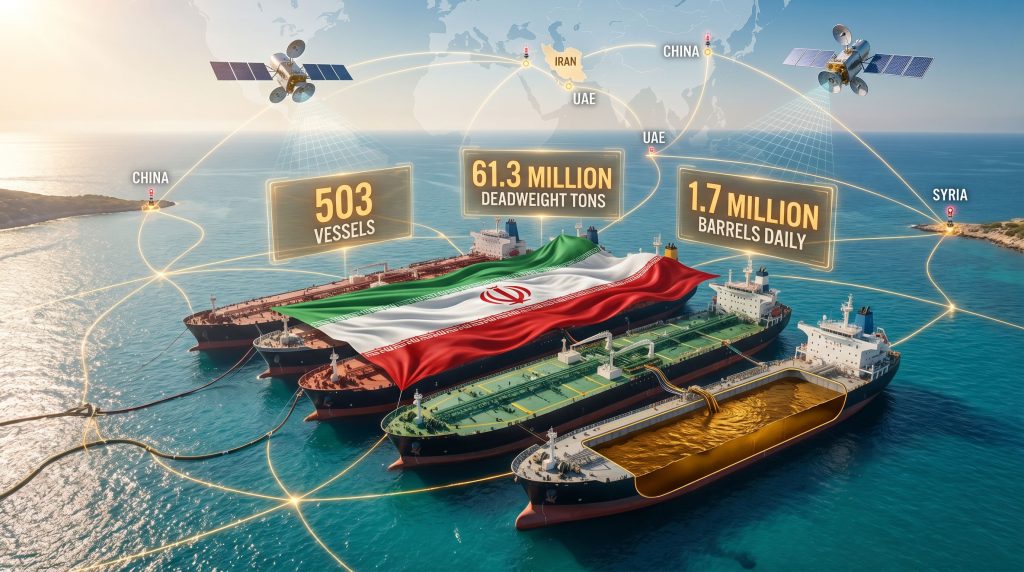
Iran's shadow fleet operations have evolved into a highly sophisticated network comprising approximately 503 vessels with a combined capacity of 61.3 million deadweight tons. This massive maritime infrastructure operates through a three-tier system designed to exploit regulatory gaps in international maritime law.
Current Fleet Composition and Sanctions Status:
- Total vessel count: 503 ships
- Combined deadweight capacity: 61.3 million tons
- Vessels under U.S. sanctions: Approximately one-third
- Daily smuggling operations: 1.7 million barrels
The operational framework involves the National Iranian Oil Company (NIOC) coordinating with its Swiss subsidiary Naftiran Intertrade Company (NICO) and the Islamic Revolutionary Guard Corps (IRGC) Quds Force. This institutional arrangement allows Iran to maintain operational control while distributing regulatory risk across multiple jurisdictions and corporate entities.
Furthermore, the IRGC received approximately $12 billion in 2022 from irregular trade activities, demonstrating how sanctions have inadvertently strengthened military control over energy revenues rather than weakening Iran's strategic capabilities. This development has significant implications for US‑China trade strategies as nations reassess their sanctions approaches.
Ship-to-Ship Transfer Networks
The most sophisticated aspect of Iran's covert operations involves ship-to-ship transfers in international waters. These operations exploit jurisdictional gaps that make real-time enforcement extremely difficult for regulatory authorities.
Key operational characteristics include:
- Frequent flag state changes to obscure ownership
- Systematic alteration of vessel identification markers
- Advanced cargo documentation falsification
- Strategic use of international waters for transfers
China's oil imports from Malaysia have increased twelve-fold since pre-sanctions levels, reaching 1.53 million barrels per day in July 2024, while direct Iranian imports are officially reported as zero. This statistical anomaly reveals how Iran's covert oil trade exploits regulatory blind spots in cargo documentation and origin certification.
Financial Engineering and Revenue Streams
Iran's revenue generation operates through an extensive network of 115+ companies spanning Dubai, Russia, London, and Geneva. This corporate ecosystem facilitates approximately $53-54 billion in annual revenue through sophisticated financial engineering mechanisms.
| Destination | Daily Volume (barrels) | Product Type | Strategic Importance |
|---|---|---|---|
| China | 1.5M+ | Crude/Condensate/LPG | Primary revenue source |
| UAE | 200,000 | Mazut | Secondary market access |
| Syria | 70,000 | Crude | Strategic alliance support |
The financial architecture includes parallel systems holding $53 billion USD and €17 billion in foreign accounts as of 2023. These holdings demonstrate Iran's ability to accumulate significant foreign currency reserves despite comprehensive international sanctions.
Shell Company Networks and Financial Flows
The complexity of Iran's financial operations extends beyond simple shell companies to sophisticated trade-based money laundering schemes. These mechanisms involve:
- Over-invoicing and under-invoicing of legitimate trade transactions
- Hawala networks for informal value transfer
- Front company structures in multiple jurisdictions
- Insurance and banking intermediaries operating unknowingly
The involvement of unwitting global financial institutions suggests significant gaps in current due diligence requirements and transaction monitoring systems. Additionally, the success of these networks demonstrates patterns similar to those observed in oil prices easing markets where regulatory uncertainty creates arbitrage opportunities.
Policy Enforcement Challenges and Regulatory Gaps
Current sanctions enforcement relies heavily on post-transaction penalties rather than real-time interdiction capabilities. This reactive approach allows approximately 300+ vessels to operate undetected for extended periods, undermining the deterrent effect of sanctions.
Technology-Enhanced Surveillance Requirements
Advanced satellite tracking systems and AI-powered vessel identification could significantly improve enforcement effectiveness. However, implementing comprehensive surveillance requires:
- Real-time AIS monitoring across global shipping lanes
- Machine learning algorithms for pattern recognition
- Cross-jurisdictional data sharing protocols
- Financial transaction correlation capabilities
The technical complexity of implementing these systems highlights the need for enhanced international coordination and resource allocation. Moreover, these surveillance improvements align with broader data‑driven operations trends transforming global industries.
Secondary Sanctions Expansion
Current regulatory frameworks struggle to address the involvement of intermediary financial institutions and shipping companies. Enhanced secondary sanctions could target:
- Insurance providers covering sanctioned vessels
- Port authorities facilitating suspicious transfers
- Financial institutions processing related payments
- Flag states failing to monitor vessel activities
Global Energy Security Implications
Iran's ability to maintain 1.7 million barrels per day of covert exports represents approximately 1.7% of global oil production. This volume creates significant market distortions that affect pricing mechanisms and strategic reserve calculations.
Supply Chain Vulnerability Assessment
The persistence of Iran's covert oil trade demonstrates fundamental limitations in using sanctions as energy security tools. Key vulnerabilities include:
- Price volatility from uncertain supply estimates
- Market manipulation through hidden inventory
- Strategic planning challenges for emergency reserves
- Regional stability risks from proxy funding
Revenue streams from covert oil sales directly fund regional proxy networks, creating a feedback loop where sanctions evasion enables geopolitical instability that further disrupts global energy markets. This pattern reflects broader concerns about the Trump tariffs impact on global trade stability.
Economic Impact on Allied Nations
The effectiveness of Iran's shadow fleet operations has broader implications for allied energy security strategies. Countries dependent on Middle Eastern oil must account for:
- Hidden supply fluctuations affecting price forecasts
- Alternative supply route development requirements
- Strategic reserve adequacy in crisis scenarios
- Regional conflict escalation risks
Technological Evolution in Sanctions Evasion
Iran's covert operations continue evolving in response to enforcement efforts. Recent technological developments include:
Advanced Maritime Deception
- AIS spoofing to falsify vessel locations
- Transponder manipulation for identity concealment
- Cargo documentation fraud using sophisticated forgeries
- Digital payment systems to bypass banking networks
Furthermore, Iran's sophisticated evasion networks have pioneered techniques that are now being studied by other state actors seeking to circumvent international sanctions. These developments represent a significant evolution in state-sponsored sanctions evasion capabilities.
Corporate Structure Sophistication
The complexity of Iran's corporate networks has increased significantly, involving:
- Multi-layered ownership structures across jurisdictions
- Rapid entity dissolution and reformation cycles
- Professional service provider networks
- Legitimate business integration for cover
However, detailed investigations by major outlets have revealed the human cost and operational risks faced by those involved in these networks, highlighting both their persistence and vulnerability.
The next major ASX story will hit our subscribers first
Future Regulatory Framework Requirements
Addressing Iran's covert oil trade requires comprehensive regulatory reforms that close existing enforcement gaps. Priority areas include:
Enhanced Maritime Regulations
International maritime law requires updates to address modern sanctions evasion techniques. Key reforms should include:
- Mandatory real-time tracking for all commercial vessels
- Enhanced cargo documentation standards
- Flag state responsibility enforcement mechanisms
- Port inspection protocols for suspicious vessels
Financial System Improvements
Banking regulations must evolve to detect sophisticated money laundering schemes:
- Advanced transaction monitoring algorithms
- Enhanced due diligence requirements for high-risk transactions
- Real-time suspicious activity reporting systems
- Cross-border information sharing protocols
International Coordination Mechanisms
Effective enforcement requires unprecedented levels of international cooperation:
- Unified sanctions databases accessible to all enforcement agencies
- Joint maritime surveillance operations
- Coordinated financial intelligence sharing
- Standardized penalty structures across jurisdictions
Investment and Market Psychology Factors
Iran's covert oil trade significantly impacts energy market psychology and investment decisions. Traders and investors must consider:
Market Uncertainty Premiums
The existence of hidden Iranian supply creates persistent uncertainty that affects:
- Risk premium calculations in oil pricing
- Volatility expectations for energy investments
- Hedge fund strategies for geopolitical risk
- Long-term supply contract negotiations
Enforcement Risk Assessment
Investment decisions increasingly require sophisticated analysis of sanctions enforcement trends and their market impacts. This assessment process parallels the strategic considerations evident in industry evolution trends across multiple sectors.
Long-Term Strategic Implications
Iran's successful development of a comprehensive sanctions evasion network has demonstrated that determined state actors can maintain substantial economic activity despite international restrictions. This reality requires fundamental reassessment of sanctions as foreign policy tools.
The $53-54 billion in annual revenue generated through shadow fleet operations proves that sophisticated networks can exploit regulatory gaps to circumvent even comprehensive international sanctions. Future policy responses must acknowledge these limitations while developing more effective enforcement mechanisms.
Organizations like United Against Nuclear Iran (UANI) have demonstrated the effectiveness of public-private partnerships in tracking sanctions violations. Scaling these monitoring capabilities while enhancing international coordination could significantly improve enforcement effectiveness.
The Iranian case serves as a critical test for the future viability of economic sanctions as diplomatic tools. Without substantial improvements in enforcement capabilities and international coordination, sanctions may increasingly serve as policy theatre rather than effective deterrence mechanisms.
This analysis is based on publicly available information and should not be considered investment advice. Energy market investments carry significant risks, and readers should conduct their own research before making investment decisions.
Ready to Invest in the Next Major Mineral Discovery?
Discovery Alert instantly alerts investors to significant ASX mineral discoveries using its proprietary Discovery IQ model, turning complex mineral data into actionable insights. Begin your 14-day free trial today to position yourself ahead of the market and gain the strategic advantage that sophisticated investors demand.