July 15, 2026
The Quota Architecture That Shapes Every Barrel Iraq Pumps
Inside every OPEC ministerial meeting sits an invisible ledger — a set of production ceilings that determine how much each member state can legally contribute to global supply. For most members, these numbers reflect a reasonable approximation of their operational reality. For Iraq, the question of a fair share within OPEC represents something fundamentally different: a production ceiling shaped not by the country's geological potential or infrastructure capability, but by the cumulative weight of sanctions, wars, and occupation-era disruption stretching across four decades.
Understanding why Iraq's fair share within OPEC has become such a contested issue requires stepping back from the immediate diplomatic news cycle and examining the underlying governance architecture that distributes production entitlements across one of the world's most consequential energy alliances.
When big ASX news breaks, our subscribers know first
Why Iraq's Quota Sits at the Centre of an OPEC Governance Debate
Iraq joined OPEC at its founding in 1960, making it one of five original members alongside Iran, Kuwait, Saudi Arabia, and Venezuela. That founding status carries symbolic weight, but it has not translated into a quota that reflects the country's proven resource base. Iraq holds approximately 145 billion barrels of proven crude oil reserves, placing it fifth globally — yet its production ceiling has historically lagged well behind peers with comparable or smaller endowments.
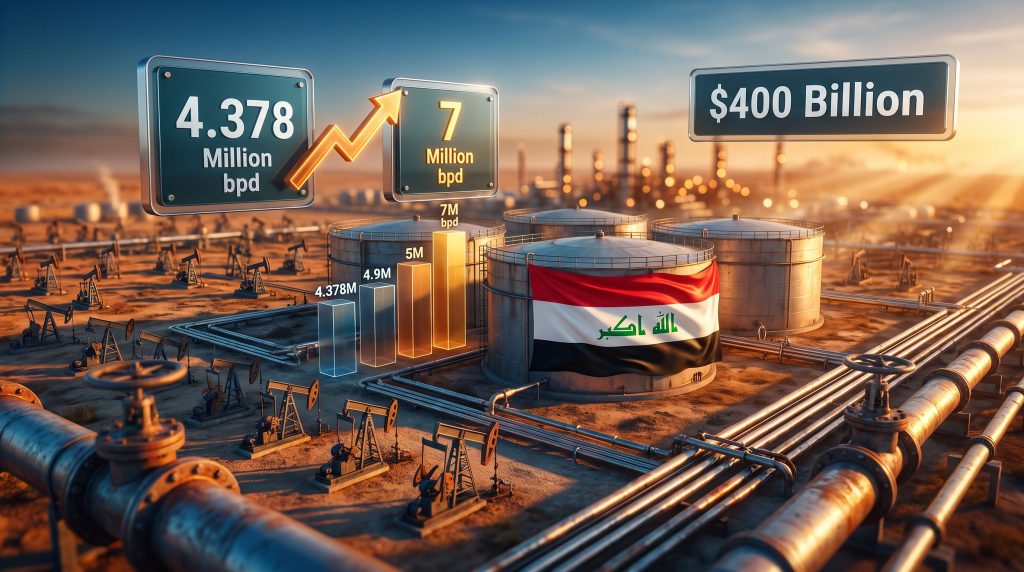
The International Energy Agency estimates Iraq's near-term production capacity at roughly 4.9 million barrels per day (bpd), achievable within 90 days under current infrastructure conditions. Its official OPEC ceiling as of mid-2026 sits at approximately 4.378 million bpd — a gap of more than 500,000 bpd that Baghdad argues represents a structural inequity rather than a prudent capacity constraint.
The Hidden Cost of Conflict in Quota Calculations
What makes Iraq's situation analytically distinct from other OPEC members pushing for higher ceilings is the multi-layered nature of the suppression applied to its production baseline. The quota allocation methodology OPEC has historically employed weights installed capacity, historical output levels, and reserve size. It does not formally account for:
- Production volumes that were systematically reduced by international sanctions regimes over multiple decades
- Output lost to infrastructure destruction during the Gulf War, the 2003 invasion, and subsequent internal conflict
- Upstream investment foregone during extended periods of political instability that deterred international oil company participation
- The compounding infrastructure deficit created by ISIS-era destruction, which the Iraqi government estimates inflicted damages exceeding $400 billion on the country's housing, utilities, and energy systems
Each of these factors operated independently to suppress Iraq's output at different historical moments, yet their combined effect anchored the country's production baseline at an artificially depressed level. Furthermore, the quota that emerged from that baseline has persisted, even as Iraq's infrastructure and security conditions have gradually stabilised.
Iraq's Three-Pillar Case for Quota Reform
Prime Minister Ali al-Zaidi articulated the core of Baghdad's position during a visit to Washington in July 2026, where he sought major U.S. investment across Iraq's oil, gas, and power sectors. His visit followed a period in which the Iran war significantly reduced Iraqi crude output and compressed state finances. His argument to OPEC rests on three interconnected rationales:
1. The Historical Suppression Principle
Iraq's current quota was effectively calibrated to an output baseline that reflects decades of externally imposed constraint rather than sovereign production decisions. The country's entitlement, Baghdad argues, should be benchmarked against its resource endowment rather than its conflict-era production history.
2. The Reconstruction Financing Imperative
With infrastructure damage costs estimated above $400 billion and significant numbers of displaced Iraqis still living in temporary conditions, hydrocarbon revenues represent the primary fiscal mechanism available to the government for rebuilding. A constrained quota directly limits the revenue available for reconstruction without requiring Iraq to accumulate unsustainable sovereign debt.
3. Reserve-Proportionate Entitlement
Iraq's status as the holder of the world's fifth-largest proven crude reserves creates a logical case that its production ceiling should bear a closer relationship to its resource magnitude, particularly when measured against OPEC members with smaller endowments operating at or near their respective ceilings. OPEC's market influence over global pricing makes this allocation question especially consequential.
| Metric | Figure |
|---|---|
| Current OPEC Quota (July 2026) | ~4.378 million bpd |
| IEA-Estimated Near-Term Capacity | ~4.9 million bpd |
| Iraq's Medium-Term Production Target | ~5 million bpd |
| Iraq's Long-Term Aspirational Ceiling | ~7 million bpd |
| Estimated Conflict-Related Infrastructure Damage | >$400 billion |
| OPEC Compliance Status | Largest overproducer in the group |
The Compliance Paradox Undermining Iraq's Reform Case
The most analytically uncomfortable dimension of Iraq's quota push is that the country has simultaneously been OPEC's most persistent overproducer. Consistently pumping crude above its allocated ceiling places Baghdad in a contradictory negotiating position: it is arguing for a higher quota while demonstrating, through its own production behaviour, that it does not adhere to the ceiling already assigned to it.
"This compliance paradox matters for OPEC governance in a specific way. Granting Iraq a higher quota could be interpreted by other member states as the alliance rewarding non-compliance, creating a perverse incentive structure that undermines the credibility of ceiling enforcement across the membership."
However, there is a second reading of Iraq's overproduction record that strengthens rather than weakens its reform case. Persistent overruns demonstrate that the country's infrastructure can already support output materially above its official ceiling — providing technical validation for the argument that the ceiling itself is set too low. The overproduction is not aspirational; it is operational.
This distinction matters for how OPEC's governing body frames any quota restructuring discussion. Consequently, the question shifts from whether Iraq can produce more to whether the alliance is willing to formally recognise output that is already occurring. OPEC production decisions of this nature carry significant implications for the entire membership.
Structural Reform Pathways Analysts Have Identified
Several governance mechanisms have been proposed within energy policy discussions as potential frameworks for resolving the Iraq dispute without destabilising OPEC's broader production management architecture:
- Phased Quota Exemptions: A time-limited structure permitting Iraq to produce above its standard ceiling during a defined reconstruction financing window, with automatic reversion once agreed fiscal benchmarks are achieved. This approach contains the supply impact while addressing Baghdad's immediate revenue requirements.
- Reserve-Weighted Allocation Formula: A revised quota methodology incorporating proven reserve size as a weighted variable alongside installed capacity. This would systematically recalibrate entitlements in favour of resource-rich but historically constrained producers, with implications extending well beyond Iraq.
- Conflict-Adjustment Provisions: A formal governance mechanism enabling member states to apply for quota recalibration based on documented periods of conflict-driven output suppression, creating a replicable institutional precedent rather than a one-off exception.
A notable precedent exists in how OPEC handled Iran and Venezuela during periods of sanctions-related production constraints. Both countries effectively operated under de facto quota exemptions, though these arrangements were reactive to externally imposed circumstances rather than proactively negotiated. Iraq's situation is structurally different in that it is seeking a formal, affirmative quota increase negotiated on its own terms — a distinction with significant implications for OPEC's institutional framework and the precedent it would establish.
As Reuters reports, Prime Minister al-Zaidi has been explicit that Iraq needs a fair share within the organisation, framing the issue in terms of equity rather than simply ambition.
The U.S. Investment Dimension and Its Geopolitical Calculus
Prime Minister al-Zaidi's Washington engagement adds a dimension to the quota debate that extends well beyond OPEC's internal governance. Attracting American capital into Iraq's upstream and midstream energy infrastructure serves two simultaneous strategic functions.
First, it provides the financing pathway for the capacity expansion that would give Iraq's production targets technical credibility. Reaching the 5 million bpd medium-term target and ultimately the 7 million bpd long-term aspiration requires sustained investment in exploration, field development, pipeline infrastructure, and gas flaring reduction.
Second, deepening energy ties with Washington shifts Iraq's diplomatic positioning within the broader Middle East energy architecture. In this context, understanding the wider geopolitical trade tensions reshaping energy flows globally adds important context to Iraq's strategic manoeuvring. OPEC negotiations have historically operated in a space where Saudi Arabia's influence has been dominant, partly reflecting Riyadh's relationships with major Western economies.
The next major ASX story will hit our subscribers first
What a Higher Iraqi Quota Would Mean for Global Oil Markets
The supply implications of a successful Iraqi quota renegotiation are material, and they scale considerably depending on the level at which any new ceiling is set. The interplay between oil prices and geopolitics makes this particularly complex to model with certainty.
| Iraq Production Scenario | Incremental Supply vs. Current Quota | Estimated Market Impact |
|---|---|---|
| Quota raised to 4.9 million bpd | +522,000 bpd | Moderate downward price pressure |
| Quota raised to 5 million bpd | +622,000 bpd | Meaningful supply surplus risk |
| Long-term target of 7 million bpd | +2.622 million bpd | Significant structural market rebalancing |
The near-term scenarios are manageable within existing market dynamics, particularly if phased over an extended timeline. WTI and Brent futures would likely reflect immediate adjustments in response to any confirmed quota restructuring, as traders recalibrate supply expectations accordingly.
A less-discussed risk is the institutional cascade effect. A successful Iraqi quota renegotiation on historical suppression grounds could encourage similar claims from other member states with documented conflict or sanctions histories. Libya, which has operated under its own informal output flexibility arrangements, and potentially others with comparable historical grievances, could use an Iraq precedent to advance their own restructuring demands.
According to OPEC's official member data, Iraq's proven reserves and production history place it firmly among the organisation's most strategically significant members, further reinforcing Baghdad's case for a quota that reflects this standing.
Reading the OPEC Exit Threat Correctly
In June 2026, Iraq's oil ministry raised the possibility of withdrawing from OPEC if quota concerns went unaddressed. This statement was subsequently walked back by government officials clarifying that exit is not Baghdad's official policy position. Reading this sequence through a governance lens reveals its actual function.
Iraq's oil sector depends on international investment frameworks, export infrastructure relationships, and pricing reference mechanisms that are all intertwined with OPEC membership. An exit would remove Baghdad from collective production management discussions at precisely the moment it needs OPEC's institutional legitimacy to attract the international capital required for its reconstruction and capacity expansion agenda.
The withdrawal signal is therefore most accurately characterised as regulatory brinkmanship — a deliberate pressure tactic designed to force structural discussions that OPEC's consensus-based governance model might otherwise defer indefinitely. It is a negotiating instrument, not a genuine policy alternative.
Frequently Asked Questions: Iraq's OPEC Quota Dispute
What is Iraq's current OPEC production quota?
Iraq's official OPEC production ceiling stands at approximately 4.378 million bpd as of July 2026. The country has consistently exceeded this level, making it the alliance's largest overproducer.
Why does Iraq believe it deserves a higher quota?
Baghdad's position centres on three arguments: that its quota baseline was anchored to conflict-suppressed output levels rather than genuine capacity, that reconstruction financing requirements demand higher revenue streams, and that its reserve ranking among OPEC members is not reflected in its production entitlement.
What are Iraq's production targets?
Iraq's near-term target is approximately 5 million bpd, consistent with IEA capacity estimates. Its long-term aspiration is 7 million bpd, requiring substantial upstream investment and infrastructure development over an extended period.
Is Iraq genuinely considering leaving OPEC?
The Iraqi government clarified that withdrawal is not its official policy. The oil ministry's June 2026 statement is widely understood as a negotiating pressure tactic rather than a credible exit intention.
How would a higher quota affect oil prices?
A moderate increase to 4.9 million bpd would introduce over 500,000 bpd of additional supply, creating downward price pressure. The long-term 7 million bpd scenario would represent a structurally significant supply addition requiring considerable market rebalancing over time.
Disclaimer: This article contains forward-looking analysis, supply scenario modelling, and commentary on geopolitical and policy developments that involve inherent uncertainty. Nothing in this article constitutes investment advice. Readers should conduct independent research before making any financial or investment decisions related to energy markets or the companies operating within them.
Want to Stay Ahead of the Next Major Resource Discovery?
Discovery Alert's proprietary Discovery IQ model scans ASX announcements in real time, transforming complex mineral data into actionable insights for traders and investors across all experience levels — explore the historic returns major discoveries have generated and begin your 14-day free trial to secure a market-leading edge.