July 13, 2026
The Strait of Hormuz as a Strategic Fault Line: How Export Chokepoints Reshape Energy Diplomacy
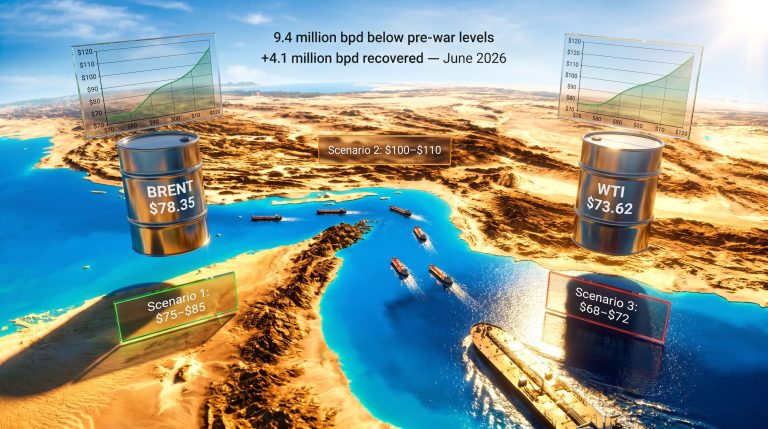
Every few decades, a single geographic bottleneck reminds the world how fragile the global energy system truly is. The Strait of Hormuz, a narrow waterway separating Iran from the Arabian Peninsula, has long been acknowledged as the most consequential oil transit corridor on earth. Roughly 20% of the world's traded oil passes through it under normal conditions. When that corridor becomes contested, the economic consequences ripple outward with remarkable speed, and governments that have long delayed difficult diplomatic decisions suddenly find themselves under acute pressure to act.
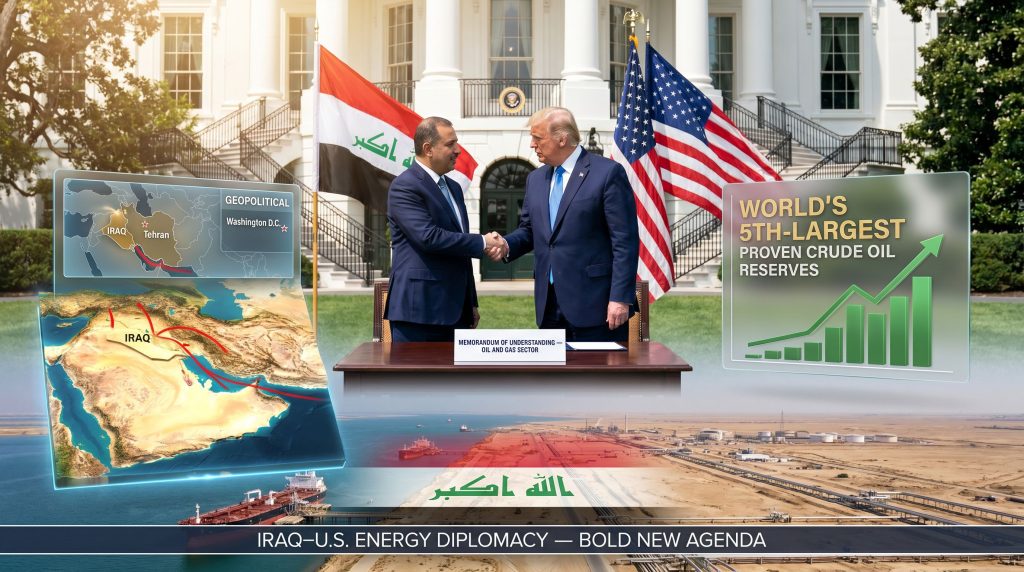
That pressure is now driving one of the most consequential foreign policy pivots in Iraq's recent history: the Iraqi prime minister Washington visit oil and gas deals carry implications far beyond bilateral trade agreements, reshaping how Baghdad positions itself within a rapidly fracturing Gulf energy order.
When big ASX news breaks, our subscribers know first
Iraq's Impossible Balancing Act: Tehran, Washington, and the Cost of Sitting Between Them
Understanding why this visit matters requires appreciating the structural bind Iraq has occupied for two decades. Baghdad depends on Iran for electricity imports, religious tourism revenue, and the political loyalty of powerful armed factions operating within its borders. At the same time, Iraq's hydrocarbon revenues flow through international markets denominated in dollars, its largest oil customers are in Asia and Europe, and its security architecture was built with substantial American involvement following 2003.
These two dependencies coexisted in an uneasy equilibrium for years. The active military conflict between the United States and Iran in 2026 has collapsed that equilibrium entirely, forcing Baghdad into a series of decisions it can no longer defer.
Ali al-Zaidi Steps Into the Role With an Unusual Mandate
Nominated to the premiership in April 2026, Prime Minister Ali al-Zaidi enters office at a moment when Iraq's traditional hedging strategy has become economically untenable. Shortly after his nomination, U.S. President Donald Trump extended congratulations and expressed his intention to pursue closer coordination between Baghdad and Washington. That early diplomatic signal set the tone for what would follow.
The decision to make Washington the destination for his first overseas trip as head of government is not incidental. It reflects a deliberate calculation about where Iraq's most pressing economic vulnerabilities lie and which relationship is most capable of addressing them in the near term. The delegation accompanying al-Zaidi is notably high-level, encompassing officials from the oil ministry, armed forces leadership, and trade portfolios, signalling that the agenda extends well beyond ceremonial diplomacy.
What Oil and Gas Deals Are Expected From the Iraqi Prime Minister's Washington Visit?
Memorandums of Understanding: The Architecture of Early-Stage Deals
The agreements expected to emerge from the Washington visit centre on memorandums of understanding across the oil and natural gas sectors. Iraq's government spokesperson Haider al-Aboudi confirmed that the planned agreements are designed to bring U.S. companies into Iraq's upstream energy sector to accelerate production capacity growth.
MOUs are deliberately chosen as the instrument at this stage rather than binding contracts, for several interconnected reasons:
- They allow commercial discussions to proceed without requiring immediate resolution of complex regulatory, fiscal, or security preconditions.
- They signal political intent to investors and markets without locking either government into specific financial commitments.
- They create a foundation for subsequent technical negotiations that can proceed at a pace determined by on-the-ground conditions rather than diplomatic calendars.
This architecture is consistent with how international energy partnerships typically develop in post-conflict or high-uncertainty environments, where the sequencing of trust-building matters as much as the commercial terms themselves.
Iraq's Production Gap: The Core Commercial Opportunity
Iraq holds the fifth-largest proven crude oil reserves in the world, estimated at roughly 145 billion barrels. Despite this geological endowment, sustained chronic underinvestment, deteriorating field infrastructure, and security instability have kept actual production well below theoretical capacity. The delta between what Iraq holds underground and what it can reliably extract and export represents one of the most significant underdeveloped upstream opportunities available to international oil companies anywhere in the world.
Furthermore, current crude oil prices remain volatile amid regional instability, adding urgency to Baghdad's push for expanded production partnerships.
| Dimension | Current Status | Strategic Goal |
|---|---|---|
| Proven crude reserves | ~145 billion barrels (5th globally) | Unlock through capital and technical partnership |
| Production capacity | Constrained by ageing infrastructure | Increase through U.S. company participation |
| Export routing | Heavily reliant on Strait of Hormuz | Diversify via alternative export corridors |
| U.S. company involvement | Limited prior to 2026 visit | Expanded through new MOU framework |
| Armed forces capability | Under strategic review | Strengthened through bilateral security cooperation |
Key technical barriers holding Iraq back include ageing surface processing facilities at major southern fields, insufficient water injection capacity required to maintain reservoir pressure in mature formations, and gas flaring constraints that limit associated gas monetisation. These are precisely the areas where U.S. operators with experience in enhanced oil recovery and field redevelopment would add the most immediate value.
Alternative Export Routes: The Hormuz Exposure Problem
Alongside production capacity, the Washington agenda includes a specific focus on developing alternative export pathways. Al-Aboudi's statements confirmed that creating alternative export outlets to reduce Iraq's vulnerability to Strait of Hormuz disruptions forms a central pillar of the planned agreements.
The urgency here is acute. Hormuz vessel movements have slowed to multi-week lows as renewed U.S. and Iranian military exchanges raise commercial shipping risk assessments. For Iraq, whose government budget is almost entirely funded by hydrocarbon export revenues, a prolonged reduction in Hormuz throughput is not merely an inconvenience but a fiscal emergency. Consequently, the oil price rally triggered by these disruptions has done little to offset the volume losses Iraq is experiencing.
Potential alternative export routes under consideration include:
- Overland pipeline corridors transiting through Turkey to Mediterranean terminals, building on existing infrastructure that has operated intermittently.
- Saudi Arabia transit arrangements, routing Iraqi crude through existing Saudi pipeline capacity to Red Sea export terminals.
- Jordan corridor development, a less mature option but geographically viable for connecting southern Iraqi fields to Aqaba port facilities.
Each pathway carries distinct feasibility timelines, political prerequisites, and capacity constraints. None offers a rapid replacement for Hormuz volumes, but the strategic value of demonstrating routing diversification to investors and rating agencies is significant even before full operational capacity is achieved.
The Hormuz Crisis: Fiscal Shock and Forced Realignment
How the Closure Is Hitting Iraq's Government Finances
Iraq's fiscal structure leaves almost no buffer against prolonged export disruptions. Hydrocarbon revenues consistently account for more than 90% of government income, meaning that any sustained reduction in export volumes or oil prices directly compresses the state's ability to pay salaries, fund infrastructure, and service debt obligations.
The Hormuz slowdown has created exactly this kind of fiscal shock, compressing the timeline within which Baghdad needed to move on alternative arrangements from a multi-year strategic plan to an immediate operational priority. This is why the Iraqi prime minister Washington visit oil and gas deals are better understood as an economic necessity than a purely diplomatic choice. The trade war oil impact on global energy flows has, moreover, amplified the pressure on Baghdad to secure reliable revenue streams outside traditional corridors.
Iraq's Swing Position in the Gulf Energy Equation
What makes Iraq's position particularly complex is that it sits geographically adjacent to Iran while being economically integrated into the same global oil markets that the U.S.-Iran conflict is actively disrupting. Baghdad cannot fully isolate itself from either side of this confrontation, which creates a narrow strategic corridor within which al-Zaidi must operate.
The decision to pursue expanded U.S. energy partnerships during an active military conflict involving America represents a calculated bet that the economic gains from closer Washington alignment outweigh the political costs of distancing from Iran-backed domestic factions.
This is not a cost-free manoeuvre. Iran-aligned political groups within Iraq's parliament retain substantial influence, and any perception that Baghdad is formally tilting toward Washington risks triggering domestic political instability that could undermine the very investment environment the government is trying to improve.
Security Architecture: Why Militia Disarmament Is Inseparable From Energy Investment
No analysis of the Iraqi prime minister Washington visit oil and gas deals is complete without confronting the security dimension directly. U.S. energy companies considering capital deployment into Iraqi upstream operations will be conducting rigorous political risk assessments that centre on one fundamental question: who controls the operating environment near key infrastructure?
The Investment Precondition That Cannot Be Papered Over
Iran-backed armed groups have historically demonstrated both the capability and willingness to threaten energy infrastructure as a tool of political leverage. Al-Zaidi's expected discussions on militia disarmament and strengthening Iraq's conventional armed forces serve a dual purpose:
- They address a genuine national sovereignty concern that successive Iraqi governments have struggled to resolve.
- They send a direct signal to the international investment community that Baghdad is serious about creating conditions in which foreign capital can operate without elevated security risk premiums.
Historical precedent supports the importance of this sequencing. Earlier rounds of international oil company entry into the Kurdistan Region of Iraq were materially enabled by the relative security stability the Kurdistan Regional Government maintained, which reduced operational risk to levels that justified investment even amid broader Iraqi instability. Replicating that dynamic at a national scale is far more complex but represents the underlying logic of the security-energy nexus in Baghdad's Washington agenda.
What U.S. Companies Need to Price In Before Entering Iraq
For U.S. energy operators evaluating Iraq's upstream opportunity, the Washington MOU framework opens a door rather than resolving the underlying risk calculus. Companies will need to carefully assess the following:
- Geopolitical risk: Active proximity to U.S.-Iran military operations and the potential for infrastructure to become a political target.
- Regulatory complexity: Iraq's layered federal-regional governance structure creates jurisdictional ambiguity, particularly regarding revenue-sharing arrangements between Baghdad and the Kurdistan Regional Government.
- Operational risk: Mature southern fields such as Rumaila and West Qurna require sustained water injection programs to maintain reservoir pressure, representing significant capital intensity before incremental production gains materialise.
- Diplomatic fragility: The bilateral relationship between Washington and Baghdad has experienced substantial turbulence, and future Iraqi governments may not maintain the same foreign policy orientation as the al-Zaidi administration.
The next major ASX story will hit our subscribers first
Regional Context: Iraq Within a Broader Wave of MENA Energy Repositioning
Iraq's diplomatic push is unfolding alongside parallel moves by other regional actors, all responding to the same underlying disruption in Gulf energy security. In addition, shifts in Venezuela oil policy have further complicated global supply calculations, adding another layer of uncertainty for energy planners tracking MENA developments. Furthermore, evolving LNG import structures across Asian markets are reshaping how Gulf exporters prioritise their trade partnerships.
| Country | Diplomatic Move | Energy Dimension |
|---|---|---|
| Iraq | PM Washington visit; oil and gas MOUs | Production capacity expansion, Hormuz alternative routes |
| UAE (ADNOC L&S) | LNG fleet expansion ($900M, 4 new carriers) | LNG transport capacity scale-up |
| African nations | Energy independence frameworks | Reducing Middle East supply dependency |
| Qatar | Diplomatic mediation; PM Oman visit | Strait of Hormuz access preservation |
Each of these moves reflects a common underlying dynamic: the U.S.-Iran conflict has accelerated strategic decisions that were already forming but had not yet reached the urgency threshold required for action. Iraq's Washington visit is the most geopolitically significant of these moves, given Baghdad's unique position as a country simultaneously inside the conflict zone and dependent on the energy markets it is disrupting. According to Dawn, the visit is being closely watched by regional analysts as a bellwether for future Gulf diplomatic alignments.
FAQ: Iraqi Prime Minister Washington Visit and Oil and Gas Deals
What is the primary objective of the Iraqi prime minister's Washington visit?
The visit targets economic cooperation as its central focus, with oil and gas memorandums of understanding, alternative export route development, and military cooperation forming the three principal pillars of the agenda.
Which U.S. companies are expected to participate in Iraq's energy deals?
Specific company names have not been publicly confirmed in advance of the visit. The MOU framework is structured to invite U.S. upstream operators into Iraq's energy sector, with commercial negotiations expected to follow the diplomatic framework agreements.
Why is reducing Hormuz exposure so urgent for Iraq right now?
The effective slowdown of Hormuz shipping traffic during the U.S.-Iran military conflict has directly compressed Iraq's oil export revenues and triggered a fiscal shock to a government budget that depends on hydrocarbon income for more than 90% of its revenues.
What security topics are on the Washington agenda?
Strengthening Iraq's conventional armed forces and addressing the influence of Iran-backed militia groups are expected to feature prominently, both as sovereign security priorities and as practical prerequisites for attracting sustained foreign energy investment.
How does this visit fit into broader MENA energy diplomacy in 2026?
Iraq's Washington outreach is part of a wider pattern of Middle Eastern and Gulf states actively repositioning their energy relationships in response to Hormuz disruption, with each country's response shaped by its specific geographic, fiscal, and political circumstances.
Disclaimer: This article contains forward-looking analysis, geopolitical assessments, and scenario projections based on publicly available information as of the date of publication. It does not constitute financial or investment advice. Readers should conduct independent research before making any investment or commercial decisions related to the topics covered.
Want to Stay Ahead of the Next Major Resource Discovery Triggered by Shifting Energy Dynamics?
Discovery Alert's proprietary Discovery IQ model instantly scans ASX announcements across more than 30 commodities, delivering real-time alerts on significant mineral discoveries before the broader market reacts — explore historic discovery returns on the dedicated discoveries page and begin your 14-day free trial to secure a market-leading edge.