August 1, 2026
The Rise of State-Directed Commodity Procurement and What It Means for Iron Ore Markets
Commodity markets have historically been shaped by supply-side actors. Mining giants, cartel structures, and resource nationalism on the producing end of the value chain have traditionally set the agenda for pricing and contract terms. However, a quieter, more methodical shift has been unfolding on the demand side, one that is now producing real disruptions across the seaborne iron ore trade. When the world's largest buyer of any commodity begins coordinating its purchasing behaviour through a single state-backed entity, the market dynamics that producers have relied upon for decades start to look fundamentally different.
That is precisely the environment where Fortescue says China's CMRG actions disrupting iron ore supply stability have created a new commercial reality, and understanding the mechanics behind this shift is essential for anyone tracking the trajectory of the $132 billion seaborne iron ore market.
When big ASX news breaks, our subscribers know first
Understanding Monopsony Power in a Single-Buyer Commodity Market
Most commodity market analysis focuses on supply concentration — the number of producers, their cost curves, and their ability to restrict output. Far less attention is paid to demand-side concentration, a condition known in economic theory as monopsony, where a single buyer commands enough market share to influence pricing and terms in its favour.
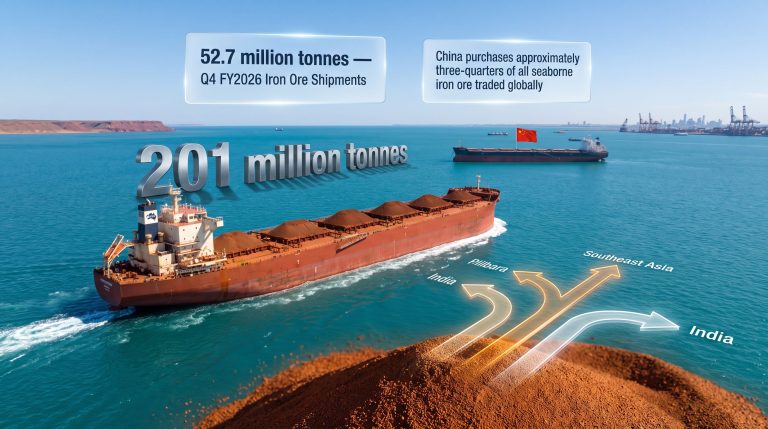
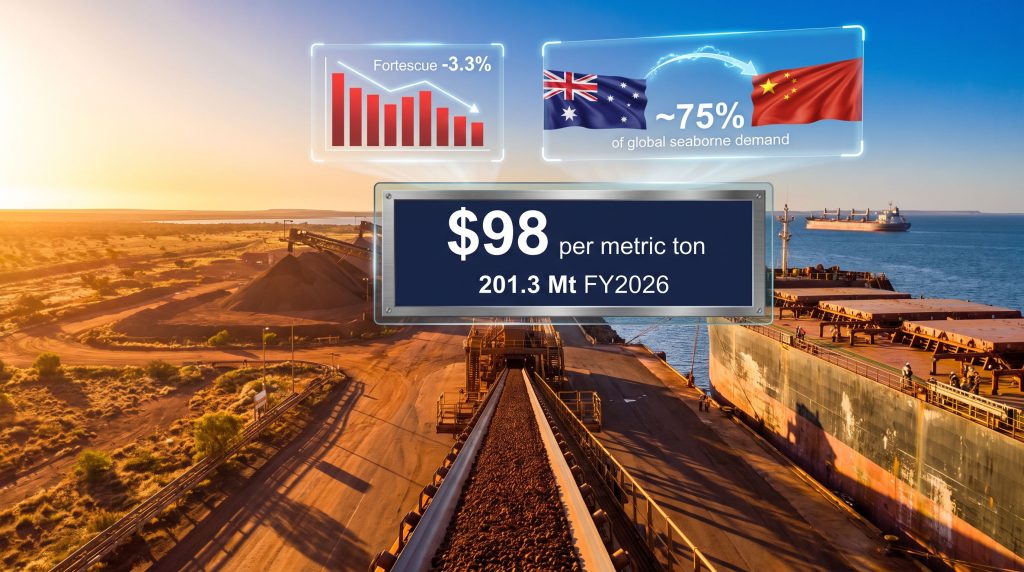
Iron ore is arguably the world's most extreme example of demand-side concentration in any major traded commodity. China iron ore demand accounts for approximately three-quarters of global seaborne iron ore demand, a figure that dwarfs the combined purchasing power of every other steel-producing nation. In standard market conditions, this concentration should translate into significant negotiating leverage. The reality, however, has historically been more fragmented.
China's steel sector comprises hundreds of mills, each procuring iron ore independently or through loosely affiliated trading arrangements. This fragmented buying structure historically prevented Chinese demand from translating into coordinated negotiating power, effectively leaving pricing leverage on the table. The establishment of China Mineral Resources Group (CMRG) is a direct structural response to this inefficiency.
What CMRG Is and How Its Mandate Works
CMRG was created to function as a centralised procurement and negotiating agent for China's steel industry. Rather than allowing each mill to engage separately with foreign suppliers, CMRG coordinates buying behaviour across the sector, enabling a unified bargaining position that individual mills could never achieve independently.
This is not simply a purchasing logistics operation. CMRG's mandate extends into strategic territory, with the objective of reducing China's vulnerability to price volatility and restructuring its dependency on a narrow group of dominant foreign iron ore suppliers. Furthermore, the organisation represents a deliberate policy of converting demand-side market share into active negotiating leverage.
What has made the current phase particularly notable is the escalation from coordination to enforcement. CMRG has progressively shifted from advisory guidance to directing steel mills to refuse delivery of specific iron ore cargoes from targeted suppliers. This tactic applies direct commercial pressure on producers by creating port-side inventory pileups, delaying revenue recognition, and signalling to the broader market that standard supply relationships can be disrupted at will.
CMRG's use of delivery refusals as a negotiating instrument mirrors tactics deployed by state-aligned buyers in other commodity sectors, suggesting this is a systematic strategy rather than an opportunistic response to short-term market conditions.
How CMRG's Tactics Have Targeted Major Australian Producers
The pattern of CMRG interventions has followed a logical escalation sequence. BHP, the world's largest iron ore producer, faced a delivery ban earlier in the current contract cycle. Fortescue, ranked as the world's fourth-largest iron ore miner, subsequently confirmed that CMRG had instructed domestic steel mills to decline delivery of certain portside iron ore products, including specific grades such as Super Special Fines and Fortune Fines. The China steel outlook for 2025 and beyond has only intensified these procurement pressures.
The table below illustrates how CMRG's actions have been applied across the sector's major players:
| Supplier | CMRG Action | Market Position |
|---|---|---|
| BHP | Delivery ban imposed earlier in the year | World's largest iron ore producer |
| Fortescue | Delivery refusals on specific product grades | World's No. 4 iron ore producer |
| Broader market | Annual term contract negotiations disrupted | Steel mill margin compression driving urgency |
The targeting of specific product grades rather than blanket supply bans is a technically significant detail. By focusing on particular fines products, CMRG creates surgical commercial pressure on specific revenue streams while maintaining the broader supply relationship. This reflects a sophisticated understanding of how iron ore product portfolios are structured and which grades carry the highest margin contribution for producers.
According to reporting from Bloomberg, Fortescue is now actively looking to markets outside China as this CMRG pressure mounts, a strategic pivot that underscores just how seriously the company is taking these disruptions.
Fortescue's Operational Performance Under Dual Pressure
Fortescue's June quarter shipment data arrived against an unusually complex operating backdrop. Total iron ore shipments for the quarter reached 52.7 million metric tons, representing a 5% sequential decline from the prior quarter. Despite this, the result came in marginally above analyst consensus of 52.48 million metric tons as compiled by Visible Alpha, providing a small operational cushion against expectations.
For the full financial year 2026, Fortescue shipped 201.3 million metric tons of iron ore. Forward guidance for FY2027 targets a range of 197 to 207 million metric tons, contingent on operational improvements across both the core hematite portfolio and the Iron Bridge magnetite operation.
The cost picture, however, is deteriorating. Fortescue's Hematite C1 unit cost for FY2026 was contained within guidance at $18.74 per wet metric ton, but the sequential June quarter increase of 6% driven by higher diesel prices signals the direction of travel. FY2027 guidance for the same metric sits between $20.50 and $21.75 per wet metric ton, representing a potential increase of up to 16% at the top of the guidance range.
| Metric | FY2026 Actual | FY2027 Guidance |
|---|---|---|
| Total Iron Ore Shipments | 201.3 Mt | 197 to 207 Mt |
| Hematite C1 Unit Cost | $18.74 / wet metric ton | $20.50 to $21.75 / wet metric ton |
| June Quarter Shipments | 52.7 Mt | Not guided separately |
At spot iron ore prices hovering near $98 per metric ton in Singapore futures markets, the combination of rising unit costs and subdued pricing creates a meaningful margin compression dynamic heading into the next financial year. Consequently, the iron ore price decline observed across recent months is adding further strain to producer margins across the sector.
Iron Bridge Magnetite: Why the Ramp-Up Delay Matters Beyond the Headline Impairment
The Strategic Logic Behind Magnetite Expansion
To understand why the Iron Bridge situation carries significance beyond the $525 million after-tax non-cash impairment charge, it is necessary to understand what magnetite iron ore represents in the context of Fortescue's product strategy.
Iron ore is not a homogeneous commodity. The two primary forms — hematite and magnetite — differ substantially in their iron content, processing requirements, and market positioning:
- Hematite is the dominant form in the Pilbara region, typically traded in direct shipping ore (DSO) form with iron grades generally in the 57% to 62% Fe range for standard fines products
- Magnetite ore typically contains lower iron grades at the mine but is processed through concentration to produce a high-grade pellet feed product, often exceeding 66% to 68% Fe
- Higher-grade iron ore products generate a significant price premium over benchmark 62% Fe fines
- Steel mills that prioritise blast furnace efficiency and emissions reduction increasingly prefer high-grade feedstocks, as they reduce coke consumption and lower carbon dioxide output per tonne of steel produced
Iron Bridge was conceived as Fortescue's entry into the premium-grade product segment, designed to improve its product mix and capture margin premiums unavailable from its hematite portfolio. The nameplate capacity of 22 million tonnes per annum represents a meaningful addition to the company's total shipment base, and critically, at a substantially higher realised price per tonne than standard hematite fines. In addition, advances in hydrogen iron ore reduction technology may eventually offer new pathways for high-grade magnetite products in decarbonising steel supply chains.
The Port Outload Constraint and Its Implications
The primary bottleneck limiting Iron Bridge's production ramp-up has been identified as port outload infrastructure capacity. This is a technically specific constraint that differs from mine-site production challenges. The ore is being mined and concentrated, but the physical throughput capacity of port loading equipment limits how much product can be exported within a given period.
Fortescue is evaluating capacity expansion options at the port to resolve this constraint. Until this infrastructure bottleneck is addressed, the operation cannot achieve its 22 Mtpa nameplate output, regardless of upstream mining performance. Jefferies, which carries an underperform rating on Fortescue, noted that Iron Bridge continues to produce below its nameplate capacity, reinforcing market concern about the timeline to full operational contribution.
The port outload limitation at Iron Bridge is a less visible but critically important infrastructure constraint. In magnetite operations, the concentration process produces a fine, dense product with specific handling requirements, making port logistics a genuine engineering challenge rather than a simple capacity scaling exercise.
The Industrial Action Dimension: Australia's Pilbara Under Simultaneous Pressure
The CMRG procurement friction represents the demand-side pressure on Australian iron ore producers. Simultaneously, the supply side is facing escalating industrial action that adds a second layer of operational risk to the sector.
BHP is confronting what has been described as its most significant industrial strike action in decades at Port Hedland, the world's largest bulk export terminal and the central logistics hub for Pilbara iron ore exports. Port Hedland handles the majority of Australia's iron ore export volumes, making any disruption to its operations a market-level event rather than a company-specific issue.
Fortescue's CEO Dino Otranto acknowledged both the industry-wide nature of the challenge and the company's belief that its internal operational culture provides a degree of resilience against similar labour disruptions. The company is not immune to the same pressures facing BHP, but has expressed confidence in its workforce relationships as a differentiating factor.
The convergence of these pressures, furthermore, creates a dual-risk framework that market participants need to assess simultaneously:
| Risk Category | Source | Supply Chain Impact |
|---|---|---|
| Demand-side procurement friction | CMRG delivery restrictions | Disrupts cargo flow, delays revenue recognition |
| Supply-side industrial action | Union activity in the Pilbara region | Threatens export volumes and port throughput |
| Cost escalation | Diesel prices, operational complexity | Compresses unit economics at current spot prices |
| Product ramp-up delays | Iron Bridge magnetite underperformance | Limits high-grade volume growth and margin improvement |
The next major ASX story will hit our subscribers first
Market Response and the Investor Psychology Behind the Share Price Move
Fortescue shares declined 3.3% on the day the operational update was released, against a 0.2% rise in the broader mining index. This divergence is analytically meaningful. A company-specific decline against a rising sector benchmark indicates that the market attributed the negative reaction to Fortescue-specific factors rather than broad commodity sentiment.
The share price move reflects the market pricing in a convergence of concerns rather than any single negative datapoint. The CMRG friction, rising unit costs, Iron Bridge underperformance, and the looming spectre of industrial action at a competitor with shared infrastructure exposure all contributed to a reassessment of near-term earnings risk.
From an investor psychology standpoint, the market is also responding to narrative uncertainty. When a company's operational guidance is complicated by geopolitical procurement tactics from its largest customer base, standard discounted cash flow modelling becomes less reliable. Investors seeking predictability in earnings streams are likely to apply a higher risk discount to producers with elevated China concentration and unresolved operational ramp-up challenges. The broader iron ore market tariffs environment compounds this uncertainty further.
Can Iron Ore Producers Realistically Diversify Away From Chinese Demand?
Fortescue's stated intention to explore customers outside China is a strategically rational response to CMRG pressure. In practice, however, the structural reality of seaborne iron ore demand makes rapid diversification extremely difficult.
With China representing approximately 75% of global seaborne demand, no alternative buyer market exists at remotely comparable scale. The combined iron ore import demand from India, Japan, South Korea, and the European Union does not approach Chinese volumes. Australia's iron ore export infrastructure, including the rail networks, port facilities, and vessel scheduling systems, was largely built around the Chinese demand base.
Over the medium term, however, several demand-side developments could partially shift this calculus:
- India's steel expansion represents the most credible alternative demand growth story, with the country targeting significant increases in domestic steel capacity over the coming decade
- Southeast Asian steel investment is growing, with Vietnam, Indonesia, and the Philippines expanding blast furnace capacity
- Electric arc furnace growth in developed markets may increase demand for high-grade iron ore pellet feed as a scrap substitute, potentially benefiting magnetite producers like Fortescue at Iron Bridge
None of these developments, however, will materially reduce China's dominance over seaborne iron ore demand within the timeframe relevant to current contract negotiations.
Long-Term Scenarios for the Iron Ore Trade Architecture
| Scenario | Key Drivers | Likely Outcome for Producers |
|---|---|---|
| CMRG achieves improved contract terms | Sustained steel mill margin pressure, coordinated delivery refusals | Lower realised prices, tighter long-term contract structures |
| Negotiations normalise | Trade friction de-escalates, mills resume standard procurement | Return to prior market conditions, cargo flow restored |
| Producers pursue grade upgrading | Investment in beneficiation and high-grade products | Partial insulation from commodity pricing pressure |
| Industrial action disrupts supply | Strikes persist at Port Hedland and Pilbara operations | Short-term price support, offset by cost increases and reputational risk |
The most consequential long-term implication of the CMRG strategy may be structural rather than cyclical. If CMRG successfully secures improved contract terms through delivery refusals and negotiating pressure, it establishes a precedent and a playbook that will be applied in future contract cycles. Producers that fail to develop alternative customer relationships, higher-grade product offerings, or cost structures resilient to lower realised prices will face a structurally more challenging market environment, a scenario where Fortescue says China's CMRG actions disrupting iron ore supply stability could permanently reshape trade architecture.
Frequently Asked Questions
What exactly does CMRG do in the iron ore market?
CMRG acts as a centralised procurement coordinator for China's steel industry, enabling coordinated buying behaviour across hundreds of domestic mills. Its tactical toolkit includes directing mills to refuse delivery of specific cargoes, effectively using China's demand dominance as a lever in annual contract negotiations with foreign iron ore suppliers.
Why does the grade of iron ore matter for pricing?
Iron ore pricing benchmarks are typically referenced to 62% iron content fines. Products above or below this grade trade at a premium or discount respectively. Higher-grade products, such as the magnetite concentrate produced at Iron Bridge, can command substantial premiums because they improve blast furnace efficiency, reduce coke consumption, and lower carbon emissions per tonne of steel produced. For producers, high-grade products offer both better realised prices and exposure to structurally growing demand from mills focused on decarbonisation.
How significant is the Iron Bridge impairment charge?
The $525 million after-tax non-cash impairment reflects the revised assessment of Iron Bridge's value given the ongoing production shortfall relative to its 22 Mtpa nameplate capacity. While non-cash impairments do not affect operating cash flow, they signal that the project's economic assumptions have been revised downward and that full operational contribution will be delayed beyond original projections.
What does Hematite C1 cost mean in practice?
The C1 cash cost is a widely used mining industry metric that captures the direct operating costs of producing and shipping iron ore, including mining, processing, and port costs, but excluding royalties, depreciation, and corporate overheads. Fortescue's FY2026 Hematite C1 cost of $18.74 per wet metric ton is competitive on a global cost curve basis, but the guided increase to up to $21.75 per wet metric ton in FY2027 narrows the margin buffer at current spot prices near $98 per metric ton.
Disclaimer: This article is for informational purposes only and does not constitute financial advice or a solicitation to buy or sell any securities or financial instruments. All financial data, production figures, and guidance ranges cited are sourced from publicly available company disclosures and third-party market reporting. Forward-looking statements and scenario analyses represent analytical perspectives and not guaranteed outcomes. Readers should conduct their own independent research before making any investment decisions.
Want to Stay Ahead of the Next Major ASX Mineral Discovery?
While iron ore majors navigate CMRG procurement pressures and shifting trade architecture, Discovery Alert's proprietary Discovery IQ model scans ASX announcements in real time, delivering instant alerts on significant mineral discoveries across more than 30 commodities — explore the historic returns major discoveries have generated and begin your 14-day free trial to position yourself ahead of the broader market.