August 7, 2026
The Quiet Restructuring of Global Iron Ore Power
Few commodity markets illustrate the tension between buyer concentration and seller scale quite like iron ore. For decades, the global iron ore trade operated under a framework that broadly favoured major producers, whose control over high-grade deposits and established logistics gave them significant pricing authority. That structural advantage is now being systematically dismantled — not through market forces alone, but through deliberate procurement consolidation engineered at the state level. Understanding how this mechanism works requires examining the architecture of power being quietly rebuilt, particularly as China iron ore demand continues to shape global trade dynamics.
When big ASX news breaks, our subscribers know first
What CMRG Actually Is and Why Its Scale Changes Everything
China Mineral Resources Group, known as CMRG, is a state-owned enterprise established specifically to centralise China's iron ore procurement. Rather than allowing individual steel mills to negotiate directly with international miners, CMRG aggregates purchasing volumes and negotiates on behalf of a broad coalition of Chinese buyers.
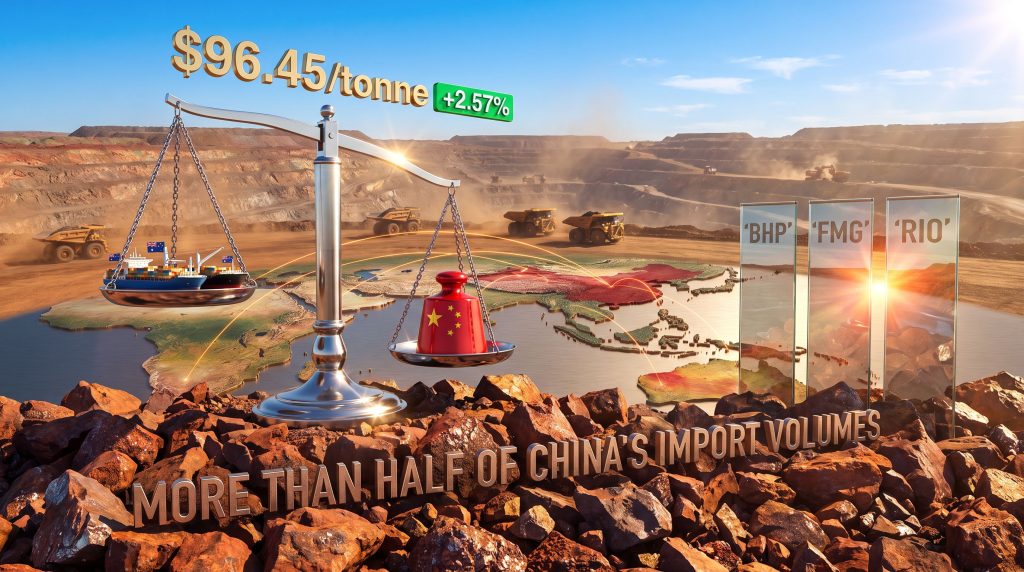
According to commodity research group Wood Mackenzie, CMRG currently negotiates for more than half of China's annual iron ore import volumes. To appreciate what this means in practical terms, consider that China is by far the world's largest consumer of iron ore, and Australia alone supplies more than half of China's total imports.
This creates a situation where a single state-controlled buyer is negotiating terms that govern what is arguably the most consequential bilateral commodity trade relationship in the world. Furthermore, the China steel and iron ore sector's structural complexities add further weight to CMRG's growing influence.
Why Centralisation Transforms Procurement Power
The logic behind centralisation is straightforward from a procurement theory perspective:
- A buyer representing 50 or 60 million tonnes per year holds dramatically more leverage than dozens of individual mills each negotiating for 1 to 5 million tonnes
- Sellers face a binary choice: accept terms from the consolidated buyer or risk losing access to a dominant share of their demand base
- The threat of withholding purchase volumes becomes credible only when the entity making the threat controls enough volume to genuinely hurt a producer's revenue guidance
This is the economic architecture that makes CMRG's recent directive so significant. Consequently, when CMRG tells steel mills to halt talks with Rio Tinto, it is not a disruption to supply — it is a deliberate negotiating instrument.
CMRG Tells Steel Mills to Halt Talks With Rio Tinto: Breaking Down the Tactic
The specific mechanism here is worth explaining carefully, because it differs from a trade restriction or an import ban. During annual supply talks, miners and their steel mill customers typically work through the operational details of the coming year: desired volumes, specific cargo specifications, shipment scheduling, and port delivery windows. These discussions are granular and logistically important for both sides.
When CMRG instructs certain mills to pause those conversations, it does not stop iron ore from flowing in the short term. However, what it does is prevent those mills from locking in their supply arrangements independently, which forces the volume they represent back into CMRG's negotiating pool. The more mills that defer to CMRG, the larger the aggregate volume it controls, and the greater its leverage over price and contract terms.
This tactic functions less like a blockade and more like a squeeze play. By concentrating negotiating authority, CMRG transforms what would otherwise be a competitive multi-buyer market into something far closer to a monopsony, where a single buyer effectively sets the rules of engagement for all sellers.
Why Rio Tinto's Situation Is Particularly Noteworthy
The directive targeting Rio Tinto is particularly significant because Rio Tinto had previously been considered partially insulated from this kind of pressure. The reasoning was structural: Rio Tinto's single largest shareholder is Chinalco, a Chinese state-owned enterprise, and Chinalco also leads the consortium partnering with Rio Tinto on the Simandou iron ore project in Guinea.
The assumption was that these shared interests would confer a degree of diplomatic protection. However, the current escalation — as reported by Reuters — suggests that CMRG's consolidation ambitions now override those relationship-based buffers.
The Escalation Timeline: Which Miners Have Been Targeted
CMRG's approach has followed a clear escalation pattern, moving from smaller pressure points toward the industry's most strategically complex relationships.
| Miner | Restriction Applied | Current Status | Key Context |
|---|---|---|---|
| BHP (ASX: BHP) | Progressive purchasing bans on select products | Restrictions lifted April 2026 | Resolved following incoming CEO's visit to China |
| Fortescue (ASX: FMG) | Cargo restrictions during contract negotiations | Ongoing pressure | Senior executive publicly criticised CMRG's tactics as destabilising |
| Hancock Prospecting | Targeted during procurement consolidation push | Ongoing | Privately held; limited public disclosure available |
| Rio Tinto (ASX: RIO) | Directive to halt September shipment negotiations | Escalating | Previously seen as insulated due to Chinalco shareholding |
The BHP resolution is instructive. Restrictions that had been applied through late 2025 and into early 2026 were lifted following a direct, high-level engagement between BHP's incoming chief executive and Chinese counterparts. This suggests that CMRG's pressure campaigns are designed to be resolved through concession rather than sustained exclusion. In addition, these developments highlight broader iron ore surplus risks that could further weaken producer bargaining positions over time.
Fortescue's public pushback is equally revealing. The company's senior leadership argued that CMRG's procurement consolidation tactics were actively undermining China's own goal of stable iron ore supply — a pointed observation that highlights the inherent tension in using supply disruption as a negotiating weapon when you depend on that supply for your domestic steel industry.
Market Signals: How Iron Ore Exchanges Responded
Commodity markets reacted swiftly to news of the expanded CMRG directive. Notably:
- The most active iron ore futures contract on China's Dalian Commodity Exchange closed daytime trade up 2.57%, reaching its highest level since July 31, at 719 yuan (approximately $106.54) per metric ton
- The benchmark September iron ore contract on the Singapore Exchange gained 2.15%, settling at $96.45 per tonne, also the highest since July 31
- Both moves occurred in a single trading session, reflecting how sensitive the market remains to any signal that supply availability for Chinese buyers could be constrained
The interesting paradox here is that these price gains benefited the very miners that CMRG is targeting. When markets interpret procurement restrictions as a potential supply risk, the resulting price uplift actually supports producer revenues in the near term, even as the longer-term trajectory of CMRG's consolidation push points toward margin compression for sellers.
The Geopolitics of Iron Ore: Why Canberra Is Watching Carefully
Australia's position in this dynamic is uncomfortable. Iron ore is the nation's single most valuable commodity export, and the country supplies the majority of China's import requirements, making the two economies deeply interdependent in this specific market. That interdependency cuts both ways.
Australia's major mining companies and their industry representatives have raised the possibility of a coordinated government response, including the formation of a single selling desk that would allow Australian producers to negotiate collectively with CMRG — effectively matching buyer concentration with seller concentration.
However, the political calculus in Canberra is complicated by recent history. Between 2020 and 2023, China imposed a series of unofficial trade restrictions across a wide range of Australian exports, including coal, wine, and beef. The eventual unwinding of those restrictions came through careful diplomatic engagement rather than confrontational countermeasures.
At least one major mining company has expressed the view that the Australian government is unlikely to engage directly on this issue at present, given the ongoing effort to stabilise the broader Australia-China trade relationship.
This leaves Australian miners in a strategically constrained position: too exposed to Chinese demand to walk away, and without meaningful government cover to push back collectively. Furthermore, the global iron ore market impact of broader geopolitical pressures only compounds this challenge.
The next major ASX story will hit our subscribers first
Rio Tinto's Strategic Response: The Long-Game Framing
Rio Tinto's iron ore leadership has framed the company's response around long-term relationship preservation rather than short-term resistance. The company's iron ore chief executive, Matthew Holcz, acknowledged publicly that negotiating leverage has shifted away from producers as growing global iron ore supply has moved the market toward balance.
He characterised buyer-seller tension as a permanent feature of commodity relationships while emphasising Rio Tinto's commitment to partnership frameworks that deliver mutual benefit. This positioning reflects a broader strategic reality — in a supply-balanced or oversupplied market, the ability of producers to resist buyer pressure diminishes significantly.
The Simandou Variable: Guinea's Iron Ore and China's Long-Term Supply Strategy
No analysis of CMRG's consolidation push is complete without considering the Simandou project in Guinea, which represents one of the largest undeveloped iron ore deposits in the world. Rio Tinto and Chinalco are co-participants in the consortium developing part of this project, and China has significant financial and strategic interests in seeing Simandou reach commercial production. Kallanish reports that Rio Tinto remains in ongoing talks with CMRG, further illustrating the complexity of these overlapping interests.
Once operational, Simandou could provide China with access to high-grade iron ore from a source entirely outside Australia's supply chain, reducing the structural dependency that currently gives Australian miners some measure of implicit protection. CMRG's current pressure campaign and the Simandou development timeline are not unrelated — both represent complementary pillars of China's broader iron ore strategy. Consequently, the competition for strategic iron ore assets globally is intensifying as all parties seek to strengthen their positions.
What Investors in Iron Ore Producers Should Monitor
For investors holding positions in major iron ore producers, the CMRG dynamic introduces several risk dimensions that deserve ongoing attention:
- Contract term compression — As CMRG consolidates negotiation rights, annual supply agreements may shift toward pricing structures less favourable to producers, particularly during periods of supply surplus
- Volume concentration risk — Producers heavily dependent on Chinese term contract volumes face amplified exposure to CMRG's leverage as the entity's coverage of import volumes expands
- Simandou production timeline — Any acceleration in Guinea's iron ore output reaching Chinese ports would reduce the negotiating floor that Australian miners currently rely on
- Diplomatic developments — Resolution of CMRG pressure campaigns, as seen with BHP, has historically required direct executive engagement with Chinese counterparts, making geopolitical relationship management an increasingly material business function for mining CEOs
- Spot versus term contract pricing divergence — If CMRG successfully anchors term contract prices below spot market levels, the revenue quality of producer earnings could deteriorate even if headline prices remain elevated
The broader takeaway for market observers is that the iron ore trade is undergoing a structural transition that is unlikely to reverse. Buyer consolidation, supply rebalancing, and geopolitical recalibration are converging simultaneously. The producers who navigate this environment most successfully will be those that invest in relationship capital with Chinese counterparties while simultaneously diversifying their strategic options.
This article is intended for informational purposes only and does not constitute financial advice. Forecasts, market assessments, and strategic scenarios discussed herein involve inherent uncertainty and should not be relied upon as the basis for investment decisions. Readers should conduct independent research and consult qualified financial advisers before making any investment.
Want To Stay Ahead of Significant ASX Mineral Discoveries Before the Broader Market Moves?
Discovery Alert's proprietary Discovery IQ model delivers real-time alerts on significant ASX mineral discoveries, instantly translating complex data across more than 30 commodities into clear, actionable insights for both short-term traders and long-term investors — explore historic examples of major discovery returns to understand the potential at stake, then begin your 14-day free trial at Discovery Alert to position yourself ahead of the market.