June 13, 2026
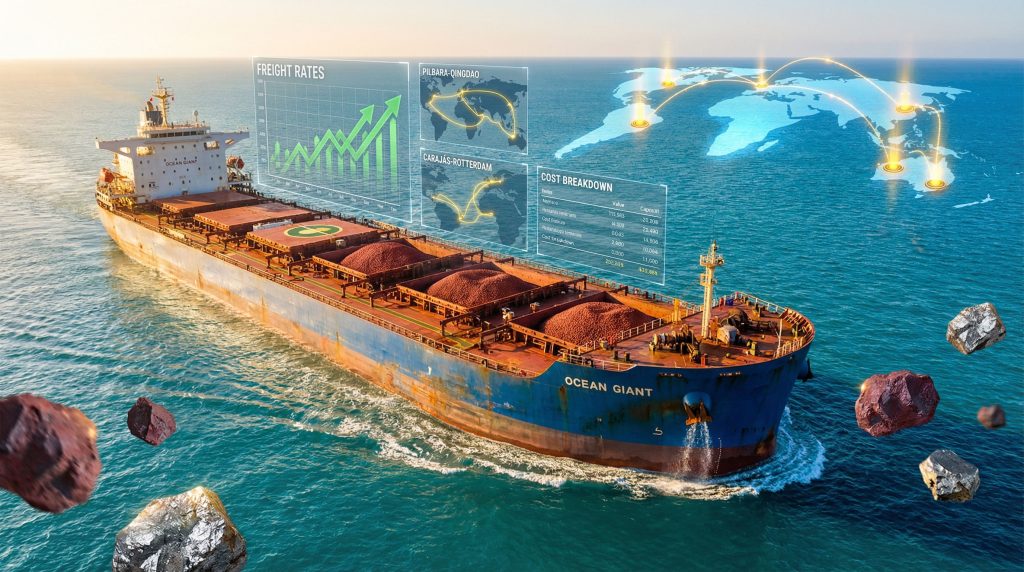
The global commodities sector operates within interconnected systems where transportation costs frequently determine market dynamics more than underlying supply and demand fundamentals. Maritime freight networks, particularly for bulk commodities like iron-ore, create cost structures that can shift entire industry economics within weeks. Iron-ore freight costs have become increasingly volatile, with iron ore price trends demonstrating how transportation expenses directly influence global steel production decisions and consumer pricing across multiple industries.
Maritime Cost Architecture in Bulk Commodity Transportation
Dry bulk shipping represents one of the most volatile cost components in global commodity markets, with freight rates capable of doubling or halving within quarterly periods. The iron-ore transportation network demonstrates these dynamics particularly clearly, as vessels must navigate complex route optimization while managing fuel consumption, port efficiency variations, and seasonal weather patterns.
Vessel Classification and Economic Impact
| Vessel Category | Dead Weight Tonnage | Route Optimization | Cost Volatility Pattern |
|---|---|---|---|
| Capesize carriers | 180,000-400,000 DWT | Transoceanic efficiency | Extreme rate swings |
| Panamax vessels | 65,000-80,000 DWT | Regional flexibility | Moderate fluctuations |
| Handymax ships | 45,000-65,000 DWT | Port accessibility | Relatively stable |
The economics of scale in maritime transport create significant advantages for larger vessels on major routes. Capesize carriers, despite their operational constraints requiring specialised port infrastructure, achieve per-ton transportation costs that can be 30-40% lower than smaller vessels on long-haul routes like Western Australia to China's eastern seaboard.
Port Infrastructure Efficiency Variables
Automated loading systems at major Australian iron-ore terminals demonstrate how infrastructure investment translates into freight cost advantages. These facilities can load 400,000-ton capesize vessels in 36-48 hours, compared to 72-96 hours required at ports with conventional loading equipment.
This efficiency differential creates substantial cost savings through reduced vessel charter expenses and improved fleet utilisation rates. The Pilbara region's integrated mine-to-port rail systems exemplify how inland transportation coordination impacts maritime costs.
Purpose-built heavy-haul railways designed specifically for iron-ore transport enable consistent cargo flows that optimise vessel scheduling and reduce port congestion delays. Furthermore, these systems demonstrate how digital transformation enhances operational efficiency throughout the supply chain.
When big ASX news breaks, our subscribers know first
Geopolitical Risk Integration in Freight Rate Formation
Maritime chokepoints create systemic vulnerabilities in global commodity transportation networks, with geopolitical tensions capable of restructuring entire trade flows. The Middle East conflict situation illustrates how regional conflicts translate into measurable freight cost increases across seemingly unrelated commodity markets.
Current tensions affecting Middle Eastern shipping lanes have resulted in war risk insurance premiums escalating from typical rates of $0.10-0.20 per $100 of cargo value to levels exceeding $0.50 per $100 during peak risk periods. For a standard capesize cargo worth approximately $40 million, this insurance differential alone adds $120,000-160,000 to voyage costs.
Alternative Route Economics
When primary shipping lanes become disrupted, alternative routing creates cascading cost increases throughout the global dry bulk fleet. Ships avoiding high-risk areas must utilise longer routes that increase fuel consumption, extend voyage times, and reduce overall fleet capacity utilisation.
The Cape of Good Hope routing alternative for Middle East-bound traffic adds approximately 3,500 nautical miles to typical journey distances, translating to:
- Additional fuel consumption: 800-1,200 tons of bunker fuel per voyage
- Extended voyage duration: 12-16 additional sailing days
- Increased crew costs: Extended time at sea raises labour expenses
- Reduced annual vessel utilisation: Fewer completed voyages per year
These factors compound to create freight rate premiums that can exceed $15-20 per ton on affected routes. Consequently, the US-China trade impact adds another layer of complexity to iron-ore freight costs.
Chinese Inland Distribution Network Complexities
China's domestic iron-ore distribution system creates multiple cost layers beyond initial maritime transportation. The integration of coastal ports with inland steel production centres through river transport, rail networks, and overland trucking adds complexity that significantly impacts total delivered costs.
Yangtze River Transportation Economics
The Yangtze River system handles substantial volumes of imported iron-ore moving from coastal ports to inland steel production centres. This inland waterway network utilises specialised river vessels with capacities ranging from 10,000 to 35,000 DWT, creating additional transshipment requirements and associated costs.
| Transportation Segment | Cost per Ton | Handling Requirements | Time Factors |
|---|---|---|---|
| Ocean vessel to coastal port | Base rate | Single discharge | 24-48 hours |
| Coastal storage and handling | $12-18 | Transfer equipment | 2-5 days |
| River barge loading | $8-15 | Specialised facilities | 12-24 hours |
| Inland waterway transport | $25-40 | Navigation constraints | 5-10 days |
Quality Preservation Challenges
Multiple handling stages in the inland distribution process create risks of ore degradation and contamination. Iron-ore stockpiles exposed to weather conditions during river transport loading can experience moisture content increases that affect blast furnace performance.
Steel mills must account for these quality variations when calculating total input costs. Lower-grade ore requires increased consumption rates to achieve equivalent hot metal output.
Specialised covered storage facilities and enclosed conveyor systems minimise quality degradation but add infrastructure costs that ultimately affect delivered pricing. Premium ore grades command higher prices partly due to their ability to maintain specifications throughout extended transportation and storage cycles.
Production Scheduling Integration with Freight Cost Cycles
Steel producers have developed sophisticated strategies to align production planning with freight rate fluctuations, treating iron-ore freight costs as a variable input that influences manufacturing timing decisions. This approach requires advanced forecasting capabilities and flexible operational systems.
Inventory Optimisation Strategies
Chinese steel mills maintain iron-ore stockpiles averaging 25-35 days of consumption capacity, but optimal inventory levels fluctuate based on freight cost projections. During periods of anticipated rate increases, mills may expand stockpiles to 45-60 days of consumption.
Current iron-ore inventory levels at Chinese ports have reached record highs exceeding 140 million tons, compared to historical averages of 110-120 million tons. This inventory accumulation reflects strategic stockpiling during favourable freight rate periods, demonstrating how iron ore demand insights influence large-scale commodity purchasing decisions.
Production Campaign Coordination
Blast furnace campaigns, typically lasting 8-12 months between major maintenance cycles, require careful coordination with raw material procurement strategies. Mills operating multiple blast furnaces can stagger maintenance schedules to take advantage of favourable freight rate periods for inventory rebuilding.
Recent production curtailments during China's parliamentary meetings illustrate how policy-driven demand changes interact with freight cost considerations. However, steel mills required to reduce output during these periods often coordinate shutdowns with inventory management strategies.
Advanced Logistics Technology Integration
Digital transformation in maritime logistics has introduced sophisticated optimisation tools that enable more precise freight cost management and route planning. These technological advances create competitive advantages for companies able to implement advanced systems effectively.
Predictive Analytics Applications
Modern shipping companies utilise machine learning algorithms to optimise route selection based on weather patterns, fuel price variations, and port congestion forecasts. These systems can identify cost savings opportunities of 5-8% through improved voyage planning and fuel consumption optimisation.
Real-Time Market Integration
Freight rate information systems now provide near real-time pricing data that enables more responsive purchasing decisions. Steel mills can adjust procurement timing based on shipping rate fluctuations, treating freight costs as a tradeable commodity input rather than a fixed expense.
Furthermore, freight cost volatility demonstrates how real-time market data enables better decision-making.
Port Efficiency Monitoring
Automated port management systems provide detailed vessel turnaround statistics that influence freight rate negotiations. Ports demonstrating consistent loading efficiency can command premium rates from charterers seeking reliable schedule performance.
Environmental Regulation Impact on Transportation Economics
Emerging environmental regulations create new cost structures in maritime transportation that will fundamentally reshape iron-ore freight costs over the next decade. The International Maritime Organization's carbon intensity regulations introduce compliance costs that directly impact bulk commodity transportation rates.
Fuel Transition Requirements
The mandatory transition toward cleaner marine fuels creates immediate cost increases for vessel operators. Low-sulphur fuel oil commands premiums of $100-200 per ton compared to traditional bunker fuels, adding $20,000-40,000 to typical capesize voyage costs.
Fleet Modernisation Investments
Newer vessel designs incorporating energy efficiency improvements require substantial capital investments but deliver operational cost reductions. Modern capesize bulk carriers achieve 15-20% better fuel efficiency than vessels built before 2010, creating competitive advantages in freight rate markets.
In addition, the focus on decarbonisation benefits extends beyond mining operations to include maritime transportation efficiency improvements.
Carbon Pricing Integration
Proposed international carbon pricing mechanisms for shipping could add $10-25 per ton of cargo to transportation costs, depending on route distances and vessel efficiency ratings. These additional costs will likely accelerate the retirement of older, less efficient vessels while encouraging investment in clean technology solutions.
The next major ASX story will hit our subscribers first
Market Structure Evolution and Consolidation Effects
The dry bulk shipping industry continues consolidating toward larger, more professionally managed fleet operators. This consolidation creates changes in rate formation mechanisms and service reliability that impact commodity transportation economics.
Fleet Optimisation Benefits
Large shipping companies achieve better fleet utilisation through sophisticated voyage scheduling and cargo matching systems. These operational advantages enable more competitive freight rate offerings while maintaining profitability through improved asset utilisation.
Service Reliability Improvements
Professional fleet management reduces schedule disruptions and cargo damage incidents that create additional costs for commodity buyers. Reliable service enables steel mills to operate with lower safety stock levels, reducing working capital requirements and storage costs.
Contract Market Development
Long-term freight agreements between major iron-ore producers and shipping companies create more predictable cost structures that enable better production planning. These contractual relationships often include volume commitments and rate escalation mechanisms tied to fuel costs and market indices.
Strategic Risk Management Framework Development
The complexity of modern iron-ore freight costs requires sophisticated risk management approaches that integrate transportation costs with broader commodity procurement strategies. Steel producers must develop comprehensive frameworks that address multiple risk factors simultaneously.
Financial Hedging Instruments
Freight derivative markets enable commodity buyers to hedge transportation cost exposure through standardised contracts. Baltic Exchange indices provide benchmark pricing for freight futures that can offset physical transportation cost variations.
Supply Chain Diversification
Strategic sourcing from multiple geographic regions reduces transportation risk concentration while providing flexibility to optimise freight costs. Steel mills maintaining supplier relationships in Australia, Brazil, and regional sources can shift procurement based on total delivered cost calculations including freight components.
Operational Flexibility Investment
Port infrastructure capable of handling different vessel sizes provides operational advantages during periods of freight rate volatility. Mills with access to both capesize and panamax vessel berths can optimise cargo sizes based on prevailing rate differentials.
The evolution of iron-ore freight costs reflects broader transformations in global trade infrastructure, environmental regulation, and digital optimisation capabilities. Understanding these interconnected factors enables more effective strategic planning and operational decision-making throughout the steel supply chain. Market participants who successfully integrate transportation cost management with production planning and risk management frameworks will achieve sustainable competitive advantages in an increasingly complex commodity environment.
This analysis is based on publicly available market information and industry data. Readers should consult current market sources and professional advisors before making investment or operational decisions based on commodity transportation cost considerations.
Ready to Capitalise on Iron-Ore Market Volatility?
Understanding freight cost dynamics and their impact on iron-ore markets provides valuable insights, but identifying actionable investment opportunities requires real-time intelligence on ASX mineral discoveries. Discovery Alert's proprietary Discovery IQ model delivers instant notifications when significant iron-ore and mineral discoveries are announced, enabling subscribers to position themselves ahead of market movements. Begin your 14-day free trial today to transform complex commodity market knowledge into strategic investment advantages.