
June 30, 2026
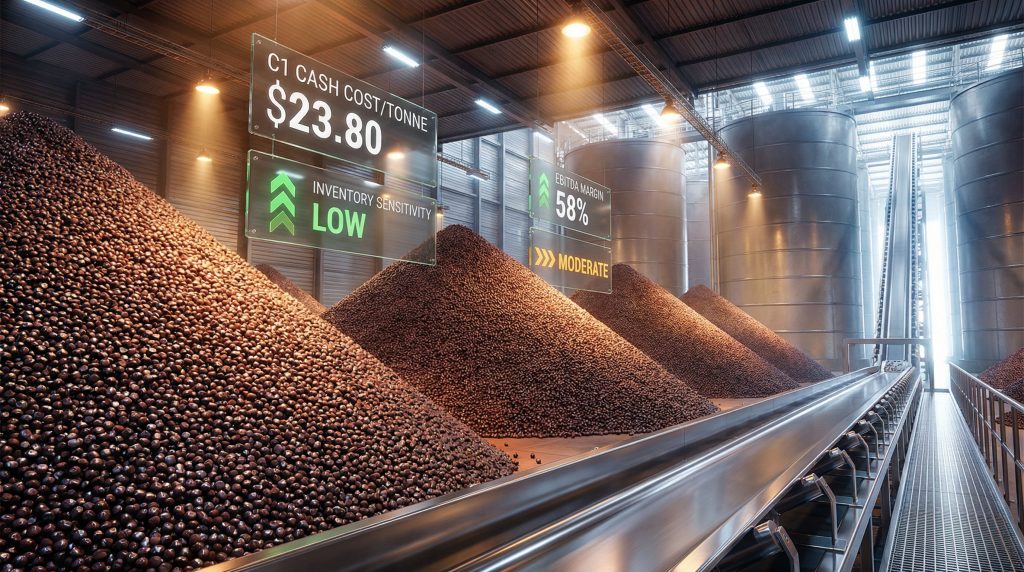
Inventory management challenges within the global iron ore sector reveal structural vulnerabilities that extend far beyond conventional supply-demand metrics. The intricate relationship between port storage capacity, seasonal trading behaviors, and production cost differentials creates a complex framework where operational efficiency becomes the primary determinant of mining company resilience. Understanding these dynamics requires examination of how elevated stockpile levels impact producer valuations, strategic responses, and the broader steel manufacturing ecosystem, particularly in light of current iron ore inventory warning conditions affecting global markets.
Current Global Iron Ore Inventory Pressures and Storage Infrastructure
Chinese port inventories have reached approximately 163 million tonnes, representing a year-on-year increase of 19 million tonnes and achieving levels not seen in more than three years. This accumulation contradicts typical seasonal patterns, where stockpiles usually decline following Chinese New Year as steel mills resume operations and draw down safety stocks.
Furthermore, iron ore price trends demonstrated recovery momentum from approximately $96 per tonne during Chinese New Year to around $105 per tonne by March 2026. However, this $9 recovery represents only modest improvement considering the substantial inventory overhang threatening sustained price stability.
Port Storage Capacity and Utilization Dynamics
The elevation of Chinese port stocks to three-year highs indicates several operational realities. Storage infrastructure designed for just-in-time steel production workflows now accommodates extended inventory cycles, suggesting either deliberate stockpiling by traders anticipating further price weakness or genuine demand destruction within end-user markets.
Blast furnace utilisation rates maintained stability at approximately 86% despite a 14% year-on-year decline in Chinese steel production during January 2026. This apparent contradiction signals that operating furnaces reduced throughput efficiency rather than shutting down capacity entirely, indicating producers managed production cuts through operational adjustments rather than facility closures.
Regional Inventory Distribution Patterns
Storage patterns reflect broader structural changes in global steel consumption. The concentration of inventory accumulation in Chinese ports suggests regional demand weakness rather than global oversupply, as other consumption centres may be managing inventory differently. This geographic concentration amplifies price sensitivity to Chinese market conditions, with China surplus impact becoming increasingly evident.
Transportation bottlenecks compound inventory challenges, as shipping schedules designed for steady throughput struggle to accommodate irregular demand patterns. Seasonal variations typically see inventory drawdowns post-Chinese New Year, making current accumulation levels particularly concerning for market participants.
When big ASX news breaks, our subscribers know first
Mining Company Financial Performance Under Inventory Pressure
Cost structure differentiation emerges as the critical factor determining producer resilience during inventory-driven market stress. Analysis of major producers reveals significant variations in operational efficiency and margin sustainability, with several companies maintaining their industry leader advantages despite challenging conditions.
Comparative Cost Structure Analysis
| Producer Category | C1 Cash Cost/tonne | EBITDA Margin | Market Position |
|---|---|---|---|
| Lowest Cost Tier | $18.50 | 63% | Superior resilience |
| Mid-Cost Range | $19-21 | 55-58% | Moderate vulnerability |
| Higher Cost Operations | $23.80 | Variable | Elevated risk exposure |
BHP Group demonstrated superior financial metrics with an EBITDA margin of 63% and EBITDA per tonne of $58 during the second half of 2025. This performance positions BHP as the most efficient operator within the comparison group, with cost advantages providing defensive characteristics during market downturns.
Rio Tinto's Pilbara operations showed EBITDA per tonne improvement of $2 in H2 2025, recovering from earlier cyclone disruptions. However, Rio's C1 cash cost of $23.80 per tonne represents approximately $5 per tonne premium over lower-cost peers, creating vulnerability during compressed pricing environments.
Free Cash Flow Yield Implications
UBS calculated 2026 free cash flow yields reflecting current spot pricing assumptions: Rio Tinto 10%, Vale 9%, and BHP 5%. These metrics suggest institutional analysis prices higher downside risk for Rio and Vale relative to BHP, with elevated yields potentially reflecting greater valuation uncertainty rather than superior opportunity.
Market Analysis Insight: The substantial free cash flow yield differential between producers reflects institutional concern regarding cost structure vulnerability during inventory surplus periods, with higher yields often signalling greater downside risk rather than superior value proposition.
Anglo American's diversified iron ore portfolio, including Kumba Iron Ore in South Africa and Minas Rio in Brazil, delivered stable EBITDA per tonne despite compressed premium pricing for high-grade and lump products. This geographic diversification provided partial insulation from Chinese market-specific pressures.
Strategic Responses and Operational Adaptations
Mining companies implement various tactical adjustments to navigate inventory-driven market conditions, though source material provides limited visibility into specific strategic initiatives currently being undertaken by major producers. However, understanding operations at the largest iron ore mines provides insights into effective adaptation strategies.
Management Transition and Cost Optimisation
Rio Tinto's recent management changes create opportunities for addressing cost structure disadvantages. The $5 per tonne cost premium relative to competitors represents a material efficiency gap that new leadership teams must address to maintain competitive positioning during challenging market cycles.
Institutional Rating Framework
UBS maintains "neutral" ratings on Rio Tinto, BHP, Vale and Fortescue" with a "Sell rating on Kumba Iron Ore". This institutional stance suggests analysts believe current pricing and inventory conditions are appropriately reflected in valuations, with limited near-term appreciation potential through operational responses alone.
Key Strategic Focus Areas:
• Production scheduling flexibility aligned with inventory cycle timing
• Cost reduction initiatives targeting operational efficiency improvements
• Quality premium strategies to differentiate product offerings
• Infrastructure investments supporting rapid market responsiveness
• Partnership development with end-users for demand stabilisation
Market Forces Driving Inventory Accumulation
Multiple interconnected factors contribute to current inventory dynamics, extending beyond simple supply-demand imbalances to encompass structural changes in steel industry operations and trading behaviours. These factors contribute significantly to the iron ore inventory warning signals observed across global markets.
Chinese Steel Industry Transformation
The 14% year-on-year decline in Chinese steel production during January 2026 occurred alongside stable blast furnace utilisation rates, indicating fundamental shifts in operational efficiency rather than capacity shutdowns. This pattern suggests steel producers are managing throughput reductions through optimisation rather than facility closures.
Electric arc furnace adoption within Chinese steel production reduces traditional iron ore intensity, as EAF technology relies more heavily on scrap steel inputs. This structural shift potentially creates permanent demand reduction for seaborne iron ore, independent of cyclical economic factors.
Seasonal and Cultural Trading Patterns
Traditional Chinese New Year inventory management typically involves pre-holiday stockpiling followed by rapid destocking as operations resume. Current patterns break this historical precedent, suggesting either extended holiday effects, deliberate inventory accumulation, or genuine demand weakness extending beyond seasonal factors.
Weather-related shipping disruptions can amplify inventory accumulation as delayed deliveries create temporary supply bunching. However, current inventory levels exceed typical weather-related variations, indicating more fundamental market dynamics, as noted in recent Australian Financial Review analysis of iron ore price fluctuations.
Investment Valuation Framework Under Inventory Stress
Elevated inventory conditions create specific valuation challenges for resource investors, requiring modified analytical frameworks that account for prolonged margin pressure and cash flow volatility. Consequently, iron ore demand insights become crucial for understanding long-term investment prospects.
Dividend Sustainability Considerations
Mining company dividend policies face scrutiny during inventory-driven downturns, as sustained margin compression affects cash generation capacity. Companies with elevated free cash flow yields may indicate either superior value opportunity or heightened dividend risk, requiring careful analysis of payout sustainability.
Cost Structure Resilience Metrics
The $5 per tonne cost differential between Rio Tinto and lower-cost peers translates to approximately 21% cost premium, directly impacting margin sustainability during price weakness. Investors must evaluate whether such differences reflect structural asset characteristics or operational inefficiencies management can address.
Risk Assessment Framework:
• Break-even price analysis for different cost structure tiers
• Working capital impact from extended inventory cycles
• Capital allocation flexibility during margin compression
• Hedging strategy effectiveness for commodity price exposure
Steel Production Evolution and Demand Implications
Global steel industry transformations affect iron ore demand patterns through technology adoption, recycling rate improvements, and regional production shifts that may permanently alter consumption dynamics. These changes are particularly relevant when considering the broader implications of iron ore inventory warning conditions.
Technology Impact on Ore Requirements
Green steel production initiatives emphasise hydrogen-based reduction processes and increased recycling utilisation, potentially reducing primary iron ore intensity per tonne of steel output. These structural changes may create long-term demand headwinds independent of cyclical economic conditions.
Just-in-time procurement strategies implemented by steel mills reduce traditional safety stock requirements, potentially lowering average global inventory levels needed to support stable production. This efficiency improvement could permanently reduce iron ore inventory investment across the supply chain.
Infrastructure Development Cycles
Emerging market infrastructure development typically drives iron ore demand through construction steel requirements. However, current inventory accumulation occurs despite continued global infrastructure investment, suggesting either demand composition changes or regional consumption pattern shifts affecting traditional ore requirements. Major mining companies, according to Bloomberg analysis, continue to monitor these evolving patterns closely.
The next major ASX story will hit our subscribers first
Risk Management and Future Market Navigation
Successfully navigating inventory-driven market cycles requires comprehensive risk management frameworks that address both operational flexibility and financial resilience during extended periods of margin pressure. In addition, understanding the complete iron ore inventory warning landscape helps inform strategic decisions.
Monitoring Framework for Inventory Health
Critical Metrics for Ongoing Assessment:
• Days of consumption ratios for global iron ore inventory levels
• Blast furnace utilisation trends across major steel-producing regions
• Premium pricing differentials for quality grades and product specifications
• Shipping rate indicators reflecting transportation demand patterns
• Futures curve positioning indicating market expectations for price recovery timing
Strategic Positioning Recommendations
Investors focusing on iron ore inventory warning situations should prioritise companies with demonstrated cost leadership, operational flexibility, and strong balance sheet positions. The current inventory environment favours producers capable of maintaining positive cash generation during extended margin compression periods.
Investment Decision Framework:
• Cost quartile analysis identifying lowest-cost producers within each geographic region
• Balance sheet strength assessment evaluating financial resilience during inventory cycles
• Management track record in previous inventory-driven downturns
• Asset quality differentiation through grade, infrastructure, and market access advantages
Long-term Industry Structure Evolution
Current inventory dynamics may accelerate structural changes within the global iron ore industry, potentially creating permanent shifts in competitive positioning and market dynamics that extend beyond cyclical recovery patterns.
Supply Base Optimisation
Prolonged inventory pressure typically accelerates industry consolidation as higher-cost producers face financial stress. Companies with superior cost positions may gain market share organically as less efficient competitors reduce output or exit operations entirely.
Technology adoption for real-time inventory monitoring and demand forecasting may improve industry-wide efficiency, potentially reducing boom-bust cycle amplitude through better supply-demand coordination. However, such improvements require substantial capital investment and cross-industry coordination.
Market Structure Implications
The concentration of inventory in Chinese ports highlights the critical importance of the Chinese market for global iron ore pricing. This dependency creates systemic risk for producers, as Chinese policy changes or economic conditions can rapidly affect global market dynamics regardless of supply-demand fundamentals in other regions.
Industry participants must adapt to evolving market structures while maintaining operational excellence and financial discipline during challenging inventory environments. Success requires balancing short-term survival with long-term strategic positioning as global steel industry transformation continues reshaping iron ore demand patterns.
Please note: This analysis is based on market conditions and data available as of March 2026. Commodity markets are inherently volatile, and iron ore inventory warning conditions can change rapidly based on multiple factors including economic conditions, weather patterns, and policy changes. Investors should conduct thorough due diligence and consider professional advice before making investment decisions in the mining sector.
Are You Tracking Major Iron Ore Discovery Opportunities?
With iron ore inventory pressures creating market volatility and cost structure advantages determining mining company resilience, Discovery Alert's proprietary Discovery IQ model delivers instant notifications on significant ASX mineral discoveries that could reshape the competitive landscape. Don't miss the next breakthrough discovery that could provide strategic advantages during challenging market conditions – begin your 14-day free trial today and position yourself ahead of inventory-driven market shifts.