June 17, 2026
Understanding Modern Iron Ore Market Fundamentals
Global steel production dynamics have undergone profound structural changes as manufacturing economies transition toward technology-intensive growth models. Traditional heavy industry consumption patterns are being reshaped by evolving infrastructure priorities, environmental regulations, and technological disruption across multiple sectors. These macro-level shifts are creating new demand patterns that mining companies and steel producers must navigate strategically.
The convergence of supply-side constraints, quality degradation challenges, and shifting consumption geography is fundamentally altering how iron-ore demand and supply constraints interact within global commodity markets. Understanding these evolving dynamics requires examination of both cyclical factors and structural transformations occurring across major consuming regions.
When big ASX news breaks, our subscribers know first
Chinese Steel Sector Transformation Drives Primary Demand Shifts
Chinese steel consumption patterns reflect the economy's transition from infrastructure-heavy growth toward services and technology sectors. Manufacturing capacity utilization rates have moderated as domestic construction activity stabilizes, with inventories of five major carbon steel products falling 1.1% week-on-week to 3.81 million tonnes during the final week of December 2025, according to Mysteel consultancy data.
Current market pricing demonstrates the impact of seasonal restocking cycles, with the Dalian Commodity Exchange May contract trading at 795.5 yuan ($113.94/mt) as steelmakers build inventory ahead of February Lunar New Year production shutdowns. This seasonal pattern creates predictable demand spikes that mining companies incorporate into their shipping schedules.
Environmental protection measures are simultaneously constraining domestic Chinese iron ore supply, with Shanghai Metals Market reporting that multiple mines have limited output to comply with stricter environmental standards. This dual dynamic of seasonal demand increases and constrained domestic supply is supporting price levels during traditional winter months.
Government stimulus programs are shifting focus from heavy industry toward technology infrastructure and renewable energy projects. This reallocation affects steel grade requirements, with high-strength steels for wind turbines and electric vehicle components requiring different iron ore specifications compared to traditional construction applications.
Emerging Market Infrastructure Developments Reshape Global Consumption
India's infrastructure expansion represents the most significant growth driver for seaborne iron ore demand outside of China. Railway modernization projects, urban metro expansions, and highway construction are creating sustained tonnage requirements that differ markedly from China's current consumption profile.
Regional steel production capacity in Southeast Asia is reducing traditional import dependencies as countries like Vietnam and Indonesia develop domestic capabilities. This localization trend is creating new trade flow patterns, with Australian and Brazilian miners adjusting shipping routes to serve evolving customer bases.
The emergence of new steel production hubs in Africa and Latin America is diversifying the global demand landscape. These regions typically require different ore grades and qualities compared to established Asian markets, influencing mining companies' product mix strategies and beneficiation investments.
Local substitution effects are becoming increasingly evident as developing economies build domestic steel sectors. This trend reduces seaborne iron ore import requirements per unit of steel production, requiring suppliers to identify new market segments or increase market share in existing regions.
Supply-Side Capacity Expansion Timelines and Constraints
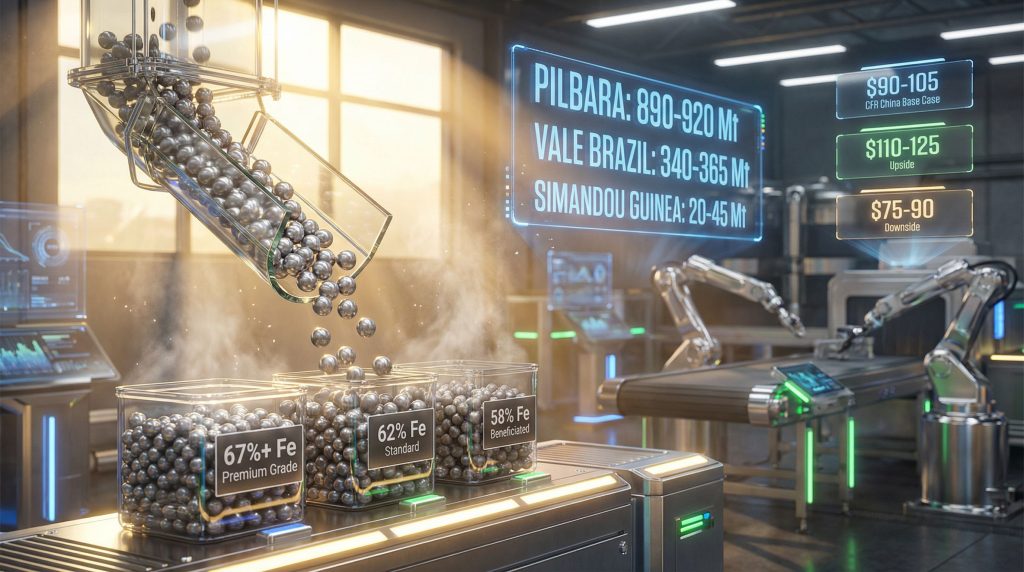
Major iron ore producers are implementing measured capacity expansion strategies that balance market demand with operational efficiency. Furthermore, current iron ore price trends suggest that sustained pricing levels support new capacity investments. The following table illustrates projected capacity development across key producing regions:
| Producer Region | 2026 Capacity (Mt) | 2027 Projected (Mt) | Primary Projects |
|---|---|---|---|
| Pilbara, Australia | 890 | 920 | Automation upgrades |
| Vale, Brazil | 340 | 365 | S11D optimization |
| Simandou, Guinea | 20 | 45 | Infrastructure completion |
These expansion programs face multiple constraints beyond traditional capital requirements. Environmental compliance costs are increasing significantly, with tailings management systems requiring substantial investment following recent dam failures in Brazil and regulatory tightening globally.
Water availability represents a growing constraint in key mining regions, driving adoption of dry processing technologies and closed-loop water systems. These innovations require higher capital expenditure but reduce operational risk in water-stressed environments.
Skilled labor availability and community relations considerations are becoming central to project development timelines. Mining companies are implementing more comprehensive stakeholder engagement programs that extend project development phases but improve long-term operational sustainability.
Ore Quality Degradation Challenges and Technical Responses
Global iron ore quality is experiencing systematic decline as easily accessible high-grade deposits become depleted. Average iron content across major producing regions has decreased from approximately 62% to 58% over the past decade, with implications for steel production efficiency and environmental performance.
High-grade ore (67%+ Fe content) now represents only about 15% of global production, creating premium markets for suppliers able to maintain quality specifications. This scarcity is driving investment in advanced beneficiation technologies and selective mining techniques.
Processing complexity is increasing as silica and alumina content rises in remaining reserves. Steel producers are responding by developing more sophisticated blending capabilities and investing in direct reduction iron (DRI) technologies that can utilise lower-grade feedstock more efficiently.
The emergence of hydrogen-based steel production technologies is creating new quality requirements, with DRI processes preferring 67%+ iron content ores. This technological shift may reverse the historical trend toward acceptance of lower-grade materials.
Environmental Compliance and Operational Cost Evolution
Environmental regulations are fundamentally reshaping iron ore mining economics through direct compliance costs and operational modifications. Carbon pricing mechanisms, including the EU Carbon Border Adjustment Mechanism, are beginning to influence trade flows and supplier selection criteria.
Tailings management standards have been substantially strengthened following dam failures, requiring mining companies to implement more conservative design criteria and monitoring systems. These changes increase both capital and operating costs but are essential for maintaining social licence to operate.
Key environmental compliance areas driving cost increases include:
- Advanced tailings storage facility design and monitoring
- Renewable energy adoption for mining operations
- Water consumption reduction and recycling systems
- Biodiversity protection and habitat restoration programmes
- Community investment and revenue-sharing arrangements
In addition, companies are increasingly investing in mining technology innovation to help offset environmental compliance costs. Automation and digitalisation investments are helping offset some environmental compliance costs through improved operational efficiency.
Furthermore, autonomous mining equipment can reduce labour costs by 15-20% whilst improving safety performance and environmental monitoring capabilities. Consequently, mine reclamation innovation is becoming a critical component of sustainable mining operations.
The next major ASX story will hit our subscribers first
Market Price Formation Mechanisms and Volatility Drivers
Iron ore pricing mechanisms are evolving from traditional annual benchmarks toward more responsive quarterly and monthly systems. The Singapore Exchange February contract reached $105.65/ton, reflecting this shift toward more frequent price discovery processes.
Seasonal restocking cycles remain powerful volatility drivers, with Chinese steel mills demonstrating predictable inventory-building patterns ahead of major holidays. Weather-related disruptions during Australian cyclone season and Brazilian wet season continue to create supply-side price volatility.
Freight rate fluctuations significantly impact delivered costs, with Baltic Dry Index movements affecting mining company margins and steel producer input costs. Capesize vessel availability averaging 85% utilisation during peak seasons creates additional transportation cost pressure.
Quality premiums and discounts are becoming more sophisticated as steel producers optimise their feedstock blending strategies. Premium ore pricing reflects both absolute iron content and processing characteristics that affect steel production efficiency.
Port Infrastructure Capacity and Shipping Bottlenecks
Major iron ore export infrastructure operates at high utilisation rates that limit flexibility during peak shipping periods. The following table shows current capacity utilisation across critical export hubs:
| Port | Current Capacity (Mtpa) | Utilisation Rate | Planned Upgrades |
|---|---|---|---|
| Port Hedland | 550 | 85% | Automated systems |
| Dampier | 170 | 78% | Rail expansion |
| Tubarão | 130 | 82% | Berth optimisation |
Panama Canal congestion is forcing longer Cape of Good Hope routing for iron ore shipments, increasing transportation costs and voyage times. IMO 2020 fuel regulations have further increased shipping expenses through higher-cost marine fuel requirements.
Port automation investments are improving loading efficiency but require substantial capital expenditure and coordination with rail infrastructure upgrades. These improvements are essential for maintaining competitiveness as global trade patterns evolve.
Alternative routing strategies are being developed to reduce dependence on traditional shipping lanes, with some producers exploring Arctic routes and alternative transshipment hubs to improve supply chain resilience.
Investment Scenario Framework and Risk Assessment
However, understanding current surplus dynamics remains crucial for investment decision-making.
Base Case Scenario (60% probability):
- Price range: $90-105 per tonne CFR China
- Chinese consumption stable at 1.1 billion tonnes annually
- Supply growth of 3-4% from existing operations
- Moderate infrastructure stimulus in emerging markets
Upside Scenario (25% probability):
- Price range: $110-125 per tonne
- Chinese infrastructure spending revival
- Supply constraints from environmental restrictions
- Accelerated green steel transition driving premium ore demand
Downside Scenario (15% probability):
- Price range: $75-90 per tonne
- Steel substitution by advanced materials
- Oversupply from new projects entering production
- Global economic slowdown reducing steel demand
These scenarios incorporate both cyclical factors and structural changes in steel demand patterns. Investors must consider iron-ore demand and supply constraints within broader commodity cycle timing and technological disruption risks.
Technology Disruption and Future Production Methods
Direct reduction iron technology represents the most significant potential disruption to traditional iron ore markets. Hydrogen-based steel production requires high-grade ore (67%+ Fe content), potentially creating bifurcated markets between premium and standard quality materials.
Investment requirements for global green steel transition are estimated at $50-80 billion, with implications for both steel producers and iron ore suppliers. Mining companies with high-grade reserves may gain competitive advantages as this transition accelerates.
Automation and digitalisation improvements include:
- Autonomous mining equipment reducing labour costs
- Predictive maintenance optimising equipment uptime
- Real-time quality monitoring improving ore consistency
- IoT sensors enabling preventive maintenance programmes
Beneficiation technology advances are enabling extraction of higher iron content from previously sub-economic deposits. Magnetic separation improvements and dry processing methods are expanding reserve bases whilst reducing environmental impacts.
Regulatory Environment and Social Licence Considerations
Mining exclusion zones are expanding in ecologically sensitive areas, reducing available exploration and development areas for iron ore projects. Biodiversity protection requirements are becoming more stringent, affecting project approval timelines and operational parameters.
Indigenous rights considerations, including free, prior, and informed consent requirements, are standard practice for new project development. These requirements extend development timelines but improve long-term community relations and operational security.
Key regulatory trends affecting iron ore operations:
- Enhanced environmental impact assessment requirements
- Stricter post-mining land rehabilitation standards
- Mandatory local content procurement preferences
- Community revenue-sharing agreement expectations
- Carbon emissions reporting and reduction targets
Social licence maintenance requires ongoing investment in community programmes, local employment, and environmental monitoring. These costs are increasingly viewed as operational necessities rather than discretionary expenses.
Strategic Implications for Market Participants
Steel producers are implementing feedstock diversification strategies to reduce dependence on single-source suppliers whilst investing in blending capabilities for different ore grades. Green transition planning involves evaluating DRI technology adoption timelines and associated feedstock quality requirements.
Mining companies are focusing asset portfolio optimisation on high-grade, low-cost operations whilst making substantial technology investments in automation and beneficiation capabilities. For instance, accessing relevant demand insights can help inform strategic planning decisions.
ESG performance is becoming a competitive differentiator affecting access to capital and customer relationships. Moreover, companies are increasingly using strong demand prospects to justify expansion investments.
Investment considerations include:
- Incorporation of ESG metrics in valuation frameworks
- Geographic diversification across mining jurisdictions
- Technology disruption risk assessment methodologies
- Commodity cycle timing versus structural trend analysis
- Supply chain resilience and alternative sourcing strategies
The convergence of environmental regulations, technological change, and shifting demand patterns is creating a more complex operating environment for iron ore market participants. Success requires sophisticated understanding of both cyclical market dynamics and structural transformation forces affecting long-term industry evolution.
Forward-looking analysis suggests that iron-ore demand and supply constraints will continue evolving as green steel technologies mature and global infrastructure priorities shift toward sustainability-focused projects. Market participants must develop adaptive strategies that can respond to both traditional commodity cycles and emerging technological disruptions affecting steel production methods and raw material requirements.
Looking to Capitalise on Iron Ore and Mining Opportunities?
Discovery Alert's proprietary Discovery IQ model delivers real-time notifications on significant ASX mineral discoveries, including iron ore and related mining opportunities, empowering subscribers to identify actionable trading prospects ahead of the broader market. Begin your 30-day free trial today and position yourself strategically as global iron ore fundamentals continue evolving.