
August 6, 2026
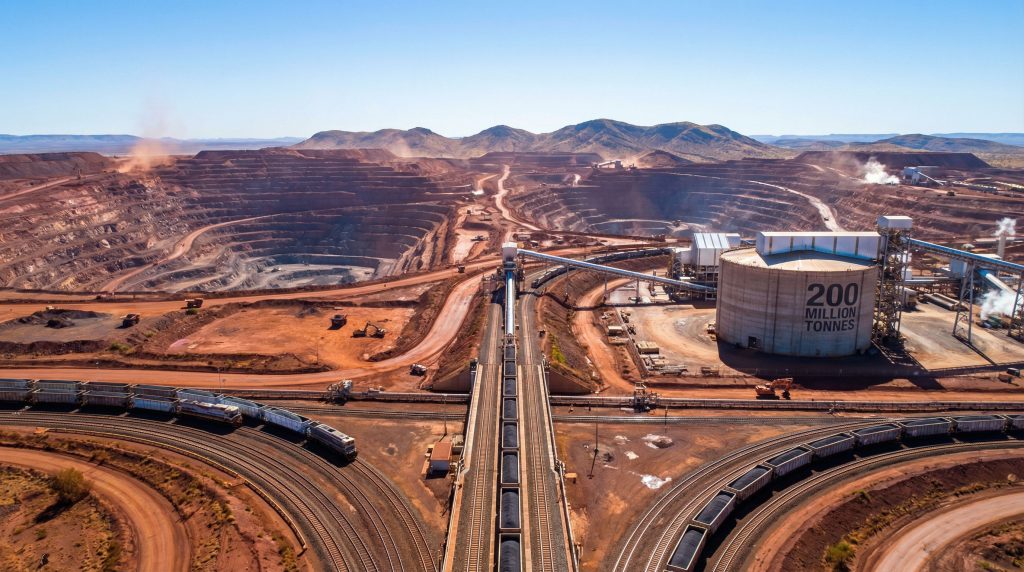
The Rio Tinto and BHP Pilbara iron ore collaboration represents a paradigm shift from traditional competitive mining models toward integrated operational frameworks designed to maximise asset utilisation across company boundaries. Australia's mature mining regions face a critical juncture where operational efficiency through collaborative partnerships has emerged as the primary path toward sustained competitiveness. The iron ore sector, representing nearly half of Western Australia's merchandise export value, increasingly prioritises asset optimisation over greenfield development as global steel demand patterns stabilise and infrastructure costs escalate.
The emergence of cross-company operational frameworks in the Pilbara reflects broader industry recognition that maximising returns from existing infrastructure delivers superior risk-adjusted outcomes compared to independent facility development. As seaborne iron ore markets approach maturity with annual trade volumes stabilising around 1,500-1,600 million tonnes, the emphasis on cost-per-tonne optimisation through shared logistics and processing capabilities becomes strategically imperative. Furthermore, current iron ore price trends indicate a shift toward sustainable production models rather than cyclical expansion strategies.
Strategic Infrastructure Optimisation in Mature Mining Regions
The partnership centres on extracting approximately 200 million tonnes of iron ore through coordinated development of the Wunbye deposit and Yandi Lower Channel operations, leveraging existing infrastructure to minimise capital expenditure while extending operational lifespans. This collaboration builds upon successful precedents established by the BHP strategic pivot toward integrated operational models across major mining assets.
Western Australia's dominance in global seaborne iron ore supply, accounting for approximately 45-50% of international trade volumes, creates unique opportunities for infrastructure sharing that would be impractical in less concentrated mining regions. The Pilbara's established rail networks, port facilities, and processing plants represent decades of capital investment totalling billions of AUD, making asset optimisation financially attractive compared to duplicative development projects.
The collaboration builds upon the successful 2023 Mungadoo Pillar agreement between the same operators, which enabled mining of previously inaccessible ore from shared tenure boundaries. This earlier partnership established operational protocols and regulatory pathways that facilitate the current, more ambitious infrastructure-sharing initiative.
Key Partnership Components:
- Wunbye Deposit Development: Joint exploration and potential co-development of Rio Tinto's previously uneconomic reserve
- Yandi Lower Channel Processing: Toll arrangement enabling BHP to utilise Rio Tinto's existing wet processing facilities
- Shared Infrastructure Access: Coordinated rail scheduling and port facility utilisation
- Combined Resource Extraction: Integrated mining sequences across adjacent operations
The timing of this collaboration during moderate iron ore pricing conditions (historically ranging $80-150 USD per tonne) demonstrates focus on structural cost advantages rather than short-term price hedging strategies. This long-term perspective aligns with industry trends toward sustainable production growth through existing asset optimisation.
When big ASX news breaks, our subscribers know first
Production Scale Impact on Global Iron Ore Markets
The 200 million tonne extraction target represents substantial production capacity equivalent to approximately 2-3 years of current global seaborne iron ore trade, positioning the collaboration as a significant factor in long-term supply stability. This volume extends operational life for both mining complexes whilst providing steel mills with enhanced delivery consistency from established Pilbara operations.
Australia's total iron ore production capacity exceeds 900 million tonnes annually across all major producers, with operations spanning some of the largest iron ore mines globally. The collaboration's output represents meaningful incremental capacity that reinforces Australia's technological and logistical advantages in serving Asia-Pacific steel markets.
Production Scale Comparison:
| Producer Category | Annual Capacity (Mt) | Market Share |
|---|---|---|
| Rio Tinto Pilbara | 100+ | ~7% global seaborne |
| BHP WA Iron Ore | 30+ | ~2% global seaborne |
| Collaboration Target | 200 (lifetime) | Extended production timeline |
| Total Australia | 900+ | 45-50% global seaborne |
The partnership's emphasis on extending operational life rather than replacing existing capacity suggests these deposits represent defined mineral resources being accelerated through coordinated development timelines. Both companies indicated the collaboration will create additional value whilst supporting Western Australian employment and community development.
Reserve optimisation through shared infrastructure allows previously marginal deposits to achieve economic viability without requiring full-scale independent development. The Wunbye deposit, previously considered uneconomic for Rio Tinto to develop alone, becomes viable through toll processing arrangements that eliminate the need for duplicate crushing and beneficiation facilities.
Economic Multiplier Effects Across Regional Communities
The Pilbara region, with approximately 76,000 residents, relies heavily on iron ore operations that provide direct employment for over 30,000 mining professionals across major producers. The collaboration's impact extends beyond direct operational roles to encompass construction phases, ongoing maintenance services, and supply chain expansion throughout Western Australia.
Infrastructure sharing models typically reduce individual capital requirements by 30-40% compared to independent development, translating to potential CAPEX savings measured in billions of AUD given typical Pilbara project scales. These cost efficiencies enable accelerated project timelines and enhanced return on investment for both operators whilst supporting regional economic development.
Employment Impact Categories:
- Direct Operations: Mining personnel, processing plant operators, rail and port logistics staff
- Construction Phase: Engineering contractors, equipment installation specialists, accommodation services
- Support Services: Maintenance contractors, safety compliance experts, environmental monitoring teams
- Community Services: Training providers, procurement specialists, indigenous liaison programmes
The requirement to harmonise equipment and safety protocols across companies creates demand for specialised consulting services and workforce development programmes. Regional training initiatives must align dual-company operational standards whilst maintaining individual corporate safety cultures and equipment specifications.
Supply chain expansion opportunities emerge from increased vendor requirements for maintenance services, logistics coordination, environmental compliance, and community engagement across both operations. The existing Pilbara mining services sector includes specialist contractors in equipment leasing, environmental consulting, and transport logistics positioned to expand under collaborative operational models.
Historical precedents from major Pilbara developments demonstrate significant economic multipliers. Previous expansion projects contributed to regional population growth, infrastructure development, and diversified service provider ecosystems that support ongoing mining operations throughout Western Australia.
What Makes This Geological Compatibility Unique?
The Yandicoogina and Yandi iron ore deposits represent Archean-aged Banded Iron Formations characteristic of the Pilbara's world-class mineral endowment. These geological formations typically contain iron ore grades ranging from 60-65% Fe for premium direct-shipping ore and 40-50% Fe for material requiring beneficiation through crushing, screening, and magnetic separation processes.
Deposit Characteristics Analysis:
- Yandicoogina Complex: Rio Tinto's established open-pit operation producing both direct-shipping ore and low-grade material for wet processing
- Yandi Lower Channel: BHP's specific ore zone within the broader Yandi field, suitable for beneficiation through Rio Tinto's existing wet plants
- Wunbye Deposit: Previously uneconomic reserve becoming viable through shared infrastructure arrangements
Geological compatibility between deposits ensures predictable processing outcomes when BHP's Yandi ore utilises Rio Tinto's beneficiation circuits. The partnership's viability depends on metallurgical testing confirming that Yandi Lower Channel ore responds consistently to Rio Tinto's established processing flowsheets, eliminating technical risks associated with ore blending from multiple sources.
How Do Mining Sequences Coordinate?
Adjacent pit operations create geometric and hydrological interdependencies requiring careful coordination:
- Pit Wall Stability: Operations in neighbouring pits can affect slope stability through vibration and groundwater impacts
- Dewatering Systems: Coordinated water management prevents conflicts between adjacent mining operations
- Extraction Scheduling: Sequenced pit development avoids geological hazards and optimises ore grade blending opportunities
Quality control standardisation addresses sampling protocols, grade blending methodologies, and contamination management across dual-company operations. Both operators must align on sampling frequency, grade classification systems, and payment terms for toll processing arrangements whilst maintaining target concentrate grades around 68% Fe for export markets.
The 30+ year operational history of BHP's Yandi mine provides extensive geological and processing data supporting metallurgical compatibility assessments. Rio Tinto's wet processing facilities demonstrate proven capability with diverse ore types, reinforcing technical feasibility for integrated ore treatment from multiple sources.
Infrastructure Integration and Operational Coordination
The collaboration requires sophisticated coordination across rail networks, processing facilities, and port operations representing billions of AUD in historical infrastructure investment. Rio Tinto operates approximately 350 kilometres of dedicated mining rail infrastructure in the Pilbara, whilst both companies maintain separate processing plants sized for their respective operational requirements.
Infrastructure Integration Challenges:
| Integration Area | Primary Challenge | Coordination Requirement |
|---|---|---|
| Rail Networks | Scheduling conflicts between operators | Harmonised dispatch systems and priority protocols |
| Processing Plants | Capacity allocation and throughput optimisation | Toll processing agreements and plant utilisation targets |
| Port Access | Coordinated shipping schedules | Joint marketing arrangements and berth allocation |
| Quality Control | Standardised sampling and grading | Unified payment terms and grade classification |
Rail scheduling coordination represents the most complex operational challenge, as both companies maintain dedicated rail corridors optimised for their individual operations. Integrating BHP ore movements through Rio Tinto's processing facilities requires dispatch frequency harmonisation, priority establishment protocols, and shared capacity utilisation strategies that maintain operational flexibility whilst maximising asset efficiency.
Processing plant capacity allocation leverages Rio Tinto's existing wet beneficiation facilities, which can process over 150 million tonnes annually of ore slurry. The partnership indicates current capacity utilisation below maximum levels, enabling incremental BHP ore processing through commercially agreed toll arrangements that optimise plant throughput without requiring additional capital investment.
Technology and Safety Harmonisation Requirements:
- Equipment Standardisation: Alignment of maintenance protocols and spare parts inventory across operations
- Safety Protocol Integration: Coordinated emergency response procedures and incident reporting systems
- Environmental Monitoring: Unified compliance reporting and impact assessment methodologies
- Training Programmes: Cross-company certification for personnel working in shared operational areas
Port coordination through existing facilities at Cape Lambert and Port Hedland requires synchronised shipping schedules and potentially joint marketing arrangements to optimise vessel loading efficiency. Combined iron ore export throughput exceeding 300 million tonnes annually from regional facilities creates opportunities for enhanced customer service through coordinated delivery scheduling.
Regulatory Framework and Approval Processes
The partnership requires navigation of Australia's comprehensive regulatory framework governing resource sector collaborations, traditional owner consultation, and environmental impact assessment. The Australian Competition and Consumer Commission (ACCC) will assess market concentration implications and competition law compliance for this arrangement between two of Australia's largest iron ore producers.
Regulatory Assessment Categories:
- Competition Analysis: Market share evaluation and competitive impact assessment on smaller Pilbara producers
- Public Interest Review: Economic benefits analysis balanced against potential market concentration concerns
- Resource Tenure Coordination: Alignment of mining lease conditions and production reporting requirements
- Export Licence Compliance: Coordination of iron ore export approvals and quota management
Traditional Owner engagement represents a critical approval pathway requiring consultation with native title holders across both operational areas. However, this collaboration reflects broader mining consolidation trends where established protocols for cultural heritage protection and community benefit sharing must be coordinated across dual-company operations whilst respecting distinct indigenous community relationships maintained by each operator.
Environmental Assessment Requirements:
Joint environmental impact studies address cumulative effects of coordinated mining operations, particularly regarding:
- Groundwater Management: Coordinated dewatering and water resource protection across adjacent pits
- Dust and Noise Control: Combined impact assessment for expanded operational areas
- Rehabilitation Planning: Integrated mine closure and land rehabilitation strategies
- Biodiversity Protection: Coordinated environmental monitoring and species protection programmes
The 2023 Mungadoo Pillar agreement provides regulatory precedent for dual-company operations in the Pilbara, demonstrating established pathways for obtaining necessary approvals whilst maintaining compliance with Australian resource sector governance requirements.
Sustainability reporting obligations require coordinated environmental, social, and governance (ESG) reporting across shared operations whilst maintaining individual corporate reporting standards and stakeholder engagement commitments.
The next major ASX story will hit our subscribers first
Financial Implications and Commercial Arrangements
The partnership's financial structure centres on toll processing agreements enabling BHP to access Rio Tinto's wet beneficiation capacity without duplicative capital investment. Commercial terms must address processing fees, profit allocation methodologies, and risk distribution frameworks whilst maintaining competitive positioning for both operators in global iron ore markets.
Capital Expenditure Optimisation:
Infrastructure sharing eliminates the need for BHP to develop independent processing facilities for Yandi Lower Channel ore, potentially reducing individual capital requirements by 30-40% compared to standalone development scenarios. These savings enable accelerated project economics and enhanced return on investment timelines for both companies.
- Reduced Infrastructure Investment: Elimination of duplicate crushing, screening, and magnetic separation facilities
- Shared Development Costs: Coordinated pit development and infrastructure expansion expenses
- Optimised Maintenance Spending: Shared equipment utilisation and maintenance scheduling efficiencies
Revenue sharing models require sophisticated frameworks addressing ore grade variations, processing recovery rates, and market price fluctuations. Toll processing fees must reflect actual processing costs whilst providing fair returns for infrastructure utilisation and operational coordination complexities.
Financial Risk Distribution:
| Risk Category | Mitigation Approach | Allocation Method |
|---|---|---|
| Processing Recovery | Guaranteed minimum recovery rates | Shared performance metrics |
| Market Price Volatility | Long-term pricing agreements | Individual market exposure |
| Operational Disruption | Force majeure provisions | Coordinated contingency planning |
| Capital Cost Overruns | Fixed toll processing fees | Individual project responsibility |
"Infrastructure sharing could reduce individual capital requirements by 30-40% whilst maintaining production targets, significantly improving project economics for both operators through optimised asset utilisation and reduced duplication of expensive processing infrastructure," according to industry analysts following the Rio Tinto and BHP announce collaboration.
The partnership's emphasis on utilising existing infrastructure aligns with shareholder expectations for capital discipline and enhanced returns from mature assets. Both companies benefit from extended operational life and improved capital efficiency without requiring substantial new investment in processing technology or port facilities.
How Does This Impact Global Steel Production?
The collaboration enhances supply chain reliability for Asian steel mills through reduced single-point-of-failure risks and improved delivery consistency from established Pilbara operations. Combined production capacity provides steel manufacturers with enhanced security of supply during planned maintenance periods or unexpected operational disruptions at individual facilities.
Steel mill procurement strategies increasingly favour suppliers offering long-term supply security and consistent ore quality specifications. The partnership's ability to blend ore from multiple sources whilst maintaining target concentrate grades around 68% Fe provides steelmakers with technical advantages in blast furnace operations and overall production efficiency.
Market Price Dynamics Considerations:
- Supply Stability: Increased production coordination reduces market volatility from individual operational disruptions
- Competitive Positioning: Enhanced cost competitiveness against Brazilian iron ore suppliers through shared infrastructure efficiencies
- Contract Negotiation Strength: Combined marketing capabilities potentially improve long-term contract terms with major steel producers
The partnership's production timeline extending into the early 2030s provides steel mills with visibility for long-term procurement planning whilst supporting price stability in seaborne iron ore markets. Enhanced operational reliability through dual-company coordination addresses steel industry concerns about supply security during periods of high demand volatility.
Asian steel markets, which consume the majority of Australian iron ore exports, benefit from improved logistics coordination and potentially enhanced shipping efficiency through coordinated port utilisation. The ability to optimise vessel loading schedules across combined operations reduces transportation costs and improves overall supply chain efficiency.
Future Mining Industry Collaboration Models
The partnership establishes important precedents for resource sector collaborations in mature mining regions where asset optimisation delivers superior returns compared to greenfield development. This cooperative framework demonstrates regulatory acceptance and operational feasibility for competitor partnerships in capital-intensive industries.
Template for Industry Transformation:
- Infrastructure Sharing Models: Proven frameworks for rail, port, and processing facility coordination
- Regulatory Approval Pathways: Established precedents for competition law compliance and traditional owner engagement
- Commercial Arrangements: Tested toll processing and revenue sharing methodologies
- Operational Integration: Demonstrated protocols for safety, environmental, and quality control coordination
Technology sharing opportunities emerge from joint research and development initiatives, shared innovation in mining automation, and collaborative sustainability programmes. Both companies maintain substantial research capabilities that could be leveraged for mutual benefit whilst maintaining competitive advantages in other operational areas.
Strategic Scenario Analysis:
| Scenario | Probability | Key Outcomes | Industry Implications |
|---|---|---|---|
| Full Implementation | 75% | 200Mt production, extended mine life | Model for mature region optimisation |
| Partial Implementation | 20% | Limited sharing, reduced targets | Selective infrastructure collaboration |
| Partnership Dissolution | 5% | Return to independent operations | Traditional competitive models persist |
The evolution from competition to collaboration in mature mining regions reflects industry recognition that sustainable growth requires optimisation of existing assets rather than continuous expansion into new territories. This shift toward cooperative resource development models may influence strategic planning across other commodity sectors facing similar infrastructure and capital allocation challenges.
Investment community expectations for capital discipline and enhanced returns from mature assets support collaborative approaches that extend operational life whilst improving asset utilisation metrics. The partnership demonstrates how traditional competitors can create mutual value through strategic coordination without compromising individual market positioning or operational capabilities.
Long-Term Strategic Implications for Resource Sector Investment
The partnership represents fundamental changes in resource sector strategic planning, emphasising asset optimisation over expansion-focused growth strategies. This shift reflects mature market conditions where infrastructure sharing delivers superior risk-adjusted returns compared to independent facility development in increasingly capital-intensive mining environments.
Enhanced operational efficiency metrics through collaborative models provide investors with improved visibility into long-term cash flow generation and reduced capital intensity requirements. The ability to extend mine life whilst optimising infrastructure utilisation addresses investor concerns about stranded assets and capital allocation discipline in mature mining regions.
Investment Performance Indicators:
- Reduced Capital Intensity: Lower capital expenditure per tonne of production capacity through shared infrastructure
- Extended Asset Life: Improved return on historical infrastructure investment through optimised utilisation
- Enhanced Cash Flow Predictability: Reduced operational risk through dual-company coordination and backup capabilities
The collaboration's emphasis on sustainable production growth through existing asset optimisation aligns with environmental, social, and governance (ESG) investment criteria increasingly important to institutional investors. Shared infrastructure reduces environmental footprint per tonne of production whilst supporting regional community development through extended operational timelines.
Furthermore, current iron ore demand insights suggest that collaborative models will become increasingly important as global steel production stabilises and mining companies focus on operational excellence rather than capacity expansion.
This transformation toward cooperative resource development signals broader industry recognition that sustainable competitive advantages emerge from operational excellence and capital efficiency rather than scale-based strategies requiring continuous expansion into higher-risk development projects. According to Australian Mining analysis, such partnerships represent a fundamental shift in how major miners approach resource extraction in mature regions.
"The shift toward cooperative resource development emphasises existing asset optimisation over greenfield expansion, reflecting mature market conditions where infrastructure sharing delivers superior risk-adjusted returns and supports sustainable production growth strategies," industry experts note.
This analysis reflects current industry conditions and partnership announcements as of early 2026. Mining operations involve inherent risks, and actual outcomes may vary based on geological conditions, market developments, and regulatory changes. Investors should conduct independent research and consider professional advice before making investment decisions in the resource sector.
Are You Ready to Capitalise on Strategic Mining Partnerships?
Discovery Alert instantly notifies investors when significant ASX mineral discoveries are announced, using its proprietary Discovery IQ model to transform complex mining data into clear, actionable insights. While major partnerships like Rio Tinto and BHP demonstrate the industry's evolution toward collaborative frameworks, astute investors can gain early exposure to emerging players through Discovery Alert's discoveries page, which showcases how historic mineral discoveries have generated substantial market returns.