August 14, 2026
The iron ore price decline due to high China stocks represents more than a simple supply-demand imbalance. Industrial commodity markets face unprecedented disruption as structural forces reshape global supply chains. Traditional demand-supply models struggle to explain modern price volatility patterns, particularly when inventory accumulation occurs alongside production recovery signals. Understanding these paradoxical dynamics requires examining the complex interplay between financial speculation, geopolitical tensions, and the intricate mechanisms governing raw material flows across international borders.
Understanding the Current Iron Ore Market Dynamics
Recent market data reveals a sophisticated ecosystem where inventory levels serve as both consequence and catalyst for price movements across multiple trading venues. Furthermore, the current situation demonstrates how iron ore demand insights become crucial for understanding market mechanics.
China's Dominant Market Position
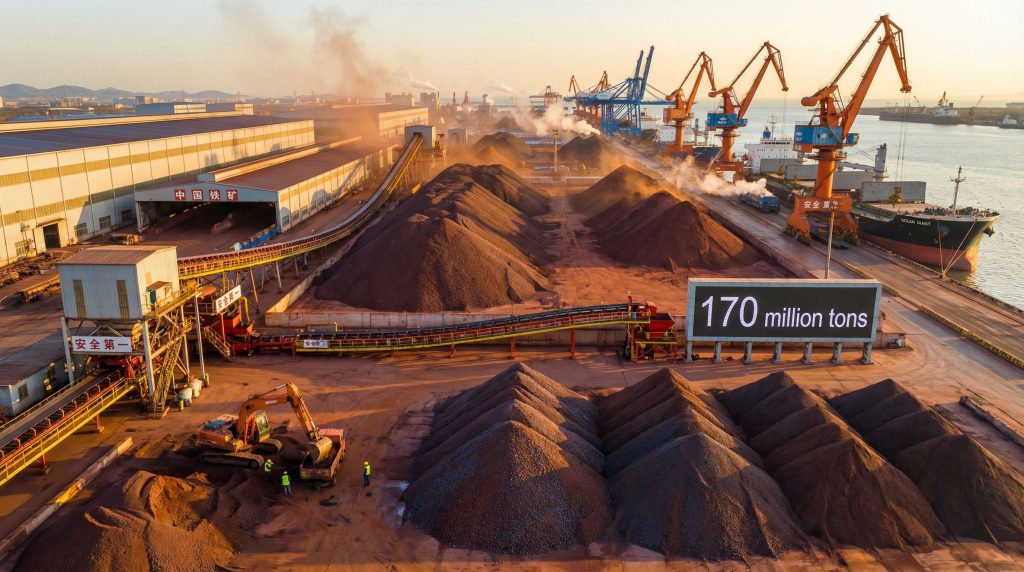
China's steel industry consumes approximately 70% of global iron ore production, making domestic inventory fluctuations a primary driver of international pricing. As of April 2026, Chinese port stockpiles reached 177.5 million tons across 47 major facilities, representing a 0.5% weekly increase that pushed inventories to within 98.9% of the record high of 179.47 million tons established in mid-March.
These inventory levels create immediate downward pressure on pricing mechanisms. The Dalian Commodity Exchange most-traded contract declined to 799.5 yuan ($116.26) per metric ton, while Singapore Exchange May contracts fell to $105.4 per ton, demonstrating synchronized price discovery across venues despite different contract specifications.
Price Discovery Mechanisms and Arbitrage Relationships
The persistent $10.86 per ton spread between DCE contracts (converted to USD) and Singapore Exchange pricing reflects sophisticated arbitrage relationships rather than market inefficiency. This differential incorporates:
- Physical delivery logistics and associated costs
- Currency hedging premiums for international transactions
- Storage and financing cost variations between domestic and offshore markets
- Trading hour misalignments affecting price synchronization
Market participants utilise these spreads for strategic positioning, creating additional volatility layers beyond fundamental supply-demand factors. The correlation between venue movements (DCE down 1.5% weekly, Singapore Exchange down 1.7%) confirms shared underlying drivers while maintaining venue-specific premium structures.
Technical Market Structure Analysis
Port inventory levels above 170 million tons historically signal oversupply conditions that pressure prices regardless of production activity levels. However, current market dynamics reveal counter-intuitive patterns where inventory accumulation coincides with production recovery signals.
Average daily hot metal output reached 2.37 million tons as of April 2, 2026, representing a 2.7% weekly increase and the highest production level since October 2025. This production recovery occurring alongside inventory buildup suggests:
Critical Market Signal: Import volumes are arriving faster than mills can process materials, indicating either strategic stockpiling behaviour or timing misalignments between overseas shipments and domestic consumption schedules.
When big ASX news breaks, our subscribers know first
Global Supply Chain Implications and Trade Dynamics
International trade policy developments create cascading effects throughout iron ore markets. The US–China trade war impact demonstrates how downstream steel trade barriers influence upstream raw material demand patterns.
Vietnam's Anti-Dumping Measures Impact
Vietnam's implementation of a 27.83% anti-dumping levy on Chinese hot-rolled coil steel products, effective April 17, 2026, illustrates how trade policy transmission mechanisms affect commodity pricing before implementation dates.
| Policy Element | Specification | Market Impact |
|---|---|---|
| Levy Rate | 27.83% on hot-rolled coil | Reduced Chinese export competitiveness |
| Implementation | April 17, 2026 | Anticipatory pressure on steel futures |
| Market Response | Hot-rolled coil futures declined 0.24% | Upstream iron ore demand concerns |
| Strategic Effect | Export market viability constraints | Potential domestic inventory accumulation |
This trade barrier creates sufficient cost burden to materially impact China's competitive positioning in Vietnamese markets. Consequently, it reduces demand expectations for iron ore inputs used in export-destined steel production.
Geopolitical Shipping Cost Escalation
Middle East conflicts demonstrate how geopolitical risks transmit through logistics cost channels rather than direct supply disruption. Ship-tracking analytics firm Kpler reports that ongoing regional instability continues driving up freight and fuel costs, creating upward pressure on delivered iron ore prices even when free-on-board pricing declines.
This cost structure reveals supply chain resilience through alternative routing capabilities. However, increased transportation expenses serve as the primary transmission mechanism to end-market pricing.
Steel Production Ecosystem and Maintenance Cycles
Chinese steel mill maintenance patterns create predictable demand fluctuations that sophisticated market participants monitor for trading opportunities and inventory management strategies.
Production Restart Dynamics
The current production recovery phase demonstrates how maintenance completion cycles provide price support even during high inventory periods. Hot metal output reaching 2.37 million tons daily represents a significant rebound from the October 2025 baseline, indicating coordinated industry maintenance scheduling during historically weak demand periods.
Mill restart patterns exhibit several characteristics:
- Coordinated timing: Major facilities synchronise maintenance to minimise market disruption
- Gradual ramp-up: Production increases occur incrementally rather than instantaneously
- Inventory coordination: Restart timing often coincides with accumulated raw material stockpiles
- Quality considerations: Mills prioritise higher-grade ores during restart phases to optimise furnace performance
Demand Recovery Indicators
The 2.7% weekly increase in hot metal production provides quantitative evidence of improving steel sector fundamentals despite elevated port inventories. This recovery pattern suggests that inventory accumulation reflected strategic positioning ahead of anticipated demand increases rather than structural oversupply.
Mills resuming operations after equipment maintenance create immediate iron ore consumption increases. Furthermore, they typically absorb accumulated inventories within 4-6 weeks of sustained production ramp-up. The timing alignment between inventory peaks and production recovery indicates sophisticated supply chain coordination within the Chinese steel sector.
Market Structure and Investment Implications
Current market conditions create multiple investment scenarios depending on inventory normalisation timing and production sustainability trends. Moreover, understanding tariffs impact investments becomes essential for strategic positioning.
Contrarian Investment Positioning
Inventory-driven price declines during production recovery phases historically present attractive entry opportunities for patient investors. The combination of:
- High inventory levels (177.5 million tons) creating immediate price pressure
- Production recovery signals (2.37 million ton daily output) indicating demand improvement
- Seasonal construction preparation approaching in major consuming regions
- Maintenance cycle completion removing temporary demand constraints
Creates conditions favourable for medium-term price recovery as inventory normalisation occurs alongside sustained demand growth.
Risk Assessment Framework
Current market positioning requires evaluating multiple risk factors. Additionally, consulting an investment strategies guide can provide valuable insights for portfolio management.
Upside Catalysts:
- Sustained steel production increases above current 2.37 million ton daily rate
- Infrastructure spending announcements in major consuming regions
- Supply disruptions from major producing countries
- Currency appreciation creating import cost advantages
Downside Risks:
- Extended maintenance periods reducing consumption below anticipated levels
- Additional trade barriers affecting steel export demand
- Economic slowdown reducing construction activity
- Alternative material substitution in steel applications
Economic Forecasting and Structural Market Changes
Long-term iron ore demand faces transformational pressures from decarbonisation initiatives, technological advances, and shifting consumption patterns in major economies.
Technology-Driven Demand Evolution
Electric arc furnace adoption rates increasingly influence raw material consumption patterns. Traditional blast furnace operations require approximately 1.6 tons of iron ore per ton of steel output, while electric arc furnaces utilising scrap steel reduce this ratio to 0.3-0.4 tons per ton of finished product.
Green Steel Production Impact
Hydrogen-based steel production technologies, while currently limited in commercial scale, represent potential structural demand changes for iron ore markets. These processes require:
- Higher-grade iron ore (>65% iron content) for optimal efficiency
- Different pelletisation specifications compared to traditional blast furnace feed
- Reduced coking coal requirements affecting integrated commodity demand patterns
- Modified logistics infrastructure for hydrogen storage and transport
Regional Demand Redistribution
China's steel production optimisation policies create opportunities for capacity development in Southeast Asia, India, and other emerging markets. China's economic growth slowdown affects global commodity demand patterns significantly. This geographical redistribution affects:
- Shipping route economics as demand centres shift
- Port infrastructure requirements in developing regions
- Long-term contract structures between miners and consumers
- Currency hedging strategies for international transactions
The next major ASX story will hit our subscribers first
Strategic Planning and Risk Management
Market participants require sophisticated approaches to navigate volatility patterns driven by inventory accumulation, policy changes, and production cycle variations.
Inventory Management Strategies
Steel producers optimise working capital through inventory timing aligned with production schedules and seasonal demand patterns. Current elevated inventory levels suggest either strategic accumulation ahead of anticipated demand increases or supply chain timing misalignments requiring corrective adjustments.
Hedging Mechanisms and Derivatives
Commodity derivatives markets provide risk management tools through:
- Futures contracts on both DCE and Singapore Exchange platforms
- Options strategies for managing downside price exposure
- Swap agreements for long-term price risk transfer
- Physical storage arbitrage capturing timing premiums
Early Warning System Development
Sophisticated market participants monitor multiple indicators for trend identification:
- Real-time port inventory tracking through satellite monitoring and vessel tracking data
- Production activity indicators including hot metal output and capacity utilisation rates
- Trade policy monitoring for anticipating demand shifts in export markets
- Currency movement analysis affecting import cost structures and competitive positioning
The combination of record-high inventories alongside production recovery signals creates unique market conditions requiring careful analysis of underlying supply-demand fundamentals. In conclusion, the iron ore price decline due to high China stocks reflects complex market dynamics rather than relying solely on traditional inventory-price relationships.
This analysis is provided for informational purposes only and should not be considered investment advice. Commodity markets involve substantial risk, and past performance does not guarantee future results. Readers should conduct their own research and consult with qualified financial advisors before making investment decisions.
Want to Stay Ahead of ASX Commodity Market Movements?
Discovery Alert's proprietary Discovery IQ model delivers real-time notifications on significant ASX mineral discoveries, instantly empowering subscribers to identify actionable opportunities ahead of the broader market. Begin your 14-day free trial today and secure your market-leading advantage in the fast-moving commodity sector.