July 27, 2026
The global steel industry faces an unprecedented convergence of challenges as iron ore quality decline and green steel ambitions intersect in complex market dynamics. Major mining operations that sustained consistent ore grades for decades are now experiencing their first significant downgrades, fundamentally altering market dynamics and forcing stakeholders to reassess traditional benchmarks.
This transformation extends beyond simple grade reductions. Rising impurity levels in traded ores are creating cascading operational challenges for steel producers, while simultaneously increasing the urgency for high-grade materials needed in emerging green steel technologies. The result is a complex market paradox where declining supply quality meets escalating demand for premium feedstock.
How Ore Quality Degradation Affects Global Steel Production
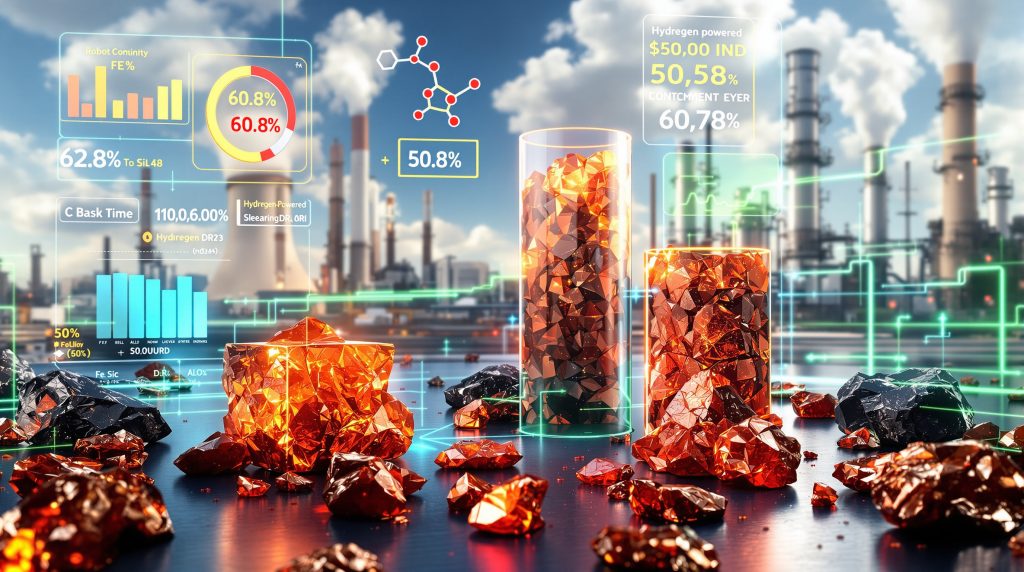
The recent decline in flagship iron ore blends marks a historic shift in global mining operations. Rio Tinto and BHP's Pilbara Blend Fines dropped from 62% to 60.8% iron content, representing the first official downgrade in over two decades. This 1.2 percentage point reduction signals broader geological realities as high-grade surface deposits reach depletion.
Mining operations increasingly extract material from deeper geological strata, where ore bodies naturally contain lower iron concentrations and elevated impurity levels. The transition from supergenetic enrichment zones near surface levels to primary hypogene zones at greater depths fundamentally changes ore composition. Moreover, iron ore price trends reflect this quality deterioration through adjusted pricing mechanisms.
Impurity Concentrations Reach Critical Thresholds
Current traded ores average 4.3% silica and 2.5% alumina, substantially higher than historical benchmarks that assumed 2-3% silica and 1-2% alumina. These elevated impurity levels create multiple operational challenges:
- Increased energy consumption in blast furnaces due to higher slag formation
- Additional coking coal requirements to compensate for thermal inefficiencies
- Reduced furnace productivity from higher melting temperature slag compositions
- Higher operational costs that directly impact steel mill profitability
The metallurgical implications are significant. Each percentage point increase in silica requires approximately 20-25 kg additional lime flux per tonne of hot metal, while elevated alumina levels create calcium aluminate slag with melting temperatures approaching 1,450°C compared to 1,300°C for standard silicate slags.
Phosphorus Content Affects Steel Grade Applications
Phosphorus presents particularly complex challenges for steel quality. This element concentrates in final steel products rather than partitioning into slag, making it especially problematic for high-specification applications. Automotive cold-rolled steel requires phosphorus levels below 0.008%, while general construction applications can tolerate up to 0.025%.
As ore phosphorus levels increase, mills must direct greater proportions of their output toward lower-value product categories, compressing margins and limiting market flexibility. Furthermore, industry experts recognise that iron ore quality decline meets green steel ambitions as a defining challenge for the sector.
When big ASX news breaks, our subscribers know first
Market Transparency Through Updated Pricing Mechanisms
Recognition of changing ore quality has driven fundamental shifts in pricing methodologies. The introduction of 61% Fe indices reflects actual market conditions rather than idealized specifications that no longer match reality.
Modern Indices Reflect Actual Cargo Specifications
| Index Type | Fe Content | Silica % | Alumina % | Market Alignment |
|---|---|---|---|---|
| Legacy 62% Fe | 62% | 2-3% | 1-2% | Historical ideal |
| Current 61% Fe | 61% | 4.3% | 2.5% | Modern reality |
This evolution provides several market benefits:
- Accurate government assessments for taxation and royalty calculations
- Improved risk management for traders and financial institutions
- Better competitive positioning for smaller mining operations
- Enhanced transparency throughout the supply chain
Pricing Methodology Supports Market Efficiency
Updated benchmarks eliminate the artificial premium associated with unrealistic quality assumptions. Mid-tier miners and smaller steel mills gain access to pricing mechanisms that reflect their actual trading conditions, creating more equitable market dynamics.
The transparency also enables more sophisticated blending strategies, as mills can accurately assess the economic trade-offs between different ore grades and impurity profiles. Additionally, mineral beneficiation opportunities become increasingly valuable as quality standards evolve.
Steel Mill Adaptation Strategies and Blending Practices
Steel producers have developed sophisticated approaches to manage quality variations while controlling costs. Chinese mills exemplify these adaptive strategies, combining lower-grade imports with high-quality domestic magnetite concentrates.
Strategic Feedstock Blending Operations
Chinese steel operations blend imported fines with domestic magnetite concentrates containing 65-68% iron and minimal impurities to achieve target specifications. This approach requires:
- Advanced inventory management systems to optimise blend ratios
- Real-time quality control to maintain steel specifications
- Flexible procurement strategies that respond to price and availability changes
- Sophisticated logistics coordination to ensure consistent feedstock supply
Mills operating under margin pressure often prioritise cost over absolute efficiency, accepting moderate processing penalties in exchange for reduced raw material expenses. Some operations use cheaper, lower-grade coking coal to offset efficiency losses from inferior ore, demonstrating the complex optimisation calculations required in modern steel production.
Case Studies in Operational Flexibility
Recent market conditions illustrate how mills adapt to quality challenges:
Margin-Pressured Operations: Mills facing profitability constraints reduce imports of premium Brazilian ore, instead relying on blended feedstock that accepts moderate efficiency trade-offs for significant cost savings.
Opportunistic Procurement: Smaller regional mills implement flexible buying strategies, accepting quality variations to secure advantageous pricing during market volatility.
These examples demonstrate how operational flexibility has become essential for maintaining competitiveness in an environment of declining ore quality and fluctuating demand. Moreover, iron ore demand insights suggest these adaptation strategies will become increasingly critical.
Green Steel Technology Requirements and Supply Constraints
The transition toward environmentally sustainable steel production creates unprecedented demand for high-grade iron ore. Hydrogen-based Direct Reduced Iron (DRI) technology requires ore exceeding 67% iron content with minimal impurities, specifications that severely limit suitable supply sources.
Premium Ore Scarcity Threatens Decarbonisation Timeline
Currently, less than 5% of global iron ore production meets DRI specifications, with suitable material primarily sourced from Brazil, Canada, and Sweden. Industry projections suggest demand for DR-grade ore could double by 2035, creating significant supply-demand imbalances.
| Steelmaking Technology | Minimum Fe % | Primary Supply Regions | Grade Premium |
|---|---|---|---|
| Blast Furnace | 60-62% | Australia, Brazil | Standard pricing |
| Hydrogen DRI | 67%+ | Brazil, Canada, Sweden | Significant premium |
This supply concentration creates multiple risks for green steel development:
- Geographic concentration limits supply security
- Premium pricing increases production costs for sustainable steel
- Infrastructure constraints in producing regions limit expansion capacity
- Competition intensification as more DRI facilities enter operation
Alternative Material Sources and Limitations
Electric arc furnaces utilising recycled scrap offer some reduction in virgin ore demand, but face their own constraints:
- Regional availability disparities concentrate high-quality scrap in developed economies
- Quality variability from contamination and mixed material sources
- Sorting and processing requirements add operational complexity
- Supply volume limitations relative to global steel demand
While scrap utilisation continues expanding, virgin iron ore remains essential for meeting stringent specifications in high-performance steel applications. Consequently, the critical minerals energy transition becomes increasingly dependent on premium-grade resources.
Infrastructure Investment and Beneficiation Technology
Addressing the quality-supply paradox requires substantial investment in ore upgrading and processing technology. Beneficiation processes can remove silica, alumina, and phosphorus, potentially expanding the volume of ore meeting higher specifications.
Beneficiation Challenges and Environmental Considerations
Upgrading lower-grade deposits involves significant trade-offs:
- Water consumption increases substantially during processing
- Tailings generation creates environmental management challenges
- Energy requirements add to processing costs and emissions
- Capital investment demands substantial upfront financing
- Regulatory compliance becomes increasingly complex under ESG frameworks
Major Development Projects and Regional Dynamics
Several large-scale projects could potentially address supply constraints:
| Project/Region | Development Focus | Key Challenges |
|---|---|---|
| Guinea (Simandou) | New high-grade deposits | Infrastructure, political stability |
| India Steel Expansion | Domestic capacity growth | Investment capital, logistics |
| Brazilian/Swedish Upgrades | DRI-grade supply | Export infrastructure |
India's expanding steel sector particularly highlights infrastructure pressures, as domestic demand growth requires both increased mining capacity and upgraded transportation networks. Success depends on coordinated investment across mining operations, processing facilities, and logistics infrastructure.
Technology Innovation and Processing Advancement
The intersection of iron ore quality decline and green steel ambitions is driving technological innovation across the industry. Advanced beneficiation techniques, including selective crushing, magnetic separation, and flotation processes, enable upgrading of previously marginal deposits.
Emerging Processing Technologies
Recent developments in ore processing include:
- Automated sorting systems using sensor-based separation
- Advanced flotation chemistry for impurity removal
- Magnetic separation improvements for fine-grained materials
- Dry processing techniques reducing water consumption
These technologies offer potential solutions but require significant capital investment and operational expertise to implement effectively. Furthermore, mining innovation trends indicate that technological advancement will be crucial for addressing quality challenges.
The next major ASX story will hit our subscribers first
Market Psychology and Investment Implications
The convergence of quality decline and green steel ambitions creates complex investment dynamics. Premium ore sources command increasing valuations, while traditional bulk operations face margin compression from elevated processing costs.
Investment Strategy Considerations
Market participants must evaluate several factors:
- Quality premium sustainability as supply tightens
- Infrastructure investment requirements for beneficiation capacity
- Regulatory risk from environmental compliance demands
- Technology adoption costs for upgrading operations
- Market timing for capacity expansion decisions
Successful navigation requires understanding both geological constraints and evolving steel industry requirements. Additionally, research from the Institute for Energy Economics and Financial Analysis highlights the financial implications of this transformation.
Regulatory Framework Evolution
Environmental regulations increasingly influence iron ore quality requirements. Carbon emissions standards make ore impurities more costly, as elevated silica and alumina directly increase energy consumption and emissions intensity.
Government policies supporting green steel development often include carbon pricing mechanisms that penalise inefficient feedstock use, effectively subsidising high-grade ore consumption. These regulatory trends reinforce market demand for premium materials.
However, recent analysis suggests that green steel development is gaining momentum, potentially accelerating demand for high-quality iron ore resources.
Future Market Dynamics and Strategic Positioning
The iron ore industry faces a fundamental restructuring as quality considerations become paramount. Successful operators will require integrated strategies combining resource optimisation, processing technology, and supply chain flexibility.
Companies positioning for future success must balance several priorities:
- Resource quality preservation through selective mining practices
- Processing capability investment to upgrade available material
- Supply chain partnership development to ensure market access
- Technology adoption for operational efficiency improvements
- Sustainability integration meeting environmental requirements
The transformation challenges traditional industry assumptions about acceptable ore grades and processing methods. Organisations that successfully adapt to quality-focused markets will capture value from the evolving supply-demand dynamics.
Disclaimer: This analysis contains forward-looking assessments based on current market conditions and industry projections. Actual developments may vary significantly from projected scenarios due to technological, regulatory, or market changes. Investment decisions should consider comprehensive risk assessments and professional guidance.
The intersection of iron ore quality decline and green steel ambitions represents a defining challenge for the global steel industry. Success requires sophisticated understanding of geological constraints, technological capabilities, and evolving market requirements. Organisations that develop integrated strategies addressing these interconnected challenges will be positioned to thrive in the transformed market landscape.
Want to Position Yourself Ahead of Critical Mineral Market Shifts?
Discovery Alert's proprietary Discovery IQ model delivers instant notifications on significant ASX mineral discoveries, including critical materials essential for steel production and green technology transitions. Stay ahead of market developments by exploring Discovery Alert's proven track record of identifying major mineral discoveries, and begin your 30-day free trial today to secure your competitive advantage in this rapidly evolving sector.