May 19, 2026
Critical Supply Chain Dependencies in Global Iron Ore Markets
Modern steel production networks face unprecedented vulnerability through their heavy reliance on concentrated iron ore supply chains. The complex web of mining operations, maritime transportation, and geopolitical relationships that delivers this essential steelmaking ingredient to global markets exhibits multiple structural weaknesses that could cascade into widespread industrial disruption.
Understanding these iron ore supply chain risks requires examining how geographic concentration, transportation bottlenecks, and political tensions interact to create systemic exposure across international manufacturing sectors. Recent market developments demonstrate how quickly external shocks can propagate through these interconnected networks, affecting pricing, availability, and long-term supply security.
When big ASX news breaks, our subscribers know first
Geographic Concentration Creates Systemic Vulnerability
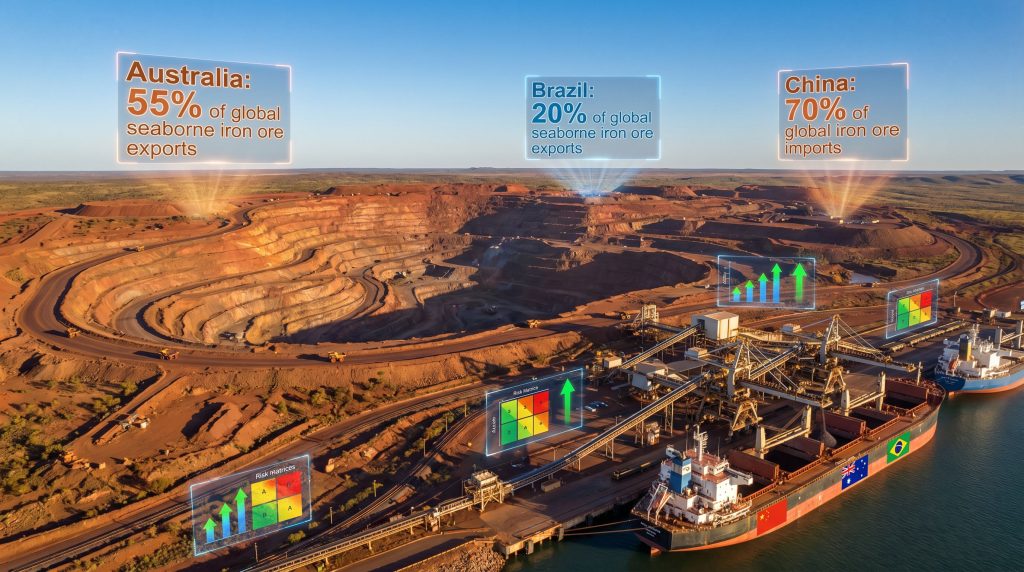
The global iron ore trade operates through dangerously centralised production networks where a handful of nations control the majority of seaborne exports. This concentration creates multiple failure points where disruptions in key mining regions can rapidly cascade through international steel production networks.
Critical Supply Chain Metrics:
• Australia iron ore leader maintains dominant market position through Pilbara region operations
• Brazil serves as secondary major supplier through Vale's extensive mining network
• China represents the world's largest consumer, creating import dependency risks
• Maritime transportation links these regions through vulnerable shipping routes
Recent data from April 2026 confirms this concentration, with Rio Tinto, identified as the world's largest iron ore supplier, maintaining its 2026 Pilbara sales forecast at 323 million to 338 million tons. This massive volume from a single supplier demonstrates the scale of dependency that global steel markets face on specific geographic regions.
Supply Chain Vulnerability Analysis:
| Risk Category | High Concentration | Moderate Diversification | Lower Risk Distribution |
|---|---|---|---|
| Production Sources | Australia/Brazil | India/South Africa | Canada/Sweden |
| Consumer Dependency | China (majority) | EU/Japan | Regional markets |
| Transportation Routes | Limited pathways | Alternative corridors | Multiple options |
The network topology reveals how BHP Group's third-quarter iron ore output beating expectations significantly impacts global supply calculations. When major producers exceed or fall short of forecasts, the ripple effects extend across international markets due to limited alternative sourcing options.
Maritime Chokepoints Amplify Geopolitical Risks
Strategic waterways represent critical vulnerability nodes where geopolitical tensions can instantly disrupt iron ore flows. The concentration of trade routes through mandatory transit points creates compound risks where regional conflicts affect global commodity markets.
Recent events demonstrate these vulnerabilities in action. As of April 2026, Iran seized two ships in the Strait of Hormuz as it tightened its grip on the strategic waterway, directly impacting energy and freight costs across commodity markets. This action followed escalating Middle Eastern tensions where US President Donald Trump announced he was indefinitely calling off attacks, with no sign of peace talks restarting.
Transportation Cost Impact Analysis:
Market analysts observe that the Iran war has sent energy prices surging, lifting freight and input costs, which have provided some support to iron ore prices, curbing downside room. This demonstrates how geopolitical events create compound effects across multiple cost vectors simultaneously.
Key Maritime Risk Factors:
• Strait of Hormuz: Critical Persian Gulf transit point affecting energy costs
• Malacca Strait: Essential Asia-Pacific shipping corridor
• Cape of Good Hope: Alternative route with extended transit times
• Suez Canal: European market access pathway
Trade relationship disruptions also create secondary supply chain complications. BHP Group's resolution of a months-long supply contract dispute with China raised prospects of more shipments to the world's largest consumer, highlighting how bilateral relationships directly affect market dynamics and supply security.
Price Volatility Reflects Supply Chain Stress
Furthermore, iron ore markets exhibit significant price volatility that reflects underlying supply chain vulnerabilities and external pressure points. Market movements demonstrate how multiple risk factors interact to create complex pricing dynamics.
Current Market Performance (April 23, 2026):
• DCE most-traded iron ore contract: closed down 0.32% at 783.5 yuan ($114.70) per metric ton
• Singapore Exchange May benchmark: declined 0.69% to $106.55 per ton
• Session trading range: reached high of $107.5 before declining
• Key resistance level: maintained above $100 psychological level for over six weeks
These price movements reflect the complex interplay between supply increases from major producers and cost pressures from geopolitical events. The market's ability to maintain levels above $100 per ton despite oversupply concerns demonstrates how energy prices surging, lifting freight and input costs provide underlying support to commodity valuations.
Price Support Mechanisms
The interaction between expanding supply and rising operational costs creates offsetting market pressures. For instance, the iron ore supply surplus would typically pressure prices downward. However, simultaneous increases in energy and transportation costs maintain price floors through higher operational expenses.
Transportation Infrastructure Dependencies
Iron ore supply chains depend heavily on specialised infrastructure designed for high-volume commodity handling. Port facilities, bulk carrier vessels, and dedicated rail networks create additional vulnerability points where capacity constraints or disruptions can halt entire supply chains.
Infrastructure Bottleneck Analysis:
• Vessel Capacity: Limited specialised bulk carrier fleet requires extended booking lead times
• Port Infrastructure: Loading and unloading facilities represent critical capacity constraints
• Rail Networks: Single-purpose transportation systems connecting mines to ports
• Energy Dependency: Fuel cost volatility affects shipping economics across all routes
Rio Tinto's massive Pilbara forecast of 323-338 million tons requires corresponding port capacity and shipping arrangements. This volume demonstrates the scale of infrastructure coordination necessary to maintain global supply flows.
Fuel Cost Impact Vectors
Maritime transportation costs fluctuate directly with energy prices, creating secondary effects from geopolitical events. Consequently, when Middle Eastern conflicts drive up crude oil prices, the resulting bunker fuel cost increases propagate through shipping rates, ultimately affecting delivered commodity prices in consuming markets.
Moreover, ongoing supply chain vulnerabilities in iron ore networks highlight how current challenges in war-induced costs continue to influence market dynamics.
Alternative Sourcing and Diversification Strategies
Organisations seeking to reduce supply chain exposure can implement diversification strategies across geographic regions and supplier networks. Alternative sourcing arrangements demonstrate greater resilience through reduced dependency on single-point-of-failure systems.
Diversification Framework Options:
• Geographic Spread: Sourcing from multiple continents reduces regional risk exposure
• Supplier Variety: Contracts with different mining companies prevent single-supplier dependency
• Alternative Materials: Direct reduced iron (DRI) and scrap steel utilisation
• Strategic Inventory: Buffer stocks during periods of supply stability
Emerging Supply Sources
Secondary producing regions offer potential diversification benefits, though typically at lower volumes than major suppliers. In addition, Canada, South Africa, and India provide alternative sourcing options that can supplement primary supply relationships during disruption periods.
Analysis of the largest iron ore mines reveals concentration patterns that companies can address through strategic diversification. Steel producers increasingly explore alternative iron sources to reduce dependency on traditional seaborne iron ore markets.
The next major ASX story will hit our subscribers first
Technology Integration for Risk Mitigation
Advanced monitoring and predictive analytics capabilities enable real-time supply chain performance tracking across multiple risk dimensions. Digital technologies provide early warning systems for potential disruptions before they cascade through networks.
Technology Application Areas:
• Satellite Monitoring: Real-time tracking of mining operations and shipping movements
• Predictive Analytics: Early warning systems for weather and operational risks
• Blockchain Integration: Enhanced supply chain transparency and traceability
• IoT Sensors: Continuous monitoring of transportation and storage conditions
These technological solutions enable more agile response strategies when disruptions occur, allowing companies to rapidly assess alternative sourcing options and adjust logistics arrangements based on real-time information.
Digital Supply Chain Benefits
Integration of monitoring technologies provides visibility into multiple risk vectors simultaneously. When weather events threaten mining operations, geopolitical tensions affect shipping routes, or operational issues impact port facilities, connected systems can rapidly assess alternative pathways and adjust procurement strategies accordingly.
Furthermore, comprehensive analysis of iron ore price trends enables better prediction of market movements during supply chain stress periods.
Strategic Risk Management Recommendations
Effective supply chain risk mitigation requires coordinated approaches that address multiple vulnerability categories simultaneously. Organisations should prioritise geographic diversification while building technological capabilities for enhanced monitoring and response.
Implementation Timeline Framework:
• Short-term (6-12 months): Supplier diversification assessment and alternative sourcing evaluation
• Medium-term (1-3 years): Technology implementation and monitoring system development
• Long-term (3-5 years): Strategic infrastructure investments and industry collaboration initiatives
Collaborative Risk Reduction
Industry-wide collaboration on supply chain resilience can reduce systemic vulnerabilities affecting all market participants. Shared infrastructure investments, coordinated response protocols, and joint monitoring systems provide benefits that individual companies cannot achieve independently.
Steel producers, mining companies, and shipping organisations can develop cooperative frameworks for information sharing during disruption events. These arrangements enable more efficient resource allocation and faster recovery from supply chain interruptions.
Additionally, understanding iron ore miners insights helps inform collaborative strategies that benefit the entire industry ecosystem.
Financial Risk Mitigation
Currency exposure and commodity price hedging strategies provide additional protection against market volatility. Organisations require sophisticated financial instruments to manage exchange rate risks, price fluctuations, and supply availability simultaneously.
However, effective iron ore supply chain risks management extends beyond financial hedging to encompass operational resilience, technological integration, and strategic partnerships that collectively strengthen supply security.
Disclaimer: This analysis contains forward-looking assessments based on current market conditions and historical patterns. Actual supply chain disruptions, geopolitical developments, and market movements may differ significantly from projections presented. Readers should conduct independent research and consult with qualified professionals before making supply chain or investment decisions based on this information.
Want to Capitalise on Iron Ore Market Volatility?
Discovery Alert's proprietary Discovery IQ model delivers real-time alerts on significant ASX iron ore and mining discoveries, helping investors identify actionable opportunities amidst supply chain disruptions and market volatility. Start your 14-day free trial today to position yourself ahead of the market when the next major discovery is announced.