
May 16, 2026
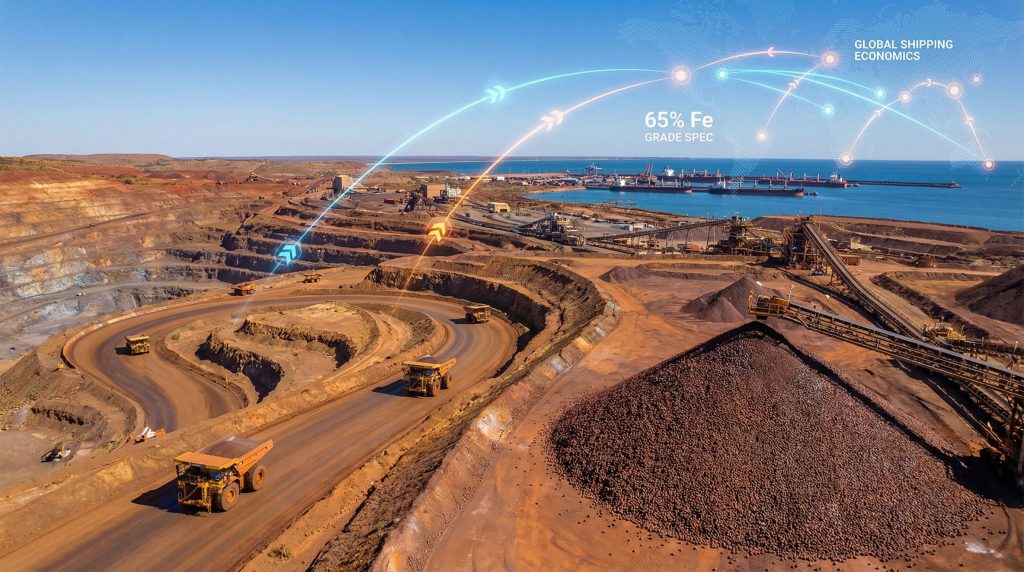
The global commodities landscape operates through interconnected systems where infrastructure limitations, policy shifts, and economic pressures create cascading effects across regional markets. Understanding these structural forces becomes essential as traditional supply-demand equations face disruption from emerging production centers and evolving procurement strategies. Furthermore, examining iron ore price trends reveals how the shift in iron ore trade flows affects global market dynamics.
China's position as the world's largest iron ore consumer places its market dynamics at the center of global trade flow evolution. The convergence of margin pressures, policy adjustments, and supply uncertainty has created conditions where traditional trading patterns require fundamental reassessment.
Understanding the New Geography of Iron Ore Commerce
The emergence of West African iron ore projects represents a significant structural shift in global supply geography. Guinea's Simandou development, despite slower-than-anticipated ramp-up volumes, introduces new logistical considerations that extend beyond simple tonnage calculations. The project's initial delivery of 5-10 million tonnes projected for 2026 falls substantially below market expectations of approximately 19 million tonnes, highlighting the complexities inherent in establishing new supply corridors.
The Emergence of Multi-Regional Supply Competition
Alternative supply corridors from West Africa create competitive dynamics that extend beyond price considerations. The establishment of these routes requires substantial infrastructure investment in port facilities, transportation networks, and processing capabilities. Unlike established Australia-China trade routes that benefit from decades of optimisation, African supply chains face developmental challenges that impact delivery consistency and cost structures.
The shift in iron ore trade flows becomes apparent when examining the redistribution of global supply sources. Traditional Pacific corridor dominance faces challenge from Atlantic routes, fundamentally altering shipping patterns and vessel deployment strategies. This geographic diversification provides strategic benefits for consumers seeking supply security while creating new risk profiles for market participants.
Market participants report that weather disruptions and supply interruptions in emerging regions could inflate long-term costs for buyers, creating persistent pricing resilience despite softer downstream demand conditions. This dynamic illustrates how supply uncertainty generates market premiums that extend beyond fundamental supply-demand calculations. Additionally, comprehensive iron ore market insights demonstrate the complexity of evolving trade patterns.
Vessel Class Optimisation in Extended Trade Routes
The economics of extended trade routes require careful analysis of vessel class deployment and tonne-mile optimisation. Cape-size and Newcastlemax vessels face different utilisation profiles when servicing West African routes compared to traditional Pacific corridors. Extended transit times to Chinese ports create vessel availability constraints that influence charter rates and shipping economics.
Port infrastructure requirements at both origin and destination points drive vessel selection decisions. West African facilities may lack the draft depth or loading capacity to accommodate ultra-large vessels, necessitating smaller vessel classes that increase per-tonne transportation costs. Conversely, Chinese port infrastructure investments have enhanced receiving capabilities for larger vessels, creating optimisation opportunities for established supply routes.
The development of new trade corridors requires coordination between mining operations, port authorities, and shipping companies to establish reliable vessel scheduling. This coordination becomes critical when supply volumes remain uncertain, as vessel operators require consistent cargo flows to justify dedicated route commitments.
When big ASX news breaks, our subscribers know first
What Economic Factors Are Driving Iron Ore Grade Preferences?
Steel mill profitability has emerged as the primary determinant of iron ore grade selection, fundamentally altering traditional procurement strategies. The relationship between steelmaking margins and ore grade preferences demonstrates clear economic sensitivity, with mills adjusting purchasing behaviour based on profitability conditions rather than operational optimisation alone.
Steel Mill Margin Pressures and Procurement Strategy Evolution
Chinese steel mill margins peaked in July 2025 with rebar net margins reaching 128.6 yuan per tonne and hot-rolled coil margins at 301.21 yuan per tonne. This profitability peak coincided with increased demand for premium iron ore grades, as mills could economically justify productivity benefits associated with higher-grade material.
However, margin conditions deteriorated significantly through the latter half of 2025, with rebar net margins entering negative territory by September. This compression eliminated the economic justification for premium grade procurement, forcing mills to prioritise cost efficiency over productivity optimisation. The fundamental shift represents a strategic recalibration where operational benefits become secondary to margin preservation.
| Metric | July 2025 Peak | September 2025 | Impact |
|---|---|---|---|
| Rebar Net Margins | 128.6 yuan/tonne | Negative territory | 100%+ decline |
| HRC Margins | 301.21 yuan/tonne | Significantly reduced | Major compression |
| Grade Premium Justification | Economically viable | Cost-prohibitive | Strategy reversal |
Mills have adopted cost-sensitive procurement strategies that prioritise immediate financial considerations over longer-term operational benefits. This shift reflects broader economic pressures from sluggish property sector demand and limited stimulus expectations for traditional steel consumption drivers.
Recent policy directives from China's Central Political Bureau Meeting emphasise infrastructure and advanced manufacturing while offering limited real estate stimulus. This policy framework suggests that traditional steel demand drivers may provide only limited support, reinforcing the emphasis on cost-efficient procurement strategies.
High-Grade Ore Market Dynamics Amid Global Supply Adjustments
The decline in global pellet production has created unexpected opportunities in high-grade ore markets. Vale's pellet sales decreased from 28.23 million tonnes in the first nine months of 2024 to 23.7 million tonnes in the same period of 2025, representing a 16 percent reduction that reflects suppressed steelmaking margins globally.
This reduction in pellet production has inadvertently resulted in increased pellet feed supply availability, with much of this material redirected toward the Chinese market. China's substantial pelletising capacity positions it as the largest clearing market for global pellet feed surplus, creating trading opportunities in 65% Fe derivatives.
The Singapore Exchange's 65% Fe iron ore contract registered record trading activity with 18,895 lots traded on August 13, 2025, following a record-breaking July with over 90,000 lots traded. This surge reflects increased hedging interest in high-grade material traded in seaborne markets, particularly high-grade pellet feed from diversified supply routes.
"The reduction of global pellet production has inadvertently resulted in a surge in pellet feed supply in the market, most of which has been diverted towards the Chinese market due to its large pelletising capacity."
Key Grade Premium Dynamics:
- 65% Fe to 62% Fe spread: Averaged $18.01/tonne in August 2025
- Premium expansion: From $11.02/tonne in June to $18.01/tonne in August
- Margin compression impact: Spread narrowed to approximately $12/tonne as margins deteriorated
- DR pellet premium: Assessed at $38/tonne in October 2025, marking four-year lows
The direct reduction (DR) pellet market illustrates how margin pressures affect environmental material procurement. DR-grade pellet premiums reached their lowest level in four years, as suppressed steelmaking margins globally weighed on mills' procurement ability for low-emission raw materials.
How Is China's Domestic Trading Infrastructure Adapting?
China's iron ore trading infrastructure faces significant adaptation pressure from policy changes and evolving market dynamics. The convergence between portside and seaborne markets reflects deeper structural shifts in procurement behaviour and risk management approaches.
Portside vs. Seaborne Market Convergence Patterns
The anticipated reduction of free-storage periods to 30 days starting January 2026 represents a fundamental policy shift that will accelerate destocking activities and redirect purchasing emphasis toward portside markets. This change creates urgency for market participants to optimise inventory management and storage cost structures.
Yuan-denominated trading has gained traction as lower-priced mainstream iron ore fines at China's portside market attracted stronger buying interest from domestic steel mills operating under negative steelmaking margins. This shift gradually weighed on seaborne equivalent premiums and reduced reselling activities, demonstrating the interconnected nature of these market segments.
Storage Policy Impact Analysis:
- Historical free-storage period: Extended periods supporting inventory accumulation
- New policy framework: 30-day maximum creating storage cost pressure
- Expected behavioural response: Accelerated destocking ahead of Chinese New Year
- Market timing: February 16-23, 2026 holiday period driving restocking demand
The temporary reversal of this trend occurred when Newmans fines and Mining Area C fines began trading at steep discounts in the seaborne market starting October 2025. Improved arbitrage margins for reselling these cargoes into China's yuan-denominated portside market stimulated speculative buying and supported seaborne prices, illustrating the dynamic relationship between these market segments.
Term Contract Negotiations Reshaping Procurement Channels
Slow-moving annual pricing negotiations between Chinese buyers and major Australian miners have created market ambiguity that supports short-term price resilience. The uncertainty around term pricing has prompted some mills to seek alternative procurement channels, including bilateral trades through intermediary traders.
This shift toward alternative channels reflects changes in sales distribution rather than increased actual shipment volumes. Market participants report that privately tendered cargoes were originally intended for term customers, suggesting a fundamental recalibration of commercial relationships rather than supply expansion.
Multiple quality downgrades from mainstream Australian and Brazilian ores during 2025 raised concerns about future high-grade availability, adding complexity to procurement planning. These quality issues compound supply uncertainty and support premium pricing for consistent-grade material. Consequently, understanding price decline dynamics becomes crucial for procurement strategy development.
Alternative Trading Channel Growth:
• Bilateral trades through intermediary traders
• Privately tendered cargoes redirected from term contracts
• Quality specification-driven supplier diversification
• Risk management through multiple procurement channels
Which Regional Demand Centres Are Gaining Strategic Importance?
Southeast Asian steel production growth creates new demand centres that influence global iron ore trade flows. Infrastructure development across ASEAN nations drives incremental consumption that complements traditional Chinese demand patterns while creating supply allocation opportunities.
Southeast Asian Steel Production Growth Trajectories
Regional steel production expansion in Southeast Asia reflects broader economic development and infrastructure investment programmes. Countries across the region demonstrate varying levels of import dependency, creating differentiated market opportunities for iron ore suppliers seeking geographic diversification.
Port capacity development throughout Southeast Asia supports increased ore throughput and creates alternative destination markets for global suppliers. These investments reduce dependence on Chinese market absorption capacity while providing pricing arbitrage opportunities.
The development of regional processing capabilities influences raw material requirements and grade specifications. As Southeast Asian steel producers establish more sophisticated processing facilities, demand patterns may shift toward higher-grade materials or specialised products. Furthermore, this development aligns with the broader mining sustainability transformation occurring across the region.
Indian Market Evolution as Supply-Demand Balancer
India's domestic iron ore production limitations relative to steel output expansion targets create sustained import growth potential. The country's seaborne import requirements through 2026-2027 represent significant volume opportunities for global suppliers.
Port infrastructure investments in India support enhanced receiving capabilities for larger iron ore vessels, improving shipping economics and supply chain efficiency. These developments position India as an increasingly important destination market for both traditional and emerging supply regions.
Regional Demand Growth Factors:
- Infrastructure development programmes across multiple countries
- Steel production capacity expansion exceeding domestic ore supply
- Port infrastructure investments supporting larger vessel operations
- Processing capability development influencing grade requirements
What Supply Chain Disruptions Are Creating Market Opportunities?
Supply chain disruptions across multiple regions create market opportunities for adaptable participants while challenging traditional procurement strategies. The combination of new project development uncertainties and established producer adjustments reshapes global supply allocation patterns.
African Project Ramp-Up Timeline Uncertainties
Simandou development schedules face significant execution risks that affect volume delivery expectations and market planning assumptions. Infrastructure bottlenecks present ongoing challenges to consistent supply flow establishment, creating opportunities for alternative suppliers to capture market share during transition periods.
The disparity between market projections and actual delivery capabilities demonstrates the complexity of establishing new mining operations in frontier regions. Technical challenges, regulatory requirements, and infrastructure limitations combine to create execution risks that extend beyond simple production capacity considerations.
Investment requirements for supporting infrastructure development create capital allocation pressures that may delay project advancement. Road networks, port facilities, and power infrastructure must develop in coordination with mining operations to achieve projected output levels.
Traditional Producer Output Adjustment Strategies
Australian and Brazilian miners have revised production guidance and shipment forecasts in response to changing market conditions and operational constraints. Vale reduced its 2026 output forecast despite maintaining volumes above 2025 levels, reflecting cautious operational planning amid demand uncertainty.
Quality control incidents affecting mainstream suppliers create opportunities for alternative sources to establish market presence. When established producers face grade consistency issues, buyers may diversify supply sources to maintain operational requirements.
Supply Adjustment Impacts:
- Production guidance revisions creating volume uncertainty
- Quality incidents affecting supplier reliability perceptions
- Market share redistribution opportunities for alternative suppliers
- Risk premium development for supply source concentration
How Are Environmental Regulations Influencing Trade Flow Patterns?
Environmental regulations increasingly influence raw material selection and sourcing decisions, creating new trade flow patterns that prioritise carbon footprint considerations alongside traditional cost and quality factors.
Decarbonisation Initiatives Affecting Raw Material Selection
Direct reduction technology adoption rates across major steel-producing regions influence pellet and high-grade ore demand allocation. Electric arc furnace expansion reduces primary ore demand while increasing scrap steel utilisation, fundamentally altering virgin material consumption patterns.
Carbon footprint considerations in sourcing decisions increasingly favour regional suppliers over long-haul transportation routes, despite potential cost premiums. This shift reflects regulatory pressure and corporate sustainability commitments that extend beyond pure economic optimisation.
Blast furnace efficiency requirements drive grade preference changes as mills seek to reduce emissions through improved raw material quality. Higher-grade ores enable reduced coke consumption and improved processing efficiency, supporting environmental compliance objectives.
Scrap Steel Integration Reducing Primary Ore Demand
Circular economy policies across major steel-producing regions affect virgin material consumption patterns and create competitive pressure on primary ore markets. Secondary material availability constraints limit the pace of transition but establish clear directional trends.
The integration of scrap steel into production processes reduces incremental iron ore demand growth while supporting established supply relationships. This transition creates market segmentation where high-quality primary materials maintain premium positioning while lower grades face substitution pressure.
The next major ASX story will hit our subscribers first
What Financial Market Developments Are Shaping Trade Dynamics?
Financial market evolution influences iron ore trade dynamics through price discovery mechanisms, hedging strategies, and investment flow patterns. Currency volatility and derivative market development create new risk management requirements and trading opportunities.
Futures Market Evolution and Price Discovery Mechanisms
The Singapore Exchange 65% Fe contract volume records demonstrate growing market participation and hedging interest in high-grade material. Record trading activity reflects increased market sophistication and risk management requirements for extended supply chain exposure.
Currency volatility impacts on yuan versus dollar-denominated transactions create hedging requirements that influence procurement timing and contract structures. Market participants must manage currency exposure alongside commodity price risk in increasingly complex trading environments.
Financial Market Development Indicators:
| Metric | Performance | Significance |
|---|---|---|
| SGX 65% Fe Contract Volume | 18,895 lots (August 13) | Daily record high |
| Monthly Trading Volume | 90,000+ lots (July) | Monthly record |
| Hedging Interest Growth | Significant increase | Risk management adoption |
| Price Discovery Efficiency | Enhanced transparency | Market maturation |
Investment Flow Redirections in Mining Project Development
Capital allocation priorities between established and frontier mining regions reflect risk-adjusted return expectations and infrastructure development requirements. Investment in West African supply corridor development requires substantial capital commitments with extended payback periods.
Infrastructure investment requirements for new supply corridor development include port facilities, transportation networks, and processing capabilities. These capital requirements create barriers to entry while establishing competitive advantages for successful developers.
Risk premium adjustments for long-haul trade route establishment reflect increased operational complexity and supply chain vulnerability. Investors require higher returns to compensate for execution risks and market development uncertainties. Additionally, effective commodity trading hedging strategies become essential for managing these risks.
Strategic Implications for Market Participants
Market participants face fundamental strategy adjustments as traditional trading patterns evolve and new supply-demand dynamics emerge. Risk management approaches must adapt to extended supply chains, policy uncertainty, and evolving customer requirements.
Procurement Strategy Adaptations for Volatile Supply Conditions
Supplier diversification strategies must balance cost considerations with reliability requirements, as single-source dependencies create vulnerability to supply disruptions. Portfolio approaches to procurement enable risk distribution while maintaining cost competitiveness.
Inventory optimisation models require adjustment for uncertain delivery schedules and storage cost pressures. The shift toward inventory-light procurement reflects both policy pressure and economic efficiency, but requires enhanced supply chain coordination.
Strategic Adaptation Requirements:
• Risk management frameworks for extended supply chain exposure
• Multiple supplier relationships balancing cost and reliability
• Flexible inventory strategies responding to policy changes
• Enhanced supply chain coordination and communication systems
Investment Positioning for Emerging Trade Corridor Development
Infrastructure development opportunities in West African supply chains present long-term investment potential with significant capital requirements and execution risks. Successful participation requires technical expertise, regulatory navigation capability, and patient capital availability.
Shipping and logistics service expansion opportunities emerge as new trade routes establish volume consistency. Port services, vessel operations, and cargo handling capabilities require development to support emerging supply corridors.
Regional processing facility development prospects reflect opportunities to add value within supply chains while reducing transportation costs and improving supply chain resilience. These developments align with broader market volatility trends affecting global trade patterns.
The evolution of global iron ore trade patterns through 2026 reflects the intersection of policy changes, infrastructure development, and economic pressures that reshape traditional market dynamics. Market participants must navigate these changes through strategic adaptation while positioning for emerging opportunities in an increasingly complex trading environment. Understanding the shift in iron ore trade flows becomes critical for stakeholders seeking to maintain competitive positions in evolving global markets.
Disclaimer: This analysis contains forward-looking assessments based on current market conditions and available information. Actual market developments may differ materially from projections due to unforeseen economic, political, or operational factors. Market participants should conduct independent analysis and consider multiple scenarios when making commercial decisions.
Ready to Capitalise on Emerging Commodity Trade Opportunities?
Discovery Alert's proprietary Discovery IQ model provides instant notifications on significant ASX mineral discoveries, helping subscribers identify actionable opportunities across diversified commodity markets including iron ore, gold, and base metals. With global trade flows evolving and new supply corridors emerging, understanding which discoveries could generate substantial returns becomes essential for positioning ahead of major market shifts.