May 17, 2026
The interconnected nature of today's global economy means that regional tensions, particularly the Israel Lebanon conflict, create cascading effects that extend far beyond immediate geographic boundaries. When strategic waterways face disruption or essential facilities come under attack, the resulting economic shockwaves ripple through commodity markets, supply chains, and humanitarian systems worldwide. This complex web of interdependencies has become increasingly apparent as regional conflicts demonstrate their capacity to trigger widespread economic consequences through relatively localised actions.
Economic Mechanisms Behind Energy Price Volatility During Regional Conflicts
The relationship between regional instability and global energy markets operates through sophisticated pricing mechanisms that extend well beyond simple supply and demand calculations. When geopolitical tensions escalate in energy-producing regions, markets incorporate multiple risk factors into commodity valuations, creating price movements that often exceed the immediate physical supply disruptions.
Furthermore, the oil price rally dynamics demonstrate how quickly markets respond to perceived threats to energy infrastructure.
Supply Chain Disruption Patterns in Critical Maritime Passages
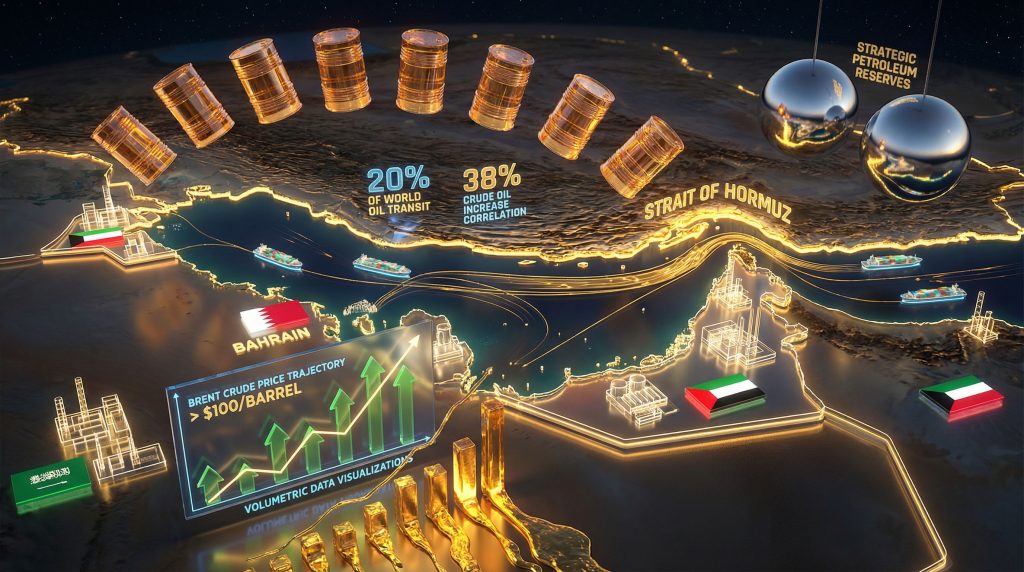
The Strait of Hormuz serves as perhaps the most critical example of how geographic chokepoints influence global energy economics. Approximately 20 percent of the world's oil transportation passes through this narrow waterway, making its operational status a key determinant of international energy pricing. When transit capacity through such strategic passages becomes compromised, the economic implications manifest immediately through crude oil price adjustments.
Recent market data demonstrates this relationship clearly: Brent crude oil prices exceeded $100 per barrel, representing a 9 percent single-day increase during periods of heightened regional tension. More significantly, crude oil prices have climbed approximately 38 percent since the Israel Lebanon conflict began affecting major transit routes and production facilities.
The economic mechanics behind these price movements involve several simultaneous factors. First, actual supply disruptions create immediate scarcity in available petroleum products. Second, increased maritime insurance costs for vessels traversing contested waters add operational expenses that translate into higher commodity prices. Third, longer transit times requiring additional shipping vessels create capacity constraints that further elevate transportation costs.
Market Psychology and Speculative Trading Dynamics
Energy markets demonstrate particular sensitivity to forward-looking risk assessment, meaning that traders and institutional investors price in anticipated disruptions before they fully materialise. This psychological component explains why energy prices can spike dramatically beyond what current supply losses alone would justify.
The speculative trading amplification effect operates through futures markets and options contracts that create leverage effects. When geopolitical risk increases, speculative traders may establish larger positions expecting price volatility, which itself drives additional volatility as these positions are adjusted or unwound.
Price elasticity relationships in energy commodities show relatively inelastic short-term demand curves. This means percentage changes in available supply produce disproportionately larger percentage changes in market prices, as consumers struggle to adjust consumption patterns immediately when supply constraints develop.
When big ASX news breaks, our subscribers know first
Infrastructure Vulnerabilities and Global Energy Security Implications
Critical energy infrastructure across major producing regions faces exposure to multiple attack vectors simultaneously, creating compound vulnerabilities that extend beyond individual facility protection. The economic implications of these vulnerabilities become apparent when examining the strategic importance and replacement costs of key installations, particularly in light of comprehensive energy security analysis.
Strategic Asset Exposure Analysis
Major oil production and processing facilities demonstrate concentrated geographic vulnerability patterns that create systemic risks for global energy markets. Recent incidents illustrate how coordinated attacks across multiple locations can create widespread supply-side pressure simultaneously.
However, the impact extends beyond Middle Eastern producers, as Saudi Arabia exploration initiatives demonstrate how global energy security depends on multiple interconnected systems.
Documentation from recent regional conflicts shows attacks targeting:
• Iraq's oil terminal operations at Basra Port, forcing complete shutdown of all national oil export terminals
• Saudi Arabia's Shaybah oil field in the Empty Quarter desert, one of the kingdom's most strategically important production facilities
• Bahrain's international airport and surrounding infrastructure, including jet fuel storage tanks and oil industry facilities
• Kuwait's residential and industrial areas, demonstrating the broad geographic scope of infrastructure targeting
• UAE defense systems activation to protect Dubai from multiple attack attempts
The economic significance of each targeted facility extends beyond immediate production or transit capacity. The Shaybah oil field, despite its remote desert location, represents critical production capacity that requires substantial resources to defend effectively. Similarly, Bahrain's Muharraq Island infrastructure serves dual functions as both aviation hub and energy processing centre, meaning damage creates cascading effects across multiple economic sectors.
Dual-Use Infrastructure Risk Assessment
Many critical facilities in major energy-producing regions serve multiple essential functions simultaneously, creating compound vulnerability where damage to single installations disrupts several economic sectors. Airports contain both civilian and military elements, industrial facilities process both civilian and energy products, and power generation serves both public and strategic needs.
Cost-benefit calculations for infrastructure protection versus replacement reveal substantial long-term economic implications. Damaged desalination plants may require months for complete repair, during which water security becomes dependent on emergency imports or alternative supply arrangements. Similarly, damaged oil loading terminals can disrupt export operations for extended periods even when upstream production capacity remains intact.
Humanitarian Economics of Population Displacement
Large-scale population displacement creates economic costs that extend across multiple dimensions beyond immediate humanitarian assistance requirements. The economic burden encompasses direct support costs, lost productive capacity, and long-term human capital effects that persist beyond displacement periods.
Displacement Scale and Resource Requirements
Current displacement figures demonstrate the substantial scale of humanitarian economic impacts. At least 759,000 internally displaced persons require immediate support services, while more than 800,000 people have registered as displaced overall. Of these displaced populations, approximately 126,000 are staying in collective shelters that require organised provision of basic services.
The displacement crisis has escalated significantly, with UN officials warning of a widening humanitarian catastrophe as the Israel Lebanon conflict continues to force families from their homes.
The per-capita economic costs for displaced populations include:
• Emergency shelter provision: $200-500 per person annually for basic housing arrangements
• Food assistance: $60-200 per person monthly depending on local price levels and dietary requirements
• Water and sanitation systems: Additional per-capita infrastructure costs for temporary facilities
• Healthcare services: Elevated medical needs due to displacement stress and concentrated living conditions
• Educational disruption: Long-term human capital costs from interrupted schooling for displaced children
Economic Output Losses from Displaced Labour
The economic impact extends beyond direct support costs through displaced workers' inability to contribute to productive economic activity. When approximately 455,000 working-age individuals (assuming 60 percent of displaced persons are of working age) cannot engage in normal employment, the lost economic output represents both consumption costs and foregone production value.
Labour market disruption affects multiple sectors simultaneously. Displaced agricultural workers cannot maintain crop production, displaced industrial workers cannot contribute to manufacturing output, and displaced service sector employees cannot provide commercial services. These productivity losses accumulate over time as displacement persists.
Secondary economic effects include disruption of tourism and hospitality sectors when displaced populations relocate to areas typically serving commercial visitors. Documentation shows displaced persons sheltering in major tourist areas, indicating how displacement physically disrupts normal commercial activity across geographic regions.
International Economic Responses and Policy Framework Analysis
Diplomatic and economic policy responses to regional conflicts operate through multiple channels designed to influence behaviour through economic incentives and constraints. The effectiveness of these mechanisms depends on implementation capacity and the economic resilience of targeted entities.
In addition, broader geopolitical tensions such as trade war global impacts demonstrate how regional conflicts can intersect with larger international economic dynamics.
Sanctions and Economic Pressure Mechanisms
UN Security Council resolutions represent formal international economic policy responses, though their effectiveness varies based on enforcement mechanisms and compliance monitoring. Recent resolution demanding cessation of regional attacks illustrates both the diplomatic process and its limitations when targeted parties continue operations despite formal international pressure.
Analysis of the Israeli-Lebanese conflict shows how historical tensions have repeatedly created economic disruption across multiple sectors and regions.
Trade restriction enforcement requires substantial administrative capacity and international cooperation for effective implementation. Economic pressure tactics involve:
• Export control restrictions limiting access to specific technologies or materials
• Financial system access limitations constraining international banking and payment processing
• Investment prohibition measures preventing capital flows into targeted sectors
• Asset freezing mechanisms immobilising financial resources held in international markets
Military and Reconstruction Economics
Military aid economic calculations involve substantial budget allocations from supporting nations, with costs extending beyond immediate equipment provision to include training, maintenance, and operational support over extended periods. Recent conflicts demonstrate how military assistance costs accumulate rapidly when sophisticated defence systems and advanced weaponry are provided.
Reconstruction financing models for post-conflict scenarios require advance planning for infrastructure rebuilding, economic system restoration, and institutional capacity development. Historical analysis suggests reconstruction costs typically exceed initial conflict damage estimates due to secondary effects and system integration requirements.
Long-Term Economic Scenario Development
Extended regional instability creates structural changes in global economic relationships that persist beyond immediate conflict resolution. These long-term effects reshape energy markets, investment patterns, and regional development trajectories through permanent adjustments in risk assessment and resource allocation.
Consequently, the OPEC production impacts become increasingly significant as member nations adjust output strategies in response to regional instability.
Energy Market Structural Adjustments
Alternative supply route development becomes economically viable when traditional transit paths face persistent disruption risks. Investment in pipeline infrastructure, shipping capacity expansion, and strategic reserve facilities represents long-term economic responses to supply security concerns.
Renewable energy investment acceleration occurs when fossil fuel supply reliability declines. Energy security considerations drive additional capital allocation toward domestic renewable capacity that reduces dependence on potentially unstable international supply chains.
Strategic petroleum reserve utilisation provides temporary supply security but requires eventual replenishment at potentially elevated market prices. The economics of reserve management become more complex when release decisions must consider both current market conditions and future availability.
Regional Development Impact Assessment
Tourism industry recovery typically follows extended timelines after regional conflicts, as visitor confidence requires sustained stability demonstration before normal travel patterns resume. Economic modelling suggests tourism sector recovery may require 2-3 years of sustained peace before reaching pre-conflict activity levels.
Foreign direct investment patterns show persistent effects from regional instability, with investors requiring risk premiums for projects in previously affected areas even after conflicts conclude. This creates lasting economic disadvantages for regions seeking international investment.
Infrastructure rebuilding economics involve substantial capital requirements that may exceed available domestic resources, creating dependencies on international financing arrangements with associated economic policy constraints.
Economic Policy Tools for Conflict Mitigation
Economic incentive structures can serve as tools for encouraging conflict resolution and regional stability through carefully designed policy frameworks that align economic interests with peaceful outcomes.
Economic Incentives for Stability
Trade partnership leverage in diplomatic negotiations involves offering improved commercial relationships conditional on peaceful resolution of disputes. These arrangements can include preferential trading terms, technology transfer agreements, and investment partnership opportunities.
Economic reconstruction packages serve as positive incentives for peace agreements by providing substantial development assistance conditional on sustained conflict cessation. Historical examples demonstrate how reconstruction aid can create economic constituencies favouring peaceful resolution.
Regional economic integration models promote stability through increased economic interdependence that raises the costs of conflict for all participants. When countries develop substantial bilateral trade relationships, economic disruption from conflict becomes mutually damaging.
Risk Management and Crisis Preparedness
Diversification strategies for energy-dependent economies reduce vulnerability to supply disruptions through multiple supplier relationships, strategic reserve maintenance, and alternative energy source development. These approaches require advance investment but provide insurance against supply interruptions.
Emergency response protocols for supply chain disruptions establish predetermined procedures for managing crisis situations, including reserve activation criteria, alternative sourcing arrangements, and demand management measures.
International cooperation mechanisms for crisis management involve pre-established frameworks for coordinated responses to supply emergencies, including reserve sharing agreements and emergency supply allocation procedures.
The next major ASX story will hit our subscribers first
Frequently Asked Questions About Regional Economic Impacts
What immediate economic measures can mitigate energy price spikes?
Strategic petroleum reserve releases represent the most direct short-term mechanism for moderating energy price increases during supply disruptions. Additionally, demand management measures such as temporary speed limit reductions and public transportation promotion can reduce consumption pressure. International coordination through organisations like the International Energy Agency enables synchronised reserve releases that maximise market impact.
How do insurance markets respond to regional conflict escalation?
Marine insurance premiums for vessels transiting conflict zones increase substantially, often doubling or tripling normal rates. War risk insurance becomes mandatory for ships entering contested waters, adding significant costs to transportation. These insurance cost increases translate directly into higher commodity prices as shipping companies pass additional costs to customers.
What role do strategic petroleum reserves play during supply disruptions?
Strategic reserves provide temporary supply cushioning during acute shortages, typically offering 60-90 days of import replacement capacity for major consuming nations. Reserve releases help moderate price spikes by increasing available supply, but effectiveness depends on coordination among multiple countries and reserve replenishment planning for sustained disruptions.
How can businesses protect against Middle Eastern supply chain risks?
Supply chain diversification across multiple geographic regions reduces dependence on any single source area. Long-term contracts with suppliers in different regions provide some price stability and supply security. Additionally, maintaining higher inventory levels creates buffer capacity during disruption periods, though this increases carrying costs during normal operations.
Disclaimer: This analysis is based on publicly available information and should not be considered as financial or investment advice. Regional conflicts involve complex and rapidly changing conditions that can affect economic outcomes in unpredictable ways. Readers should consult with qualified professionals before making decisions based on this analysis.
Further Exploration: Readers interested in understanding broader Middle Eastern developments can explore comprehensive regional coverage from established news organisations such as Arab News, which provides detailed analysis of ongoing geopolitical and economic developments affecting the region.
Could Regional Conflicts Signal New Investment Opportunities?
Discovery Alert's proprietary Discovery IQ model tracks how geopolitical events like the Israel Lebanon conflict create ripple effects across global commodity markets, particularly affecting mining and exploration companies on the ASX. Gain immediate insights into how regional tensions translate into actionable investment opportunities by exploring Discovery Alert's discoveries page and beginning your 14-day free trial today.