June 8, 2026
The Israel Tnufa Challenge represents a transformative approach to addressing global critical minerals competitiveness through strategic technological innovation rather than traditional resource extraction models. This comprehensive framework demonstrates how countries can leverage advanced processing technologies and innovation ecosystems to establish competitive advantages in increasingly complex supply chains.
Strategic Innovation Framework Driving Market Transformation
The Israel Tnufa Challenge represents a comprehensive approach to critical minerals competitiveness through targeted technology development across three distinct operational categories. This framework addresses fundamental bottlenecks that constrain global supply chain efficiency and resilience, creating opportunities for breakthrough solutions that could reshape industry dynamics.
Furthermore, the program's strategic focus aligns with broader trends towards AI transforming mining operations and intelligent automation systems that enhance exploration accuracy and processing efficiency.
Deep Technology Mining Solutions
Advanced exploration technologies form the foundation of the innovation framework, targeting significant reductions in discovery timelines and environmental impact assessments. Current exploration cycles often require multiple years for comprehensive geological evaluation and resource estimation, creating substantial barriers to rapid supply response during demand surges.
Key technological development areas include:
• AI-powered geological modelling systems that process multi-spectral satellite data and geological datasets to identify mineral deposit characteristics with enhanced accuracy
• Remote sensing integration platforms combining hyperspectral imagery, LiDAR terrain analysis, and geochemical sampling validation to reduce expensive field survey requirements
• Predictive analytics frameworks utilising machine learning algorithms for ore grade optimisation, resource tonnage estimation, and production forecasting based on geological parameters
These technologies address critical industry challenges by potentially reducing preliminary exploration phase timelines from years to months while maintaining geological assessment accuracy standards required for project development decisions.
Advanced Processing and Recovery Technologies
Processing stage innovations target the most significant bottlenecks in global critical minerals supply chains, where complex separation requirements and stringent quality specifications create substantial barriers to market entry. Current processing infrastructure demonstrates extreme geographic concentration, with China controlling approximately 60-80% of global refining capacity for most critical minerals, creating systemic vulnerabilities that technology-driven solutions could help address.
Processing technology development priorities encompass:
• Selective extraction technologies designed for complex polymetallic ores requiring sophisticated chemistry optimisation for specific ore compositions
• Low-energy separation processes replacing energy-intensive pyrometallurgical methods with optimised hydrometallurgical alternatives
• Automated quality control systems ensuring consistent product specifications and contamination prevention for battery-grade and high-purity applications
The technical complexity of converting raw ores into battery-grade materials requires precise chemical processes, exact pH control, temperature management, and reaction timing. A single rare earth processing facility may perform 10-15+ sequential leaching, precipitation, and crystallisation stages to achieve magnet-grade purity specifications, illustrating the sophistication required for competitive processing operations.
Substitution and Efficiency Innovation Technologies
Material substitution and efficiency optimisation represent emerging opportunity areas for reducing critical mineral dependencies while maintaining performance specifications across key applications. These technologies address supply security concerns by developing alternative material formulations and improved recycling capabilities.
Innovation development targets include:
• Alternative material formulations that reduce critical mineral requirements in battery applications, permanent magnets, and advanced manufacturing processes
• Recycling optimisation technologies for end-of-life product recovery, particularly focusing on direct lithium extraction and rare earth elements from electronic devices
• Supply chain visibility platforms providing demand forecasting, inventory optimisation, and material flow tracking capabilities for improved resource utilisation
When big ASX news breaks, our subscribers know first
Financial Architecture and Competitive Positioning
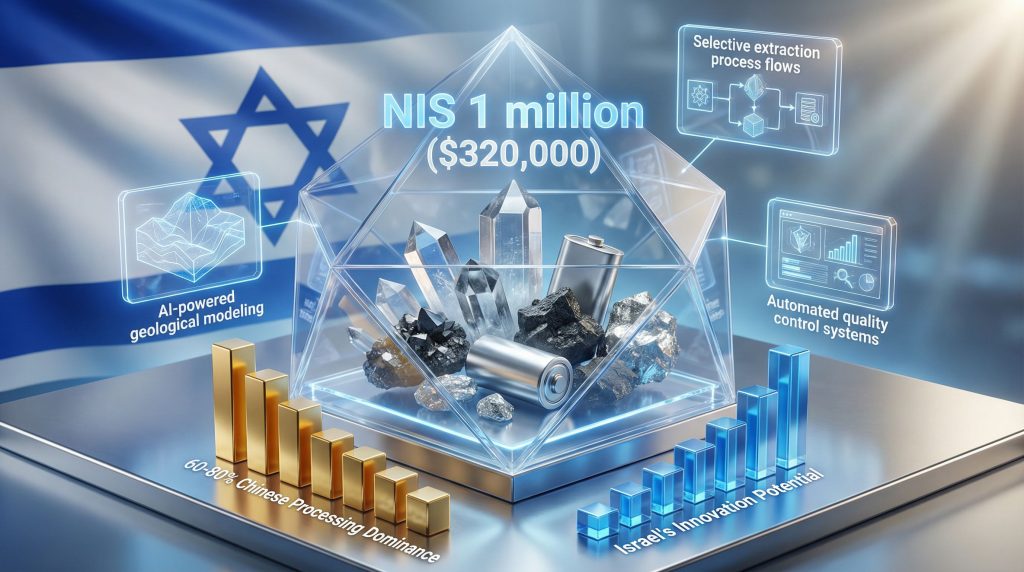
The Israel Tnufa Challenge implements a strategic financial structure designed to attract early-stage technology ventures while maintaining cost efficiency compared to traditional R&D funding approaches. The program offers a NIS 1 million ($320,000) grand prize supplemented by four NIS 200,000 ($63,200) secondary awards, creating a competitive ecosystem that incentivises breakthrough technology development.
This prize structure reflects deliberate government strategy to convert geographic resource constraints into technological capability advantages. As Director General Yossi Dayan explained, Israel seeks to establish strategic advantage in global value chains through innovation infrastructure rather than resource volume competition.
Performance Metrics and Timeline Expectations
| Metric Category | Target Outcomes | Timeline |
|---|---|---|
| Startup Development | 20+ participating ventures | 12-18 months |
| Technology Validation | 5+ proof-of-concept demonstrations | 18-24 months |
| Commercial Partnerships | 3+ licensing agreements | 24-36 months |
| International Recognition | Regional technology hub status | 36-48 months |
The program timeline reflects realistic technology development cycles for deep-tech ventures while establishing measurable milestones for assessing commercialisation progress and market adoption potential.
Geographic Resource Constraints as Innovation Catalysts
Countries without significant domestic mineral resources frequently develop superior technological capabilities through necessity-driven innovation frameworks that create exportable competitive advantages. This phenomenon demonstrates how resource constraints can generate more sustainable long-term positioning than resource abundance dependencies.
Historical Precedents for Technology-Led Resource Strategies
Japan's Materials Science Leadership: Japan achieved world-leading materials science capabilities despite minimal domestic rare earth deposits through technological innovation in processing and application development. Japanese companies maintain competitive advantages in advanced materials applications and rare earth processing technologies, creating revenue streams independent of resource ownership.
South Korea's Battery Technology Dominance: South Korea established battery manufacturing leadership through companies like Samsung SDI and LG Energy Solution without possessing lithium deposits. The country imports raw lithium compounds and generates value through advanced battery chemistry development and manufacturing optimisation.
Singapore's Rare Earth Trading Hub: Singapore developed specialised processing capabilities and rare earth trading expertise through supply chain logistics optimisation and processing technology rather than resource extraction, creating competitive positioning in regional markets.
These examples validate strategic frameworks where technological capabilities generate more sustainable competitive advantages than geological endowments, particularly as supply chains become increasingly complex and quality specifications more demanding.
Innovation Ecosystem Advantages
Israel's existing deep-technology infrastructure creates natural synergies with critical minerals technology development, potentially accelerating commercialisation timelines through established venture capital networks, research institutions, and government innovation support frameworks.
Key ecosystem components include:
• Established venture capital funding channels for early-stage technology ventures with proven track records in deep-tech commercialisation
• Multiple research institutions with materials science, chemistry, and engineering expertise supporting advanced technology development
• Government innovation support infrastructure through the Israel Innovation Authority providing technology commercialisation assistance and funding coordination
• International technology transfer networks facilitating global licensing opportunities and market access for breakthrough technologies
Processing Technologies as Strategic Competitive Advantages
The global critical minerals bottleneck increasingly occurs during complex processing and refining stages rather than at extraction phases, creating opportunities for technology-focused strategies to address fundamental supply chain vulnerabilities. Processing stage innovations offer higher-value positioning and reduced geographic dependency compared to traditional extraction-based approaches.
Moreover, the shift towards data-driven mining operations enables more sophisticated process optimisation and quality control systems that reduce waste and improve yield efficiency.
Technical Complexity Barriers
Converting raw ores into battery-grade materials and high-purity compounds requires sophisticated separation technologies, precise chemical processes, and quality control systems that represent significant barriers to entry for new market participants. These technical requirements justify government innovation incentives for developing breakthrough processing solutions.
Critical processing challenges include:
• Multi-stage chemical separation processes for polymetallic ores requiring sequential leaching, precipitation, and crystallisation operations
• Stringent purity specifications for battery manufacturers and magnet producers demanding consistent contamination prevention
• Environmental management requirements for waste stream handling and regulatory compliance across multiple jurisdictions
• Energy-intensive processing methods creating cost pressures and sustainability concerns for traditional separation technologies
Market Access Through Value-Added Processing
Technology-focused approaches enable strategic positioning where countries import raw materials, apply technological value through advanced processing, and export higher-value products to global markets. This model reduces dependency on domestic resource ownership while capturing higher-margin supply chain segments.
Processing technology leadership creates opportunities for licensing revenue, equipment export, and technical services that generate sustainable competitive advantages independent of commodity price fluctuations or resource depletion concerns.
Technology Transfer and Global Market Integration
Breakthrough processing technologies developed through innovation challenges create multiple pathways for international market integration and revenue generation. Technology licensing models enable global deployment while maintaining strategic advantages for originating countries.
In addition, the broader context of mining industry evolution supports technology transfer opportunities as companies seek advanced solutions to address operational challenges and environmental requirements.
Partnership Opportunities with Resource-Rich Nations
Technology-focused strategies facilitate partnerships where innovation-leading countries provide technological capabilities while resource-rich nations contribute raw materials. These arrangements create mutually beneficial frameworks that reduce geopolitical tensions while strengthening supply chain resilience.
Strategic partnership models include:
• Technology licensing agreements for processing equipment and separation methods deployed in multiple jurisdictions
• Joint venture processing facilities combining technological expertise with raw material access
• Technical services contracts providing ongoing optimisation and maintenance support for processing operations
• Research collaboration frameworks for continued technology development and application optimisation
Competitive Positioning Through Intellectual Property
Israeli startups developing breakthrough processing technologies could establish licensing revenue streams that operate independently of physical resource ownership while strengthening international supply chain competitiveness. This approach creates sustainable competitive advantages that appreciate through continued innovation rather than depleting through extraction.
Technology licensing models enable scalable revenue generation while maintaining strategic control over core intellectual property and specialised knowledge required for implementation and optimisation.
Long-Term Strategic Implications for Resource Geopolitics
The Israel Tnufa Challenge represents broader trends where competitive advantages increasingly derive from technological capabilities rather than geological endowments. This shift could potentially redistribute global influence in critical minerals markets toward innovation-focused economies.
Innovation-Driven Supply Chain Resilience
Countries developing superior processing and recycling technologies could reduce dependencies on primary extraction while creating more distributed and resilient supply networks. Technology-driven approaches enable supply chain diversification that reduces geographic concentration risks and geopolitical vulnerabilities.
Advanced recycling technologies particularly offer strategic advantages by enabling resource recovery from existing material stocks rather than requiring access to new deposits. Battery material recycling and rare earth element recovery from electronic waste represent emerging opportunity areas for technology-focused strategies.
However, the success of these initiatives depends significantly on the broader mineral recycling transition across global supply chains and supportive policy frameworks.
New Forms of International Collaboration
Technology-focused approaches facilitate cooperation between nations that might otherwise compete for resource access, as innovation benefits can be shared while maintaining competitive advantages through continued development and application optimisation.
Emerging collaboration frameworks include:
• Technology development consortiums combining research capabilities from multiple countries
• Shared processing infrastructure utilising advanced technologies for regional supply chain optimisation
• Standards development initiatives creating common technical specifications for processed materials
• Knowledge transfer programs facilitated through Tnufa program initiatives that accelerate technology deployment and capability development
The next major ASX story will hit our subscribers first
Future Scenarios and Strategic Pathways
Scenario 1: Technology Leadership Achievement
Successful development of breakthrough processing technologies positions Israel as a global licensing hub, generating significant export revenues while strengthening international supply chain partnerships. This outcome creates sustainable competitive advantages that appreciate through continued innovation and global deployment.
Key indicators for this scenario include:
• Multiple licensing agreements with international processing companies
• Technology export revenue exceeding traditional resource export values
• Recognition as preferred technology partner for critical minerals processing
• Establishment of international research collaboration networks
Scenario 2: Regional Innovation Cluster Formation
The Israel Tnufa Challenge catalyses broader Middle Eastern cooperation on critical minerals technology, creating a regional innovation ecosystem that competes globally with established technology centres in North America, Europe, and Asia.
Regional cluster development could leverage complementary capabilities across multiple countries while creating shared infrastructure for technology development, testing, and commercialisation activities.
Scenario 3: Integration with Global Value Chains
Israeli technologies become embedded in international mining and processing operations, creating long-term revenue streams and strategic influence despite limited domestic resources. This integration model enables sustained competitive positioning through intellectual property ownership and ongoing technical support services.
Global value chain integration offers scalable growth opportunities while maintaining strategic control over core technologies and specialised knowledge required for competitive implementation.
Investment Considerations and Risk Assessment
Technology-focused critical minerals strategies present distinct risk profiles compared to traditional extraction-based approaches, with different capital requirements, timeline expectations, and market dynamics requiring specialised evaluation frameworks.
Technology Development Risks
Primary risk factors include:
• Technical feasibility uncertainties for breakthrough processing methods
• Market adoption timelines potentially exceeding development cost projections
• Competitive response from established processing companies and equipment manufacturers
• Regulatory approval requirements for new processing technologies and environmental compliance
Market Opportunity Assessment
Global critical minerals processing markets represent substantial opportunity areas for breakthrough technologies, particularly as demand growth outpaces current processing capacity expansion and environmental regulations increase pressure for cleaner processing methods.
Market drivers supporting technology adoption include:
• Growing battery demand requiring expanded processing capacity
• Environmental regulations favouring lower-impact processing methods
• Supply chain resilience priorities driving processing infrastructure diversification
• Cost pressures creating incentives for efficiency optimisation technologies
Disclaimer: This analysis contains forward-looking statements and projections that involve uncertainties and assumptions. Technology development timelines, market adoption rates, and competitive dynamics may differ significantly from projected scenarios. Investment decisions should consider comprehensive risk assessments and professional financial advice appropriate to individual circumstances.
Ready to Invest in the Next Critical Minerals Breakthrough?
Discovery Alert's proprietary Discovery IQ model delivers real-time notifications on significant ASX mineral discoveries, instantly empowering investors to identify actionable opportunities ahead of the broader market. Explore how major mineral discoveries can generate exceptional returns by examining historic examples, then begin your 14-day free trial today to position yourself ahead of the competition.