August 22, 2026
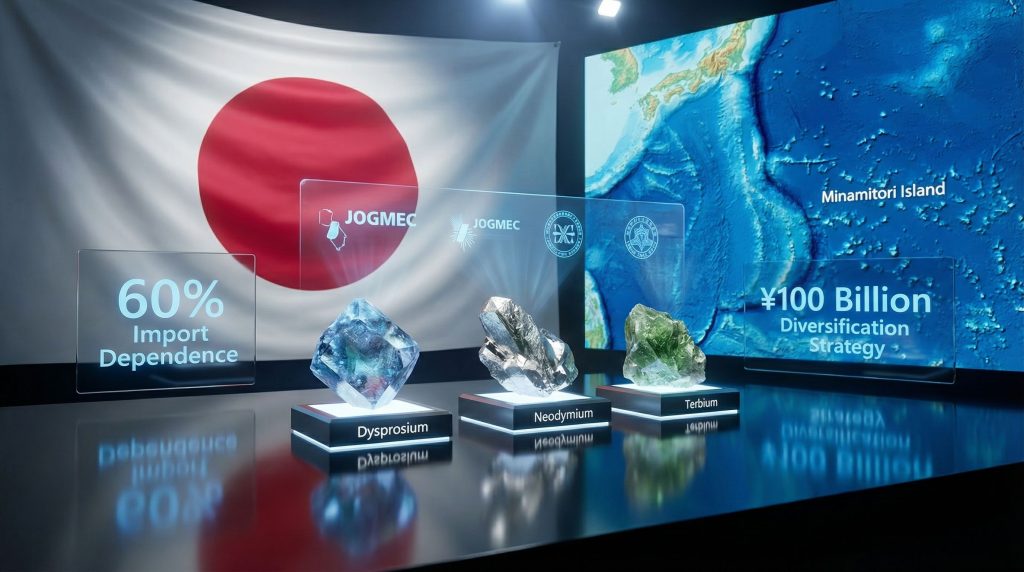
Japan's pursuit of strategic mineral independence has become increasingly critical as global supply chains face unprecedented geopolitical pressures, with Japan rare earth stockpiling emerging as a cornerstone of national economic security. The nation's heavy reliance on imported rare earth elements for advanced manufacturing creates vulnerabilities that extend far beyond simple trade relationships. Furthermore, recent tensions surrounding export controls have accelerated both government and corporate stockpiling initiatives across multiple industrial sectors.
What Drives Japan's Strategic Rare Earth Stockpiling Initiative?
Critical Manufacturing Dependencies Creating National Security Concerns
Japan's industrial foundation rests heavily on seventeen critical rare earth elements that power everything from automotive manufacturing to consumer electronics production. These materials enable the permanent magnets in electric vehicle motors, the phosphors in advanced display technologies, and the specialised alloys in precision manufacturing equipment. The nation's massive manufacturing sector generates significant economic output precisely because of its technological sophistication, yet this same advancement creates acute vulnerabilities when essential inputs face supply disruptions.
Current dependency patterns reveal the scope of this challenge:
- China processes approximately 90 percent of global rare earth supplies
- Japanese manufacturers consume substantial quantities across diverse applications
- Alternative sourcing options require extensive lead times to establish
- Price competitiveness of Chinese supplies complicates diversification efforts
The technical properties that make rare earth elements irreplaceable in high-tech applications also make them strategically significant. Neodymium's magnetic properties enable compact, powerful motors essential for electric vehicles. Terbium's luminescent characteristics drive advanced display technologies. Dysprosium's heat resistance allows permanent magnets to function in demanding automotive environments. Each element serves specific industrial functions that currently lack viable substitutes.
Historical Context: The 2010 Supply Shock That Changed Everything
A two-month supply disruption in 2010 fundamentally altered Japan's approach to rare earth security. The incident, triggered by a vessel collision near disputed territories, demonstrated how quickly geopolitical tensions could translate into immediate industrial supply challenges. Manufacturing companies faced production uncertainties, prices spiked dramatically, and strategic planners realised that traditional just-in-time supply chain models created unacceptable vulnerabilities for critical materials.
This supply shock catalysed Japan rare earth stockpiling as a comprehensive policy response. Government agencies initiated diversification programs, manufacturing companies began exploring alternative suppliers, and research institutions accelerated development of recycling technologies. The experience revealed that even temporary supply disruptions could generate lasting strategic implications, prompting a shift toward building resilience rather than optimising efficiency alone.
Current Vulnerability Assessment: Ongoing Import Dependence Despite Diversification Efforts
Despite sustained diversification initiatives since 2010, Japan continues to face significant import dependence for rare earth materials. Industry experts note that replacement sources require considerable time to develop, meaning that immediate vulnerability persists even as longer-term alternatives advance. The challenge extends beyond identifying alternative suppliers to building entire processing and refining capabilities that can match China's integrated production systems.
Market Reality Check: While diversification efforts have reduced direct dependence, the global rare earth supply chain remains highly concentrated, with Chinese processing capabilities setting market dynamics regardless of mining location.
Current vulnerability metrics illustrate the persistent challenge. Manufacturing sectors from automotive to electronics maintain substantial exposure to supply disruptions. Corporate stockpiling initiatives have accelerated in response to recent export control discussions, indicating that private sector risk assessment aligns with government security concerns.
When big ASX news breaks, our subscribers know first
How Does Japan's Multi-Layered Rare Earth Security Framework Operate?
Public-Private Coordination Architecture
Japan's approach to rare earth security operates through coordinated public-private mechanisms designed to balance market efficiency with strategic security requirements. Government agencies work closely with major manufacturing companies to assess vulnerability, coordinate stockpiling efforts, and develop alternative supply chains. This collaborative framework acknowledges that effective mineral security requires both institutional coordination and private sector expertise.
The architecture includes several key components:
- Strategic assessment protocols that evaluate supply chain vulnerabilities
- Coordinated stockpiling systems that optimise inventory across public and private sectors
- Research and development initiatives supporting alternative materials and recycling technologies
- International partnership frameworks that diversify supply sources
Government Investment Strategy Implementation
Japanese government investment in rare earth security encompasses multiple strategic priorities, from supporting alternative suppliers to advancing domestic processing capabilities. These investments recognise that mineral security requires long-term commitment across diverse technological and geographical approaches. Funding allocation balances immediate risk mitigation with longer-term independence objectives.
Investment priorities include:
- Alternative supplier development in Australia, Canada, and other nations
- Advanced recycling technologies that recover rare earths from electronic waste
- Domestic production research including deep-sea mining possibilities
- Strategic stockpile maintenance ensuring adequate emergency supplies
The critical minerals energy security framework demonstrates how strategic planning integrates multiple approaches to achieve comprehensive supply chain resilience.
Corporate Stockpiling Acceleration Response
Japanese manufacturing companies have significantly increased private stockpiling efforts in response to recent geopolitical tensions. This corporate response reflects sophisticated risk assessment that views inventory costs as insurance against supply disruption impacts. Major automotive and electronics manufacturers now maintain strategic reserves that exceed traditional operational requirements.
Private sector stockpiling serves multiple functions beyond simple supply security. Companies use strategic inventories to maintain production flexibility, negotiate better terms with suppliers, and demonstrate supply chain resilience to investors and customers. This approach transforms stockpiling from a cost centre into a strategic capability that supports business continuity.
What Alternative Supply Strategies Is Japan Implementing?
Deep-Sea Mining Development Prospects
Japan's exploration of seabed rare earth deposits represents a potentially transformative approach to mineral independence. Research initiatives focus on deposits in Japanese territorial waters, particularly around remote Pacific islands where geological surveys have identified significant concentrations of critical elements. These deposits could theoretically provide domestic supply sources, though technical and economic challenges remain substantial.
Deep-sea mining advantages include:
- Deposits located within Japanese territorial waters
- Potential for complete supply chain control
- Reduced geopolitical dependency risks
- Possible long-term cost competitiveness
However, the deep‑sea mining controversy faces significant technical hurdles. Extraction technologies must operate in extreme ocean depths, processing equipment requires development for marine environments, and environmental impact assessments demand careful consideration. Economic viability depends on achieving extraction costs competitive with land-based mining operations.
International Partnership Development Framework
Japan has actively pursued partnerships with rare earth producers in politically stable nations, particularly Australia, Canada, and the United States. These relationships aim to create diversified supply chains that reduce concentration risk whilst maintaining competitive pricing. Partnership development involves both government-to-government agreements and direct corporate investment in foreign mining operations.
Australian rare earth projects have attracted significant Japanese investment, with companies seeking to secure long-term supply agreements outside Chinese control. These partnerships often include technology sharing arrangements, where Japanese expertise in precision manufacturing complements Australian mining capabilities. Similar frameworks are developing with North American suppliers.
Urban Mining and Recycling Technology Advancement
Japan leads global development in urban mining technologies that recover rare earth elements from electronic waste streams. These approaches can significantly reduce primary material requirements whilst creating domestic supply sources from recycled content. Advanced separation technologies now enable economic recovery of rare earths from discarded smartphones, computers, and automotive components.
Technical innovations in recycling include:
- Selective dissolution processes that separate specific rare earth elements
- Automated disassembly systems that efficiently process electronic waste
- Purification technologies that achieve commercial-grade material quality
- Integration systems that connect waste collection with manufacturing supply chains
Urban mining provides multiple benefits beyond supply security. Environmental advantages include reduced waste disposal requirements and decreased mining environmental impacts. Economic benefits encompass domestic job creation and reduced import expenditures. Strategic benefits involve creating supply sources entirely within Japanese control.
How Are Geopolitical Tensions Reshaping Japan's Rare Earth Strategy?
China's Export Control Evolution and Strategic Implications
Chinese rare earth export policies have evolved significantly since the dramatic 2010 supply disruption, moving toward more sophisticated control mechanisms that balance economic interests with strategic leverage. Current approaches focus on dual-use restrictions and processing concentration rather than outright export bans. This evolution reflects China's recognition that complete supply cutoffs could accelerate customer diversification whilst more nuanced controls maintain market influence.
Beijing's current strategy emphasises controlling critical processing stages rather than raw material exports alone. This approach maintains Chinese participation in global supply chains whilst preserving strategic influence over final product availability. The strategy proves more sustainable than dramatic supply cutoffs because it maintains revenue streams whilst exercising geopolitical leverage.
G7 Coordination Mechanisms and Finance Ministers' Summit Priorities
Japan's Finance Minister emphasised the need to reduce China's ability to weaponise rare earth supplies during G7 discussions, indicating that mineral security now ranks among primary economic policy concerns. This elevation to G7 agenda status reflects recognition that critical material access affects fundamental economic security rather than merely trade policy.
The Washington summit brought together officials from Canada, the United States, and Australia, creating opportunities for coordinated response development. G7 coordination on critical minerals aims to:
- Share intelligence on supply chain vulnerabilities and threats
- Coordinate strategic stockpiling to maximise collective resilience
- Develop alternative suppliers through joint investment initiatives
- Create response protocols for managing supply disruptions
Bilateral Framework Development with Key Partners
Japan rare earth stockpiling increasingly emphasises bilateral partnerships that complement multilateral G7 coordination. These frameworks typically combine government-to-government agreements with corporate investment facilitation, creating integrated approaches that address both policy and commercial dimensions of supply chain development.
Partnership structure examples include:
- Investment protection agreements that reduce political risk for cross-border mining investments
- Technology sharing arrangements that combine Japanese manufacturing expertise with partner nation resources
- Strategic reserve coordination that optimises stockpile allocation across partner nations
- Emergency response protocols that ensure supply access during crisis periods
Which Rare Earth Elements Present the Greatest Strategic Vulnerabilities?
Heavy Rare Earth Elements: Critical Scarcity Patterns
Heavy rare earth elements, particularly dysprosium and terbium, present Japan's most acute supply vulnerabilities due to their essential applications in advanced technologies and concentrated production sources. Dysprosium enables permanent magnets to maintain performance at elevated temperatures, making it crucial for electric vehicle motors and wind turbine generators. Terbium provides green phosphorescence in display technologies and energy-efficient lighting systems.
Supply concentration characteristics:
| Element | Primary Applications | Supply Concentration Risk |
|---|---|---|
| Dysprosium | EV motors, wind turbines | Extremely high |
| Terbium | Display phosphors, lighting | Extremely high |
| Europium | LED phosphors, security features | Very high |
| Holmium | Specialised magnets, lasers | High |
These elements command premium prices precisely because of their scarcity and essential applications. Unlike light rare earths that have broader geological distribution, heavy rare earths concentrate in specific deposits that require sophisticated processing capabilities. This geological reality means that diversification strategies face fundamental resource constraints beyond political considerations.
Automotive Sector Exposure: Electric Vehicle Manufacturing Dependencies
Japan's automotive industry faces particularly acute rare earth vulnerabilities as electric vehicle production scales rapidly. High-performance permanent magnet motors require substantial quantities of neodymium and dysprosium, whilst advanced battery systems utilise various rare earth compounds for optimal performance. As automotive companies transition toward electrification, rare earth consumption intensifies dramatically.
Automotive rare earth applications include:
- Permanent magnet motors requiring neodymium-iron-boron alloys with dysprosium additions
- Battery cathode materials incorporating various rare earth compounds
- Electronic control systems using rare earth elements in sensors and circuits
- Hybrid powertrains combining multiple rare earth-dependent technologies
Electric vehicle adoption trends amplify Japan's rare earth vulnerability because automotive applications consume large quantities per unit compared to consumer electronics. A single electric vehicle motor may contain several kilograms of rare earth materials, whilst a smartphone requires only trace amounts. This scaling relationship means that automotive electrification success depends directly on secure rare earth access.
Electronics Industry Impact: Consumer Technology Supply Chain Risks
Japan's electronics manufacturing sector utilises rare earth elements across diverse applications, from display technologies to precision components. Whilst individual consumer devices contain relatively small quantities of rare earth materials, the aggregate consumption across millions of units creates substantial supply requirements. Production disruptions can quickly cascade through complex supply chains serving global markets.
Electronics sector vulnerabilities encompass:
- Display manufacturing requiring terbium and europium for phosphor production
- Speaker and headphone production using neodymium permanent magnets
- Camera lens systems incorporating lanthanum for optical clarity
- Semiconductor processing utilising various rare earth compounds
Consumer electronics supply chains operate on tight inventory cycles that amplify disruption impacts. Just-in-time manufacturing models that optimise working capital efficiency become vulnerabilities when critical material supplies face uncertainty. This tension between operational efficiency and supply security drives current stockpiling initiatives.
What Economic Implications Emerge from Supply Chain Diversification?
Cost-Benefit Analysis: Stockpiling Investment Versus Disruption Risks
Japanese companies and government agencies conduct sophisticated cost-benefit analyses that weigh stockpiling expenses against potential supply disruption impacts. These assessments consider multiple variables including inventory carrying costs, price volatility patterns, disruption probability scenarios, and alternative sourcing development timelines. The analysis typically reveals that strategic stockpiling provides favourable risk-adjusted returns despite significant upfront investments.
Economic factors in stockpiling decisions include:
- Inventory carrying costs including storage, insurance, and capital opportunity costs
- Price volatility hedging where stockpiles provide protection against price spikes
- Production continuity value from maintaining manufacturing operations during disruptions
- Market share protection by ensuring consistent product availability
Sophisticated companies calculate the economic impact of production shutdowns across their entire value chain, including lost sales, customer relationship damage, and market share erosion. These comprehensive assessments often justify substantial stockpiling investments because disruption costs far exceed inventory carrying expenses.
Manufacturing Competitiveness Impact: Price Volatility and Production Planning
Rare earth price volatility creates significant challenges for Japanese manufacturers attempting to maintain competitive pricing whilst managing input cost uncertainty. China's position as the dominant low-cost supplier complicates diversification efforts because alternative sources typically command premium prices. This dynamic forces manufacturers to balance supply security against cost competitiveness.
Manufacturing planning challenges include:
- Product pricing strategies that account for volatile input costs
- Production scheduling optimisation to minimise inventory risk exposure
- Customer contract negotiations incorporating supply uncertainty factors
- Investment planning for alternative materials research and development
Long-term manufacturing competitiveness depends on developing supply chains that combine security with cost efficiency. This often requires accepting higher short-term costs to build sustainable competitive advantages through supply chain resilience and technological innovation.
Innovation Investment Returns: Alternative Materials Development Progress
Japanese investment in alternative materials research and recycling technologies generates returns that extend beyond supply security to include technological leadership and export opportunities. Advanced minerals recycling innovation capabilities create new revenue streams from electronic waste processing whilst reducing primary material requirements. Alternative materials research may lead to breakthrough technologies that eliminate rare earth dependencies entirely.
Innovation investment categories encompass:
- Alternative magnet technologies that reduce or eliminate rare earth requirements
- Advanced recycling processes that create domestic rare earth supply sources
- Material substitution research developing functionally equivalent alternatives
- Efficiency improvements that reduce rare earth consumption per application
These research initiatives position Japanese companies as leaders in sustainable materials technologies, creating export opportunities as other nations face similar supply security challenges. Innovation investments thus serve dual purposes of reducing import dependence whilst building new competitive advantages.
The next major ASX story will hit our subscribers first
How Effective Are Current Risk Mitigation Strategies?
Strategic Stockpile Adequacy and Duration Analysis
Japan's strategic rare earth stockpiles aim to provide sufficient coverage for weathering supply disruptions whilst alternative sources come online or diplomatic solutions emerge. Stockpile adequacy assessment requires sophisticated modelling of consumption patterns, disruption scenarios, and alternative sourcing timelines. Whilst specific stockpile volumes remain classified for security reasons, the system design targets several months of coverage for critical applications.
Stockpile effectiveness factors include:
- Material selection priorities focusing on elements with highest vulnerability
- Storage technology requirements maintaining material quality over extended periods
- Distribution logistics ensuring rapid deployment to critical manufacturers
- Refresh and rotation protocols preventing material degradation
Stockpile management requires balancing coverage duration against storage costs and material degradation risks. Optimal strategies often involve rotating inventories through normal consumption whilst maintaining minimum strategic reserves. This approach ensures material freshness whilst providing security coverage.
Supply Chain Diversification Success Metrics
Japan's diversification efforts since 2010 have achieved measurable progress in reducing Chinese import dependence, though significant exposure remains. Success metrics encompass both quantitative measures like import source distribution and qualitative factors including supply chain resilience and alternative supplier reliability. Industry experts note that meaningful diversification requires sustained effort because replacement sources need time to develop adequate capacity and reliability.
Diversification progress indicators:
- Source country distribution showing reduced concentration in any single supplier nation
- Alternative supplier capacity measuring non-Chinese production capability development
- Supply contract diversity indicating reduced reliance on specific companies or regions
- Price competitiveness of alternative sources compared to Chinese supplies
Whilst diversification has advanced considerably, analysts emphasise that replacement sources require substantial time to achieve full operational capacity and cost competitiveness. This reality means that supply security improvements occur gradually rather than through rapid transformation.
Technology Solutions Performance: Recycling and Efficiency Achievements
Japanese advances in rare earth recycling and consumption efficiency have generated significant supply security benefits alongside environmental advantages. Urban mining technologies now recover substantial quantities of rare earth elements from electronic waste streams, creating domestic supply sources entirely within Japanese control. Efficiency improvements in manufacturing processes have reduced consumption requirements across multiple applications.
Technology solution achievements include:
- Recovery rate improvements in extracting rare earths from electronic waste
- Processing cost reductions making recycling economically competitive
- Application efficiency gains reducing rare earth requirements per product unit
- Substitute material development enabling reduced rare earth consumption
These technological capabilities provide flexible response options that complement traditional supply chain diversification. Recycling capacity can expand rapidly during supply shortages, whilst efficiency improvements reduce overall vulnerability exposure. Combined approaches create more resilient supply security than any single strategy alone.
What Future Scenarios Could Reshape Japan's Rare Earth Security?
Optimistic Scenario: Technological Breakthrough and Supply Independence
Japan's most favourable future scenario involves breakthrough success in domestic deep-sea mining combined with revolutionary advances in recycling technology and alternative materials development. This pathway could potentially achieve near-complete independence from foreign rare earth supplies whilst maintaining manufacturing cost competitiveness. Success would require coordinated advances across multiple technological frontiers simultaneously.
Breakthrough scenario elements:
- Deep-sea mining commercialisation achieving cost parity with land-based operations
- 100% recycling efficiency recovering all rare earths from waste streams
- Alternative materials success eliminating rare earth requirements for key applications
- Processing technology leadership creating export opportunities for Japanese expertise
This scenario transforms Japan from vulnerable importer to secure domestic supplier with potential export capabilities. The economic implications extend beyond supply security to include technological leadership, environmental benefits, and strategic influence in global rare earth markets.
Challenging Scenario: Extended Supply Disruption and Industrial Impact
Japan's most concerning scenario involves prolonged supply disruption combined with limited alternative source availability and slow technological solution development. This situation would force difficult choices between maintaining production volumes and accepting dramatically higher input costs. Extended disruption could accelerate manufacturing base migration to locations with more secure supply access.
Disruption scenario consequences might include:
- Production volume reductions as companies ration limited rare earth supplies
- Manufacturing cost increases from accessing expensive alternative sources
- Market share losses to competitors with more secure supply chains
- Industrial base erosion as companies relocate to supply-secure regions
This scenario emphasises the critical importance of current Japan rare earth stockpiling strategies and the substantial economic stakes involved in supply chain security. The potential costs of inadequate preparation far exceed the investments required for comprehensive risk mitigation.
Probable Scenario: Gradual Diversification with Persistent Partial Dependence
Japan's most likely future involves steady progress in diversification and technological solutions whilst maintaining significant import dependence on Chinese supplies. This scenario reflects the practical realities of supply chain transformation timelines and the economic advantages of Chinese processing capabilities. Success requires managing ongoing vulnerability whilst building long-term resilience capabilities.
Realistic scenario characteristics encompass:
- Moderate diversification progress reducing but not eliminating Chinese dependence
- Technological solution adoption providing partial supply security improvements
- Strategic stockpile maintenance ensuring disruption response capabilities
- International cooperation development creating coordinated response mechanisms
This pathway requires sophisticated risk management that balances multiple strategies whilst accepting persistent vulnerability as development timelines unfold. Success depends on maintaining flexibility and continuing investment in alternative approaches.
How Do Other G7 Nations Compare in Critical Mineral Security?
United States Strategic Reserve Models and Rare Earth Applications
The United States maintains strategic mineral reserves through multiple mechanisms, including the Strategic Petroleum Reserve model that could inform rare earth stockpiling approaches. American critical mineral strategy emphasises domestic mining development, recycling technology advancement, and partnership building with ally nations. The U.S. approach often focuses on military and defence applications where supply security takes precedence over cost optimisation.
U.S. strategic elements include:
- Defence Production Act authorities for critical mineral supply chain development
- Strategic mineral reserves maintained for national security applications
- Mining industry support including regulatory streamlining and financial incentives
- Research and development funding for alternative materials and recycling technologies
American rare earth strategy development provides valuable insights for Japanese planners whilst highlighting different national priorities and resource endowments. The U.S. emphasis on domestic mining reflects abundant mineral resources that Japan lacks, requiring different approaches to achieve similar security objectives.
European Union Critical Raw Materials Framework
The European Union's Critical Raw Materials Act represents a comprehensive regulatory approach to supply chain security that balances market mechanisms with strategic oversight. EU critical raw materials framework emphasises circular economy principles, sustainable sourcing requirements, and coordinated stockpiling across member nations. This framework offers insights into multilateral coordination mechanisms that could inform G7 cooperation.
EU framework components include:
- Strategic project designation for critical mineral supply chain development
- Recycling targets mandating circular economy approaches
- Diversification requirements limiting dependence on any single supplier nation
- Monitoring and assessment systems tracking supply chain vulnerability
European approaches demonstrate how regulatory frameworks can incentivise private sector diversification whilst maintaining market efficiency. The EU model may inform Japanese policy development and G7 coordination mechanisms.
Canada-Australia Resource Diplomacy and Mining Partnerships
Canada and Australia leverage their substantial mineral resources to build strategic partnerships that enhance collective security whilst supporting domestic mining industries. These nations often serve as alternative suppliers for countries seeking to diversify away from Chinese sources. Their approaches demonstrate how resource-rich nations can convert natural endowments into strategic influence and economic opportunity.
Resource diplomacy strategies encompass:
- Government-backed investment facilitation supporting international mining partnerships
- Technology sharing agreements combining mining expertise with manufacturing capabilities
- Long-term supply contracts providing security for both suppliers and customers
- Joint research initiatives advancing sustainable mining and processing technologies
These partnerships offer models for Japanese engagement that combine supply security objectives with mutually beneficial economic development. Resource diplomacy creates win-win relationships that prove more sustainable than purely transactional supply arrangements.
What Investment Opportunities Emerge from Japan's Rare Earth Strategy?
Mining Technology Innovation and Deep-Sea Extraction Leaders
Japan's commitment to deep-sea mining development creates substantial investment opportunities for companies developing specialised extraction and processing technologies. These innovations require sophisticated engineering solutions for operating in extreme marine environments whilst maintaining economic viability. Success could revolutionise rare earth supply chains globally whilst creating new industrial sectors.
Technology investment areas include:
- Underwater mining equipment designed for deep ocean operations
- Marine processing systems that handle raw materials in challenging environments
- Environmental monitoring technologies ensuring sustainable extraction practices
- Marine logistics systems connecting deep-sea operations with land-based facilities
Companies successfully developing deep-sea rare earth technologies could capture significant market opportunities as other nations pursue similar strategies. The technical challenges create substantial barriers to entry that may protect successful innovators' competitive advantages.
Recycling and Urban Mining Technology Companies
Japan's advanced recycling capabilities create investment opportunities across the entire urban mining value chain, from electronic waste collection to refined rare earth production. Companies developing efficient separation technologies, automated processing systems, and quality control capabilities benefit from growing demand for domestic supply sources and environmental sustainability.
Urban mining investment opportunities encompass:
- Waste collection and processing infrastructure serving urban populations
- Separation technology development achieving high purity recovered materials
- Automation systems reducing processing costs and improving safety
- Quality assurance technologies ensuring recycled materials meet manufacturing standards
The circular economy trend supports sustained growth in urban mining applications beyond rare earths to include other critical materials. Companies building comprehensive recycling capabilities may benefit from expanding market opportunities as sustainability requirements intensify.
Alternative Materials Research and Substitution Technology Development
Japanese investment in alternative materials research creates opportunities for companies developing substitute technologies that reduce or eliminate rare earth requirements. These innovations could fundamentally transform markets by removing critical dependencies whilst potentially offering superior performance characteristics. Success requires sustained research investment and sophisticated understanding of application requirements.
Alternative materials research includes:
- Magnet technology development using abundant materials instead of rare earths
- Display phosphor alternatives providing equivalent performance with common elements
- Battery chemistry innovations reducing or eliminating rare earth requirements
- Manufacturing process improvements achieving better efficiency with alternative materials
Alternative materials development represents high-risk, high-reward investment opportunities that could generate enormous returns by solving fundamental supply security challenges. Companies achieving breakthrough innovations may capture substantial market value whilst contributing to national security objectives.
How Does Japan's Approach Integrate with Broader Mining Innovation Trends?
Advanced Automation and AI-Driven Processing Systems
Japan's rare earth security strategy increasingly incorporates cutting-edge mining innovation trends that utilise artificial intelligence and automated processing systems. These technologies improve efficiency in both traditional mining operations and advanced recycling facilities. Furthermore, automation reduces operational risks whilst enhancing material recovery rates across diverse processing environments.
Advanced processing systems enable more precise separation of individual rare earth elements, improving overall yield and reducing waste generation. Consequently, these innovations support both economic and environmental objectives by maximising resource utilisation whilst minimising processing footprints.
Integration with Global Supply Chain Digitalisation
Digital supply chain technologies play an increasingly important role in Japan's rare earth stockpiling strategy. Blockchain-based tracking systems provide enhanced transparency across complex international supply networks. Additionally, predictive analytics help optimise inventory levels and anticipate potential disruption scenarios.
These digital capabilities enable more sophisticated coordination between government stockpiles and private sector inventories, creating more efficient overall resource allocation whilst maintaining strategic security coverage.
Key Takeaways: Japan's Rare Earth Security Evolution
Strategic Stockpiling as Economic Insurance Policy
Japan's approach to rare earth stockpiling demonstrates sophisticated risk management that treats inventory investment as insurance against supply disruption rather than simple cost centre. This perspective recognises that potential disruption costs far exceed stockpiling expenses when calculated across entire value chains and economic impacts. Strategic stockpiling provides operational flexibility and negotiating leverage whilst supporting broader supply chain resilience.
The economic logic supporting stockpiling becomes compelling when considering the concentrated nature of rare earth processing and the essential role these materials play in high-value manufacturing sectors. Insurance value calculations must account for production continuity, market share protection, and customer relationship maintenance during potential supply disruptions.
Technology Innovation Driving Long-Term Independence Potential
Japanese leadership in recycling technology, alternative materials research, and advanced manufacturing processes creates pathways toward reduced import dependence that complement traditional supply diversification strategies. These technological capabilities provide flexible response options that can expand rapidly during supply constraints whilst generating economic value through innovation leadership.
Technology-driven independence strategies include:
- Urban mining systems that create domestic rare earth sources from waste streams
- Alternative materials development reducing or eliminating specific rare earth requirements
- Process efficiency improvements maximising output from available materials
- Deep-sea mining capabilities potentially accessing domestic rare earth deposits
Innovation investment serves dual purposes by reducing vulnerability whilst building competitive advantages in sustainable technologies that other nations may eventually adopt.
International Cooperation Essential for Supply Chain Resilience
Japan's elevation of rare earth security to G7 agenda status reflects recognition that supply chain resilience requires coordinated international responses rather than purely national solutions. International frameworks enable resource sharing, intelligence coordination, and joint investment in alternative suppliers that individual nations might struggle to support independently.
International cooperation benefits encompass:
- Shared intelligence on supply threats and alternative source development
- Coordinated stockpiling optimising coverage whilst minimising individual nation costs
- Joint investment projects supporting alternative supplier capacity development
- Emergency response protocols ensuring mutual assistance during disruption events
The G7 framework provides institutional mechanisms for sustained cooperation that can adapt to evolving threats and opportunities. Multilateral approaches prove more sustainable than bilateral arrangements because they distribute costs and benefits across multiple participants whilst creating redundant response capabilities.
Effective rare earth security strategy requires integrating stockpiling, diversification, technological innovation, and international cooperation into comprehensive approaches that address both immediate vulnerabilities and long-term independence objectives. Japan's evolving Japan rare earth stockpiling strategy demonstrates how sophisticated risk management can transform supply chain challenges into opportunities for technological leadership and strategic partnership development.
Ready to capitalise on the next major mineral discovery?
Strategic stockpiling initiatives like Japan's rare earth security programme highlight why major mineral discoveries can generate exceptional returns, particularly when supply chain vulnerabilities create sustained demand for critical materials. Discovery Alert's proprietary Discovery IQ model delivers real-time notifications on significant ASX mineral discoveries, empowering investors to identify actionable opportunities ahead of the broader market and understand why historic discoveries have delivered substantial returns.