August 9, 2026
Japan releases oil reserves amidst Middle East shipping disruptions as global maritime chokepoints face unprecedented military threats, revealing underlying vulnerabilities through coordinated emergency protocols. Strategic petroleum reserve releases represent critical mechanisms designed for scenarios where diplomatic tensions translate directly into supply chain disruptions affecting billions of consumers worldwide.
What Makes Strategic Oil Reserve Releases Critical During Global Energy Crises?
The mechanics of emergency petroleum stockpiling operate through carefully calibrated national security frameworks that distinguish between immediate market intervention and long-term strategic preservation. When Japan releases oil reserves amidst Middle East shipping disruptions, it activates a multi-tiered system spanning both government-controlled strategic reserves and privately-held commercial stocks.
Understanding the Mechanics of Emergency Petroleum Stockpiling
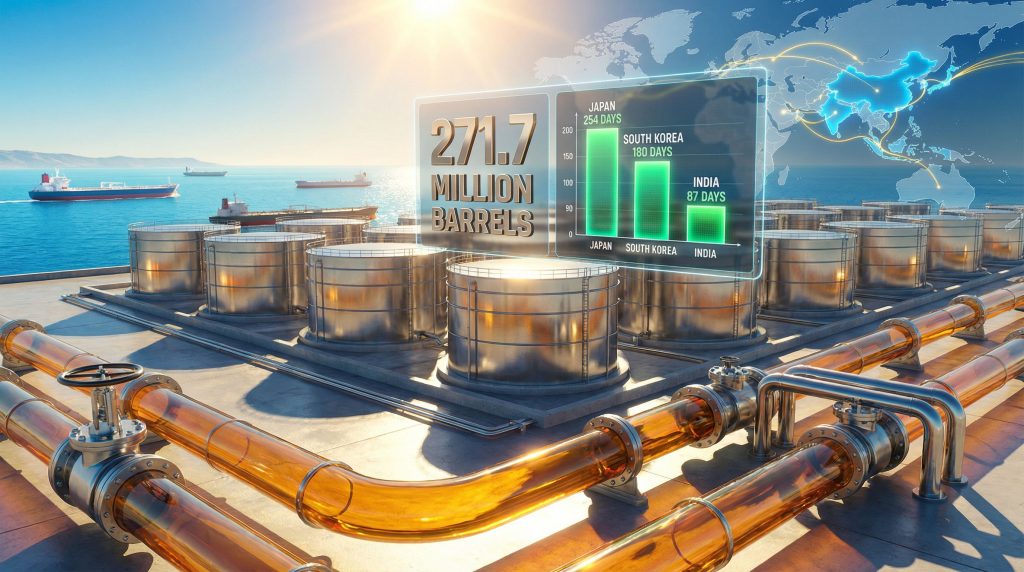
Emergency stockpiling functions as a supply-side shock absorber through sophisticated calculation methodologies that measure releases against standardised daily consumption metrics. Japan's strategic reserve architecture demonstrates this complexity, maintaining 254 days of total national demand across multiple categories: government stockpiles accounting for 146 days, private sector reserves providing 108+ days, and joint stockpiles with producing nations.
The release sequence optimisation prioritises market stability while preserving strategic capacity. Private sector stocks mobilise first, providing 15 days of immediate access, followed by government reserves offering a 30-day release window. This phased approach prevents simultaneous depletion of all strategic assets whilst ensuring continuous supply during extended crises.
How Reserve Release Volumes Are Calculated Against National Consumption
Reserve calculations operate through precise consumption-based algorithms that account for seasonal demand variations, industrial requirements, and emergency consumption reduction protocols. The International Energy Agency's coordinated response mechanism authorised 108.6 million barrels for immediate release across the Asia-Oceania region, representing the largest multilateral reserve mobilisation in modern energy crisis management.
Individual national contributions reflect strategic capacity differentials:
• Japan: 45-day immediate release capability (15 private + 30 government)
• South Korea: 30-day coordinated release from 180 total reserve days
• India: 15-day emergency access from 87 total reserve days
• Regional coordination: IEA protocol activation enabling collective drawdowns exceeding single-nation contributions
The Role of Private vs. Government-Controlled Strategic Reserves
The dual-structure approach between private and government reserves creates operational flexibility during crisis escalation. Private sector reserves mobilise without parliamentary approval or complex bureaucratic processes, whilst government stockpiles require formal authorisation but provide larger sustained release volumes.
Japan's framework illustrates this coordination: oil-related companies hold reserves equivalent to 70 days of national consumption, enabling immediate market intervention when diplomatic tensions threaten supply stability. Government reserves then provide sustained support through extended release windows, preventing market panic during prolonged disruptions.
Furthermore, the oil price rally demonstrates how market sentiment responds to these coordinated interventions. "Strategic petroleum reserves function as the first line of defence against supply chain weaponisation, providing time for diplomatic solutions whilst preventing energy-driven economic collapse."
When big ASX news breaks, our subscribers know first
How Do Middle Eastern Maritime Chokepoints Impact Global Energy Security?
Geographic concentration creates systemic vulnerabilities when 20% of global oil supply depends on passage through a single 34-mile-wide maritime corridor. The Strait of Hormuz represents the most critical energy chokepoint globally, where regional military conflicts immediately translate into worldwide price volatility and supply security concerns.
The Strait of Hormuz: Why 20% of Global Oil Supply Depends on One Waterway
The Persian Gulf's oil-producing capacity concentrates through this narrow passage, creating a geographic bottleneck where military control determines energy access for import-dependent economies worldwide. Current Iranian activities impeding maritime traffic demonstrate how regional conflicts transform into global energy security crises through chokepoint control mechanisms.
Historical precedents establish clear price impact patterns: threats to critical maritime passages typically drive crude oil prices above $100 per barrel, with volatility persisting until shipping normalises or alternative supply routes establish operational capacity. Additionally, OPEC production impact influences these pricing mechanisms through futures markets where risk premium calculations precede physical supply disruptions.
Alternative Shipping Routes and Their Economic Viability During Crises
Alternative routing through the Suez Canal, Red Sea passages, and overland pipeline networks provides partial mitigation but cannot fully substitute for Hormuz throughput capacity. These alternatives involve longer transit times, higher shipping costs, and increased insurance premiums that translate into consumer price impacts across energy-dependent economies.
Pipeline infrastructure connecting Persian Gulf production to Mediterranean terminals offers the most viable long-term alternative, though current capacity limitations prevent full substitution during extended Hormuz closures. Regional pipeline projects require multi-year development timelines and substantial capital investment coordination between producing and transit nations.
Historical Precedents of Energy Supply Disruptions in Critical Maritime Passages
The 1973 Arab-Israeli conflict demonstrated how regional military operations weaponise energy supplies through maritime passage control. OPEC's embargo strategy utilised chokepoint geography to create international energy instability, establishing precedents for current crisis management approaches.
During 2011 Iranian threats to close the Strait, crude oil prices responded sharply despite no actual closure materialising. This demonstrated market sensitivity to chokepoint security perceptions, where diplomatic rhetoric alone generates immediate oil price volatility through trader risk assessment algorithms.
| Chokepoint | Daily Oil Transit | Alternative Routes | Price Impact Threshold |
|---|---|---|---|
| Strait of Hormuz | 21 million barrels | Suez Canal, pipelines | $100+ per barrel |
| Suez Canal | 6 million barrels | Cape of Good Hope | $85+ per barrel |
| Strait of Malacca | 16 million barrels | Lombok, Sunda Straits | $90+ per barrel |
What Strategic Options Do Energy-Dependent Nations Have During Supply Crises?
Energy security architecture operates through three primary response mechanisms: coordinated reserve releases, bilateral alliance frameworks, and domestic diversification strategies. The current crisis reveals how these options intersect with political constraints, legal frameworks, and strategic assessments of military resource allocation.
Coordinated International Energy Agency Response Mechanisms
The IEA's standing agreements enable collective reserve mobilisation that exceeds individual national capacity, creating aggregate supply interventions sufficient for market stabilisation. Executive Director Fatih Birol confirmed that unprecedented additional volumes entered global markets through coordinated Asia-Oceania releases, though he cautioned that opening the Strait of Hormuz remains vital for stable flow restoration.
This coordination mechanism operates through pre-established protocols rather than ad hoc decision-making, enabling rapid response times when diplomatic tensions escalate into supply disruptions. Member nations contribute based on reserve capacity and import dependency calculations, distributing crisis response burdens across multiple economies.
Bilateral Energy Security Partnerships and Alliance Frameworks
Military alliance structures create complex decision matrices when energy crises require naval asset deployment for passage security. Current responses illustrate these constraints: President Trump's requests to approximately seven allied nations for warship contributions encountered varied responses reflecting domestic political considerations, existing military commitments, and legal frameworks governing overseas operations.
National Response Patterns:
• Australia: Explicit refusal – Cabinet Minister Catherine King stated no ships would deploy to the Strait of Hormuz
• Japan: Constitutional constraints – Prime Minister Sanae Takaichi emphasised evaluation within legal frameworks, no current naval deployment plans
• South Korea: Cautious deliberation – careful review required before any potential military commitment
• UK-Canada: Trilateral coordination with U.S. focusing on shipping disruption responses rather than direct military participation
Defence Minister Shinjiro Koizumi's discussions with U.S. Secretary of Defense Pete Hegseth reaffirmed bilateral alliance commitments whilst avoiding direct naval contribution commitments. Hegseth provided assurances that Iranian conflicts would produce no changes to American force deployments in Japan, demonstrating how energy crises trigger alliance-level coordination without necessarily requiring direct naval participation from allies.
Domestic Energy Mix Diversification as Long-Term Risk Mitigation
Import dependency creates structural vulnerabilities that strategic reserves can only temporarily mitigate. Consequently, long-term energy security requires diversification across supply sources, alternative energy capacity expansion, and domestic production enhancement where geologically viable.
Japan's 254-day total reserve capacity provides substantial crisis management flexibility, but sustainable energy security demands reduced import dependency through renewable energy integration, liquefied natural gas source diversification, and demand management efficiency improvements. The nation faces significant energy transition challenges similar to other developed economies.
Nuclear power capacity represents another diversification option, though political and safety considerations create implementation barriers in many jurisdictions. The current crisis may accelerate domestic alternative energy investment as nations reassess the geopolitical risks of excessive fossil fuel import dependency.
How Do Diplomatic Tensions Translate Into Energy Market Volatility?
Market volatility transmission operates through sophisticated risk assessment mechanisms where diplomatic tensions trigger immediate pricing responses before physical supply disruptions materialise. Current global oil price increases reflect trader calculations incorporating chokepoint security threats, naval deployment uncertainties, and diplomatic resolution probabilities.
The Economics of $100+ Oil Prices on Import-Dependent Economies
Energy price inflation cascades through economic systems via transportation costs, manufacturing input expenses, and consumer purchasing power reduction. When oil prices exceed $100 per barrel, import-dependent economies face immediate inflationary pressures that compound existing economic challenges.
Japan releases oil reserves amidst Middle East shipping disruptions precisely to mitigate these transmission mechanisms: higher crude costs increase electricity generation expenses, transportation fuel prices, and industrial input costs across manufacturing sectors. The strategic reserve releases aim to moderate these impacts whilst diplomatic efforts address underlying supply security concerns.
Naval Security Operations and Their Impact on Shipping Insurance Costs
Maritime security threats generate immediate insurance premium increases that function as energy price inflation even before physical supply disruptions occur. Shipping insurance costs escalate through risk assessment algorithms that calculate probability-weighted loss scenarios during maritime security operations.
These insurance cost increases represent hidden energy taxation on import-dependent economies, as higher shipping expenses ultimately transfer to consumer prices through supply chain cost transmission. Naval security operations paradoxically increase costs whilst providing protection, creating economic trade-offs between security and affordability.
Political Risk Assessment in Energy Supply Chain Management
Energy companies and government procurement agencies utilise sophisticated political risk models that incorporate diplomatic tension indicators, military deployment patterns, and historical conflict escalation probabilities. These models influence purchasing decisions, contract negotiations, and strategic stockpile management policies.
President Trump's framing of energy security as collective responsibility attempts to redistribute military burden-sharing among nations dependent on Middle Eastern crude. His specific identification of China as deriving majority oil supplies through Hormuz illustrates how energy dependency creates strategic leverage in international relations. Moreover, the broader trade war impact demonstrates how geopolitical tensions compound energy security challenges.
What Are the Long-Term Implications of Coordinated Reserve Releases?
Strategic reserve utilisation creates subsequent replenishment requirements that may coincide with elevated market prices, generating fiscal costs for reserve management agencies. The current 271.7 million barrel coordinated release represents substantial stockpile depletion requiring strategic rebuilding over multiple years.
Market Stabilisation Effects vs. Strategic Reserve Depletion Risks
Reserve releases provide immediate market intervention capacity but reduce future crisis response capability until stockpiles rebuild to target levels. Nations must balance short-term market stabilisation benefits against longer-term strategic vulnerability increases during reserve replenishment periods.
Economic modelling suggests reserve releases moderate price spikes by 15-25% compared to unmitigated supply disruptions, though effectiveness depends on disruption duration and coordination scope. Extended crises may exhaust reserve capacity before diplomatic solutions emerge, creating secondary vulnerability periods.
Rebuilding National Energy Stockpiles After Emergency Drawdowns
Reserve replenishment typically occurs through government purchasing programmes that may conflict with market price stabilisation objectives. Simultaneous replenishment by multiple nations creates demand concentration that can elevate prices during rebuilding phases.
Replenishment Timeline Considerations:
• Immediate phase (0-3 months): Private sector reserves rebuild through normal commercial operations
• Medium-term phase (3-12 months): Government stockpile restoration through strategic purchasing programmes
• Long-term phase (12+ months): Reserve capacity expansion based on crisis lessons learned
• Policy adjustment period: Reserve target levels may increase based on crisis duration experience
Lessons for Future Energy Security Policy Development
Current crisis responses reveal coordination mechanism effectiveness whilst highlighting diplomatic and military constraint limitations. Future energy security frameworks may require enhanced reserve sharing agreements, pre-positioned alternative supply arrangements, and accelerated domestic energy transition investments.
The relationship between military alliance obligations and energy security creates policy complexity requiring careful balance between burden-sharing expectations and domestic political constraints. Nations may develop more explicit energy security contributions that substitute for direct military participation in overseas operations.
Which Nations Are Most Vulnerable to Middle Eastern Energy Supply Disruptions?
Import dependency analysis reveals systematic vulnerabilities concentrated among Asian economies with limited domestic energy production and high manufacturing energy requirements. Geographic distance from alternative supply sources compounds these vulnerabilities during extended maritime security crises.
Import Dependency Analysis: Asia-Pacific's Energy Security Challenge
Regional Vulnerability Assessment:
| Nation | Middle East Import % | Strategic Reserves | Alternative Sources | Vulnerability Rating |
|---|---|---|---|---|
| Japan | 87% | 254 days | Australia, Russia | Moderate-High |
| South Korea | 84% | 180 days | Americas, Africa | High |
| India | 64% | 87 days | Americas, Africa | Very High |
| China | 52% | 90+ days | Russia, Americas | Moderate |
These dependency patterns create economic and political leverage opportunities for Middle Eastern producers whilst generating security commitments for importing nations. The current crisis demonstrates how geographic energy concentration translates into strategic vulnerability requiring military resource allocation.
Geographic Diversification Strategies for Crude Oil Sourcing
Supply source diversification involves long-term contract negotiations, infrastructure investments, and quality specification adjustments to accommodate different crude oil grades. American shale production offers partial Middle Eastern substitution, though transportation costs and refinery compatibility create implementation challenges.
African oil production from Nigeria, Angola, and emerging producers provides geographic diversification, though political stability risks and infrastructure limitations constrain reliable supply capacity. South American sources offer additional alternatives but require extended shipping routes that increase costs and transit times.
Infrastructure Investments in Alternative Energy Import Terminals
Liquefied natural gas import capacity represents the most viable alternative energy infrastructure for reducing crude oil import dependency. Japan's extensive LNG terminal network provides energy diversification precedents for other import-dependent economies.
Renewable energy infrastructure combined with battery storage systems offers long-term import dependency reduction, though current technology costs and grid integration challenges limit rapid transition capabilities. The current crisis may accelerate renewable energy investment as nations reassess fossil fuel import risks.
The next major ASX story will hit our subscribers first
How Do Military Alliance Commitments Factor Into Energy Crisis Management?
Alliance frameworks create expectations for burden-sharing during energy security operations whilst encountering domestic political and legal constraints that limit actual military contributions. Current diplomatic negotiations reveal the gap between theoretical alliance obligations and practical deployment capabilities.
Naval Asset Deployment Requests and Allied Response Strategies
Military burden-sharing during energy crises involves complex cost-benefit calculations incorporating operational expenses, opportunity costs of redeployed assets, and domestic political considerations. Australia's refusal and Japan's constitutional constraints illustrate how national interests override alliance pressure during overseas deployment requests.
Naval deployment costs encompass fuel, maintenance, personnel, and opportunity costs of assets unavailable for other security commitments. These expenses may exceed economic benefits of stable energy prices, creating rational incentives for deployment refusal despite alliance pressure.
The Balance Between Energy Security and Military Resource Allocation
Military resource allocation decisions must balance energy security benefits against competing security priorities including territorial defence, regional stability operations, and humanitarian commitments. Energy security represents one factor among multiple strategic considerations rather than an overriding imperative.
Alliance Response Patterns:
• Direct military contribution: Limited participation due to political and cost constraints
• Financial contribution: Alternative burden-sharing through economic support rather than military assets
• Diplomatic coordination: Non-military participation through negotiation and mediation efforts
• Reserve sharing: Energy security contribution through coordinated stockpile releases rather than naval deployment
Diplomatic Negotiations During Maritime Security Operations
Multilateral coordination requires balancing competing national interests whilst maintaining alliance cohesion during crisis periods. Prime Minister Keir Starmer's trilateral discussions with President Trump and Canadian Prime Minister Mark Carney demonstrate diplomatic coordination mechanisms that may substitute for direct military participation.
These negotiations must address domestic political concerns, legal framework constraints, and strategic assessment differences whilst maintaining alliance effectiveness. The current crisis tests alliance structures by requiring concrete commitments rather than theoretical burden-sharing agreements.
What Market Mechanisms Emerge During Extended Energy Supply Disruptions?
Energy market dynamics shift during prolonged supply disruptions as short-term price volatility mechanisms evolve into structural adjustment processes. Extended crises trigger contract renegotiation, alternative supply development, and consumption pattern modifications that permanently alter global energy flows.
Spot Market Premium Calculations During Crisis Periods
Spot market pricing incorporates risk premiums reflecting supply disruption probability, alternative source availability, and storage capacity constraints. Current pricing mechanisms demonstrate how diplomatic tensions translate into immediate commodity price increases before physical supply shortages materialise.
Premium calculations utilise probability-weighted scenarios incorporating disruption duration estimates, diplomatic resolution prospects, and military intervention effectiveness assessments. These calculations create price volatility that may exceed actual supply shortage impacts through speculative trading mechanisms.
Long-Term Contract Renegotiation Strategies for Energy Importers
Extended supply disruptions provide leverage for contract renegotiation as importing nations seek supply security guarantees and pricing stability mechanisms. Energy producers may demand premium prices in exchange for guaranteed delivery during crisis periods.
Contract terms increasingly include force majeure provisions, alternative delivery mechanisms, and shared security cost arrangements that distribute crisis management expenses between producers and consumers. These arrangements may permanently increase energy costs through embedded security premiums.
Alternative Energy Acceleration as Crisis Response
Supply security concerns accelerate renewable energy investment and domestic energy production development as nations seek import dependency reduction. The current crisis may catalyse policy changes that accelerate energy transition timelines through emergency authorisation procedures and enhanced financial incentives.
Nuclear power reconsideration represents another crisis response mechanism, though implementation timelines exceed short-term security requirements. Energy storage technology development receives increased investment priority as grid stability becomes more critical during supply disruptions.
How Will This Crisis Reshape Global Energy Security Frameworks?
Current crisis responses reveal both coordination mechanism effectiveness and structural limitation requirements for future energy security architecture development. Lessons learned may reshape strategic reserve policies, maritime security arrangements, and international energy cooperation frameworks.
Lessons for Strategic Reserve Policy Optimisation
Reserve sharing agreements may require enhancement to enable more flexible multinational coordination during crisis periods. Current IEA frameworks provide coordination mechanisms, but implementation reveals capability gaps and political constraint limitations requiring policy adjustments.
Strategic reserve target levels may require increases based on crisis duration experience and coordination mechanism effectiveness assessments. Nations may prioritise reserve expansion over other energy security investments based on current crisis management success evaluation.
Maritime Security Investment Priorities for Energy-Dependent Nations
Naval capacity investments specifically focused on chokepoint security may receive increased priority as nations recognise energy security military requirements. These investments may emphasise surveillance, mine detection, and convoy escort capabilities rather than general naval combat capacity.
International maritime security cooperation agreements may develop beyond current alliance frameworks to address energy security specifically. These arrangements could include cost-sharing mechanisms, specialised asset development, and coordinated response protocols for energy-related maritime security operations.
Regional Energy Cooperation Agreements as Stability Mechanisms
Regional energy cooperation frameworks may expand beyond current trade arrangements to include crisis management coordination, alternative supply development, and shared infrastructure investments. Asian economies may develop enhanced cooperation mechanisms based on current crisis coordination experience.
Energy security may become more explicitly integrated into broader regional security frameworks, creating formal linkages between trade relationships and security commitments. This integration could reshape diplomatic relationships based on energy interdependency rather than traditional military alliance structures.
Furthermore, Japan's release of part oil reserves demonstrates the practical implementation of these coordination mechanisms. Japan releases oil reserves amidst Middle East shipping disruptions as part of broader international efforts to maintain energy stability during geopolitical tensions.
Investment Disclaimer: This analysis contains forward-looking assessments based on current market conditions and policy developments. Energy market volatility, geopolitical developments, and technological changes may significantly impact actual outcomes. Readers should consult qualified financial advisors before making investment decisions based on energy security considerations discussed in this analysis.
The current crisis demonstrates how maritime chokepoint vulnerabilities create cascading effects through global energy systems, requiring coordinated responses that balance immediate market stabilisation against long-term strategic capacity preservation. Future energy security frameworks will likely incorporate lessons learned from current coordination successes and diplomatic constraint limitations, potentially reshaping international energy relationships for decades to come.
Are You Prepared for Energy Supply Chain Disruptions?
The current crisis demonstrates how quickly geopolitical tensions can impact global energy security, creating immediate volatility across commodity markets and investment opportunities. Discovery Alert's proprietary Discovery IQ model delivers real-time alerts on significant ASX mineral and energy discoveries, helping subscribers identify actionable opportunities when market disruptions create investment potential in the resources sector.