May 12, 2026
Currency Dynamics Drive Japan's Scrap Metal Market Evolution
Global currency dynamics shape commodity markets in ways that extend far beyond simple price fluctuations. When major trading currencies experience volatility, the ripple effects cascade through international supply chains, reshaping competitive advantages and triggering strategic realignments across industrial sectors. The Japan scrap tender weak yen renewed demand phenomenon exemplifies this complex interplay between exchange rates, commodity pricing, and regional demand patterns.
When big ASX news breaks, our subscribers know first
Currency Mechanics and Industrial Material Competitiveness
The relationship between currency depreciation and export competitiveness in ferrous scrap markets demonstrates fundamental economic principles at work. When the Japanese yen weakens against major trading currencies, domestic scrap dealers gain significant pricing flexibility in international markets. Furthermore, this currency buffer effect allows exporters to maintain competitive positioning even when underlying commodity costs face upward pressure.
The mathematical relationship between currency movements and commodity pricing creates measurable advantages for Japanese scrap exporters. Recent market data illustrates this dynamic clearly:
| Pricing Metric | December 2024 | January 2025 | Net Change |
|---|---|---|---|
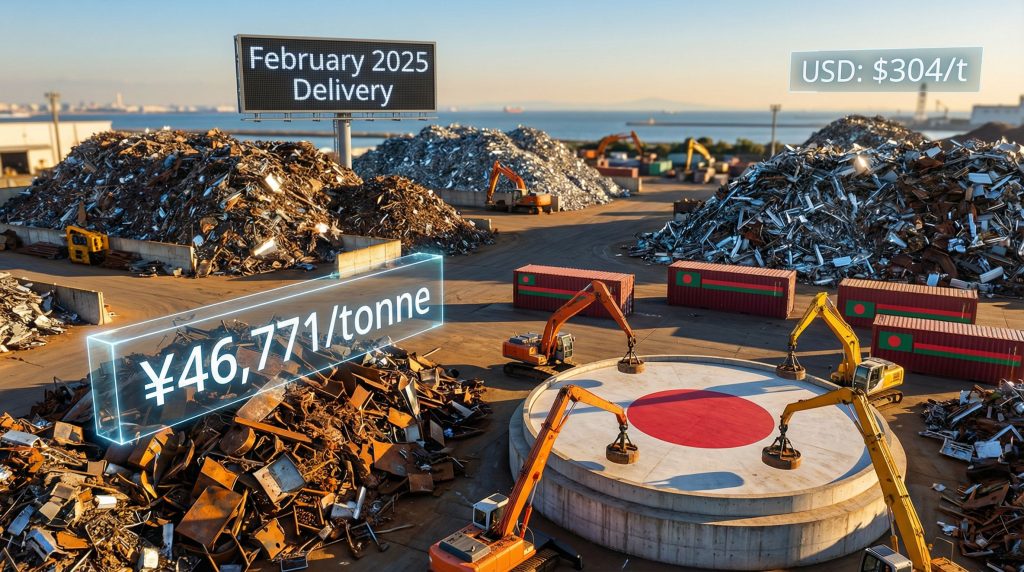
| Tender Price (Yen/tonne) | ¥45,688 | ¥46,771 | +¥1,083 |
| USD Equivalent | ~$298/t | ~$304/t | +$6/t |
| Market Position | Stable pricing amid weak yen | Enhanced export appeal | Structural advantage maintained |
This currency-adjusted pricing mechanism demonstrates how macroeconomic factors can override traditional supply-demand dynamics in commodity markets. Consequently, the relatively modest dollar-equivalent price increase masks the significant yen-denominated gains, creating an attractive proposition for international buyers seeking supply security.
Regional Steel Industry Recovery Patterns
South Asian steel markets are experiencing renewed vitality after extended periods of political and economic uncertainty. Bangladesh's re-emergence as an active buyer in Japan's scrap tender system signals broader regional industrial recovery patterns that extend beyond simple commodity procurement decisions.
The February shipment commitment represents more than tactical purchasing; it reflects strategic confidence in Bangladesh's medium-term industrial outlook. Political stabilisation following recent governmental transitions has restored access to international financing mechanisms, enabling major steel producers to resume long-term procurement strategies rather than relying on spot market opportunism.
Key factors driving Bangladeshi market re-engagement include:
- Restored banking sector confidence improving trade finance availability
- Infrastructure development projects resuming after electoral certainty
- Construction sector demand recovery supporting steel mill capacity utilisation
- Strategic diversification away from volatile US supply sources
The willingness to pay premium pricing for Japanese H2 scrap reflects supply chain risk management priorities. In addition, Bangladeshi mills are prioritising reliability and quality consistency over pure cost optimisation, indicating mature procurement strategies focused on operational continuity.
Global Supply Chain Realignment Dynamics
International scrap metal trade routes are undergoing significant restructuring as regional demand patterns shift. The Turkish market's magnetic effect on US West Coast supplies has created supply chain disruptions that reverberate across Pacific basin trading relationships.
Turkish steel producers' aggressive purchasing has redirected traditional US export flows away from Asian destinations. However, this supply chain reorientation forces Asian buyers to seek alternative sources, creating opportunities for Japanese exporters despite their typically premium positioning.
Understanding how tariffs impact markets becomes crucial as these supply chain shifts accelerate across global commodity flows.
Supply chain shifts impacting Asian markets:
- US West Coast suppliers redirecting tonnages toward Mediterranean markets
- Traditional Pacific basin trade routes experiencing volume declines
- Asian buyers competing for reduced available tonnages from established suppliers
- Premium positioning for reliable suppliers gaining strategic importance
Vietnam maintains its status as Japan's largest scrap buyer, though seasonal construction patterns continue influencing monthly intake volumes. The monsoon-related construction slowdowns that reduced November purchasing illustrate how regional weather patterns interact with industrial demand cycles to create predictable market rhythms.
Japanese Domestic Steel Market Equilibrium
Japan's internal scrap market demonstrates sophisticated balance between domestic consumption needs and export revenue opportunities. Tokyo Steel's strategic collection price increases exemplify how domestic mills compete with export markets for available tonnages, creating internal price discovery mechanisms that support overall market stability.
Japanese scrap export performance indicators:
- October 2024: Four-year high export volumes reflecting strong international demand
- November 2024: 21% month-over-month decline to 590,000 tonnes due to seasonal factors
- January-November 2024: 21% year-over-year increase to 7.01 million tonnes total exports
- December tender: ¥45,688/tonne establishing baseline for January pricing
This export volume management reflects careful balancing between maximising export revenues and ensuring adequate domestic supply availability. For instance, Japanese scrap dealers operate within a framework that considers both immediate market opportunities and longer-term domestic industrial needs.
How Does Domestic Competition Affect Export Pricing?
The tension between domestic steel industry requirements and export market opportunities creates ongoing strategic considerations for market participants. Domestic mills must offer competitive pricing to retain scrap supplies internally, while exporters seek to capitalise on international demand and favourable currency conditions.
The Japan scrap tender weak yen renewed demand scenario demonstrates how currency advantages can tip this balance towards export markets, creating additional revenue opportunities for domestic suppliers.
Currency Risk Management in Commodity Markets
Sophisticated currency hedging strategies play crucial roles in commodity tender outcomes, particularly when dealing with volatile exchange rate environments. The ¥46,771/tonne tender result reflects complex pricing calculations that account for currency risk allocation between buyers and sellers.
Japanese exporters must navigate multiple risk factors when establishing tender pricing:
- Exchange rate volatility between yen and buyer currencies
- Forward contract implications for future delivery commitments
- Currency hedging costs impacting overall transaction economics
- International competition from suppliers using different base currencies
The February shipment timing suggests successful risk allocation negotiations, with Bangladesh accepting yen-denominated pricing exposure in exchange for supply security guarantees. Therefore, this risk distribution model enables transactions to proceed despite currency volatility concerns.
Implementing effective volatility hedging insights becomes essential for participants in these complex commodity markets.
The next major ASX story will hit our subscribers first
Broader Asian Steel Raw Material Market Implications
Japan's tender system serves as a critical benchmark for broader Asian scrap pricing mechanisms. The results influence purchasing strategies across multiple regional markets, with Vietnamese and Taiwanese buyers closely monitoring outcomes to inform their own procurement decisions.
Regional price discovery mechanisms demonstrate:
- Japanese tender results establishing baseline pricing expectations
- Vietnamese mills adjusting bid levels based on Japanese market signals
- Taiwanese buyers using tender outcomes for competitive positioning analysis
- Regional price convergence patterns reflecting integrated market dynamics
Recent market dynamics showcase how geopolitical uncertainties, currency fluctuations, and seasonal demand patterns interact to reshape international commodity flows. Furthermore, the interconnected nature of Asian steel raw material markets means that pricing signals from major exporters like Japan cascade through regional supply chains.
The broader trade war impact continues influencing these regional dynamics, creating additional complexity for market participants to navigate.
What Role Do Steel Market Challenges Play?
Understanding steel market challenges provides context for why alternative supply sources like Japanese scrap become increasingly attractive to regional buyers seeking supply diversification.
The interconnected nature of these challenges affects everything from pricing mechanisms to long-term procurement strategies across Asian steel markets.
Investment Strategy Considerations
The tender results provide valuable insights for steel industry stakeholders evaluating investment strategies and market positioning. Currency hedging effectiveness, regional demand recovery patterns, and supply chain adaptation strategies all factor into long-term strategic planning.
Market intelligence suggests that successful navigation of Asian steel raw material markets requires understanding of multiple interconnected factors rather than focusing solely on traditional supply-demand fundamentals.
Strategic implications for market participants include:
- Currency volatility creating both opportunities and risks for exporters
- Regional demand diversification reducing dependence on single markets
- Supply chain resilience becoming increasingly important competitive factor
- Premium positioning strategies gaining traction amid supply uncertainties
The Bangladesh re-engagement, combined with ongoing Vietnamese demand and potential Taiwanese market response, indicates Asian steel raw material markets are entering a more dynamic phase. This evolution is characterised by supply diversification priorities and strategic procurement planning rather than purely cost-driven decision making.
A comprehensive investment strategy guide can help stakeholders navigate these complex commodity market dynamics effectively.
Market Outlook and Future Developments
Japan's scrap tender mechanism continues evolving to reflect changing global market conditions. The interplay between domestic steel industry needs, export revenue opportunities, and international competitive pressures creates a complex but transparent price discovery system that serves broader regional market development.
The Japan scrap tender weak yen renewed demand dynamic represents more than temporary market conditions; it signals fundamental shifts in how Asian commodity markets operate. As regional buyers prioritise supply security over pure cost optimisation, Japanese exporters find themselves well-positioned to capitalise on these evolving preferences.
Recent Japanese steel market analysis indicates continued strength in export-oriented strategies, supporting the sustainability of current market dynamics.
However, market participants must remain vigilant about potential currency reversals and shifting regional demand patterns that could alter competitive positioning. The sophisticated balance between domestic needs and export opportunities requires ongoing strategic assessment and adaptive management approaches.
Disclaimer: This analysis involves market forecasts and currency predictions that involve inherent uncertainties. Commodity markets and currency exchange rates can be highly volatile and influenced by numerous unpredictable factors. Readers should conduct independent research and consider multiple perspectives when making investment or business decisions related to steel raw materials markets.
Are You Looking to Capitalise on Commodity Market Opportunities?
Discovery Alert delivers instant notifications on significant ASX mineral discoveries using its proprietary Discovery IQ model, helping investors identify actionable opportunities in commodity-focused markets ahead of broader market awareness. Begin your 30-day free trial today to gain the market-leading edge you need for strategic positioning in evolving commodity sectors.