August 14, 2026
The Geology Is Not the Strategy: Rethinking Africa's Mineral Opportunity
The story of commodity-rich nations failing to translate geological abundance into lasting prosperity is one of the oldest and most repeated patterns in economic history. From the oil states of the 1970s to the copper belt cycles of the twentieth century, resource wealth has proven to be neither a guarantee of development nor a substitute for institutional capacity. As the global energy transition reshapes demand for a new basket of minerals, Jeanine Mabunda on Africa's mineral strategy has emerged as one of the most coherent and actionable frameworks for addressing this structural challenge.
For Africa, the answer to that question has never been more consequential. The continent sits at the centre of the most strategically important mineral map in the world, yet the architecture through which that wealth flows outward has, for decades, been designed elsewhere.
When big ASX news breaks, our subscribers know first
Africa's Critical Mineral Footprint: Scale, Concentration, and Strategic Significance
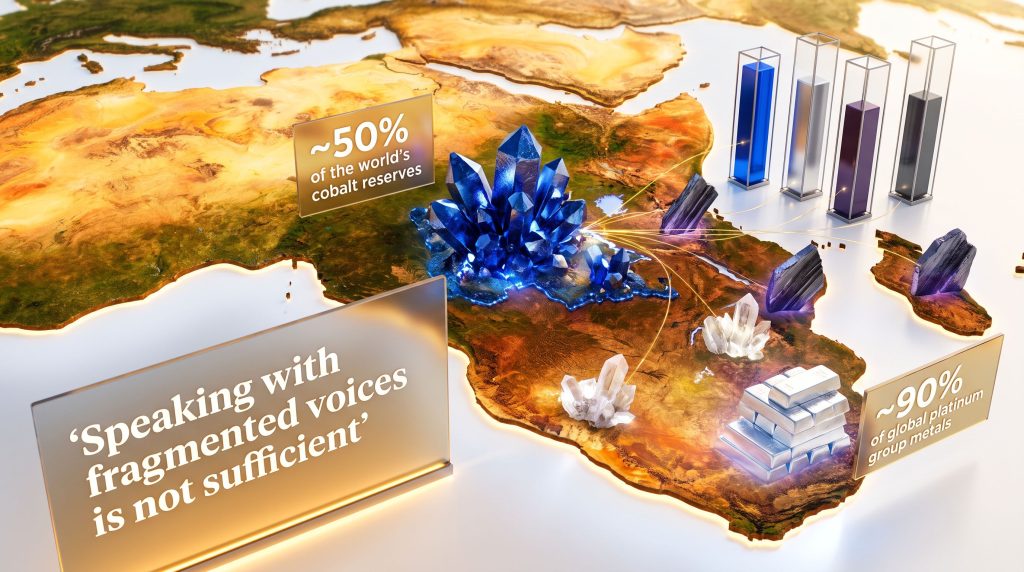
The sheer concentration of critical mineral reserves across the African continent is difficult to overstate. The Democratic Republic of Congo alone holds approximately 50% of the world's known cobalt reserves, a mineral that sits at the heart of lithium-ion battery chemistry and is effectively irreplaceable in current electric vehicle cathode technology. South Africa and Zimbabwe together account for roughly 90% of global platinum group metal (PGM) reserves, materials essential for hydrogen fuel cells and catalytic converters.
Furthermore, critical minerals and energy security concerns have amplified the strategic significance of these deposits well beyond their commercial value. Beyond the headline figures, Africa commands significant positions across the full spectrum of energy transition minerals.
| Mineral | Africa's Global Share | Primary Producing Nations |
|---|---|---|
| Cobalt | ~50% of reserves | DRC |
| Platinum Group Metals | ~90% of reserves | South Africa, Zimbabwe |
| Manganese | ~30-35% of production | South Africa, Gabon |
| Graphite | ~25% of production | Mozambique, Tanzania |
| Lithium | Growing, emerging share | Zimbabwe, Namibia, Mali |
Zimbabwe has emerged as a particularly significant lithium jurisdiction, with the Bikita and Arcadia deposits drawing international attention. Namibia's lithium potential has attracted exploration capital from both Chinese and Western interests, while Mali's mineral endowment extends well beyond its established gold production base.
What makes this concentration geopolitically significant is not just the volume of reserves but their irreplaceability in current technology pathways. Battery chemistries, fuel cell catalysts, and grid-scale storage systems have not yet found commercially viable substitutes for many of these minerals. That dependency gives Africa a structural position in the global energy transition that is, in principle, extraordinarily powerful.
Why Raw Endowment Has Not Produced Industrial Wealth
Despite this geological inheritance, most African nations continue to export minerals at the raw ore or lightly concentrated stage, with the majority of value creation occurring in processing facilities located in China, Europe, and North America. The economic logic is straightforward: a tonne of refined cobalt sulphate is worth dramatically more than a tonne of cobalt hydroxide, which is worth dramatically more than a tonne of ore concentrate. Africa has historically captured only the lowest rung of that value ladder.
The structural barriers driving this outcome are interconnected and mutually reinforcing:
- Refining and processing infrastructure remains severely underdeveloped across most African mineral jurisdictions
- Geological survey data is often incomplete, fragmented, or not publicly accessible, complicating exploration investment decisions
- Regulatory and fiscal frameworks vary significantly between jurisdictions and are subject to policy reversals that increase perceived sovereign risk
- Regional coordination on mineral governance is nascent, leaving individual nations to negotiate bilaterally against far more powerful counterparties
- Technical and engineering skills pipelines are insufficient to staff processing-scale operations domestically
A less commonly discussed barrier is the structure of shipping and logistics infrastructure, which in many African corridors was historically designed for extraction and export rather than inbound industrial inputs. Building processing capacity requires not just smelters and refineries but reliable inbound supply chains for reagents, power, water, and skilled labour, all of which require co-investment in supporting infrastructure that export-focused models were never designed to provide.
The Strategic Competition That Is Actually Taking Place
Jeanine Mabunda, the former President of the DRC's National Assembly and a prominent voice on African mineral governance, has articulated a perspective on Africa's mineral opportunity that moves well beyond conventional resource nationalism. Her framework, as reported by Mining Magazine, recognises that the competition underway is not primarily about who gains access to Africa's mineral resources. It is a competition for investment confidence, governance credibility, and the terms on which Africa participates in downstream value chains.
This is a conceptually important distinction. Traditional resource nationalism focuses on restricting foreign access or unilaterally renegotiating contracts, approaches that frequently trigger capital flight and investment freezes. The integrated approach Mabunda advocates instead focuses on building the institutional and infrastructural foundations that allow African nations to attract investment on materially better terms, while retaining meaningful participation in the value chain beyond the pit.
The contrast between transactional and strategic partnership models is stark when examined across multiple dimensions:
| Dimension | Transactional Model | Strategic Partnership Model |
|---|---|---|
| Value capture | Raw material export | Processing, refining, and manufacturing |
| Technology transfer | Minimal | Structured and contractual |
| Skills development | Incidental | Central to agreement terms |
| Governance requirements | Variable | Transparent and standardised |
| Revenue distribution | Royalty-dependent | Diversified across equity and processing |
| Duration | Short-term | Long-term and developmental |
The shift from one model to the other is not purely a matter of political will. It requires the simultaneous development of processing infrastructure, governance credibility, regional alignment, and financing architecture. None of these can substitute for the others.
The Multipolar Competition for African Minerals
Every major industrial power has now positioned itself as a partner in Africa's mineral future, each with different terms and different strategic objectives:
- China has maintained deep investment relationships across the DRC, Zambia, Zimbabwe, and Guinea for over two decades, with significant de facto control over cobalt hydroxide processing through the Freeport Cobalt and other refining assets. Chinese entities control an estimated 70-80% of cobalt chemical refining capacity globally, giving them structural leverage over the entire downstream supply chain regardless of where ore is mined.
- The European Union, through its Critical Raw Materials Act, has established formal supply chain diversification targets and is actively pursuing strategic partnership agreements with African mineral nations, seeking to reduce single-source dependency, particularly on Chinese processing.
- The United States has expanded the Minerals Security Partnership (MSP) and is pursuing bilateral mineral agreements across sub-Saharan Africa as part of a broader industrial policy realignment, with the Lobito Corridor infrastructure project representing one concrete expression of that strategic interest.
- Gulf sovereign wealth funds are an increasingly active but less publicly visible presence in African mining finance, with mandates that extend to lithium, copper, and battery metals as Gulf states pursue economic diversification strategies.
The simultaneous interest from multiple competing powers is, counterintuitively, an asset for Africa. It creates competitive pressure among potential partners that individual African nations, or better still a coordinated continental bloc, can leverage to extract better terms on processing requirements, technology transfer, and revenue sharing. Emerging African mining finance trends reflect this shifting dynamic, with a growing number of structured deals embedding downstream obligations.
What Jeanine Mabunda's Integrated Approach Actually Requires
Jeanine Mabunda on Africa's mineral strategy, as she has framed it, is built on five interconnected pillars that must advance in parallel rather than in sequence. The error of sequential thinking, assuming that governance must be perfected before infrastructure investment begins, or that processing capacity should wait for financing frameworks to mature, has historically allowed the window for value capture to close before the foundations were complete.
- Continental coordination over bilateral fragmentation – African nations must align on common processing requirements, investment terms, and governance standards rather than competing against each other for the same pool of foreign capital on terms set by external counterparties.
- Governance and institutional credibility as investability prerequisites – transparent regulatory frameworks, contract sanctity, and functional dispute resolution mechanisms reduce the risk premium that investors apply to African projects, directly reducing the cost of capital.
- Non-negotiable value addition requirements – new mining agreements must embed downstream processing commitments as structural conditions rather than aspirational add-ons that disappear during project negotiation.
- Sovereign participation in value creation – meaningful equity stakes, processing fee revenues, and technology licensing arrangements provide diversified revenue streams beyond royalty dependency.
- Unified diplomatic positioning – collective negotiating positions, analogous in concept to coordinated commodity diplomacy, multiply individual nations' leverage when engaging with major industrial powers or multinational mining corporations.
A critical but underappreciated dimension of this framework involves the battery precursor supply chain. The most significant value addition opportunity in the cobalt and lithium supply chain does not lie in smelting, but in the production of battery-grade precursor cathode active materials (pCAM) and cathode active materials (CAM). These intermediate products sit directly upstream of battery cell manufacturing and command significant price premiums over refined metals. Currently, China dominates this processing stage almost entirely, capturing value that African mineral endowment fundamentally enables but does not currently share in.
The Africa Mining Vision: Framework Versus Implementation
The African Union's Africa Mining Vision (AMV), adopted in 2009, established the formal continental framework for the transformation Mabunda describes. Its core orientation aligns closely with an integrated approach: transparent and equitable exploitation, diversified mineral economies, integrated development linked to manufacturing and agriculture, and capable developmental states.
The honest assessment of AMV implementation is one of significant gaps between ambition and execution:
| AMV Priority Area | Progress to Date | Key Remaining Gaps |
|---|---|---|
| Governance and transparency | Moderate (EITI adoption in key nations) | Inconsistent enforcement across jurisdictions |
| Value addition and beneficiation | Limited | Processing infrastructure severely underdeveloped |
| Regional mineral value chains | Early-stage | AfCFTA mineral protocols still developing |
| Skills and technology | Nascent | Substantial human capital deficit remains |
| Financing frameworks | Improving | Risk perception continues to suppress capital flows |
The AfCFTA's mineral provisions represent a potentially transformative but as yet underutilised instrument. Cross-border mineral value chains, where ore from one nation is processed in a neighbouring country with better energy infrastructure or technical capacity, could allow African nations to collectively compete with Chinese processing dominance without each nation needing to build the full value chain independently.
The Six Infrastructure Pillars That Must Develop Simultaneously
Drawing from AU policy frameworks and the broader discourse on African industrial strategy, a credible mineral development pathway requires progress across six domains at once:
- Geological data and exploration infrastructure – systematic national surveys, open-access data frameworks, and investment in remote sensing technology
- Governance, transparency, and regulatory certainty – harmonised mining codes, anti-corruption frameworks embedded in licensing, and independent oversight of revenue flows
- Processing and refining capacity – domestic smelting, battery precursor manufacturing, and mandatory beneficiation requirements in new agreements
- Transport and energy infrastructure – rail, road, and port corridors aligned to mineral value chains, plus affordable power supply as a prerequisite for processing operations
- Financing and investment architecture – blended finance instruments, development finance institution co-investment, and sovereign wealth fund structures for strategic revenue deployment
- Skills, technology, and human capital – technical training aligned to processing sector needs, university-industry partnerships, and technology transfer requirements in foreign investment agreements
Investor Confidence: The Variable That Determines Everything Else
No aspect of Africa's mineral strategy matters more, in practical terms, than the structure of investor confidence. African mining projects routinely face risk-adjusted discount rates of 15-25%, compared to 8-12% for comparable projects in more politically stable jurisdictions. This differential is not merely a financing inconvenience. At those rates, projects that would be economically viable in a lower-risk environment become unfinanceable, and the investment flows that Africa's mineral strategy depends on fail to materialise regardless of geological quality.
A reduction in sovereign risk perception of even 3-5 percentage points, achievable through demonstrable governance improvements and policy continuity, could unlock billions of dollars in additional mineral investment across the continent without requiring any change in what lies beneath the ground.
The factors that build investor confidence in African mineral jurisdictions are well understood, even if the political economy of delivering them is genuinely difficult:
- Policy continuity and contractual stability – investors in long-cycle mining projects price 20-30 year risk horizons; policy reversals that occur within that window dramatically increase capital costs
- Transparent revenue management – demonstrated fiscal discipline and functional anti-corruption mechanisms reduce the sovereign risk premium that financial models apply
- Infrastructure co-investment signals – government participation in enabling infrastructure signals long-term partnership intent that reduces project risk for private investors
- Regional market integration progress – AfCFTA implementation reduces the operational fragmentation costs that currently inflate project economics across multi-jurisdiction value chains
A less commonly discussed dimension of investor confidence involves geological data quality. In many African jurisdictions, national geological surveys have not been systematically updated in decades, and historical data is often held in formats that are incompatible with modern exploration modelling. Investors conducting feasibility assessments must therefore carry a significant data risk premium that equivalent projects in Canada or Australia do not face. Systematic investment in geological survey infrastructure would meaningfully lower exploration-stage risk perception.
In addition, critical minerals supply chains have become a central concern for Western governments, creating additional pressure on African host nations to align governance frameworks with international investor expectations. Meanwhile, the DRC cobalt export suspension has demonstrated just how rapidly policy decisions in individual nations can reverberate across global commodity markets.
The next major ASX story will hit our subscribers first
The Unified Voice Imperative and What It Would Actually Change
Perhaps the most strategically actionable insight in Mabunda's framework is also the most straightforward. The assertion that Africa cannot afford to negotiate from fragmented positions is not merely rhetorical. It reflects a structural reality about bargaining power in commodity markets.
Consider a concrete scenario: if the DRC, Zambia, and Zimbabwe were to coordinate a common requirement that a defined percentage of cobalt and lithium ore be processed domestically before export, the collective bargaining position of those three nations would be materially stronger than any individual nation acting alone. The alternative, each nation competing to attract investment by offering lower processing requirements or more favourable fiscal terms than its neighbours, produces a race to the bottom that undermines every nation's development objectives simultaneously.
The OPEC analogy has limitations, but the underlying logic is sound. Coordinated market positioning by holders of concentrated, irreplaceable resources changes the terms of engagement with buyers and investors in ways that unilateral action cannot replicate. Africa's mineral endowment, particularly in cobalt and PGMs, provides the geological basis for exactly that kind of leverage. The missing ingredient is not geological. It is institutional.
Furthermore, mining private equity is increasingly attuned to governance quality as a precondition for capital deployment, meaning that institutional improvements translate directly into expanded financing options for African mineral projects.
The trajectory from resource possession to economic sovereignty is measured in decades, not electoral cycles. The most credible roadmap combines short-term governance and data infrastructure reforms that reduce perceived risk, medium-term processing capacity development and skills pipeline investment, and long-term participation in battery materials manufacturing and technology licensing revenues. What Jeanine Mabunda on Africa's mineral strategy correctly identifies is that these stages are not sequential. They are simultaneous, and the continent's geological window of maximum leverage will not remain open indefinitely.
This article is intended for informational purposes only and does not constitute financial, investment, or professional advice. Forecasts, projections, and scenario analyses reflect analytical frameworks and available data at the time of writing and are subject to change. Readers should conduct independent research before making any investment or policy decisions.
Want to Track the Next Major Mineral Discovery Before the Market Does?
Discovery Alert's proprietary Discovery IQ model delivers real-time alerts on significant ASX mineral discoveries — cutting through complex geological and commodity data to surface actionable opportunities the moment they are announced. Explore Discovery Alert's dedicated discoveries page to understand how historic finds have generated extraordinary returns, and begin your 14-day free trial today to position yourself ahead of the broader market.