August 3, 2026
Understanding the Jones Act and Current Waiver Considerations
The modern global economy operates through intricate supply chains that span continents, connecting producers with consumers across vast oceanic distances. When these networks face disruption, the ripple effects can cascade through entire industries, affecting everything from energy costs to agricultural commodity prices. As recent geopolitical tensions intensify, discussions around whether the us may waive jones act shipping restrictions have gained significant momentum, highlighting the delicate balance between economic efficiency and strategic security considerations.
When big ASX news breaks, our subscribers know first
Understanding Maritime Regulatory Frameworks and Their Strategic Purpose
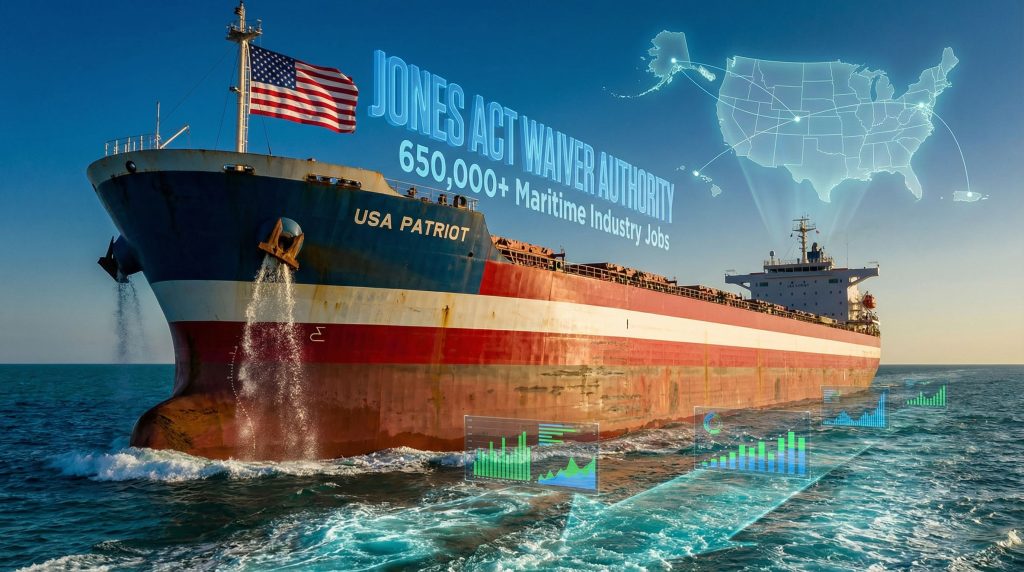
The foundation of American domestic shipping regulation traces back to the 1920 Merchant Marine Act, a comprehensive legislative framework designed to protect the nation's maritime industry during a period of intense international competition. This regulatory structure establishes four fundamental requirements that distinguish eligible vessels from their international counterparts: domestic construction, American ownership, United States flag registration, and crews composed entirely of US citizens.
According to official White House communications, these regulations require that commercial vessels operating between US ports meet all four criteria simultaneously. The policy creates what maritime economists refer to as a protected domestic shipping market, where foreign competitors cannot directly participate in inter-coastal trade routes.
The economic implications of this regulatory framework are substantial. Industry analysis indicates that compliant vessels typically command premium rates due to their unique regulatory status and limited availability compared to the broader international fleet. This pricing differential reflects both the restricted supply of qualifying vessels and the higher operational costs associated with meeting domestic crew and construction requirements.
Geographic and Strategic Considerations
The regulatory framework particularly impacts specific trade corridors that are vital to American commerce and security. Furthermore, these routes serve not only commercial purposes but also function as critical components of national defense logistics:
• Alaska energy and supply routes: Critical for delivering refined products and essential goods to remote communities
• Hawaiian commercial shipping: Supporting the islands' import-dependent economy
• Puerto Rico trade connections: Linking the territory with mainland manufacturing and agricultural centers
• Continental coastal shipping: Facilitating efficient movement of bulk commodities along America's extensive coastlines
The domestic maritime industry maintains specialised capabilities that can be rapidly mobilised during emergencies, providing strategic sealift capacity that foreign-flagged vessels cannot reliably supply.
Federal Waiver Authority and Emergency Response Mechanisms
The executive branch possesses specific legal authority to temporarily suspend shipping restrictions when circumstances warrant regulatory flexibility. This power operates independently of Congressional oversight, allowing rapid response to developing supply chain crises that could impact us economy tariffs and broader economic stability.
Presidential waiver authority represents a carefully calibrated policy instrument that balances immediate economic needs against long-term strategic interests. As White House officials have explained, the administration can consider temporarily waiving restrictions for limited periods to ensure critical commodities flow freely to American ports during supply disruptions.
Decision-Making Framework and Implementation
The waiver process involves multiple considerations that extend beyond simple cost-benefit calculations. However, these decisions must account for broader market dynamics:
Supply Chain Vulnerability Assessment
- Critical commodity flow analysis
- Regional dependency evaluation
- Alternative sourcing capacity review
- Emergency stockpile adequacy assessment
National Security Implications
- Strategic sealift capacity preservation
- Maritime industrial base protection
- Foreign dependency risk evaluation
- Allied cooperation considerations
Economic Impact Analysis
- Regional price volatility projections
- Industry capacity constraints
- International shipping rate comparisons
- Consumer cost implications
The temporary nature of these waivers represents a fundamental design principle. Unlike permanent legislative changes, executive waivers are explicitly limited in duration, preserving the underlying protective framework while providing emergency relief during acute supply disruptions.
Economic Pressures and Market Dynamics Driving Policy Decisions
Contemporary waiver considerations reflect complex interactions between global commodity markets, geopolitical tensions, and domestic supply chain vulnerabilities. Recent analysis of Middle Eastern supply disruptions provides insight into the economic calculations underlying regulatory flexibility decisions, particularly regarding how tariffs impact markets.
The International Energy Agency has documented significant commodity flow disruptions, with LPG flows experiencing 1.5 million barrels per day of interruption, representing the most severely affected petroleum product category. This disruption pattern demonstrates how geopolitical events can create acute supply shortages that prompt regulatory intervention.
Regional Vulnerability and Supply Chain Stress
Specific regions face disproportionate exposure to international supply disruptions. Consequently, these vulnerabilities create pressure for policy adjustments:
India's Strategic Vulnerability
- Consumes more than 45% of total Middle East LPG exports
- Relies on 1.1 million barrels per day total consumption
- Limited storage infrastructure magnifies immediate supply shock effects
- 90% of domestic LPG demand serves residential cooking needs
Alternative Supply Route Challenges
- US-to-India shipping requires 5-6 weeks transit time
- Traditional Middle Eastern routes complete delivery in less than one week
- Geographic chokepoint disruptions force expensive routing alternatives
The economic mathematics of supply disruption create compelling cases for regulatory flexibility. When traditional shipping routes become unavailable, the cost differential between domestic and international vessels can become secondary to ensuring commodity availability.
Price Impact Documentation
Market response to supply disruptions provides quantitative evidence of economic stress that motivates policy intervention. Recent commodity price movements illustrate the scale of market disruption:
- Brent crude futures surged above $100 per barrel during acute supply uncertainty
- Regional governments implemented emergency fiscal measures to protect consumers
- Brazil eliminated federal PIS/Cofins tax levies on diesel imports, providing relief worth R$0.64 per liter to end users
These price movements demonstrate how international supply disruptions translate into immediate domestic economic pressures, creating political and economic incentives for regulatory intervention, especially when considering trade war supply chains complexities.
Historical Precedent and Waiver Implementation Patterns
Emergency waiver authority has been utilised repeatedly during various crisis scenarios, establishing precedents for contemporary policy decisions. The regulatory framework explicitly recognises natural disaster-driven supply chain disruption as a primary justification for temporary regulatory suspension.
While specific historical data varies, the pattern of waiver utilisation reflects consistent principles: temporary duration, commodity-specific scope, and geographic targeting based on acute need rather than general economic optimisation.
Contemporary Geopolitical Context
Current waiver considerations emerge from specific international conflict dynamics that threaten critical supply routes. Iran's declaration of closure of the Strait of Hormuz represents a textbook example of circumstances that trigger regulatory flexibility evaluation, particularly relevant to ongoing discussions about us-china trade impact.
The geographic concentration of commodity flows through vulnerable chokepoints creates systemic vulnerabilities that domestic shipping regulations cannot address through normal market mechanisms. Analysis indicates that 99% of Middle East LPG exports flow to Asia-Pacific markets, demonstrating extreme geographic concentration of critical trade routes.
Emergency Response Coordination
International cooperation mechanisms provide additional context for domestic policy decisions. The International Energy Agency coordinated member country responses, with agreements to release 400 million barrels of oil from emergency reserves as a stop-gap measure during supply disruptions.
This coordinated approach illustrates how domestic regulatory flexibility aligns with broader international crisis management strategies, ensuring that national policy responses complement multilateral stabilisation efforts, similar to how opec production impact influences global market stability.
Strategic Supply Chain Security and National Defence Considerations
The intersection of commercial shipping regulation and national security creates complex policy calculations that extend beyond immediate economic concerns. Maritime industrial base preservation represents a critical component of long-term defence preparedness that purely economic analysis cannot capture.
Domestic shipping requirements maintain specialised capabilities within American borders that might otherwise migrate to lower-cost international providers. This industrial base provides strategic flexibility during international crises when foreign shipping capacity might become unavailable or unreliable.
Critical Infrastructure Protection
The regulatory framework protects more than individual companies or shipping routes. It preserves integrated systems of:
- Shipbuilding and repair facilities capable of military vessel construction
- Maritime workforce expertise available for emergency mobilisation
- Specialised vessel designs optimised for American operational requirements
- Supply chain networks independent of foreign control or influence
These capabilities cannot be rapidly reconstituted if eliminated through unrestricted foreign competition. The economic premium associated with domestic shipping represents insurance against supply chain vulnerabilities that could emerge during international conflicts or diplomatic tensions.
Risk Assessment and Strategic Planning
Contemporary waiver decisions must account for evolving geopolitical risks that extend beyond immediate supply disruptions. The current Middle Eastern conflict demonstrates how rapidly international shipping routes can become unavailable, forcing reliance on alternative systems.
Strategic Commodity Prioritisation
White House communications emphasise energy and agricultural products as priority commodities for waiver consideration. This prioritisation reflects strategic assessment of which supply interruptions pose the greatest risk to economic stability and national security.
Energy security considerations encompass both immediate consumer needs and industrial input requirements. Agricultural commodity disruptions can affect food security and export competitiveness, creating cascading economic effects that extend far beyond shipping costs.
The next major ASX story will hit our subscribers first
Technology Integration and Future Regulatory Evolution
The maritime industry faces technological transformation that will influence future regulatory frameworks and waiver policies. Autonomous vessel technologies, digital logistics platforms, and alternative fuel systems represent emerging factors that current regulations must accommodate.
However, technological advancement cannot eliminate the fundamental geographic and strategic considerations that drive domestic shipping protection. Physical vessel location, crew nationality, and construction origin remain relevant factors regardless of technological sophistication.
Modernisation Challenges and Opportunities
Future regulatory evolution must balance several competing priorities. In addition, the consideration of whether the us may waive jones act shipping restrictions becomes more complex as these factors evolve:
Economic Efficiency Improvements
- Selective exemption frameworks for specific commodity categories
- Technology-enabled compliance monitoring and verification
- Risk-based regulatory flexibility mechanisms
- Performance-based alternative compliance pathways
Strategic Capability Preservation
- Maritime industrial base modernisation support
- Workforce development and technology integration
- Emergency response capacity enhancement
- International cooperation framework development
The challenge lies in adapting regulations developed during the 1920s maritime industry context to contemporary global supply chain realities while preserving the strategic benefits that justify protective policies.
Policy Implementation and Stakeholder Coordination
Effective waiver implementation requires coordination among multiple federal agencies, industry stakeholders, and international partners. The complexity of modern supply chains means that regulatory changes in one sector can have unexpected consequences in related industries.
Multi-Agency Coordination Requirements
| Agency/Department | Primary Responsibility | Implementation Role |
|---|---|---|
| White House | Policy decision authority | Executive waiver issuance |
| Department of Defence | National security assessment | Strategic impact evaluation |
| Department of Homeland Security | Supply chain security | Risk assessment coordination |
| Customs and Border Protection | Enforcement and monitoring | Compliance verification |
| Department of Transportation | Maritime safety oversight | Operational standards maintenance |
This coordination structure ensures that waiver decisions account for multiple policy perspectives while maintaining operational effectiveness during implementation.
Industry Consultation and Market Response
Successful waiver implementation depends on industry cooperation and market participant understanding of temporary regulatory changes. The shipping industry must rapidly adapt operational practices to accommodate foreign vessel utilisation while maintaining safety and security standards.
Communication strategies become critical during waiver periods, ensuring that market participants understand both the scope and limitations of regulatory flexibility. Clear guidance prevents market confusion and ensures that emergency measures achieve their intended supply chain stabilisation objectives.
What Circumstances Trigger Jones Act Waiver Considerations?
Several factors can prompt federal authorities to evaluate temporary suspension of domestic shipping requirements. These circumstances typically involve acute supply chain disruptions that threaten economic stability or national security.
Natural Disaster Response
Emergency waivers have historically been granted following major hurricanes, earthquakes, or other natural disasters that disrupt normal shipping patterns. These situations create immediate needs for fuel, medical supplies, and reconstruction materials that domestic vessels cannot adequately meet.
Geopolitical Supply Chain Disruption
International conflicts or diplomatic tensions that restrict access to traditional shipping routes create conditions favouring regulatory flexibility. When foreign ports become inaccessible or unsafe, alternative routing may require non-compliant vessels to maintain critical commodity flows.
Long-term Policy Implications and Reform Considerations
Current waiver discussions illuminate broader questions about maritime regulatory modernisation and international competitiveness. The frequency and scope of emergency waivers may indicate structural tensions between protective regulation and economic efficiency.
Reform Framework Evaluation
Policymakers must consider whether current regulatory structures adequately balance competing priorities. For instance, decisions about whether the us may waive jones act shipping restrictions reflect these ongoing tensions:
• Economic competitiveness: Ensuring American businesses can compete effectively in global markets
• Strategic security: Maintaining critical maritime capabilities independent of foreign control
• Emergency flexibility: Providing rapid response mechanisms for supply chain disruptions
• Industry sustainability: Supporting domestic maritime industry long-term viability
The resolution of these tensions may require more sophisticated regulatory approaches that provide greater built-in flexibility while preserving strategic protective elements.
International Coordination and Best Practices
American maritime policy operates within a broader international framework of shipping regulations, trade agreements, and security cooperation arrangements. Future policy evolution must account for allied nation approaches and multilateral coordination requirements.
Emerging Policy Considerations
Several factors will influence future regulatory development:
- Climate change adaptation: Extreme weather frequency and supply chain resilience requirements
- Cybersecurity integration: Digital systems protection and vessel communication security
- Alternative fuel adoption: Environmental compliance and technology transition support
- Autonomous vessel deployment: Crew requirements and operational safety standards
These emerging challenges require regulatory frameworks that can adapt to technological and environmental changes while maintaining core strategic protections.
Investment in Future Capabilities
Long-term policy success requires ongoing investment in domestic maritime capabilities that justify protective regulation. This includes:
- Workforce development programmes that maintain specialised maritime expertise
- Infrastructure modernisation supporting efficient domestic vessel operations
- Technology adoption incentives encouraging innovation within the domestic fleet
- Emergency preparedness systems ensuring rapid response capability during crises
These investments demonstrate commitment to maintaining the strategic capabilities that justify regulatory protection while enhancing economic competitiveness.
The evolution of Jones Act waiver policy reflects broader challenges facing American economic and security policy in an interconnected global economy. Balancing immediate economic pressures against long-term strategic interests requires sophisticated policy tools that can respond rapidly to changing circumstances while preserving fundamental protective principles.
As supply chain vulnerabilities become more apparent and geopolitical tensions increase, the strategic value of domestic maritime capabilities becomes more evident. However, economic pressures for flexibility and cost reduction remain significant factors in policy development.
Future policy success will depend on developing regulatory frameworks that provide greater built-in flexibility while maintaining the strategic industrial base that justifies protective regulation. This balance requires ongoing investment in domestic capabilities, international coordination, and adaptive regulatory mechanisms that can respond effectively to evolving challenges.
Disclaimer: This analysis is based on publicly available information and industry reporting. Policy decisions involve complex considerations that may not be fully captured in public communications. Readers should consult official government sources for authoritative policy guidance and current regulatory requirements.
Ready to Capitalise on Supply Chain Disruption Opportunities?
Major supply chain disruptions often create significant investment opportunities in commodity-focused ASX companies. Discovery Alert's proprietary Discovery IQ model delivers real-time alerts on mineral discoveries that could benefit from these shifting global trade dynamics, helping subscribers identify actionable opportunities before broader market recognition. Begin your 14-day free trial today to position yourself ahead of supply chain-driven market movements.