July 17, 2026
Why the Global Nickel Supply Chain Has a Carbon Problem Kabanga Is Built to Solve
The nickel industry is quietly undergoing a structural stress test that has nothing to do with price cycles. Across Southeast Asia, the dominant production model relies on coal-fired rotary kiln electric furnace (RKEF) smelting of laterite ores, a process that generates carbon intensities estimated between 40 and 70-plus tonnes of CO₂-equivalent per tonne of nickel produced. As battery manufacturers, stainless steel producers, and project financiers face mounting pressure to account for Scope 3 emissions across their supply chains, the question of where nickel comes from and how it was made is becoming as commercially relevant as the nickel price itself.
This is the context in which the Lifezone Metals Kabanga Nickel Project sustainability profile deserves to be read — not as a compliance document, but as a forward-looking map of operational risk compression ahead of a targeted 2026 Final Investment Decision (FID).
When big ASX news breaks, our subscribers know first
From Diesel to Hydropower: The Energy Transition Hiding Inside Kabanga's Sustainability Numbers
The 49% Diesel Reduction Is a Cost Engineering Achievement
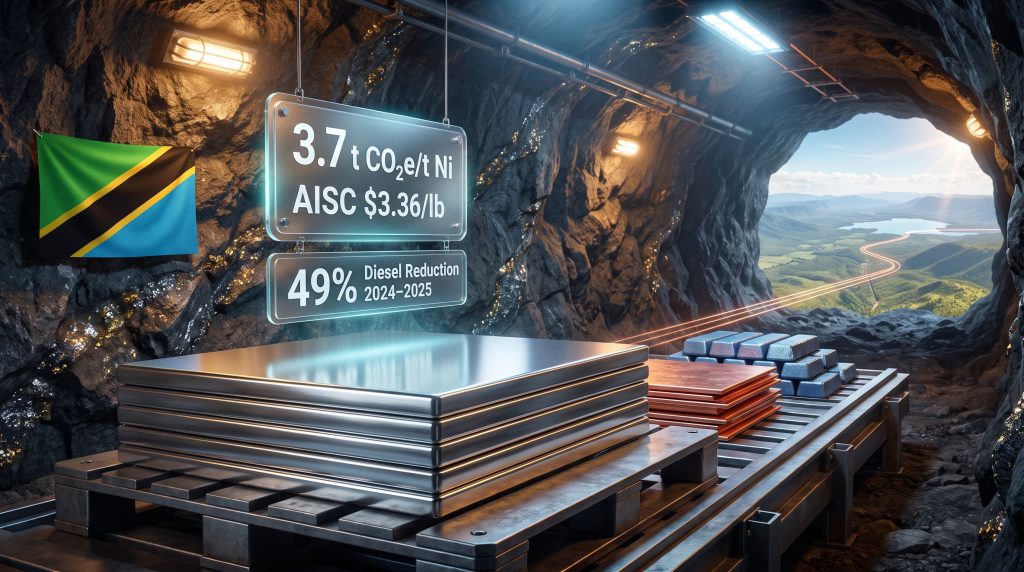
At the Kabanga site in northwestern Tanzania, energy sourcing has undergone a meaningful transition over the past two years. Diesel consumption dropped from 188,961 litres in 2024 to 95,481 litres in 2025, a reduction of approximately 49% year-over-year. The driver behind this shift was the progressive handover of site power to the Tanzania Electric Supply Company Limited (TANESCO) grid, which delivered 64.8% renewable electricity to Kabanga in 2025, more than double the 32.4% renewable share recorded in 2024.
For investors focused purely on ESG metrics, this might read as a clean-energy milestone. However, for those examining project economics, the more important signal is what diesel actually represents in a pre-production mining context:
- Diesel is priced off global oil markets, which no pre-production project can hedge effectively over a multi-year development timeline.
- Fuel supply chains in landlocked or remote regions carry additional logistics cost and disruption risk.
- Grid electricity sourced from hydropower operates under regulated tariff structures, creating a structurally more predictable operating cost input over the life of mine.
The arithmetic matters here. Kabanga's July 2025 Feasibility Study established an all-in sustaining cost (AISC) of $3.36 per pound of payable nickel, net of cobalt and copper by-product credits, placing it in the first quartile of the global nickel cost curve. Removing a commodity-price-linked fuel input from the operating cost base before construction begins makes that first-quartile positioning more defensible over time, not just at the moment the feasibility study was completed.
Tanzania's Power Infrastructure: What the Grid Build-Out Means for Kabanga's Long-Term Cost Base
The credibility of Kabanga's energy transition depends on whether Tanzania's power grid continues to grow. The available evidence suggests it will. Tanzania's Power System Master Plan targets a national generation capacity of 5 gigawatts, with 60% sourced from hydropower, scaling from the current approximately 4 gigawatts. Two major hydropower stations are already generating power:
- The 80-megawatt Rusumo Hydroelectric Power Station, operational on the Kagera River.
- The 2.1-gigawatt Julius Nyerere Hydropower Station, the largest hydroelectric facility in East Africa.
A third station, the 88-megawatt Kakono Hydroelectric Power Station, is scheduled for commissioning in 2028. Beyond these national assets, a planned 220-kilovolt, 88-kilometre dedicated transmission line will supply Kabanga's full operational power load, building on the 33-kilovolt grid connection already in place at the site. This staged infrastructure pathway means Kabanga's future energy cost base is increasingly anchored to in-country hydropower capacity that is already being constructed, rather than to the volatility of imported petroleum markets.
| Energy Source | Cost Predictability | Primary Price Driver | Emissions Profile | Operational Risk Factor |
|---|---|---|---|---|
| Diesel generation | Low | Global oil markets | High CO₂ and SO₂ | Supply chain disruption |
| TANESCO grid (hydropower-backed) | High | Regulated tariff | Low CO₂ | Grid reliability dependent |
| 220kV dedicated transmission (planned) | Very High | Fixed infrastructure cost | Lowest CO₂ | Infrastructure completion timeline |
The Hydrometallurgical Difference: How Process Technology Rewrites Kabanga's Emissions Equation
Eliminating Smelting as a Source of Structural Emissions
Conventional processing of nickel sulphide ores typically involves pyrometallurgical smelting, a high-temperature process that converts sulphide minerals into molten metal but simultaneously generates sulfur dioxide (SO₂) as a direct combustion byproduct. SO₂ is both a greenhouse precursor and an air quality concern that triggers regulatory obligations in most jurisdictions.
Lifezone Metals' proprietary hydrometallurgical (hydromet) technology eliminates smelting from the production chain entirely. Rather than using heat to break down sulphide minerals, the hydromet process uses aqueous chemistry at lower temperatures to selectively extract nickel, copper, and cobalt from the ore matrix. The result is zero SO₂ emissions at the point of refining and an overall carbon intensity approximately 70% lower than conventional nickel production pathways.
A less widely understood technical advantage of the Kabanga hydromet process relates to the ore's own sulphur chemistry. The deposit contains approximately 30% sulphur content by composition, and within the hydromet circuit, this sulphur serves as a process reagent rather than a waste product. Consequently, the operation does not need to purchase sulfuric acid as a processing input — a cost that laterite nickel producers relying on high-pressure acid leach (HPAL) technology must absorb as a significant variable operating expense. This structural cost advantage over HPAL-based competitors is rarely discussed in mainstream coverage of Kabanga but represents a meaningful economic differentiator.
The LCA Result and What It Means Commercially
Following the completion of the Kabanga Feasibility Study in July 2025, Lifezone engaged Minviro Ltd. to conduct an independent Life Cycle Assessment (LCA) in accordance with ISO 14040 and ISO 14044 standards. The cradle-to-gate result, covering the full upstream chain from ore extraction through to nickel concentrate including sea freight, was independently verified at 3.7 tonnes of CO₂-equivalent per tonne of nickel.
"The cradle-to-gate scope of the LCA is the relevant metric for procurement comparisons, as it captures the full upstream production chain to the point of product delivery and allows like-for-like assessment against competing supply sources."
To appreciate why this figure matters commercially, consider the competitive landscape. The Indonesian nickel industry accounts for approximately 64% of estimated 2025 global nickel production, predominantly through RKEF smelting operations powered by coal-fired captive power plants. Furthermore, independent analyses of Indonesia's nickel miners have estimated carbon intensities ranging from 40 to over 70 tonnes of CO₂-equivalent per tonne of nickel, depending on the energy source and process configuration.
| Nickel Source Type | Approx. CO₂e per Tonne of Nickel | Processing Route | Jurisdictional Profile |
|---|---|---|---|
| Indonesian NPI via RKEF (coal-powered) | 40 to 70+ t CO₂e/t Ni | Pyrometallurgical smelting | Chinese-backed investment |
| Philippine laterite (HPAL) | Moderate to high | High-pressure acid leach | Mixed |
| Conventional sulphide smelting | Moderate | Pyrometallurgical | Global |
| Kabanga via Lifezone hydromet | 3.7 t CO₂e/t Ni | Hydromet, hydropower-backed | Tanzania |
As battery cell manufacturers begin applying Scope 3 accounting frameworks and European battery regulation mandates carbon intensity disclosure for cells placed on the EU market, the gap between Kabanga's LCA result and the Indonesian supply chain average is likely to carry increasing commercial weight. Whether that translates into a formal price premium or simply expands Kabanga's addressable buyer pool remains speculative; however, the directional logic is sound. Carbon-conscious procurement is moving from voluntary to contractual in key end markets.
Tailings Architecture and Water Risk: The Operational Details That Lenders Examine Closely
Paste Fill as a Structural Liability Reduction Tool
Surface tailings storage facilities represent one of the most significant long-term environmental liabilities in underground mining, both in terms of physical risk and in terms of closure cost obligations that affect a project's net asset value calculation. At Kabanga, 52% of non-pyrrhotite tailings are returned underground as paste fill, materially reducing the volume of material requiring surface storage and the associated long-term liability profile.
The tailings management framework at Kabanga is aligned with the Global Industry Standard on Tailings Management (GISTM), which has become the baseline requirement for project finance from development finance institutions (DFIs) and commercial lenders applying Equator Principles. GISTM alignment is not a minor procedural detail. For major DFI lenders, including multilateral and bilateral institutions, non-GISTM-compliant tailings facilities represent a disqualifying condition for project financing. Securing alignment before FID keeps the broadest possible lender pool available to Kabanga.
Water Monitoring: Transparent Disclosure as Risk Management
Ongoing monitoring of surface and groundwater sources at the Kabanga site shows the majority of measured parameters within World Health Organization (WHO) health thresholds. However, localised exceedances of fluoride and uranium concentrations have been documented at shallow well locations near the project area. These exceedances are consistent with naturally occurring geochemical conditions in parts of the East African Rift system and are not necessarily attributable to project activities, but they represent an active monitoring and mitigation obligation.
The transparent disclosure of these exceedances in Lifezone's sustainability reporting, rather than their omission, reflects alignment with IFC Performance Standard requirements and reduces the probability of post-FID environmental compliance surprises that could trigger lender covenant breaches or construction hold orders. For investors evaluating pre-FID risk, the disclosure itself is a positive signal of the governance culture in place.
Resettlement Completion, Safety Records, and Governance: The Execution Metrics That Drive Construction Schedule Certainty
Why Resettlement Completion Is a Schedule Risk Indicator, Not a Social KPI
Incomplete resettlement processes are statistically among the most common causes of construction timeline slippage in African mining projects. Legal challenges, community disputes, and regulatory interventions tied to unresolved land rights can delay mobilisation by months or years, with direct consequences for financing costs and project economics. Against this backdrop, Kabanga's resettlement progress deserves to be read as a construction schedule risk indicator:
- 100% of cash compensation payments due under the Resettlement Action Plan (RAP) were completed by end of 2025.
- 97% of Project Affected Households (PAHs) had signed agreements and received payments by the same date.
- The RAP is structured in alignment with IFC Performance Standard 5 on involuntary resettlement, a standard required by most DFI lenders, including the U.S. International Development Finance Corporation (DFC).
- Mukubu Primary School infrastructure upgrades were 99% complete by the end of the 2025 reporting period.
- Livelihood Restoration co-design activities were scheduled to commence in early 2026.
Near-completion of these milestones before FID materially narrows the window in which community-driven construction delays could occur.
Safety and Governance: What Three Years of Zero Incidents Signals
As of Lifezone's July 2026 Investor Presentation, the Kabanga project has logged more than 2.9 million hours worked without a Lost Time Injury (LTI). Three consecutive years of zero environmental incidents have been recorded. These figures are more than safety statistics; they are indicators of operational discipline and management quality that directly affect a project's insurability, lender risk assessment, and construction contractor selection.
On the governance side, the Lifezone Metals Sustainability Committee, chaired by Beatriz Orrantia, recorded 100% attendance throughout 2025. A sustainability-linked incentive metric embedded into executive compensation achieved 100% performance against its benchmark. Tembo Nickel, Lifezone's Tanzanian subsidiary, received the Mwanza Regional Commissioner's Compliance Excellence Award for environmental and regulatory performance in October 2025, an independently conferred recognition of operational standards.
The U.S. DFC completed its environmental and social due diligence and consultation, categorising the project as Category A, reflecting the significance and complexity of its potential environmental and social impacts and the corresponding rigour applied to the assessment process. An updated Environmental and Social Management Plan (ESMP) is pending approval from Tanzania's National Environment Management Council (NEMC), following completion of the Environmental and Social Impact Assessment in June 2025.
How Kabanga's Sustainability Architecture Reinforces First-Quartile Economics
The reserve base underpinning Kabanga's economics stands at 52.2 million tonnes at 1.98% nickel, a scale and grade combination that qualifies as a Tier 1 global asset. The July 2025 Feasibility Study's AISC of $3.36 per pound of payable nickel net of cobalt and copper by-product credits places the project in the first quartile of the global cost curve. In addition, the Lifezone Metals Kabanga Nickel Project sustainability data adds a set of structural reinforcements to that cost position — reinforcements that intersect directly with broader critical minerals demand trends reshaping global supply chains:
- Diesel reduction lowers fuel cost exposure, making the AISC more predictable over a full commodity cycle.
- Hydropower grid connection reduces both emissions intensity and long-term energy cost.
- The independently verified 3.7 t CO₂e/t Ni LCA result positions Kabanga as a preferred supply source for carbon-sensitive buyers.
- RAP completion reduces the probability of construction delays that inflate financing costs.
- GISTM-aligned tailings management preserves access to the broadest possible DFI financing pool.
- NEMC regulatory engagement and transparent environmental disclosure reduce the probability of post-FID compliance-driven work stoppages.
These are not parallel ESG initiatives. They are interconnected operational risk reduction mechanisms that compound in the direction of a more defensible project economics profile at the point of FID, and through construction into production. Furthermore, the broader context of mining decarbonisation is accelerating across global capital markets, making Kabanga's low-emissions architecture increasingly relevant to institutional investors.
The next major ASX story will hit our subscribers first
Key Pre-FID Milestones to Monitor
Investors tracking nickel price momentum alongside the Lifezone Metals Kabanga Nickel Project sustainability progress ahead of a 2026 FID should monitor several specific execution indicators:
| Milestone Category | Indicator to Watch | Current Status |
|---|---|---|
| Energy transition | Diesel consumption below 95,481 litres; 220kV line progress | 2025 baseline established |
| Carbon intensity | Maintenance of 3.7 t CO₂e/t Ni or improvement | LCA completed post-July 2025 FS |
| Resettlement | Completion of remaining 3% PAH agreements; Livelihood Restoration progress | 97% complete at end-2025 |
| Regulatory | NEMC ESMP approval | Pending as of mid-2026 |
| Safety | Continuation of zero-LTI record through mobilisation | 2.9M+ hours at July 2026 |
| Financing | DFC and DFI commitment advancement | Category A assessment complete |
The risk scenario most likely to disrupt this trajectory is a delay in NEMC ESMP approval, which could create a condition precedent issue for DFI disbursement and push the FID timeline. Grid reliability deterioration in Tanzania and the pace of the remaining resettlement completions represent secondary but real execution dependencies.
This article contains forward-looking statements and projections based on publicly available information from Lifezone Metals' 2025 Sustainability Report and July 2026 Investor Presentation. These do not constitute financial advice. Forecasts regarding energy infrastructure timelines, carbon pricing mechanisms, and buyer behaviour involve uncertainty. Readers should conduct their own due diligence before making any investment decisions.
Want to Spot the Next Major ASX Mineral Discovery Before the Broader Market Does?
Discovery Alert's proprietary Discovery IQ model delivers real-time alerts on significant ASX mineral discoveries, translating complex geological and commodity data into actionable insights for both short-term traders and long-term investors — explore historic examples of exceptional discovery returns and begin your 14-day free trial today to position yourself ahead of the market.