May 21, 2026
The Hidden Cost Calculus Behind Copper's Biggest Acquisition Wave
The mining industry has entered a period where the scarcity of developable copper assets is reshaping corporate strategy more profoundly than commodity prices alone. Across the global copper landscape, a structural mismatch between demand growth and supply delivery timelines is forcing established producers to rethink how they grow. The average time from copper discovery to first production now exceeds 16 years, according to industry research, and permitting complexity has extended that timeline further in many jurisdictions. Against this backdrop, acquiring proven assets has become the rational alternative to waiting out a greenfield development cycle that may not deliver metal until well into the 2030s.
This tension between urgency and scarcity is precisely the environment in which KGHM copper mine takeovers have moved from strategic aspiration to operational priority.
When big ASX news breaks, our subscribers know first
Why Copper M&A Is Accelerating in 2025–2026
The Energy Transition's Demand Multiplier Effect
The copper market is being reshaped by simultaneous demand impulses that historically would have appeared decades apart. Wind turbines require roughly 4 to 15 tonnes of copper per megawatt of installed capacity depending on turbine design, electric vehicles use approximately 2.5 to 4 times more copper than internal combustion engine vehicles, and the rapid buildout of AI data centre infrastructure is creating an entirely new category of grid demand that analysts are still learning to model accurately.
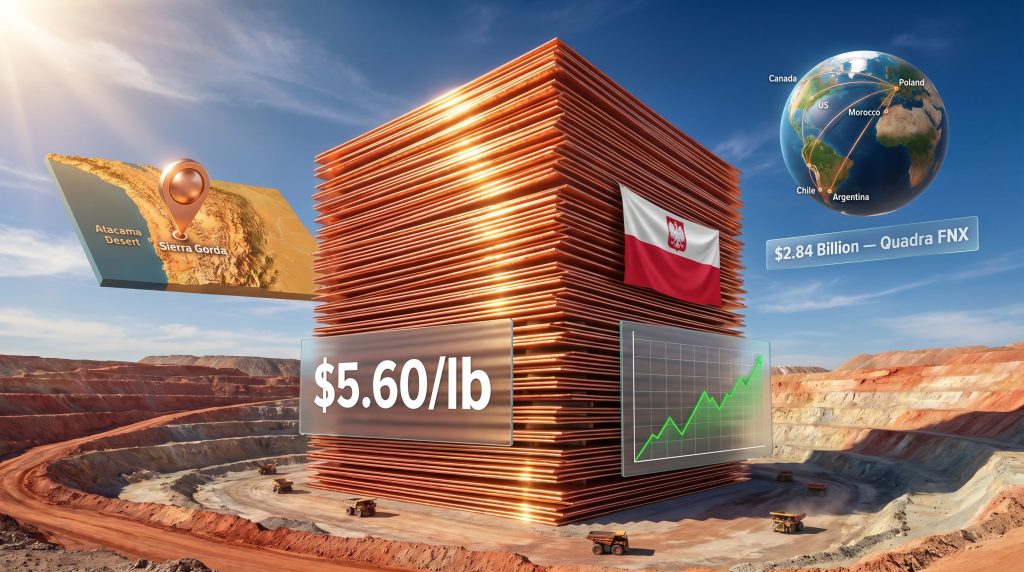
China remains the single most important variable in global copper pricing, accounting for over 55% of refined copper consumption worldwide. Its sustained appetite for the metal, driven by grid modernisation, EV manufacturing scale-up, and continued urbanisation, functions as a structural floor beneath global prices. With copper trading near $5.60 per pound as of mid-2026, the current copper market trends are signalling that the supply side is not keeping pace.
The geological reality compounds the challenge. High-grade copper deposits are becoming rarer. The average ore grade of copper mines globally has declined from around 1.7% copper in the early 1900s to below 0.6% in many modern operations, meaning that simply maintaining output requires processing dramatically larger volumes of rock. This grade dilution quietly inflates operating costs across the industry, making high-quality assets with strong grades increasingly valuable.
How Tight Supply Is Reshaping Corporate M&A Calculus
When the pipeline of development-ready copper projects is thin and the time-to-production horizon is measured in decades, the economics of acquisition change fundamentally. Paying a premium for existing production or near-term development assets becomes financially rational when compared against the full lifecycle capital expenditure and timeline risk of building from scratch.
Paying a premium for proven copper in the ground can be materially cheaper than the capital and timeline risk of building a new mine from discovery through to first production in the current cycle.
This logic is driving competition across a spectrum of acquirers. State-owned enterprises from China and elsewhere, diversified private-sector majors like BHP and Rio Tinto, and mid-tier consolidators are all targeting the same narrowing universe of quality assets. The result is a competitive M&A environment where speed, financial capacity, and strategic fit all matter simultaneously. Furthermore, copper investment strategies are evolving rapidly in response to this scarcity dynamic.
What Is KGHM Polska Miedź and Why Does Its M&A Strategy Matter?
KGHM's Position in the Global Copper Hierarchy
KGHM Polska Miedź has been operating in Poland's Lower Silesian copper belt since the 1960s, making it one of the oldest continuously operating large-scale copper producers in Europe. It holds the distinction of being the European Union's largest copper producer and sits atop the EU's most significant known copper reserves.
What separates KGHM from most copper producers is its dual-metal production profile. The same Polish ore bodies that yield copper also produce meaningful quantities of silver, and KGHM consistently ranks among the world's top ten silver producers by volume. This dual exposure provided a natural earnings hedge during the sharp silver rally in late 2025, when silver prices surged significantly, boosting group profitability at a time when energy and processing cost pressures were intense elsewhere in the sector.
The company's market capitalisation stood at approximately $18 billion as of mid-2026, reflecting a 180% appreciation in its stock price from early 2025. That extraordinary re-rating was driven by the convergence of copper and silver price strength, earnings leverage from its international assets, and growing investor recognition of KGHM's strategic positioning in a supply-constrained metal.
The Financial Catalyst Behind the Expansion Push
A critical and often underappreciated feature of KGHM's financial structure is the earnings contribution of its international assets relative to their production share. Despite generating only approximately 20% of total group production volumes, international operations contributed nearly 50% of group EBITDA in recent periods. This earnings concentration in overseas assets reflects the dramatic cost advantage of open-pit mining at Sierra Gorda in Chile versus deep underground extraction in Poland.
This profitability dynamic creates a compounding incentive for further international expansion. Each additional tonne of copper produced from low-cost international assets delivers disproportionately higher earnings than incremental Polish production, giving KGHM both the financial capacity and the strategic logic to accelerate its acquisition programme.
The Structural Constraint Driving Outward Expansion
Poland's domestic copper deposits are not running out, but they are getting harder and more expensive to mine. KGHM's Polish operations require progressively deeper underground extraction as shallow ore is depleted, pushing unit costs higher with each passing year. This is compounded by Poland's copper extraction tax regime, which represents one of the highest tax burdens on mining operations in Europe and materially compresses domestic margins.
The contrast with KGHM's Chilean operations is stark. The C1 cash cost at Sierra Gorda's open-pit operation in Q1 2026 was approximately 47% lower than the equivalent cost at KGHM's Polish underground mines. That gap, driven by the fundamental economics of open-pit versus underground mining, is not a temporary phenomenon. It reflects a structural cost advantage that will persist and likely widen as Polish depths increase.
KGHM's Historical Acquisition Blueprint: What the Quadra FNX Deal Reveals
The 2012 Quadra FNX Takeover: Anatomy of a $2.84 Billion Bet
In 2011 and 2012, KGHM executed what remains Poland's largest foreign corporate acquisition: the purchase of Quadra FNX Mining Ltd. for approximately $2.84 billion. The deal brought a portfolio of assets spanning Canada, the United States, and Chile, with Sierra Gorda in Chile's Atacama Desert representing the flagship long-term prize.
The transaction was bold and controversial in equal measure. At the time, Sierra Gorda was still in development, requiring substantial additional capital expenditure before it could produce. The integration timeline was challenging, and commodity cycle timing meant that the assets took years to generate the positive returns that KGHM's shareholders needed to justify the premium paid.
What is less commonly understood is that the Quadra FNX deal was not simply a copper play. The acquisition also brought molybdenum production from Sierra Gorda, a byproduct metal used in high-strength steel alloys for aerospace and industrial applications. Molybdenum's price dynamics are largely independent of copper, providing an additional earnings diversification layer that has contributed meaningfully to Sierra Gorda's economics during periods of copper price softness.
Lessons Applied to the Current Acquisition Framework
The experience of managing a $2.84 billion integration across multiple continents and commodity cycles has shaped KGHM's current M&A philosophy in measurable ways. The company's approach has shifted toward a model that prioritises balance over ambition, avoiding projects that would require disproportionately large upfront capital commitments relative to KGHM's balance sheet capacity.
The state-controlled ownership structure reinforces this conservatism. As a listed company with significant Polish government ownership, KGHM operates under a dual accountability framework. Commercial return criteria must be satisfied alongside broader national strategic interests, and the governance structures associated with state ownership impose a natural brake on risk appetite that purely private-sector competitors do not face.
As a listed, state-controlled entity, KGHM operates with a structurally lower risk threshold than purely private-sector competitors. This shapes both deal size and target selection in ways that narrow the universe but also provide political support for cross-border transactions.
KGHM's Current Acquisition Target Map: Where Is the Company Looking?
The Americas: Active Target Screening Underway
KGHM has confirmed active evaluation of acquisition targets across Chile, Argentina, the United States, and Canada. The process is at the shortlisting stage, with management indicating that a final decision is expected within the next several months as of mid-2026.
Chile remains the most logical priority within the Americas target set. Sierra Gorda's operational success has already demonstrated KGHM's ability to manage large-scale Chilean operations, and the Atacama and surrounding regions host some of the world's highest-quality undeveloped copper porphyry systems. Chile's established regulatory framework for mining investment, while not without complexity, is better understood by KGHM's management than newer jurisdictions.
Argentina's emerging copper belt, particularly the high-altitude porphyry deposits in the Andes corridor, represents a more speculative but potentially higher-upside opportunity. In addition, a major copper system in Argentina has attracted growing interest from international producers evaluating the region. Argentina has historically presented challenges around currency stability, export restrictions, and regulatory predictability, but recent policy shifts have improved the investment climate for mining projects in select provinces.
Europe and Africa: Proximity-Driven Strategic Logic
The Morocco memorandum of understanding represents a strategically distinct type of acquisition logic compared to the Americas screening. Rather than seeking scale, the primary objective of KGHM's European and African expansion is smelter feed security.
KGHM's Polish smelters, particularly the Głogów complex, require a continuous supply of copper concentrate as feedstock. When KGHM does not own sufficient upstream production to fill its smelting capacity, it must purchase concentrates on the open market at spot prices, a structurally disadvantaged position that exposes margins to concentrate availability and treatment charge dynamics. Acquiring nearby production sources that can feed Głogów directly eliminates that exposure and reduces logistics costs simultaneously.
The target from European and African expansion is to add approximately 100,000 tonnes of annual own-source production, which would represent a meaningful increase in KGHM's self-sufficiency ratio and reduce its dependence on purchased materials.
The Domestic Opportunity: Lumina Metals and the Polish Copper Corridor
One of the least discussed but potentially most strategically significant developments in KGHM's near-term outlook is the emergence of Canada's Lumina Metals Corp. as an active explorer in the copper-bearing formations adjacent to KGHM's existing Polish operations.
Lumina has identified significant copper deposits in close proximity to KGHM's established infrastructure in Poland's Lower Silesian copper district. Rather than viewing this as a competitive intrusion, KGHM has framed Lumina's activity as complementary. The Polish producer has signalled that routing Lumina's ore through the Głogów smelter would be a natural processing arrangement given the infrastructure's proximity and capacity.
A secondary benefit, raised explicitly in management commentary, is that Lumina's investment activity in Polish copper extraction could generate political and economic pressure to revisit the copper extraction tax rate. A lower tax burden would benefit KGHM's domestic margins directly, representing a form of indirect policy benefit from a third party's investment without requiring KGHM to advocate publicly for tax reform itself.
Portfolio Rationalisation: KGHM's Divestment Strategy in Parallel
The Sudbury Basin Exit: Selling Non-Core Canadian Assets
KGHM's M&A strategy is not purely acquisitive. In February 2025, the company completed the sale of its Sudbury Basin asset package to Magna Mining, transferring the producing McCreedy West copper mine along with associated exploration and past-producing properties.
The deal was structured across multiple consideration components:
- An upfront cash payment
- Magna Mining equity received by KGHM
- Deferred cash payments scheduled over time
- Milestone-linked contingent consideration tied to future project outcomes
This structure allowed KGHM to monetise a mature asset while retaining some exposure to its upside through equity and contingent payments, a capital-efficient approach that preserved optionality without tying up operational management bandwidth.
KGHM's International Asset Portfolio: A Snapshot
| Asset | Location | Status | Strategic Role |
|---|---|---|---|
| Sierra Gorda | Chile (Atacama Desert) | Producing (flagship) | Core international copper-molybdenum source |
| Victoria Mine | Canada | Development stage | Long-term reserve building |
| McCreedy West | Canada (Sudbury) | Divested Feb 2025 | Non-core, monetised via Magna Mining |
| Morocco (MOU) | Africa | Early-stage evaluation | Smelter feed security and proximity play |
| Poland domestic | EU | Producing (primary) | ~390,000 t/yr national reserve base |
The next major ASX story will hit our subscribers first
How Does KGHM's M&A Strategy Compare to Global Copper Majors?
Competitive Landscape: Who Else Is Hunting Copper Assets?
The competitive environment for copper M&A in 2025 and 2026 has intensified considerably. BHP has publicly identified copper as a growth priority, and Rio Tinto copper expansion efforts are ongoing as the major evaluates additional copper exposure. Furthermore, diversified majors that previously focused on iron ore and coal are now pivoting toward battery and energy transition metals.
The consequence for KGHM is that the pool of attractive second-tier copper assets — those too small or complex for BHP and Rio Tinto to pursue but still large enough to move the needle for a mid-tier producer — is being competed for by an expanding set of well-capitalised buyers. Speed and decisiveness matter more than they did a decade ago.
KGHM's Competitive Advantages and Structural Limitations
Competitive Advantages:
- Existing smelting infrastructure at Głogów creates a natural strategic fit for concentrate-producing acquisitions in proximate geographies
- Dual silver-copper production provides cash flow resilience across commodity cycles
- Deep operational experience in underground and open-pit environments across multiple continents
- State ownership provides access to financing structures and political risk tolerance in select jurisdictions not available to purely private acquirers
Structural Limitations:
- Governance constraints associated with state-controlled ownership slow decision-making relative to private-sector peers
- Balance sheet scale limits ability to compete for tier-one assets against BHP, Rio Tinto, or Glencore
- High Polish domestic tax burden constrains capital available for international deployment
- Dual mandate of commercial returns and national strategic interests narrows the target universe
Key Risks in KGHM's Copper Acquisition Strategy
Jurisdictional and Political Risk Considerations
Argentina's inclusion in KGHM's target screening introduces the most meaningful jurisdictional risk in the current acquisition framework. Argentina has a well-documented history of resource nationalism, currency controls, and export restriction policies that have historically deterred foreign mining investment. While provincial-level frameworks in Mendoza and San Juan have been more investor-friendly than federal policy, the risk of policy reversals remains real and must be priced into any acquisition valuation.
Morocco, by contrast, represents a relatively stable African entry point. The country has a long-standing mining industry, primarily in phosphates, and has been actively seeking foreign investment in its metals sector. However, converting a memorandum of understanding into a binding investment agreement involves navigating regulatory processes that carry execution risk.
Commodity Price Sensitivity and Acquisition Timing Risk
Acquiring copper assets near multi-decade price highs introduces a structural valuation risk that careful investors should not overlook. When copper trades above $5.60 per pound, acquisition multiples reflect optimistic long-term price assumptions. If copper retraces meaningfully from current levels due to demand disappointment, macroeconomic weakness, or a faster-than-expected supply response, assets acquired at cycle-peak valuations could generate returns well below acquisition-period projections.
Investor Disclaimer: This article discusses M&A activity, commodity prices, and corporate strategy for informational purposes. Nothing herein constitutes financial or investment advice. Forward-looking statements involve inherent uncertainty and actual outcomes may differ materially from projections discussed.
Operational Integration Risk
The Quadra FNX integration demonstrated that geographic diversification across multiple continents introduces complexity that extends well beyond financial modelling. Workforce management across jurisdictions with different labour laws, environmental compliance obligations in multiple regulatory systems, and community relations requirements in culturally distinct settings all represent ongoing operational challenges that can delay the realisation of projected synergies by years. Consequently, major-miner partnerships in copper are increasingly structured to manage these integration challenges more effectively.
Frequently Asked Questions: KGHM Copper Mine Takeovers
What Is KGHM's Current Annual Copper Production Capacity?
KGHM's Polish domestic operations produce approximately 390,000 tonnes of copper per year. The company's international expansion strategy targets adding approximately 100,000 tonnes of additional annual output through acquisitions in Europe and Africa, with further potential growth from Americas-based targets.
Why Did KGHM Sell Its Sudbury Basin Assets in Canada?
The February 2025 sale of McCreedy West and associated Sudbury Basin properties to Magna Mining reflected KGHM's strategy of monetising non-core North American assets and redirecting capital toward higher-priority targets in Chile, Argentina, Morocco, and geographies closer to its Polish smelter network.
What Was KGHM's Largest Foreign Acquisition?
The 2012 acquisition of Quadra FNX Mining Ltd. for approximately $2.84 billion remains both KGHM's largest foreign transaction and the largest Polish acquisition abroad on record.
How Does Sierra Gorda's C1 Cost Compare to Polish Operations?
Sierra Gorda's open-pit C1 cost in Chile was approximately 47% lower than KGHM's underground Polish operations in Q1 2026, demonstrating the core economic logic behind the company's international diversification strategy.
What Is the Significance of the Morocco MOU?
The Morocco memorandum of understanding is KGHM's first formal step toward African copper exposure. Its primary objective is securing additional smelter feed for Polish processing infrastructure, reducing reliance on purchased third-party concentrates and lowering logistics costs.
The Strategic Outlook: What KGHM's M&A Pipeline Means for the Copper Market
Near-Term Catalysts to Watch
Several developments warrant monitoring in the coming months:
- Final acquisition decision on KGHM's Americas target shortlist, covering Chile, Argentina, the United States, and Canada, expected within months of mid-2026
- Progress on converting the Morocco MOU into binding investment commitments
- Advancement of Lumina Metals' development timeline and potential formalisation of a supply arrangement with KGHM's Głogów smelter
- Any announcements regarding Poland's copper extraction tax framework, which would materially affect domestic margin calculations
Long-Term Structural Implications
KGHM's acquisition push is part of a broader pattern reshaping how European industrial producers approach critical mineral security. The company's expansion reflects a recognition that Poland's domestic copper reserves, while substantial by EU standards, cannot sustain the company's long-term ambitions on their own without an escalating cost trajectory.
The broader implication for the copper M&A market is that state-affiliated producers from multiple regions are now competing alongside private-sector majors for the same shrinking pool of quality assets. This structural dynamic, where sovereign strategic interests and commercial return criteria intersect in acquisition decisions, is likely to keep copper asset valuations elevated even if spot prices moderate.
KGHM's Acquisition Framework: Strategic Summary
| Strategic Pillar | Target Geography | Primary Objective | Timeline |
|---|---|---|---|
| Smelter feed security | Europe and Morocco/Africa | +100,000 t/yr own production | Near-term priority |
| Growth optionality | Chile, Argentina, Americas | Scale and earnings diversification | Decision within months |
| Portfolio optimisation | Canada (selective) | Retain strategic, divest non-core | Ongoing |
| Domestic supplementation | Poland | Leverage Lumina Metals partnership | Medium-term |
For investors and industry participants tracking KGHM copper mine takeovers and the broader copper M&A cycle, the next six to twelve months represent a period of unusually high strategic activity. Decisions made now by KGHM's management will define the company's production profile and cost structure for the decade ahead, making this one of the most consequential periods in the company's international expansion history.
Want to Position Yourself Ahead of the Next Major Copper Discovery?
Discovery Alert's proprietary Discovery IQ model scans ASX announcements in real time, instantly identifying significant mineral discoveries — including copper — and translating complex data into actionable opportunities for investors at every level. Explore historic examples of major discovery returns and begin your 14-day free trial at Discovery Alert to secure your edge in a copper market where timing has never mattered more.