May 21, 2026
The recent achievement of a KGHM mine in Chile contract agreement represents a significant milestone in the South American mining sector, demonstrating how proactive labour relations strategies can secure operational stability in an increasingly competitive global marketplace. This development at Sierra Gorda showcases the potential for international mining operations to establish sustainable workforce relationships that benefit both employees and operational continuity. Furthermore, the success reflects broader copper price trends that are driving strategic decision-making across the Chilean mining landscape.
The transformation of mining labour relations reflects broader economic forces reshaping industrial operations globally. As supply chain reliability becomes increasingly critical for downstream manufacturers, particularly in renewable energy and electric vehicle sectors, mining companies are investing significantly in workforce stability programs that extend far beyond traditional compensation structures.
Understanding Chile's Strategic Position in Global Copper Markets
Chile maintains its position as the world's dominant copper producer, contributing approximately 27% of global mine production according to recent World Bank data. This concentration of production capacity creates significant leverage for Chilean mining operations in global commodity markets, while simultaneously placing substantial responsibility on the nation's mining workforce to maintain consistent output levels.
The Antofagasta region serves as the epicenter of Chilean copper production, hosting approximately 44% of the country's total copper mining capacity. This geographical concentration has historically created both opportunities and challenges for labour relations, as work stoppages in this region can substantially impact global copper availability.
Key economic indicators highlight the sector's importance:
- Mining contributes 8-10% to Chile's GDP through direct operations and related services
- Copper exports represent 45% of total national export revenue
- Government revenues benefit from approximately 10% of total collections through mining taxation and royalties
The region's mining operations have experienced varying degrees of labour stability over recent years. Major facilities including Escondida experienced a significant 40-day strike in 2017 affecting 2,300 workers, while Collahuasi faced similar disruptions in 2015 and 2014. These incidents demonstrate the ongoing importance of proactive labour relations strategies, particularly as industry evolution trends continue to reshape operational approaches in maintaining operational continuity.
Economic Multiplier Effects of Mining Operations
Large-scale copper mining operations generate substantial indirect employment through supply chain relationships and regional service providers. Industry analysis suggests that each direct mining position supports 2-3 additional jobs through related economic activity, creating substantial community dependence on operational stability.
The economic impact extends beyond immediate employment relationships. Regional economies in mining areas depend on consistent wage flows, supplier relationships, and community investment programs that mining companies typically maintain during periods of stable operation.
When big ASX news breaks, our subscribers know first
Strategic Advantages of Early Contract Negotiations in Mining
The mining industry has increasingly recognised the substantial benefits of engaging in labour negotiations well before existing contracts expire. This proactive approach represents a fundamental shift from traditional last-minute negotiation patterns that often resulted in adversarial relationships and costly production disruptions.
Production continuity imperatives drive this strategic evolution. Major Chilean copper operations face production costs ranging from $1.50-$2.30 per pound, with each day of unplanned stoppage resulting in revenue losses of $1.5-$3 million daily, depending on operational scale. These financial realities create strong incentives for avoiding production interruptions through proactive labour relations investment, whilst commodity price impacts continue to influence strategic planning decisions.
Risk Mitigation Framework for Continuous Operations
Early negotiation strategies provide multiple operational advantages:
- Extended planning horizons that enable comprehensive workforce development programs
- Reduced negotiation pressure by eliminating artificial deadline constraints
- Collaborative problem-solving opportunities that address underlying operational challenges
- Market volatility protection through multi-year agreement structures
Mining companies implementing early negotiation frameworks report improved outcomes across multiple metrics, including reduced settlement costs, shorter negotiation periods, and enhanced worker satisfaction levels. These improvements reflect the elimination of adversarial dynamics that emerge when negotiations occur under production deadline pressure.
Cost Analysis of Production Disruption Prevention
| Impact Category | Daily Cost Range | Annual Impact |
|---|---|---|
| Direct Production Loss | $1.5M – $3.0M | $547M – $1.1B |
| Fixed Overhead Continuation | $0.3M – $0.6M | $109M – $219M |
| Supply Chain Disruption | $0.2M – $0.5M | $73M – $183M |
| Market Confidence Impact | Variable | 2-5% price volatility |
The financial analysis demonstrates substantial return on investment for proactive labour relations programs, even when accounting for enhanced compensation packages and extended benefit programs that often accompany early settlement agreements.
Sierra Gorda's Operational Framework Supporting Labour Stability
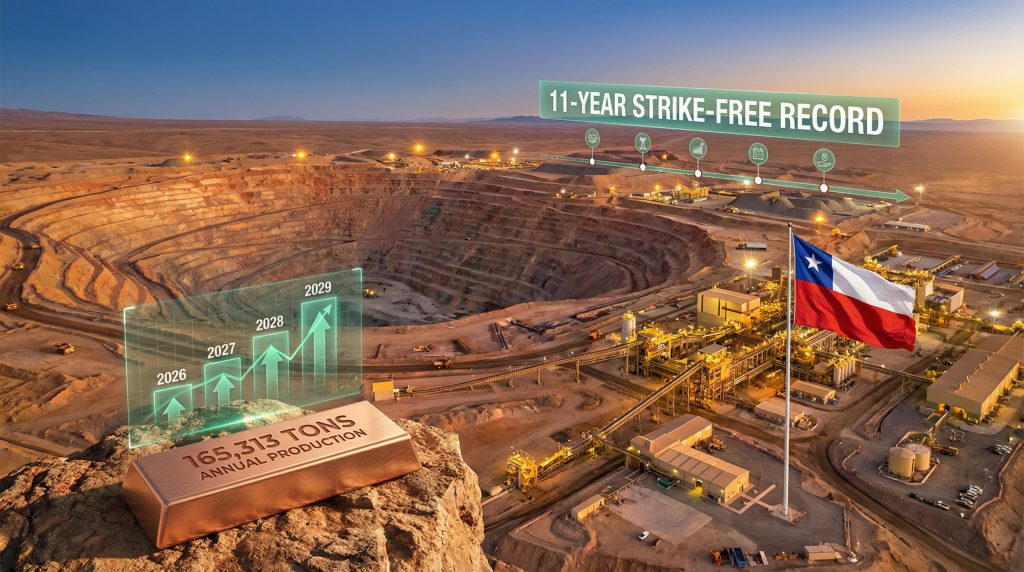
The Sierra Gorda mining operation presents a compelling case study in successful labour relations within Chile's copper sector. With annual production capacity of 165,313 tons of copper, the operation represents approximately 3% of Chilean total production while maintaining an exceptional record of workforce stability.
The facility's workforce structure encompasses more than 1,600 employees organised across two labour unions and one supervisor's union. This multi-union framework requires sophisticated coordination and communication protocols to maintain operational harmony while addressing diverse worker constituency needs.
Joint Venture Dynamics in International Mining Operations
The KGHM-South32 partnership structure creates unique advantages for labour relations through the combination of Polish and Australian operational methodologies. KGHM Polska Miedź S.A., headquartered in Lubin, Poland, brings European stakeholder dialogue traditions, while South32 Limited contributes Australian mining industry best practices developed in comparable international operations. These joint venture strategies have proven particularly effective in complex multinational operations.
Joint venture operational advantages include:
- Dual accountability frameworks ensuring comprehensive oversight
- International best practice integration from multiple operational jurisdictions
- Resource allocation flexibility supporting comprehensive employee programs
- Cross-cultural management expertise enhancing communication effectiveness
Large-scale joint ventures typically allocate 4-6% of operational budgets to human resources and employee relations functions, enabling investment in comprehensive benefits programs, professional development initiatives, safety and wellness programs, and community engagement activities.
Operational Scale Supporting Workforce Development
Sierra Gorda's production scale creates operational redundancy that supports enhanced employee engagement programs. Unlike smaller operations with limited workforce depth, facilities of this scale can implement:
- Comprehensive training and development programs without compromising production schedules
- Career advancement pathways that retain experienced workers within the organisation
- Cross-functional skill development that enhances operational flexibility
- Leadership development programs that prepare workers for supervisory roles
The operational profile includes both open-pit and underground mining components, requiring diverse skill sets and creating multiple career pathways for workers seeking professional advancement within the organisation.
Economic Drivers Supporting Multi-Year Agreement Structures
The extension of labour agreements through 2029 reflects sophisticated economic analysis incorporating commodity price forecasting, currency volatility management, and inflation protection mechanisms. These extended timeframes provide mutual benefits while addressing the economic uncertainties inherent in commodity-dependent operations.
Copper market fundamentals supporting long-term planning include projected price ranges of $4.00-$5.50 per pound through 2029, driven by renewable energy infrastructure development, electric vehicle adoption acceleration, and global electrification initiatives. These demand drivers provide confidence for sustained operational viability supporting multi-year employment commitments.
Currency and Inflation Risk Management
Chilean peso volatility presents ongoing challenges for wage stability, with exchange rates fluctuating 15-20% annually against the US dollar. Multi-year agreements address this challenge through:
"Inflation Adjustment Mechanisms: Wage indexation formulas tied to Chilean Consumer Price Index movements, protecting worker purchasing power during currency depreciation periods."
Key Economic Protection Elements:
- Minimum wage floors adjusted annually for inflation
- Performance-based incentive programs linked to operational efficiency metrics
- Currency hedging provisions protecting against peso depreciation
- Cost of living adjustments reflecting regional economic conditions
Chilean inflation averaging 3.8% in 2024 with projections of 2.9-3.2% for 2025-2026 requires systematic adjustment mechanisms to maintain real wage values throughout extended contract periods.
Capital Investment Planning Security
Labour cost certainty through 2029 enables strategic capital allocation decisions supporting operational expansion, equipment modernisation, and technological advancement programs. Mining operations require substantial capital investment planning horizons, with major equipment purchases and facility upgrades typically planned 3-5 years in advance.
Investment planning benefits include:
- Predictable operational cost structures supporting project feasibility analysis
- Workforce development program coordination with technological advancement initiatives
- Expansion project viability assessment with known labour cost parameters
- Equipment replacement scheduling aligned with workforce training requirements
KGHM's Exceptional Labour Relations Performance Record
The achievement of 11 consecutive years without strikes at Sierra Gorda represents a remarkable accomplishment within the Chilean mining sector and exceeds global mining industry benchmarks significantly. This record contrasts sharply with regional mining operations that have experienced substantial labour disruptions during similar timeframes, particularly given current workforce safety insights highlighting the complexity of maintaining harmonious labour relations.
Comparative Analysis of Chilean Mining Labour Relations
Strike frequency analysis across major Chilean operations reveals significant variations in labour relations outcomes:
| Operation | Owner | Recent Strike Activity | Impact |
|---|---|---|---|
| Escondida | BHP | 2017 (40 days) | 2,300 workers affected |
| Collahuasi | Anglo American/Glencore | 2015 (40 days), 2014 (21 days) | Multiple disruptions |
| Chuquicamata | CODELCO | 2014-2015 | Various work stoppages |
| Sierra Gorda | KGHM/South32 | None (11 years) | Continuous operation |
Global mining operations average strike incidents every 7-12 years, with median strike durations of 20-45 days. Sierra Gorda's performance significantly exceeds these industry benchmarks, demonstrating the effectiveness of systematic labour relations investment.
Cross-Cultural Management Success Factors
KGHM's Polish organisational heritage emphasises stakeholder dialogue and consensus-building approaches developed during Poland's post-1989 economic transition. This operational philosophy contrasts with more hierarchical management models, contributing to enhanced labour relations outcomes through:
- Joint labour-management committees with binding authority over operational improvements
- Regular communication forums between worker representatives and senior management
- Transparent grievance resolution processes with documented timelines
- Collaborative conflict resolution training for supervisory staff
Evidence suggests that organisations implementing European labour relations frameworks, emphasising worker councils and joint management committees, demonstrate superior strike avoidance records compared to purely adversarial management approaches.
Employee Engagement Programs Supporting Retention
The strike-free record reflects comprehensive employee engagement strategies extending beyond compensation structures:
Professional Development Initiatives:
- Skills advancement pathways aligned with technological developments
- Leadership development programs preparing workers for supervisory roles
- Cross-training opportunities enhancing career flexibility
Safety and Wellness Programs:
- Performance-based safety incentives aligning worker and operator objectives
- Comprehensive health and wellness initiatives supporting worker and family needs
- Community investment programs linking operational continuity to regional development
Broader Implications for Chilean Copper Sector Stability
The successful negotiation of multi-year labour agreements at Sierra Gorda carries significance extending far beyond the individual operation, influencing broader perceptions of Chilean mining jurisdiction stability and contributing to global copper supply chain reliability. According to Mining.com's recent report, this achievement demonstrates the potential for international mining companies to establish sustainable workforce relationships in South American operations.
Global Supply Chain Security Considerations
Chile's position as the dominant global copper supplier makes regional labour stability critical for downstream manufacturing industries worldwide. The renewable energy transition requires approximately 1.5 million additional metric tons of copper production annually through 2030 to meet infrastructure demands, elevating the strategic importance of stable production sources.
Supply chain reliability benefits include:
- Predictable delivery schedules supporting manufacturer planning processes
- Reduced price volatility through consistent production levels
- Enhanced investor confidence in Chilean mining jurisdiction
- Long-term supply contract viability for industrial customers
Operations with established strike-free records command 25-50 basis points lower cost of capital compared to facilities with strike histories, reflecting investor recognition of operational risk reduction through effective labour relations.
Regional Economic Development Effects
Stable mining operations generate substantial economic multiplier effects throughout the Antofagasta region. Sierra Gorda's workforce of 1,600 direct employees supports an estimated 3,200-4,800 indirect positions through supply chain relationships and service provider contracts.
Community impact elements:
- Local employment stability reducing regional economic volatility
- Supplier relationship continuity supporting small and medium enterprise development
- Infrastructure investment programs benefiting broader community development
- Educational and training partnerships with regional institutions
The economic stability provided by consistent mining operations enables long-term community planning and development initiatives that would be impossible under conditions of frequent production disruption.
Investment Climate Enhancement for Chilean Mining
Successful labour relations at major operations like Sierra Gorda contribute to positive international perceptions of Chilean mining investment climate. This reputation enhancement supports:
- Reduced country risk premiums for new mining investment
- Enhanced exploration investment by international mining companies
- Technology transfer acceleration through international partnership confidence
- Regulatory framework stability through demonstrated sector cooperation
The next major ASX story will hit our subscribers first
Strategic Framework for International Mining Operations
The Sierra Gorda model provides replicable elements for international mining operations seeking to enhance labour relations outcomes and achieve sustainable workforce stability in challenging operational environments.
Core Framework Components
Proactive Engagement Timing Strategies:
- Early negotiation initiation beginning 18-24 months before contract expiration
- Continuous dialogue mechanisms maintaining communication outside formal negotiation periods
- Predictive issue identification through worker satisfaction monitoring and feedback systems
Multi-Stakeholder Negotiation Approaches:
- Independent mediation utilisation when complex issues require neutral perspective
- Joint fact-finding processes establishing shared understanding of operational economics
- Collaborative problem-solving frameworks addressing underlying operational challenges
Technology Integration Supporting Workforce Stability
Modern mining operations increasingly integrate technology solutions that enhance rather than replace human capabilities, creating opportunities for workforce development while improving operational efficiency:
- Predictive maintenance systems reducing equipment failure risks and improving workplace safety
- Data analytics platforms enabling evidence-based decision making in labour relations
- Communication technologies facilitating real-time dialogue between management and worker representatives
- Training simulation systems supporting skill development without production disruption
Future Trends in Mining Labour Relations
The evolution toward collaborative labour-management models reflects broader industry recognition that workforce stability represents a competitive advantage rather than a cost centre. Future developments likely include:
Enhanced Stakeholder Integration:
- Worker representation in strategic planning processes
- Community partnership programs linking operational success to regional development
- Environmental stewardship initiatives engaging workers in sustainability programs
Performance-Based Compensation Evolution:
- Operational efficiency incentives aligning worker and operator objectives
- Safety performance recognition programs rewarding collective achievement
- Innovation participation rewards encouraging worker contribution to process improvement
Risk Assessment and Future Considerations
While Sierra Gorda's labour relations success provides an encouraging model, several risk factors require ongoing attention to maintain this positive trajectory through changing economic and operational conditions.
Economic Volatility Challenges
Commodity price fluctuations remain the primary external risk factor for sustained labour relations stability. Significant copper price declines could create pressure for cost reduction that challenges existing agreement structures, while dramatic price increases might generate demands for contract renegotiation.
Mitigation strategies include:
- Flexible compensation components that adjust with operational performance
- Transparent communication regarding market conditions and operational economics
- Joint planning processes for addressing various economic scenarios
- Contingency frameworks for managing unexpected market developments
Operational Evolution Considerations
Mining operations continuously evolve through technological advancement, regulatory changes, and market demand shifts. Successful labour relations frameworks must accommodate these changes while maintaining workforce stability and operational continuity.
Adaptive framework elements:
- Workforce development programs aligned with technological advancement
- Flexible job classification systems accommodating operational changes
- Continuous learning initiatives supporting worker adaptation to new technologies
- Change management protocols ensuring worker participation in operational evolution
What Makes the KGHM Mine in Chile Contract Agreement Significant?
The KGHM mine in Chile contract agreement demonstrates that sustained investment in proactive labour relations generates substantial returns through operational continuity, cost management, and competitive positioning. As KGHM's official announcement details, this achievement represents a collaborative approach that benefits both workers and operational efficiency.
As global copper demand continues expanding through renewable energy transition and electrification initiatives, the strategic importance of stable production sources will only increase, making effective labour relations an essential component of successful mining operations worldwide. The KGHM mine in Chile contract agreement serves as a template for how international partnerships can achieve sustainable workforce relationships whilst maintaining competitive operational performance in volatile commodity markets.
Disclaimer: This analysis is based on publicly available information and industry research. Investment decisions should not be made solely based on this content. Readers should consult with qualified financial advisors and conduct independent research before making investment decisions. Forward-looking statements involve risks and uncertainties that may cause actual results to differ materially from projected outcomes.
Looking to Capitalise on Mining Sector Developments?
Discovery Alert's proprietary Discovery IQ model delivers real-time alerts on significant ASX mineral discoveries, instantly empowering subscribers to identify actionable opportunities ahead of the broader market. Understand why major mineral discoveries can lead to substantial market returns by exploring Discovery Alert's dedicated discoveries page, showcasing historic examples of exceptional outcomes, and begin your 14-day free trial today to position yourself ahead of the market.