August 20, 2026
The Architecture of a New Transatlantic Energy Corridor
The global LNG market has undergone a structural transformation since 2022 that few industry observers fully anticipated. European nations, long anchored to pipeline gas infrastructure built across decades of relative geopolitical stability, have found themselves urgently redesigning their energy procurement strategies from the ground up. This pivot has opened a window of opportunity for supply corridors that were previously considered commercially marginal but are now strategically vital. The question facing European utilities, institutional investors, and policymakers is no longer whether to diversify LNG sourcing, but which new corridors offer the best combination of reliability, emissions performance, and geopolitical alignment.
Canada's eastern seaboard is emerging as a compelling answer to that question, and the proposed Kino Aski Marinvest Canadian LNG project is one of the most structurally distinctive proposals to enter this conversation. Understanding its potential requires examining the global LNG supply outlook and how Canada fits within it.
When big ASX news breaks, our subscribers know first
Why Atlantic Canada Is Gaining Strategic Weight in European LNG Procurement
The Geography Advantage That Changes the Economics
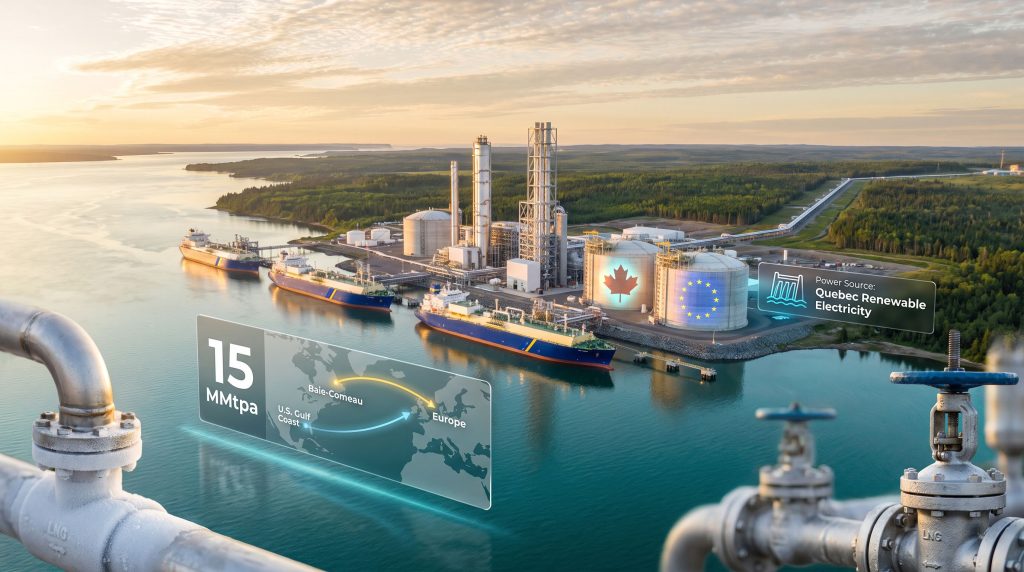
One of the less-discussed but commercially significant aspects of Canadian Atlantic LNG is pure shipping geometry. Export terminals positioned on Quebec's Atlantic coastline sit materially closer to northwest European receiving terminals than competing supply sources operating out of the U.S. Gulf Coast, Australia, or the Middle East.
This distance differential matters in ways that compound over the life of a 20-year offtake agreement:
- Shorter voyage durations reduce per-cargo freight costs and allow LNG carriers to complete more annual round trips
- Reduced transit time lowers the volumetric losses associated with boil-off gas during shipping
- Atlantic routing eliminates Panama Canal congestion risk, which has periodically created significant delivery uncertainty for Pacific-origin LNG
- Supply corridor geography through allied, rule-of-law jurisdictions reduces geopolitical interruption risk compared to Middle Eastern or Central Asian alternatives
Strategic Insight: Canada's eastern seaboard offers European buyers a materially shorter shipping distance than competing U.S. Gulf Coast export terminals, potentially reducing both freight costs and delivery timelines. In volatile freight markets, this structural advantage converts into a pricing edge that grows more meaningful as European buyers negotiate long-term supply contracts.
Canada's Underutilised Export Potential
Canada holds the world's fifth-largest proven natural gas reserves, yet its LNG export infrastructure has historically been concentrated on Pacific-facing British Columbia projects oriented toward Asian markets. The eastern corridor, despite its obvious advantages for European supply, has been constrained by a combination of pipeline infrastructure gaps, regulatory complexity, and the historical absence of committed European offtake to justify capital allocation.
That calculus is shifting. Canada's energy transition challenges have in many ways accelerated interest in eastern export options, as the combination of European energy security urgency and provincial interest in new corridors has created a more receptive environment for eastern Canadian LNG proposals than has existed at any point in the past two decades.
What the Kino Aski Marinvest Canadian LNG Project Actually Proposes
Project Fundamentals at a Glance
The Kino Aski LNG facility, proposed through the partnership between Kino Aski Inc. (led by the Atikamekw Nation) and Marinvest Energy Canada Inc., targets an export capacity of 15 million metric tonnes per annum (MMtpa). At that scale, it would rank among the largest proposed Canadian LNG export facilities ever advanced.
| Feature | Kino Aski LNG (Proposed) | Typical Gas-Fired LNG Plant |
|---|---|---|
| Power Source | Quebec Renewable Electricity | Natural Gas Combustion |
| Methane Certification | Low-emission certified (proposed) | Variable |
| Export Terminal Location | Baie-Comeau, Quebec (Atlantic) | Gulf Coast or Pacific |
| Shipping Distance to Europe | Shorter Atlantic route | Longer routing |
| Capacity (MMtpa) | 15 | Varies |
The core supply chain design involves:
- Sourcing feed gas from Western Canadian natural gas producing basins
- Transporting that gas eastward via a combination of existing pipeline networks and newly constructed pipeline infrastructure
- Liquefying the gas at the Port of Baie-Comeau in Quebec using power drawn from Quebec's renewable electricity grid
- Exporting certified low-methane LNG via Atlantic shipping routes to European receiving terminals
The Low-Carbon Liquefaction Differentiator
The decision to site the liquefaction facility in Quebec is not merely logistical. It is a deliberate commercial strategy built around Quebec's hydroelectric power system, one of the most abundant sources of low-cost renewable electricity on the continent.
Conventional LNG liquefaction plants combust natural gas to generate the power needed for the refrigeration cycle that converts gas to liquid form. This process generates direct emissions at the facility, and those emissions are increasingly scrutinised by European procurement teams operating under tightening regulatory frameworks. By substituting renewable hydroelectric power for gas combustion, Kino Aski LNG could achieve a structurally lower carbon intensity per tonne of LNG produced compared to gas-fired competitors.
This matters because the European Union's methane regulation framework and carbon border adjustment mechanisms are progressively creating conditions where emissions certification will function as a commercial prerequisite rather than a marketing differentiator. Furthermore, renewable energy solutions such as Quebec's hydroelectric grid are increasingly central to how LNG developers position their projects within European regulatory frameworks.
The Governance Model That Sets This Project Apart
First Nations Majority Ownership as a Commercial Structure
The ownership architecture of the Kino Aski Marinvest Canadian LNG project departs significantly from the historical template of Canadian resource development, where Indigenous communities were typically engaged through consultation processes and offered benefit-sharing arrangements rather than genuine governance authority.
Under the Kino Aski structure:
- Kino Aski Inc., the Atikamekw Nation-led entity, holds majority ownership and governance control
- Marinvest Energy Canada Inc. holds a minority equity position, contributing international energy industry expertise and capital market access
- Decision-making authority over project governance, financing strategy, construction oversight, and operational management sits with the Indigenous majority owner
This is not a consultation framework with financial benefits attached. It is a majority ownership structure that places the Atikamekw Nation in a fundamentally different position relative to the project than any Indigenous engagement model that preceded it in Canadian energy development.
Governance Framework Note: The Kino Aski structure, where a First Nations entity holds majority control rather than a minority benefit-sharing position, represents a meaningful structural evolution in how Canadian resource projects are being designed for both legal durability and ESG credibility.
Why This Governance Structure Changes the Risk Profile
From an investor and project finance perspective, the Atikamekw Nation's majority ownership position addresses one of the most persistent sources of development risk in Canadian energy infrastructure. Projects that have proceeded without genuine Indigenous ownership stakes have faced legal challenges, injunctions, and regulatory delays that have materially extended development timelines and increased costs.
When the community most directly affected by a project is also its majority owner, the conventional adversarial dynamic between developer and community is structurally altered. This has implications for:
- The probability of legal challenges arising from affected groups
- Alignment with Canada's obligations under the United Nations Declaration on the Rights of Indigenous Peoples (UNDRIP)
- The project's attractiveness to ESG-focused institutional investors and European sovereign wealth funds with explicit Indigenous rights screening criteria
- Regulatory assessment processes that increasingly evaluate social licence as a component of project viability
The Ksi Lisims LNG partnership, involving the Nisga'a Nation alongside Rockies LNG Partners and Western LNG, offers a partial precedent. Ksi Lisims executed benefits agreements with Indigenous groups in June 2026, a milestone that helped prepare the path toward investor sanctioning of that project by year-end. Kino Aski's governance model goes further by placing the First Nations entity in the majority position from inception.
Where Kino Aski Sits in Canada's Expanding LNG Landscape
The Canadian LNG Project Comparison
European energy majors have already moved decisively to secure Canadian LNG supply, primarily through the more advanced Ksi Lisims project in British Columbia. The pattern of agreements executed to date reveals a clear strategic logic: diversification across multiple Canadian projects rather than concentration in a single supply source. This aligns with the broader Canada resource development plan that prioritises expanding export infrastructure across multiple corridors.
| Project | Capacity (MMtpa) | Location | Key European Offtakers | Status |
|---|---|---|---|---|
| Kino Aski LNG | 15 | Baie-Comeau, Quebec | TBD | Pre-regulatory, development stage |
| Ksi Lisims LNG | 12 | British Columbia | Uniper, SEFE, TotalEnergies, Shell | Advanced; benefits agreements executed June 2026 |
The European offtake commitments already locked in at Ksi Lisims illustrate the scale of demand these buyers are seeking to satisfy:
- Uniper SE (Germany): 2 MMtpa on a 20-year free-on-board basis, with deliveries targeted from 2032, representing the first major long-term LNG supply arrangement between Canada and Germany
- SEFE (Germany): 1 MMtpa over 20 years under a preliminary agreement, with deliveries expected in the 2030s
- TotalEnergies SE (France): 2 MMtpa over 20 years, plus a 5% equity stake in Western LNG with options to increase to approximately 10% at the time of final investment decision
- Shell PLC (UK): 2 MMtpa over 20 years, announced in January 2024
The collective 7 MMtpa committed from Ksi Lisims' planned 12 MMtpa capacity leaves room in both that project and broader Canadian supply for additional European demand. Kino Aski's proposed 15 MMtpa scale suggests its developers are targeting a significant share of that remaining European appetite.
Strategic Development Scenarios: Pathways and Risks
Optimistic Case: Accelerated Development
Under the most favourable development scenario, Kino Aski enters the regulatory process with Quebec provincial alignment on LNG export infrastructure, secures early offtake commitments from European utilities seeking supply diversification beyond what Ksi Lisims can offer, and attracts ESG-aligned institutional capital drawn by the Indigenous governance model. First LNG deliveries under this scenario could be achievable in the early-to-mid 2030s.
Base Case: Measured Progression
A more conservative but realistic trajectory involves regulatory engagement commencing in 2027 or 2028 following completion of pipeline route studies, environmental assessments, and detailed engineering work. Offtake negotiations with European buyers would proceed in parallel. A final investment decision in the early 2030s would support deliveries in the mid-2030s, placing Kino Aski in a competitive position against second-wave U.S. LNG expansion projects for European contract allocation.
Downside Case: Delays and Restructuring
The most significant development risks include pipeline routing challenges through Quebec terrain and populated areas, softening European LNG demand driven by faster-than-expected renewable energy deployment, and financing gaps that emerge if early offtake agreements cannot be secured ahead of regulatory milestones. In addition, interprovincial trade barriers could complicate the eastward transportation of Western Canadian gas, adding another layer of regulatory and commercial complexity.
Risk Callout: As of August 2026, Kino Aski LNG has not initiated any formal regulatory process. No pipeline route, project cost estimate, construction timeline, or financing structure has been publicly disclosed. Investors and European buyers should treat this as an early-stage development proposal requiring substantial de-risking before commercial commitments can be assessed.
The next major ASX story will hit our subscribers first
The Broader Implications for European Energy Security Architecture
Building a Durable Atlantic LNG Corridor
The strategic value of a functioning Canada-to-Europe LNG corridor extends well beyond any individual project's commercial returns. A multi-project Canadian LNG export ecosystem operating across both Atlantic and Pacific terminals would provide European buyers with a supply diversification option anchored in a stable, allied, rule-of-law jurisdiction with transparent regulatory frameworks and enforceable contract rights.
This structural reliability is difficult to price but increasingly valued by European procurement teams who have witnessed how geopolitical disruption can render contractual supply commitments unenforceable in practice.
The Bridge Fuel Debate and 20-Year LNG Contracts
One of the more nuanced tensions embedded in European LNG procurement decisions is the apparent contradiction between signing 20-year supply contracts and stated commitments to achieving net-zero emissions by 2050. The resolution of this tension, for most European utilities, lies in the concept of certified low-carbon LNG as a transition fuel that displaces higher-emissions alternatives in the near term while renewable infrastructure scales to fill the gap.
Quebec's renewable electricity grid provides Kino Aski with a genuine technical basis for this positioning, rather than a marketing claim. Whether European regulators and civil society will accept this framing over the full 20-year contract horizon remains an open question, but the EU's REPowerEU framework and Fit for 55 targets currently provide space for bridge fuel arrangements with demonstrably lower emissions profiles.
Frequently Asked Questions: Kino Aski LNG and the Canada-Europe Energy Trade
What is the Kino Aski LNG project?
Kino Aski LNG is a proposed Canadian liquefied natural gas export facility with a planned capacity of 15 MMtpa, to be developed at the Port of Baie-Comeau in Quebec. It is led by the Atikamekw Nation through Kino Aski Inc. in partnership with Marinvest Energy Canada Inc., with the primary commercial objective of supplying European energy markets.
Who owns Kino Aski LNG?
Kino Aski Inc., the Atikamekw Nation-led entity, holds a majority ownership position. Marinvest Energy Canada Inc. holds a minority interest and is expected to contribute industry expertise and support capital formation processes.
Where will the feed gas come from?
Feed gas will be sourced from Western Canadian natural gas producing regions and transported eastward to the Quebec export terminal via a combination of existing pipeline networks and newly constructed pipeline infrastructure.
What stage of development is the project at?
As of August 2026, the project is in early development. No formal regulatory application has been submitted, and key project details including pipeline routing, capital cost, financing arrangements, and a construction schedule have not been publicly disclosed. Discussions with governments, communities, and industry partners are described as ongoing.
When could Kino Aski LNG begin delivering gas to Europe?
No delivery timeline has been formally announced. Given the pre-regulatory status of the project, first deliveries would realistically depend on regulatory approval, financing, and construction timelines that have yet to be established. Under optimistic assumptions, an early-to-mid 2030s delivery window is conceivable.
Key Takeaways for Investors and European Energy Buyers
The Kino Aski Marinvest Canadian LNG project occupies an interesting and genuinely novel position within the emerging Canadian LNG export landscape. Its distinguishing characteristics, when assessed together, create a value proposition that differs meaningfully from competing proposals:
- Scale ambition: At 15 MMtpa, the project targets a capacity that would make it one of Canada's largest LNG export facilities if fully realised
- Governance innovation: The Atikamekw Nation majority ownership model establishes a new structural benchmark for Indigenous-led resource development in Canada, with material implications for social licence and project durability
- Emissions differentiation: Renewable-powered liquefaction using Quebec's hydroelectric grid and planned low-methane certification position the project favourably within European regulatory and procurement frameworks
- Atlantic geography: Baie-Comeau's location offers structural shipping distance advantages over Gulf Coast and Pacific alternatives for European delivery
- Early-stage risk: The absence of regulatory engagement, cost disclosure, pipeline routing confirmation, and offtake agreements means the project carries substantial development risk at this stage
- Competitive context: Ksi Lisims LNG has already secured 7 MMtpa in European offtake agreements and is targeting operational status by 2029, establishing both a validation precedent and a competitive benchmark for Kino Aski's commercial development path
This article is intended for informational purposes only and does not constitute financial or investment advice. Early-stage energy development projects carry significant execution, regulatory, and market risks. Readers should conduct independent due diligence before drawing any investment conclusions.
Want to Identify the Next Major Resource Opportunity Before the Market Moves?
While Canada's emerging LNG corridors reshape global energy trade, significant mineral discoveries on the ASX are being flagged in real time by Discovery Alert's proprietary Discovery IQ model — translating complex resource data into actionable investment insights for both short-term traders and long-term investors. Explore historic examples of discovery-driven returns and begin your 14-day free trial today to position yourself ahead of the broader market.