
June 25, 2026
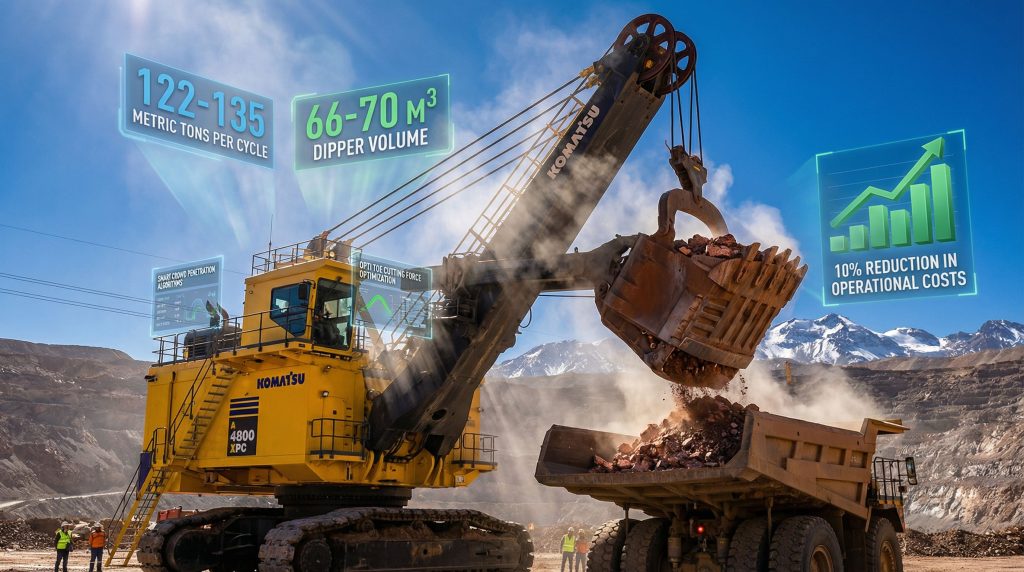
The Komatsu 4800XPC shovel in Peru deployment at Antamina represents a significant milestone in ultra-class mining equipment advancement, showcasing how modern technology addresses the demands of high-volume copper production. This implementation reflects broader trends in mining industry evolution that emphasise efficiency and technological integration. Furthermore, the integration of advanced control systems demonstrates the growing importance of AI in mining operations across global mining sectors.
Understanding Ultra-Class Electric Rope Shovels in Modern Mining
Industrial mining operations increasingly rely on ultra-class electric rope shovels to achieve production targets that would require multiple smaller machines to accomplish. These massive excavation units represent the convergence of electrical engineering, hydraulic precision, and materials science to create equipment capable of moving hundreds of thousands of tonnes of ore daily.
Technical Specifications That Define Ultra-Class Performance
The Komatsu P&H 4800XPC operates with specifications that separate it from conventional mining shovels. With a maximum payload capacity of 135 metric tons per cycle, this equipment represents a substantial advancement over predecessor models such as the Komatsu 4100XPC, delivering 30-35 metric tons more material per bucket cycle than previous generation equipment.
| Performance Metric | Komatsu 4800XPC | Standard Mining Shovels |
|---|---|---|
| Payload Capacity | 135 metric tons | 90-105 metric tons |
| Dipper Volume | 66-70 m³ | 45-55 m³ |
| Loading Passes Required | 3 passes | 4-5 passes |
| Power Configuration | 7200V/13800V | 4160V/6600V |
The dipper volume engineering operates within the 66-70 m³ capacity range, enabling larger material volumes per bucket cycle compared to standard electric rope shovels. This capacity increase directly translates to reduced truck loading cycles, with the Komatsu 4800XPC shovel in Peru achieving three-pass loading for ultra-class trucks carrying 290-363 metric ton payloads.
Electrical infrastructure demands represent a significant consideration for mine operators evaluating ultra-class deployment. The 4800XPC operates on electrical systems rated at 7200V or 13800V configurations, requiring substantial electrical grid upgrades compared to standard mining equipment operating at lower voltage levels.
How Three-Pass Loading Revolutionises Truck Cycle Efficiency
The transition from four-pass to three-pass loading cycles creates measurable efficiency improvements throughout the mining operation. This 25% reduction in loading cycles decreases overall truck traffic on mine haul roads, reducing fuel consumption for transport fleets and minimising tire wear across haulage equipment.
Productivity Formula: Reducing loading passes from four to three represents approximately 25% efficiency improvement in bucket cycle rate, enabling a single shovel to service truck fleets previously requiring 1.3-1.5 shovels for equivalent throughput.
Mathematical analysis of cycle time improvements demonstrates that fewer loading passes per truck reduces bottlenecks at loading points. When ultra-class trucks spend less time positioned at the shovel, the overall mine transportation network experiences improved flow dynamics and reduced equipment idle time.
Fuel consumption calculations reveal substantial operational cost benefits. The reduction in truck positioning time and loading cycles decreases diesel fuel consumption across the haulage fleet by an estimated 15-20% per loading cycle, contributing to both cost reduction and environmental impact improvement.
When big ASX news breaks, our subscribers know first
Why Peru's Mining Sector Represents a Strategic Equipment Testing Ground
Peru's position as the world's second-largest copper producer creates unique operational demands that make it an ideal proving ground for ultra-class mining equipment. The country accounts for approximately 10-11% of global copper output, with mining operations concentrated in geologically challenging environments that test equipment capabilities.
Geological Conditions That Demand Ultra-Class Equipment
The Komatsu 4800XPC shovel in Peru operates at the Antamina copper-zinc mining operation, located at elevations between 3,800-4,300 metres above sea level. These high-altitude conditions create atmospheric pressure considerations that affect equipment performance and operational protocols.
| Geological Factor | Antamina Specifications | Equipment Requirements |
|---|---|---|
| Ore Hardness | Mohs scale 4.5-6.5 | >300 kN penetration force |
| Altitude | 3,800-4,300 metres | Enhanced atmospheric compensation |
| Ore Type | Mixed copper-zinc porphyry | Variable density handling |
| Daily Processing | 220,000 metric tons | Ultra-class capacity demand |
Antamina's primarily porphyry copper-zinc deposits contain chalcopyrite, bornite, and sphalerite mineralisation requiring bucket penetration forces exceeding 300 kN to achieve efficient fragmentation. The varying hardness characteristics demand robust excavation equipment capable of handling material variability without cycle time reduction.
The mine's ore composition presents technical challenges with fragmented material ranging from fines to 400+ millimetre boulders. The 4800XPC's precision control system addresses the specific challenge of loading this varied size distribution without spillage or bucket damage at high-altitude operating elevations.
Infrastructure Investment Patterns in South American Mining
The deployment of ultra-class equipment requires substantial infrastructure investments beyond the equipment purchase. Electrical grid upgrades to support 7200V/13800V systems typically require capital investment estimated between $5-15 million, though these costs are amortised over the equipment's 15-20 year operational lifespan.
Transportation logistics for equipment measuring 15+ metres in width demand specialised handling protocols and route planning. The assembly process requires deployment of specialised technicians and quality assurance teams, with the Antamina installation completed over a 90-day assembly period with zero personal injury incidents.
Local workforce training and certification protocols become critical components of ultra-class equipment deployment. Operators must complete comprehensive training programmes that include theoretical education components, simulator-based practical training, and ongoing competency maintenance requirements.
How Advanced Control Systems Transform Operator Safety and Precision
Advanced control technology represents a fundamental shift from operator-dependent mechanical systems to precision-engineered automated assistance. The Komatsu 4800XPC shovel in Peru incorporates multiple control systems that enhance both safety performance and operational consistency through data-driven mining operations.
Adaptive Control Technology in High-Production Environments
Smart Crowd penetration algorithms provide automated penetration depth adjustment based on real-time hydraulic pressure feedback. This system prevents over-forcing the bucket into resistant ore bodies, reducing mechanical stress and eliminating operator injury risks from sudden resistance changes.
The Opti Toe cutting force optimisation system manages dynamic tooth engagement based on material density feedback. This technology modulates cutting angles in real-time, reducing bucket hang-up incidents where ore material jams between bucket teeth and surrounding rock formations.
Active Load Compensation technology provides hydraulic system response to uneven terrain conditions under haul trucks. The system maintains horizontal bucket orientation during loading operations, preventing spillage and ensuring uniform truck load distribution regardless of ground conditions.
Ergonomic Design Standards for Ultra-Class Cab Systems
The operator cab positioning maximises sightlines to bucket and truck interface points, with 360-degree camera systems mounted on the shovel cab perimeter. These visibility enhancement technologies provide comprehensive views of bucket positioning relative to truck hopper edges and surrounding equipment.
Automated systems reduce manual control inputs required during loading cycles, decreasing operator fatigue during extended 12-hour shift operations. The ergonomic design incorporates fatigue reduction principles through intelligent automation that maintains operator alertness while reducing repetitive manual tasks.
Zero-Accident Achievement: The 90-day assembly and commissioning process at Antamina was completed with zero personal injury incidents, demonstrating the effectiveness of integrated safety protocols.
Training integration programmes ensure operators receive comprehensive preparation for ultra-class equipment operation. The Antamina deployment included Komatsu theoretical training modules, integrated practical training in production environments, and specialised simulator-based instruction to ensure operational competency.
What Economic Factors Drive Ultra-Class Shovel Adoption?
The economic viability of ultra-class equipment depends on sustained high-capacity mine operations capable of processing 200,000+ metric tons of ore daily. The Komatsu 4800XPC shovel in Peru demonstrates how technological advancement translates to measurable operational cost benefits.
Cost-Per-Tonne Analysis in Large-Scale Operations
The 4800XPC achieves approximately 10% reduction in cost-per-tonne of ore moved compared to smaller equipment configurations. This improvement stems from the three-pass loading efficiency that reduces overall equipment requirements and operational complexity.
Labour optimisation represents a significant economic factor in ultra-class adoption. The transition from multiple smaller shovels to a single ultra-class unit reduces crew requirements from approximately 2-3 operators for multiple machines to 1 dedicated operator with backup support, representing direct labour cost reduction of 50-70% per unit of equipment.
| Cost Factor | Standard Configuration | Ultra-Class Configuration |
|---|---|---|
| Operators Required | 2-3 per shift | 1 per shift |
| Loading Passes | 4-5 passes | 3 passes |
| Maintenance Intervals | 6,000-8,000 hours | 10,000-12,000 hours |
| Component Lifespan | 8,000-12,000 hours | 15,000-20,000 hours |
Truck fleet optimisation through three-pass loading cycles reduces overall truck traffic on mine haul roads by approximately 25%. This reduction decreases fuel consumption for transport fleets and reduces tire wear and maintenance costs across haulage equipment, creating system-wide operational efficiencies.
Market Positioning for Mining Companies
Ultra-class equipment deployment signals technological leadership and operational capability to global commodity markets. The Komatsu 4800XPC shovel in Peru represents Antamina's commitment to maintaining production leadership within South American copper operations.
Production capacity expansion through equipment advancement enables output increases without proportional workforce expansion. This capability becomes particularly valuable during periods of favourable commodity pricing when maximising production efficiency directly impacts profitability.
Investment market positioning benefits from ultra-class equipment deployment as institutional investors increasingly evaluate mining operations based on technological advancement and operational efficiency metrics rather than purely production volume statistics.
Where Does Ultra-Class Equipment Fit in Global Mining Trends?
Global mining automation trends position ultra-class equipment as foundational infrastructure for future autonomous operations. The Komatsu 4800XPC shovel in Peru incorporates control architecture designed for integration with emerging automation technologies that support sustainability transformation in mining.
Automation Integration Pathways
The global autonomous haul truck fleet includes an estimated 200+ units in operation worldwide as of 2024-2025, primarily utilising Komatsu Autonomous Haulage Systems and Caterpillar MineStar Command technologies. The 4800XPC's electronic control architecture utilises CAN-bus communication protocols compatible with these autonomous dispatch systems.
Approximately 35-40% of large-scale mining operations processing more than 200,000 metric tons daily have implemented some level of equipment automation. This trend indicates the growing industry recognition that operational consistency and safety improvements through automation provide competitive advantages.
Remote monitoring and predictive maintenance capabilities represent critical components of modern mining operations. The 4800XPC's sensor network enables real-time performance monitoring and predictive maintenance scheduling, contributing to the 60-70% of major mining operations now utilising predictive maintenance systems.
Environmental Impact Considerations
Energy efficiency improvements over diesel alternatives position electric rope shovels as environmentally preferred technology. The elimination of diesel combustion reduces direct emissions at the mining site while enabling operations to utilise renewable electrical grid sources where available.
| Environmental Metric | Electric Rope Shovel | Diesel Alternative |
|---|---|---|
| Direct Emissions | Zero at point of use | High CO2 output |
| Energy Source | Grid electricity | Diesel fuel |
| Noise Output | Reduced operational noise | Higher decibel levels |
| Ground Disturbance | Precision loading reduces impact | Variable precision |
Reduced ground disturbance through precision loading capabilities minimises environmental impact beyond the immediate excavation area. The 4800XPC's accurate bucket positioning reduces spillage and over-excavation, contributing to more precise ore boundary management.
Precision measurement capabilities enable more accurate ore grade control, reducing waste rock processing and improving overall resource utilisation efficiency. This precision contributes to reduced environmental impact through optimised material handling.
How Implementation Timelines Affect Mining Operations
The deployment timeline for ultra-class equipment requires careful coordination with ongoing mining operations to minimise production disruption. The Komatsu 4800XPC shovel in Peru implementation demonstrates the planning complexity involved in ultra-class equipment integration.
90-Day Assembly Process Breakdown
Site preparation requirements include electrical infrastructure upgrades, foundation construction, and access route preparation for equipment transportation. The specialised nature of ultra-class assembly demands dedicated workspace areas separate from active mining operations.
Specialised technician deployment involves coordination between equipment manufacturers, local contractors, and mine operations teams. The assembly process requires personnel with specific ultra-class certification and experience working with high-voltage electrical systems.
Quality assurance and safety protocols during assembly focus on zero-incident performance standards. The Antamina assembly achieved zero personal injury incidents over the 90-day installation period, establishing safety benchmarks for future ultra-class deployments.
Training and Certification Requirements
Theoretical education components cover equipment specifications, safety protocols, maintenance procedures, and operational best practices specific to ultra-class equipment. This foundation training typically requires 2-3 weeks of intensive classroom instruction.
Simulator-based practical training provides operators with realistic equipment experience before production deployment. Advanced simulators replicate the 4800XPC's control systems and operational scenarios, enabling competency development without production risks.
Ongoing competency maintenance programmes ensure operators maintain certification standards throughout their careers. These programmes include periodic recertification, advanced training modules, and continuous safety education requirements.
The next major ASX story will hit our subscribers first
What Future Developments Shape Ultra-Class Mining Equipment?
Technology advancement in ultra-class mining equipment focuses on artificial intelligence integration, enhanced safety systems, and predictive maintenance capabilities. The Komatsu 4800XPC shovel in Peru represents current technological capabilities while providing platforms for future enhancements that will be showcased at industry events such as the mining innovation expo.
Technology Roadmap for Next-Generation Shovels
Artificial intelligence integration possibilities include autonomous bucket positioning, predictive material handling optimisation, and real-time equipment performance adjustment. AI systems could analyse ore characteristics in real-time and adjust excavation parameters automatically.
Enhanced safety sensor systems under development include proximity detection technologies, automated collision avoidance, and comprehensive environmental monitoring. These systems would provide additional safety layers beyond current control technologies.
Predictive maintenance algorithms utilising machine learning could analyse equipment performance data to predict component failures before they occur. This capability would enable proactive maintenance scheduling and reduce unplanned equipment downtime.
Global Deployment Strategies
Regional market expansion patterns indicate increasing ultra-class equipment adoption in high-production mining regions globally. Markets in Australia, Chile, and Canada represent primary deployment targets for next-generation ultra-class equipment.
Local partnership requirements include collaboration with regional electrical contractors, specialised transportation providers, and certified training organisations. These partnerships enable efficient deployment and ongoing operational support.
2027 Equipment Rollout Timeline: Antamina plans deployment of a second ultra-class shovel in October 2026 and a third unit in 2027, representing progressive expansion of ultra-class capabilities.
The progressive rollout strategy allows mining operations to gradually scale ultra-class capabilities while developing organisational expertise and infrastructure capacity to support multiple units effectively.
Frequently Asked Questions About Ultra-Class Mining Shovels
What makes the 4800XPC different from smaller electric shovels?
The primary differences include 135-metric-ton payload capacity compared to 90-105 tons for standard shovels, 66-70 m³ dipper volume versus 45-55 m³, and advanced control systems including Smart Crowd penetration algorithms and Opti Toe cutting force optimisation.
How do ultra-class shovels impact overall mine productivity?
Ultra-class shovels enable three-pass truck loading compared to four passes with smaller equipment, representing approximately 25% efficiency improvement in loading cycles. This translates to reduced truck traffic, lower fuel consumption, and improved overall mine throughput.
What infrastructure changes are required for 4800XPC deployment?
Infrastructure requirements include electrical grid upgrades to 7200V/13800V systems, specialised transportation routes for 15+ metre equipment width, foundation construction for assembly areas, and workforce training facilities for operator certification programmes.
How does operator training differ for ultra-class equipment?
Training programmes include 2-3 weeks of theoretical education, simulator-based practical training, integrated production environment instruction, and ongoing competency maintenance requirements. The complexity and scale of ultra-class equipment demand more comprehensive training compared to standard mining shovels.
Key Takeaways: Ultra-Class Equipment in Modern Mining Operations
The Komatsu 4800XPC shovel in Peru represents technological advancement that transforms mining operational efficiency through measurable productivity improvements. The reduction from four-pass to three-pass loading cycles creates system-wide benefits including reduced truck traffic, lower fuel consumption, and improved equipment utilisation rates.
Safety enhancements through advanced control systems demonstrate the industry evolution toward operator assistance technologies that reduce human error risks while maintaining operational control. The zero-accident assembly performance and integrated safety systems establish benchmarks for ultra-class equipment deployment.
Economic advantages in high-volume operations stem from 10% cost-per-tonne reduction compared to smaller equipment configurations, combined with labour optimisation that reduces crew requirements by 50-70% per equipment unit while maintaining or improving production output.
Strategic positioning for future mining automation becomes increasingly important as the industry adopts autonomous technologies. The 4800XPC's control architecture provides foundation compatibility for future autonomous integration while delivering immediate operational benefits through current technology deployment.
The progressive rollout strategy at Antamina, with additional units planned for October 2026 and 2027, demonstrates sustainable approach to ultra-class adoption that allows organisational capability development alongside technological advancement.
This analysis is based on publicly available information and industry data. Mining operations involve inherent risks, and equipment performance may vary based on site-specific geological and operational conditions.
Ready to Invest in the Next Major Mineral Discovery?
Discovery Alert instantly alerts investors to significant ASX mineral discoveries using its proprietary Discovery IQ model, turning complex mineral data into actionable insights. Understand why historic discoveries can generate substantial returns by visiting Discovery Alert's dedicated discoveries page, and begin your 30-day free trial today to position yourself ahead of the market.