
June 22, 2026
The heavy equipment sector continues to evolve rapidly as manufacturers recognise the strategic value of controlling aftermarket revenue streams. The Komatsu North America acquisition of SRC of Lexington represents a pivotal moment in this transformation, demonstrating how leading companies are positioning themselves for sustainable growth through vertical integration. Furthermore, this transaction reflects broader industry evolution trends that prioritise recurring revenue models over traditional cyclical sales patterns.
Strategic Integration Through Heavy Equipment Remanufacturing Markets
Heavy equipment manufacturers face mounting pressure to diversify revenue streams beyond traditional sales cycles that fluctuate with commodity prices and construction demand. The remanufacturing sector has emerged as a critical component of aftermarket strategies, offering manufacturers higher-margin recurring revenue opportunities while addressing customer total cost of ownership concerns. This market evolution reflects broader industry recognition that equipment lifecycle management extends far beyond initial purchase decisions.
The remanufacturing landscape represents a fundamental shift toward circular economy principles within capital-intensive industries. Component recovery, restoration, and redistribution models enable manufacturers to capture value from equipment throughout extended operational lifecycles. This approach becomes particularly strategic when manufacturers control dedicated remanufacturing facilities positioned proximate to major customer concentrations.
When big ASX news breaks, our subscribers know first
What Strategic Value Does the SRC Lexington Acquisition Deliver for Komatsu?
Market Positioning Through Vertical Integration
The Komatsu North America acquisition of SRC of Lexington demonstrates the strategic importance of controlling remanufacturing capabilities within core geographic markets. This transaction positions Komatsu to strengthen its competitive moat through dedicated domestic capacity in Kentucky, eliminating dependence on distant facilities for North American component recovery operations. Additionally, this move aligns with broader industry consolidation trends that favour vertical integration strategies.
SRC of Lexington's established operations in Kentucky provide Komatsu with immediate access to a 180-person workforce possessing specialised remanufacturing expertise accumulated over three decades. This human capital represents institutional knowledge of component restoration processes, quality assurance protocols, and customer relationship management that would require years to develop organically.
The geographic proximity benefits extend beyond simple logistics cost reduction. North American mining operations, particularly in regions such as the Canadian oil sands and Appalachian coal extraction, require rapid component replacement to minimise equipment downtime during peak production periods. Domestic remanufacturing capacity enables Komatsu to offer significantly improved response times compared to competitors relying on overseas facilities.
Revenue Stream Diversification Impact
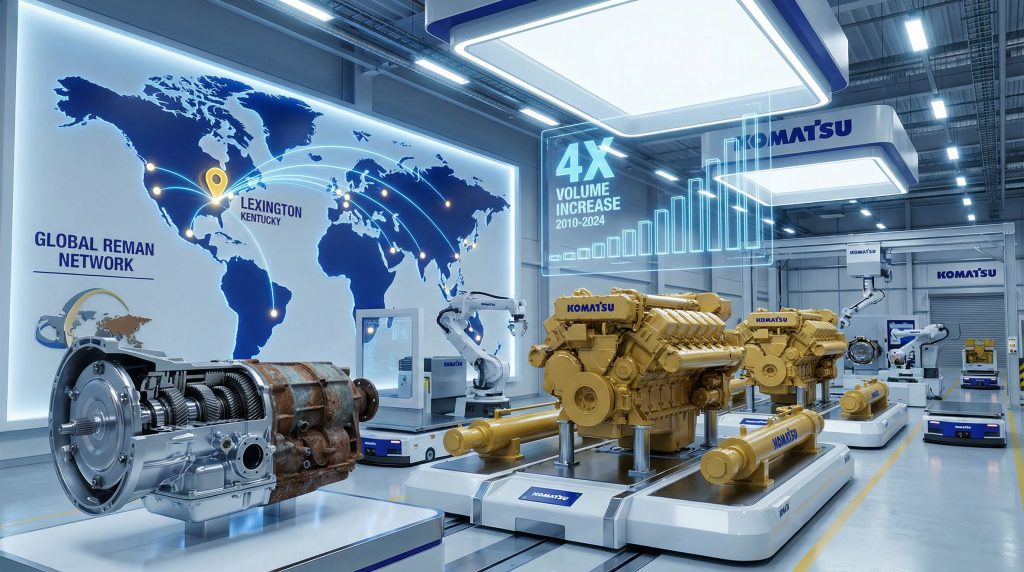
Komatsu's remanufacturing business experienced remarkable expansion with transaction volumes increasing approximately four times between fiscal years 2010 and 2024. This growth trajectory correlates directly with the expansion of the installed equipment base in North American mining and extraction operations since 2010.
The remanufacturing market offers several financial advantages over traditional equipment sales:
• Higher gross margins through lower material input costs
• Reduced inventory requirements via component recovery from existing equipment
• Predictable demand patterns based on equipment utilisation cycles
• Customer retention benefits through lifecycle service relationships
Remanufactured components typically deliver margins 20-30% higher than new component production while requiring significantly less raw material input. The SRC acquisition provides Komatsu with established customer relationships spanning multiple original equipment manufacturer brands, creating cross-selling opportunities for Komatsu's broader product portfolio.
How Does This Deal Reshape Heavy Equipment Aftermarket Dynamics?
Competitive Response Framework
The heavy equipment aftermarket operates through complex networks of original equipment manufacturers, independent remanufacturers, and regional service providers. Major manufacturers have pursued different strategies for controlling aftermarket revenue streams, particularly as the industry embraces sustainable mining transformation initiatives.
| Company | Global Facilities | Key Markets | Strategic Focus |
|---|---|---|---|
| Komatsu | 45+ locations | 16 countries | Circular economy integration |
| Caterpillar | Extensive network | Global presence | Cat Reman program expansion |
| Volvo CE | Multiple centres | Europe/Americas | Volvo Exchange platform |
Komatsu's acquisition of SRC Lexington reflects broader industry consolidation trends as manufacturers seek to control component supply chains and capture aftermarket value. This vertical integration strategy reduces reliance on third-party remanufacturers while ensuring quality consistency across global operations.
Supply Chain Resilience Considerations
Recent global supply chain disruptions have elevated the strategic importance of regional manufacturing and remanufacturing capabilities. The SRC acquisition provides Komatsu with domestic component recovery capacity that reduces exposure to international shipping delays, customs procedures, and currency fluctuation risks.
According to Mining Magazine, "The acquisition strengthens Komatsu's remanufacturing network across North America, enabling faster response times and enhanced customer service capabilities." This enhanced operational capability supports the industry's transition toward data-driven operations that require reliable component availability.
Component inventory optimisation benefits arise from the ability to predict regional demand patterns based on local equipment populations and utilisation cycles. The SRC facility's historical data provides Komatsu with detailed insights into component replacement frequency, seasonal demand variations, and customer purchasing behaviour patterns.
What Financial and Operational Metrics Define This Transaction's Success?
Deal Structure and Valuation Methodology
The acquisition employs an asset-based structure rather than a traditional merger approach, enabling Komatsu to acquire SRC's physical assets, customer relationships, and workforce while maintaining operational continuity. The transaction timeline targeting completion by February 28, 2026, reflects extensive prior due diligence and pre-negotiation alignment on integration protocols.
SRC's employee-owned corporate structure required careful consideration of workforce retention and cultural integration factors. Komatsu's explicit commitment to maintaining the 180-person Lexington workforce demonstrates recognition that remanufacturing expertise represents a core asset that cannot be easily replaced or relocated.
Performance Benchmarks and ROI Projections
Success metrics for the acquisition encompass multiple operational and financial dimensions:
Operational Performance Indicators:
• Component turnaround time reductions compared to baseline metrics
• Capacity utilisation improvements at the Lexington facility
• Customer satisfaction scores for remanufactured component quality
• Cross-selling success rates for Komatsu equipment to SRC's existing customer base
Financial Performance Indicators:
• Market share gains in North American aftermarket segments
• Revenue per employee improvements through operational integration
• Gross margin expansion through process optimisation
• Return on invested capital relative to acquisition costs
Why Is Remanufacturing Becoming Critical for Mining Equipment Economics?
Total Cost of Ownership Evolution
Mining equipment operators face increasingly complex economic pressures that extend far beyond initial purchase price considerations. Commodity price volatility, environmental compliance requirements, and operational efficiency mandates have elevated the importance of lifecycle cost management strategies. Moreover, the integration of AI in mining innovation requires equipment that can support advanced technological capabilities throughout extended operational lifecycles.
Remanufactured components enable mining operations to:
• Extend equipment lifecycles beyond traditional replacement schedules
• Defer capital expenditures during commodity price downturns
• Maintain operational availability through faster component replacement
• Reduce environmental impact through component reuse and recycling
The economic benefits become particularly pronounced for large mining equipment where new component costs can reach hundreds of thousands of dollars. Remanufactured alternatives typically offer 30-50% cost savings while maintaining equivalent performance and warranty coverage.
Technology Integration Opportunities
Modern remanufacturing operations incorporate advanced technologies that enhance quality assurance and operational efficiency. Digital monitoring systems enable predictive scheduling based on equipment utilisation patterns and component wear indicators.
Quality assurance protocols in contemporary remanufacturing facilities match or exceed new component manufacturing standards through:
• Computerised inspection systems for dimensional accuracy verification
• Materials testing procedures for fatigue and stress resistance
• Performance validation testing under simulated operational conditions
• Traceability systems for component history and warranty management
How Does Geographic Expansion Support Komatsu's Global Strategy?
Regional Market Penetration Analysis
North America represents one of Komatsu's most strategically important markets for both construction and mining equipment sales. The region's mature mining operations, extensive infrastructure development projects, and large installed equipment base create substantial aftermarket opportunities.
Komatsu's global remanufacturing network expansion from two pillar locations in 2007 to 45 locations across 16 countries by 2025 demonstrates systematic geographic expansion aligned with equipment manufacturing and customer concentration patterns. The original facilities in Chile (established 2005) and Indonesia (established 2007) were strategically positioned to serve equipment manufactured in the United States and Japan respectively.
Network Effect Amplification
Komatsu's expanded remanufacturing network creates significant operational synergies across global markets. The company's strategic positioning includes:
Asia-Pacific Operations: The Indonesia facility serves equipment manufactured in Japan, leveraging proximity to production centres and established supply chain relationships.
South American Operations: The Chile facility supports electric mining trucks manufactured in the United States, demonstrating cross-regional integration capabilities.
North American Operations: The enhanced network including SRC Lexington provides comprehensive coverage for the largest global equipment market.
The next major ASX story will hit our subscribers first
What Industry Trends Drive Remanufacturing Demand Growth?
Sustainability Mandate Impact
Corporate sustainability requirements increasingly influence equipment purchasing and maintenance decisions across mining and construction industries. Environmental, social, and governance (ESG) mandates from investors and regulatory agencies favour circular economy approaches that minimise waste generation and resource consumption.
Remanufacturing directly supports sustainability objectives through:
• Resource conservation via component reuse rather than replacement
• Carbon footprint reduction through avoided manufacturing processes
• Waste stream diversion from landfills and recycling facilities
• Energy efficiency through remanufacturing versus new production
Equipment Longevity and Utilisation Patterns
Mining equipment lifecycles have extended significantly as operators optimise existing assets rather than purchasing new equipment during uncertain commodity price environments. This trend increases demand for high-quality remanufactured components that enable continued operation of aging equipment fleets.
Higher equipment utilisation rates in efficient mining operations accelerate component wear cycles, creating more frequent replacement requirements. The combination of extended equipment lifecycles and intensive utilisation patterns generates sustained demand for remanufactured alternatives.
What Integration Challenges and Opportunities Emerge Post-Acquisition?
Cultural and Operational Alignment
The integration of SRC's employee-owned operational culture with Komatsu's corporate structure requires careful management to preserve institutional knowledge while achieving operational synergies. SRC's three decades of remanufacturing expertise represents valuable intellectual capital that could be compromised by overly aggressive integration approaches.
Quality standard harmonisation across Komatsu's global remanufacturing network presents both challenges and opportunities. SRC's established quality protocols must be evaluated against Komatsu's global standards to ensure consistency while preserving operational excellence that attracted the acquisition interest.
Customer Relationship Transition Management
SRC's established customer base includes equipment owners operating multiple manufacturer brands, creating opportunities for Komatsu to expand relationships beyond remanufactured components to new equipment sales and comprehensive service contracts.
The transition period requires maintaining service level agreements with existing SRC customers while introducing Komatsu's broader product portfolio and service capabilities. This delicate balance involves preserving customer satisfaction while capturing cross-selling opportunities.
How Will This Acquisition Influence Future M&A Activity in Heavy Equipment?
Consolidation Trend Acceleration
The Komatsu North America acquisition of SRC of Lexington signals broader industry recognition that aftermarket services provide more stable revenue streams and higher margins than cyclical equipment sales. This strategic shift toward service-centric business models will likely accelerate consolidation activity as manufacturers seek to control component supply chains.
As reported by Komatsu, "This acquisition strengthens our commitment to providing comprehensive aftermarket support across North America while enhancing our circular economy initiatives." Independent remanufacturers represent attractive acquisition targets for equipment manufacturers seeking to expand geographic coverage, acquire specialised capabilities, or access established customer relationships.
Investment Thesis for Aftermarket Services
The acquisition validates investment thesis prioritising recurring revenue models over cyclical equipment manufacturing. Aftermarket services typically demonstrate:
• Revenue stability through predictable replacement cycles
• Margin expansion through service value-added offerings
• Customer retention through lifecycle relationship management
• Capital efficiency through asset utilisation optimisation
Digital transformation opportunities in aftermarket operations include predictive maintenance platforms, remote monitoring systems, and data analytics applications that enhance customer value while improving operational efficiency.
Investment activity in the heavy equipment sector will likely prioritise companies with strong aftermarket positions, comprehensive service networks, and digital capabilities that support customer lifecycle management rather than traditional manufacturing-focused business models.
Disclaimer: This analysis is based on publicly available information and industry trends. Readers should conduct independent research and consult with qualified financial advisors before making investment decisions. Forward-looking statements involve inherent risks and uncertainties that may cause actual results to differ materially from expectations.
Ready to Capitalise on Mining Industry Consolidation Trends?
Discovery Alert's proprietary Discovery IQ model delivers real-time alerts on significant ASX mineral discoveries, instantly empowering subscribers to identify actionable opportunities in the rapidly evolving mining sector ahead of the broader market. Begin your 14-day free trial today and secure your market-leading advantage in this dynamic consolidation environment.